
23-05-2026 18:57
Sylvie Le GoffBonjour à tousRécolté sur une branchette de Sal
23-05-2026 11:44
 Charles Grapinet
Hello, I am having trouble identifying this copro
22-05-2026 14:44
 Lothar Krieglsteiner
in unripe condition citrine yellow, then soon fadi
22-05-2026 21:35
Steve ClementsBonjour, I expected this find on old wood on our
22-05-2026 18:12
Lothar Krieglsteiner
... in moist chamber from Portugal.As the fungus s
22-05-2026 20:08
Ethan CrensonHello all, Yesterday in NYC I was visiting an e
11-01-2022 16:36
 Jason Karakehian
Hi does anyone have a digital copy of Raitviir A (
20-05-2026 17:47
Margot en Geert VullingsWe found this Mollisia on dead Juncus stems mown l
22-05-2026 14:47
Gernot FriebesHi,superficial ascomata collected on bark of a liv
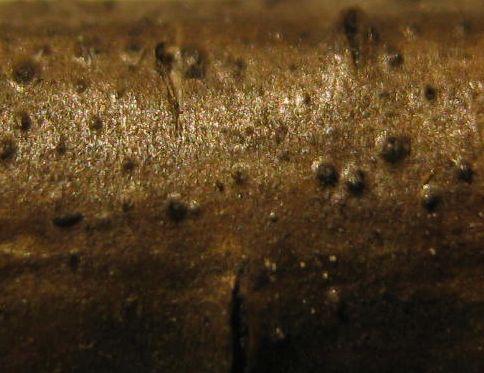
Dark spots on Caragana
Marja Pennanen,
11-01-2015 16:16
these about 0,2 mm wide spots on Caragana turned to be pyrenomycetes.
They are much wider than high and seem to grow under the outermost layer of the bark.
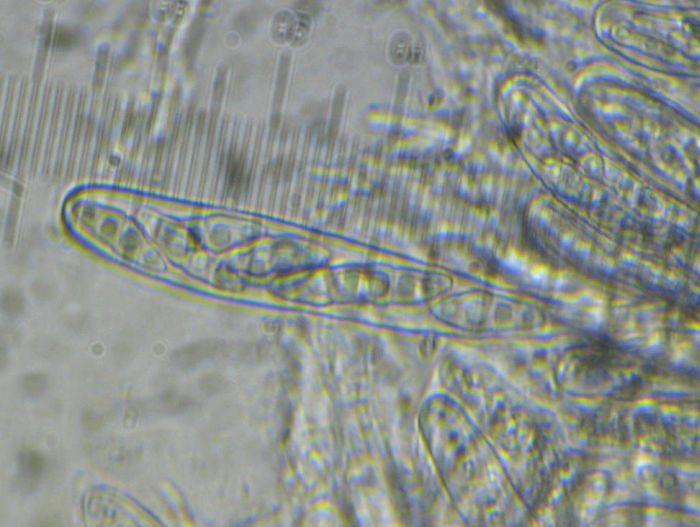
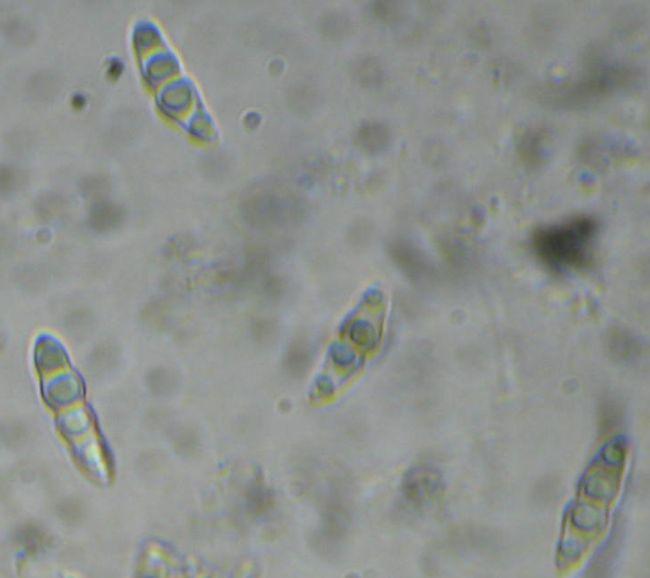
The spores are at least now hyaline, 18-24x4-6 and contain 4 droplets.
The asci are about 70-120x9-12.
Help with the determination is truly welcome: Marja
Alain GARDIENNET,
11-01-2015 22:02

Re : Dark spots on Caragana
Hi Marja,
Probably an Arthopyrenia species.
Alain
Marja Pennanen,
12-01-2015 13:44
Re : Dark spots on Caragana
Cher Alain,
merci!
So, it may be a lichen. This is an interesting piece of information for me.
I have thought, that lichens grow on a surface not under it...
Marja
merci!
So, it may be a lichen. This is an interesting piece of information for me.
I have thought, that lichens grow on a surface not under it...
Marja
Björn Wergen,
28-01-2015 12:30

Re : Dark spots on Caragana
Hi Marja,
indeed Arthopyrenia. This genus belong to a group of lichens called "pyrenocarpous lichens", because they simulate pyrenomycetes fruitbodies. They occur on the bark of various deciduous trees, in my region Arthopyrenia cinereopruinosa is commonest.
regards,
björn
indeed Arthopyrenia. This genus belong to a group of lichens called "pyrenocarpous lichens", because they simulate pyrenomycetes fruitbodies. They occur on the bark of various deciduous trees, in my region Arthopyrenia cinereopruinosa is commonest.
regards,
björn