05-05-2026 22:40
Gernot FriebesHi,I believe this is a Plagiostoma growing on a Sa
04-05-2026 18:13
 Stephen Martin Mifsud
ID request for what seems to be a true aquatic fun
04-05-2026 16:39
Stephen Martin Mifsud
ID request: This specimen was collected in Malta o
28-07-2011 18:31
 Alex Akulov
Dear FriendsToday I made the pdf file of Velenovsk
28-04-2026 20:07
 Lothar Krieglsteiner
... on twig in the air at standing Ceratonia siliq
04-05-2026 09:50
 Castillo Joseba
Me mandan el material seco de Galicia,(España) re
02-05-2026 12:42
Alain BRISSARDBonjour à tousJeuidi 30 avril dernier on m'a remi
02-05-2026 13:06
Pauline. PennaBonjour Please can someone help me with this id
01-05-2026 22:45
 Thierry Blondelle
Bonjour à tous, Une récolte sur bouse séchée d
Chaetosphaeria hebetiseta
Björn Wergen,
11-12-2014 23:10
 Hi there,
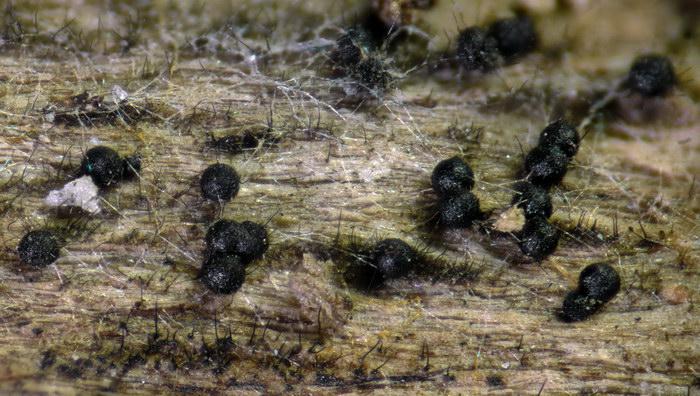
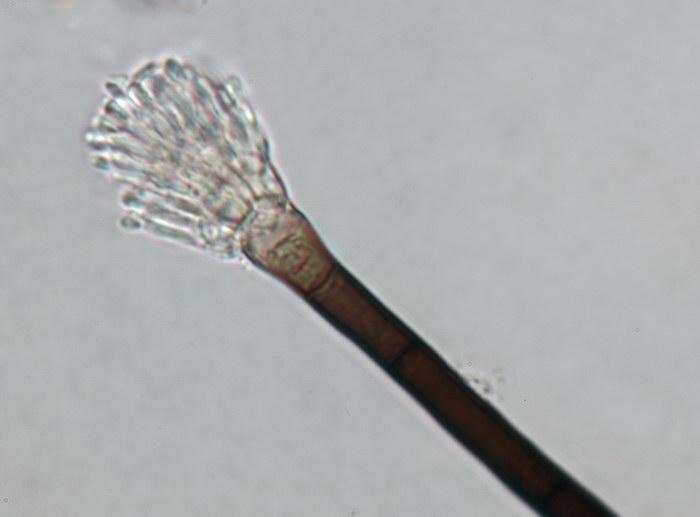
I have an austrian collection of a Chaetosphaeria with a conidial state nearby identified as "Chaetosphaeria hebetiseta" (Réblová 2000). I am a bit unsure because I am not familiar with all the terms (locus, collarette, "proliferating sympodially") used to describe the conidiomata.
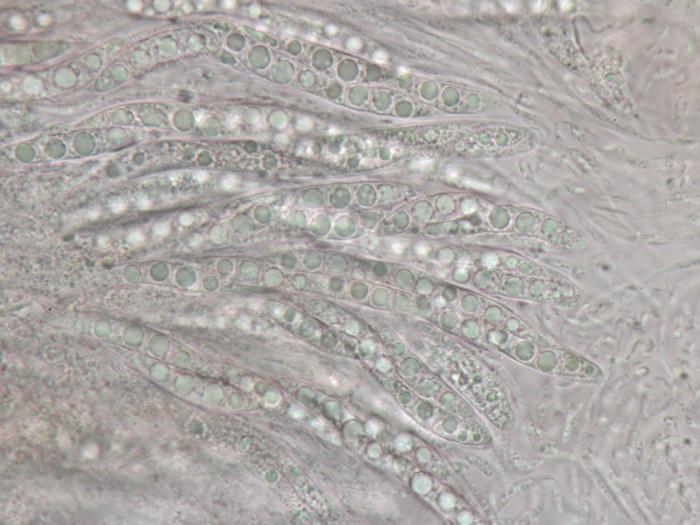
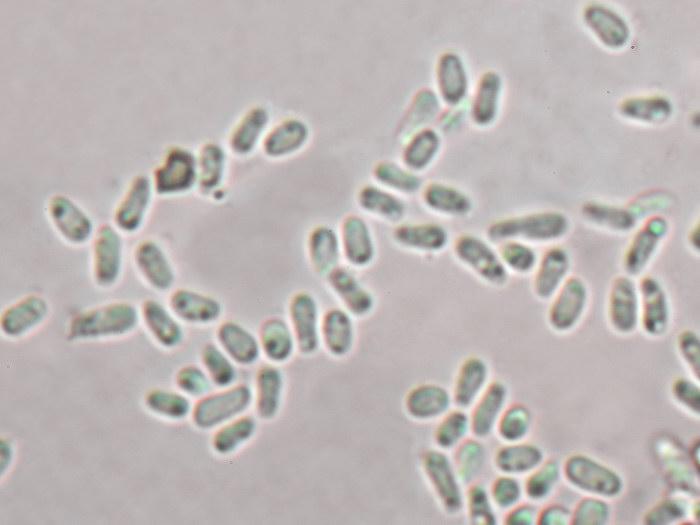
Spores 19-24 (28,5) x 4,4-6,5µm, 3septated. Asci 95-120x8-10µm. Conidia 2-3x1,5µm. On dead Fagus wood.
With the key I clearly come to the branch C. innumera - C. hebetiseta. The first one is described as having distinctly smaller spores and asci, and C. hebetiseta fits well with nearly all characteristics (the conidia are given as 1-1,5µm longer).
Perhaps someone can confirm the determination.
Thanks in advance,
björn