

05-05-2026 22:40
Gernot FriebesHi,I believe this is a Plagiostoma growing on a Sa
06-05-2026 11:25
 Castillo Joseba
Me mandan el material seco de Galicia (España) re
06-05-2026 17:23
Thomas Læssøehttps://svampe.databasen.org/observations/10594257
28-04-2026 20:07
 Lothar Krieglsteiner
... on twig in the air at standing Ceratonia siliq
04-05-2026 18:13
 Stephen Martin Mifsud
ID request for what seems to be a true aquatic fun
04-05-2026 16:39
Stephen Martin Mifsud
ID request: This specimen was collected in Malta o
28-07-2011 18:31
 Alex Akulov
Dear FriendsToday I made the pdf file of Velenovsk
04-05-2026 09:50
Castillo Joseba
Me mandan el material seco de Galicia,(España) re
 Hello, everyone
I have doubts about this specimen, to be exact I choose between H. elastica and H. latispora. It was collected in mixed forest - oaks (Q.robur), linden and maple.
There are measurements:
Spores: 19,4-22,5*12,2-15,5 um
Asci:290-325*17-19 um
Croziers present
Underside of cup is almost smooth, microscopically a palisade layer of 3-celled hyphae is visible, in general this structures are 30-40 um long. Stalk is more 'furry' macroscopically, and this hyphae are much longer - 80-90 um and more separated.
Paraphyses do not contain brown pigment.
help me to choose, please:)
Best wishes,
Ira
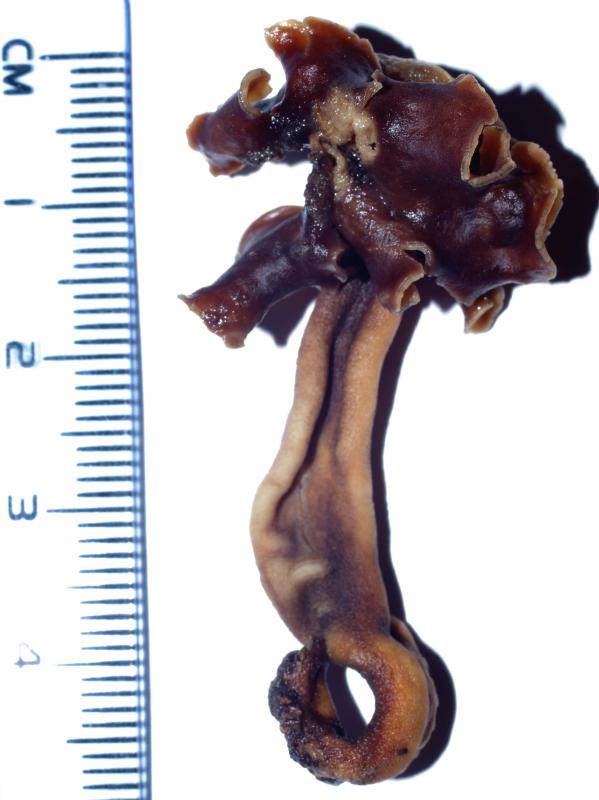
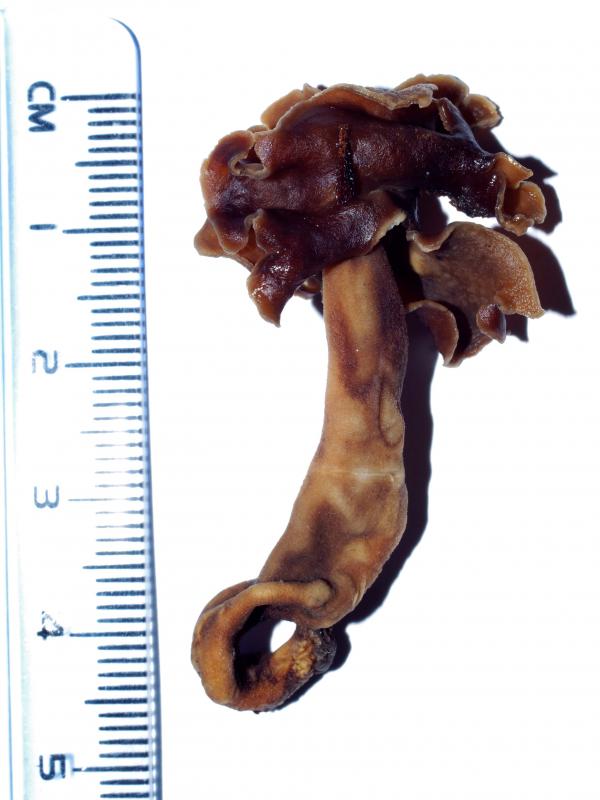
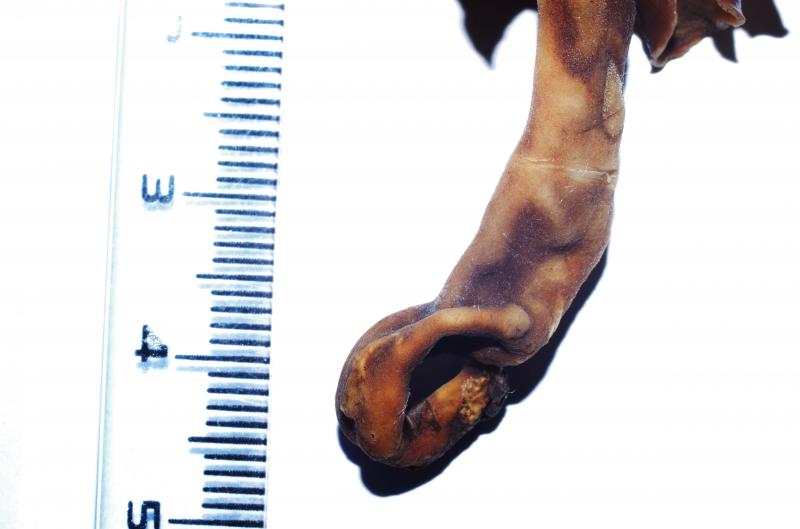
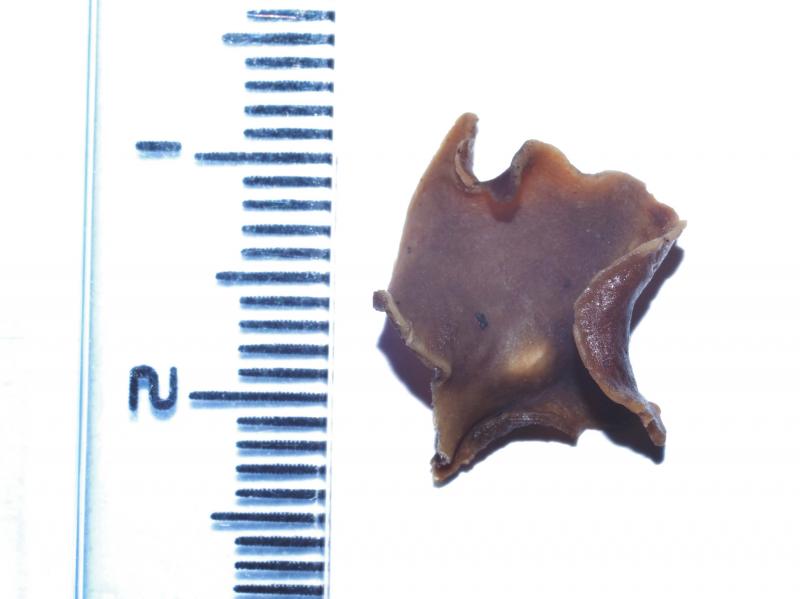
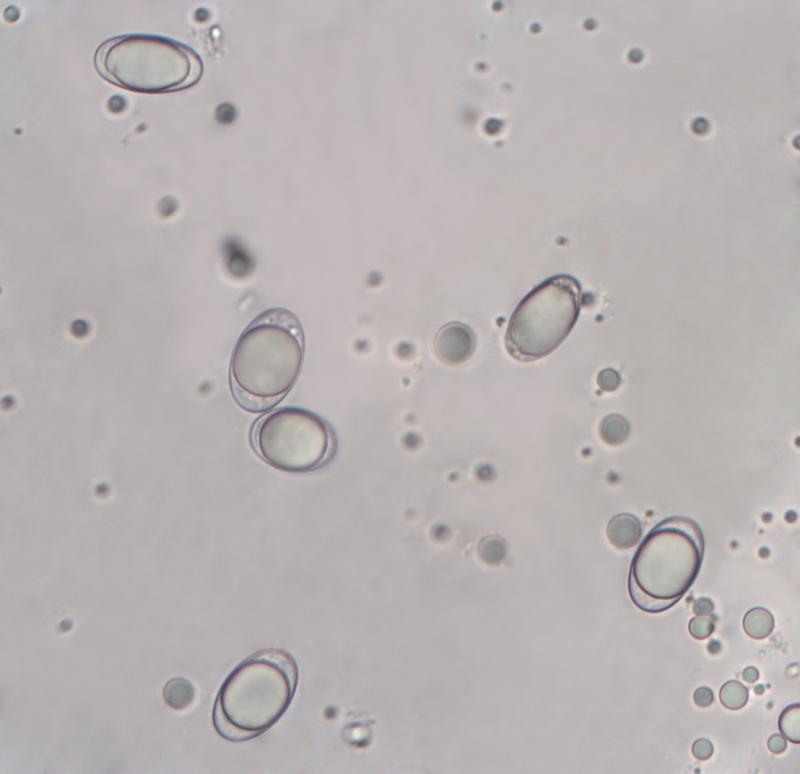
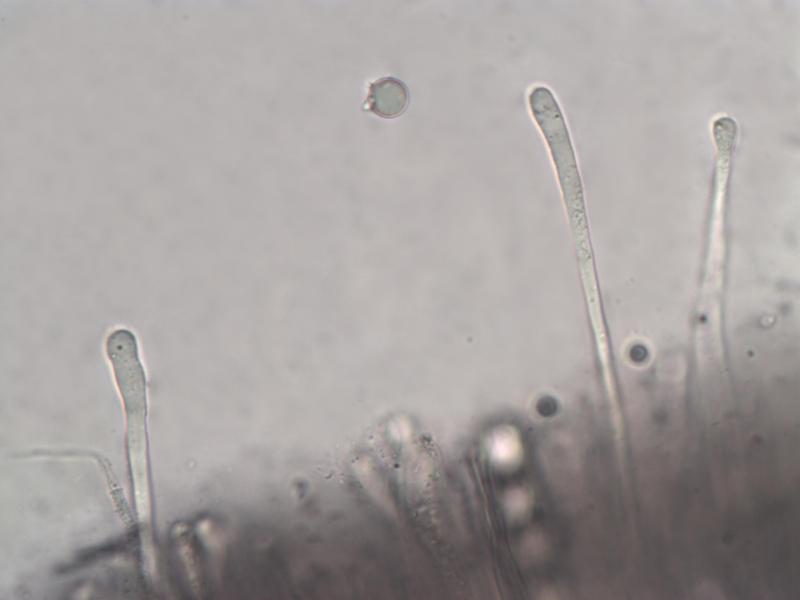
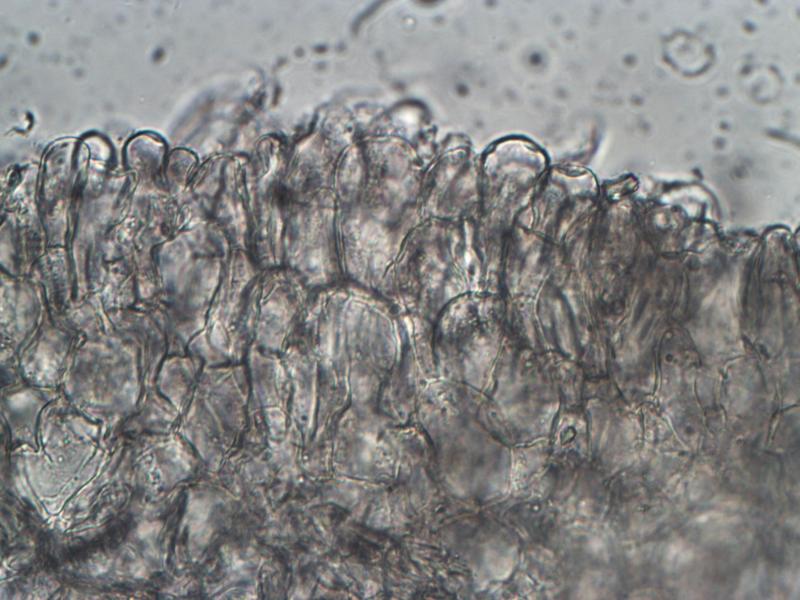
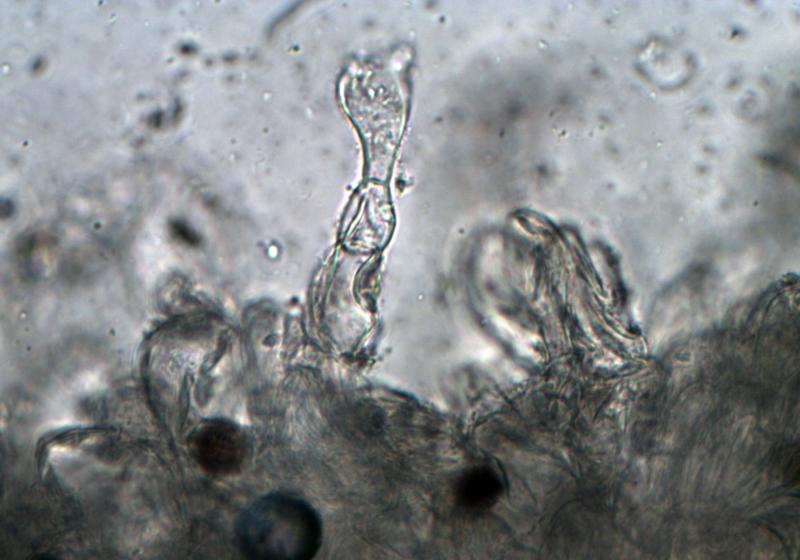
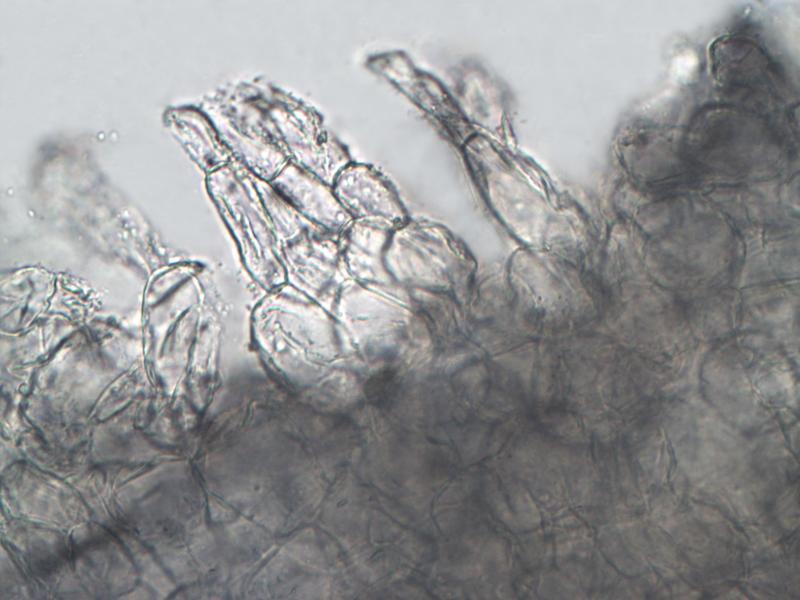

H. latispora must be more hairy?
With best wishes,
Irina
Well, the specimen seems very old, or rottening, and in these conditions can be very difficult, if not impossible, to choose. The stipe seems pigmented, this is a feature that is not normally present in any species in the section Elasticae. But I think it's only too old.
One single young specimen should give the solution... :)
However, the collection was consisting only in one ascoma?
I aked a person who collected this specimen and he had its photos in fresh state. Unfortunately there was only one fruitbody. As far as I can see the stalk is not pigmented, which probably confirms H.elastica?
Best regards,
Irina
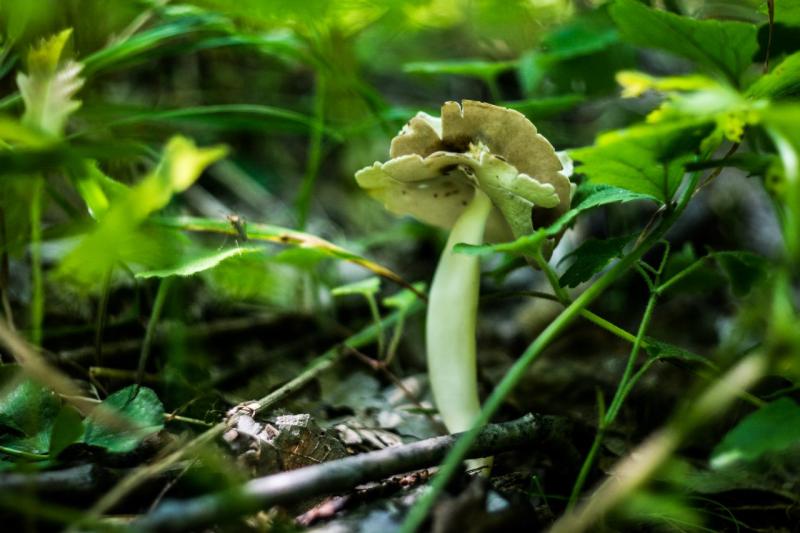
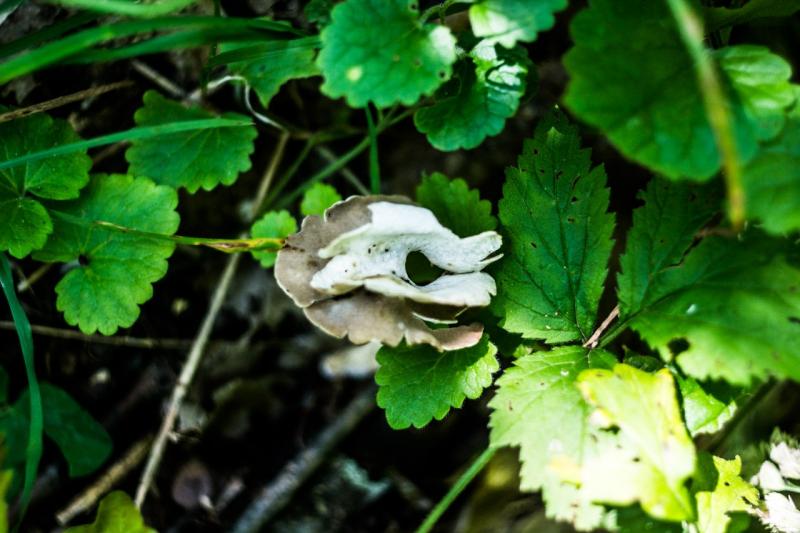
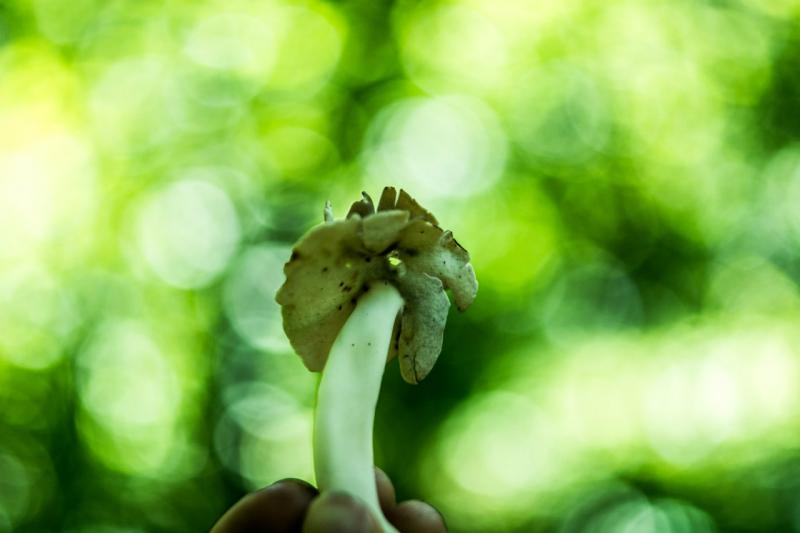
I've found photos of fresh specimen (attached above) and as for me it doesn't look like G.infula. What do you think?
Best regards,
Irina
https://www.google.si/search?q=Helvella+lacunosa&client=firefox-a&hs=132&rls=org.mozilla:en-US:official&channel=sb&tbm=isch&tbo=u&source=univ&sa=X&ei=nP8fVNvFIeTe7Aa974H4Cg&ved=0CCEQsAQ&biw=1920&bih=900
Likely then, that is valid for all hellvelas, doh I did no see so dark elastica as yours ever (probably they hide very good in surrounding autmn leafs).
See my collection: http://agrozoo.net/gallery/Helvella
Mybe the one before last goes towards your specimen regarding coloration.
The fresh specimen looks like hellvela elastica to me, seen one super fresh Gyromitra infula yesterday, I think they can't bi mistaked (fresh).
See also this & compare to your images from first post: http://agrozoo.net/jsp/Galery_one_image.jsp?id_galery_obfuscated=8a4596c4119e4d548c0fc6c35d9d80d4
The stalk looks the same, the cap can be easily deformed to deformation as on your images (by my expiriemnce).
All species in the section Elasticae have a white stalk, when fresh, as this specimen in the photos taken by the collector.
In other sections the things may be different (as in H. lacunosa), but in that case not in all specimens (segregate species?).
With the images added, I think it's more correct Helvella latispora in the broad concept of Häffner, 1987. But I keep a great doubt that it fits with the original Boudier's meaning, with spores very short and broad.
No doubt that it is not a Gyromitra of course, completely different colours, ectal excipulum spores... at all!
Regards