
10-05-2026 16:18
brigitte vignotbonjour trouvée en Ariège sur bois une petite
29-04-2026 10:44
 Lothar Krieglsteiner
growing at moist, drying-out soil at the side of a
27-04-2026 17:16
Lothar Krieglsteiner
.. Algarve, moist lying.The conidiomata look like
10-05-2026 09:02
Buckwheat PeteHello everybody, ould this be Lachnum subvirgineu
08-05-2026 11:55
Gernot FriebesHi,found on a decorticated Picea abies branch stil
11-05-2016 20:37
 Zuzana Sochorová (Egertová)
Hi,this very little ascomycete grew on soil in a m
09-05-2026 07:37
Zuzana Sochorová (Egertová)
Hello,please, could anyone share this paper?Ferná

05-05-2026 22:40
Gernot FriebesHi,I believe this is a Plagiostoma growing on a Sa
06-05-2026 11:25
 Castillo Joseba
Me mandan el material seco de Galicia (España) re
Bonjour !
Voici un disco stipité et inconnu de nous.
Merci de nous aider !
Amitiés ! Roland
Données :
Date de récolte : 20 / 06 / 2013
Substrat : débris ligneux à demi submergés (feuillu?) d'une forêt mixte Ascome 7 mm de hauteur totale Apothécie 1 mm de hauteur, 2 mm de diam.
Asques à 8 spores partiellement bisériées, avec crochetés à la base et appareil apical amyloïde, jusqu'à 76 x 9 µm
Paraphyses cylindriques, septées, parfois à une petite ramification cylindrique au tiers inférieur, légèrement élargies et parfois couvertes d'une substance hyaline (gélifiée?) à l'apex, pigmentées de brun ochracé olivâtre à ocre doré, à contenu jaunâtre > 80%, jusqu'à 75 x 3,5 µm, dépassant les asques de 3-6 µm
Réaction négative dans le KOH
Spores ellipsoïdes, lisses, non septées, avec 2 petites ou moyennes guttules, hyalines à jaunâtres, 7-12 x 2,5-3,3 µm, 8,4 x 2,9 µm en moyenne, Q = 2,89
Medulla en textura epidermoidea / intricata, ± ascendant, à cellules hyphoïdes polymorphes, hyalines, de taille variable, 25-90 x 5-30 µm
Excipulum ectal en textura globulosa / globulosa-angularis, à cellules à paroi légèrement épaissie, 15-34 x 13-32 µm
Revêtement externe formé de cellules globuleuses à ellipsoïdes en chaîne (?), à pigment brun à olivâtre, 16-18 x 12-15 um
Cellules marginales cylindriques à l'apex et à segments progressivement plus gros vers la base
Revêtement caulinaire brun olivâtre à brun foncé, avec cellules terminales sinueuses, cylindriques à clavées
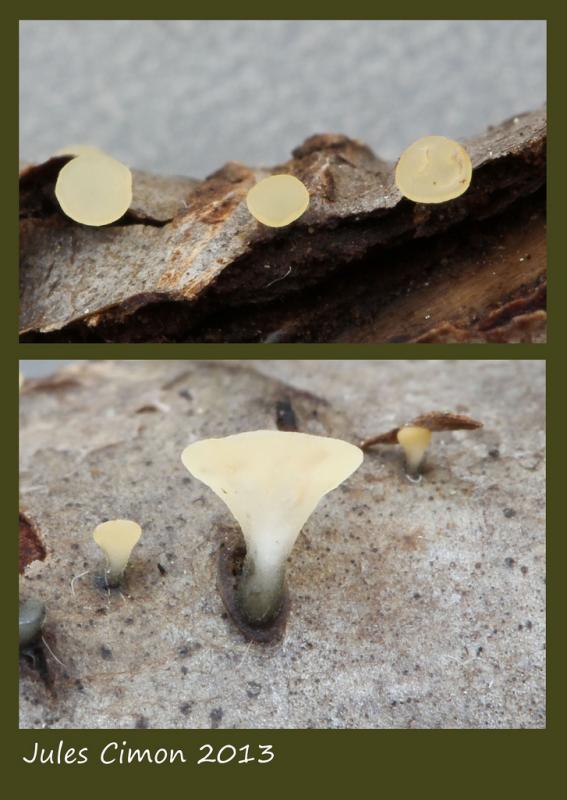
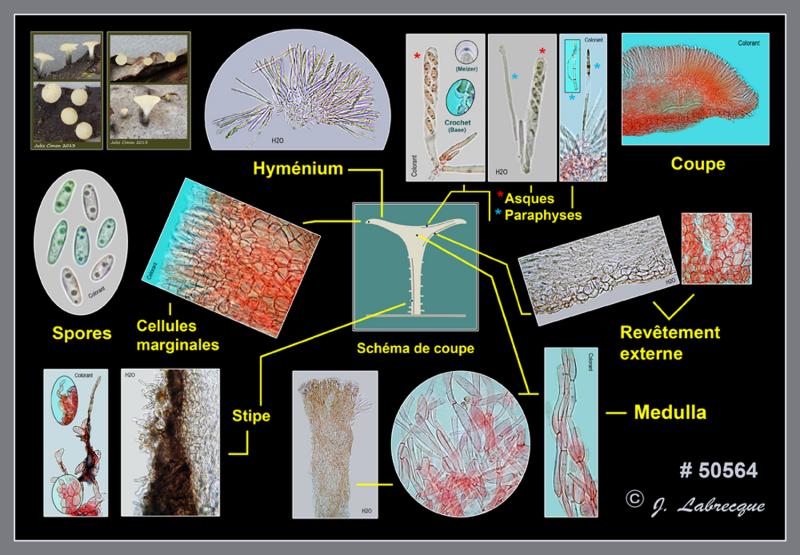

important woud be here to see living paraphyses with their contents. Moellerodiscus I want to exclude. The apical ring looks Calycina-like, but I am not sure, the resolution is too low. Min. 200% would be necessary for this plate to better work with it. Could you perhaps send me by mail?
Zotto
Yes, I will, Zotto !
Roland
On the photo of paraphyses I can see that they contained VBs, though this is far away from the aspect of the living state.
Now, this species fits, in my opinion Hymenosc. vernus, with one exception: the asci clearly arise from croziers while H. vernus is consistently without. Typical for H. vernus is the blackish base of the stipe. H. vernus is frequent on Alnus but may occur also on Fagus and Salix. Did you ever record H. vernus in your area?
There is also a Hym. foliicola Abdullah et al. from England which grows on twigs (with a characteristic anamorph recorded on leaves), which is similar to H. vernus, but the ascus base was not studied by the authors.
Zotto
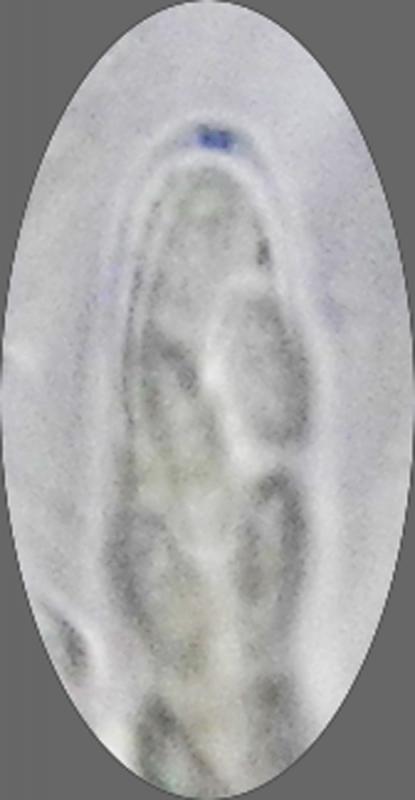
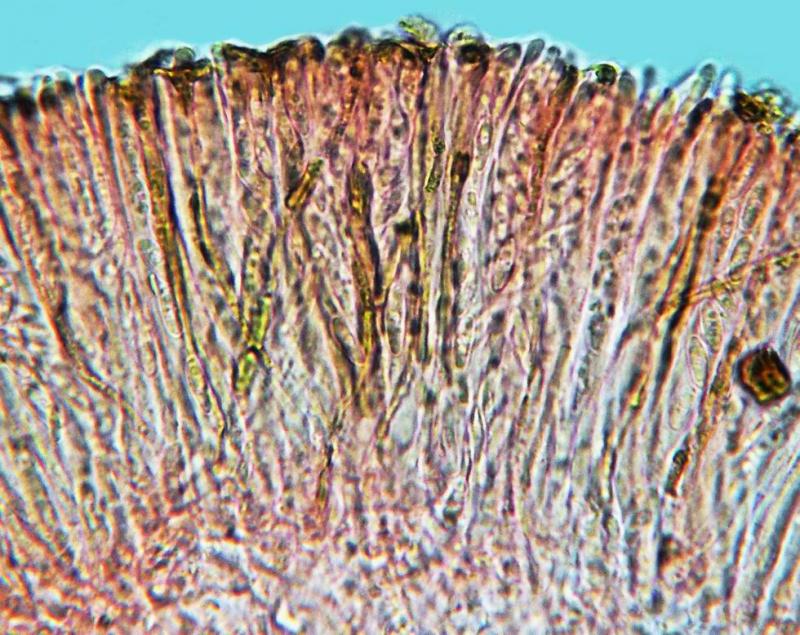
Zotto, yes we have record H. vernus., but without croziers.
see : http://www.flickr.com/photos/19369983@N06/4425309001/in/photolist-7K3Sc4-koZLwm
Here, we have croziers.
It may be not H. vernus.
I will seek on H. foliicola.
Thank you ! Roland
On this plate you can see, as an example, an artifact of dead cells: the below pic (base du pied) shows strongly wrinkled hyphae, but they are smooth when alive.
Zotto