
12-06-2026 14:50
 François Freléchoux
Bonjour, Voici la brève description d'une Mollis
10-06-2026 21:16
François Freléchoux
Bonsoir,Le dernier du jour, en attendant votre avi
11-06-2026 19:01
 William Slosse
Hello all,In an attempt to make a culture of a sus
11-06-2026 19:03
 Nicolas VAN VOOREN
Chers membres d'Ascofrance,Le site sera placé en

09-06-2026 18:32
Camille MertensSur morceau de roseau immergé 0,5 - 0,7 mm de dia
10-06-2026 12:54
Steve ClementsBonjour encore, Pouvez-vous m'aider, s'il vous pl
10-06-2026 21:07
François Freléchoux
Toutes les tiges de gentianes jaunes de l'an passÃ
10-06-2026 13:41
François Freléchoux
Bonjour à nouveau, Voici une trouvaille d'hier.
Boudiera from Portugal
Lothar Krieglsteiner,
29-04-2026 10:44
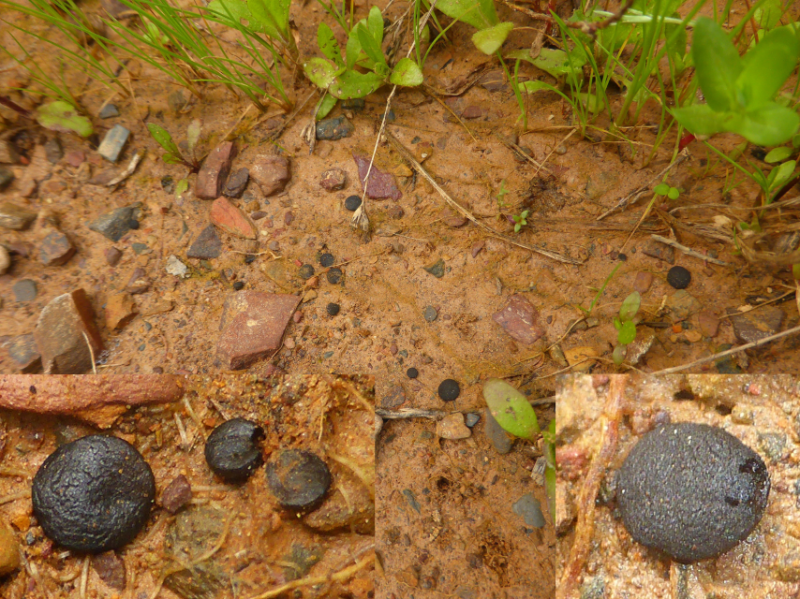
 growing at moist, drying-out soil at the side of a small puddle - near Cistus species etc.
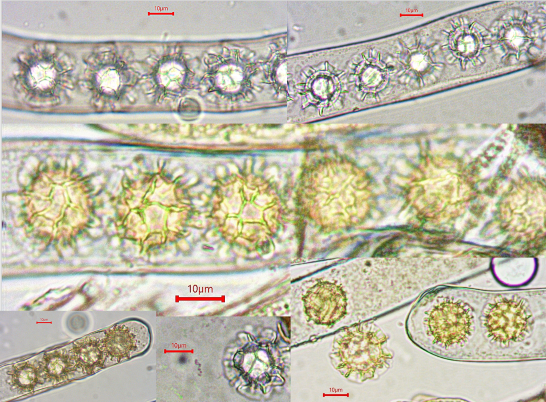
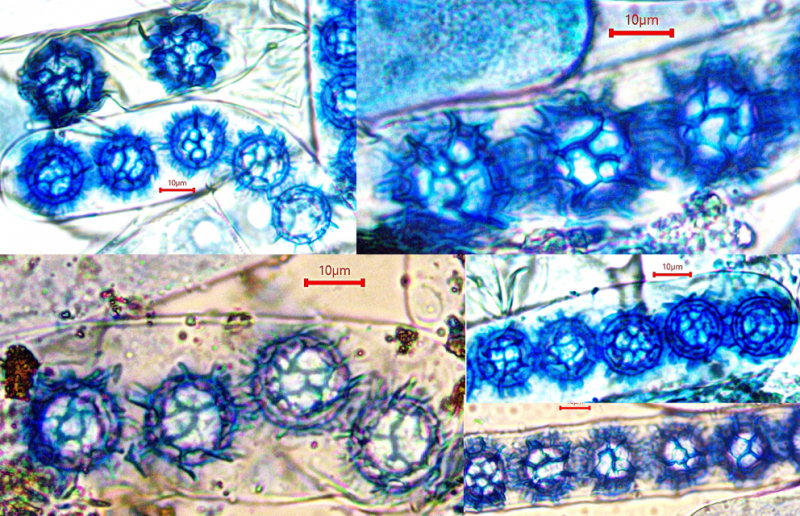
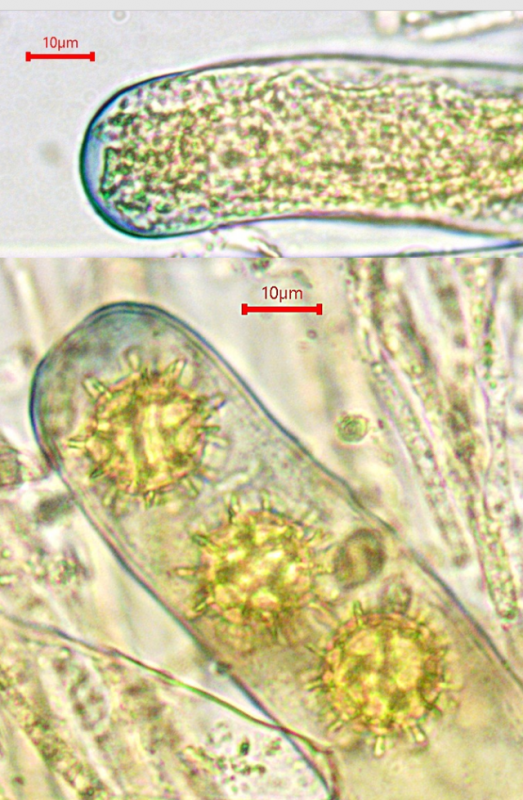
Would not be spore size (without ornament only 16-18 µm) I would not at all hesitate to call this Boudiera areolata.
Do there exist also such small-spored forms?
Best regards, Lothar
Lothar Krieglsteiner,
10-05-2026 16:22
Re : Boudiera from Portugal
does nobody have any comment?
Nicolas VAN VOOREN,
10-05-2026 16:29
Re : Boudiera from Portugal
The spore ornamentation points to B. areolata, but of course this spore size is weird... No idea.
Lothar Krieglsteiner,
10-05-2026 16:32
Re : Boudiera from Portugal
thanks, Nicolas, for your comment.
Lieve Deceuninck,
10-05-2026 20:09

Re : Boudiera from Portugal
Is Boudiera purpurea already excluded?
Lothar Krieglsteiner,
10-05-2026 20:40
Re : Boudiera from Portugal
Hello Lieve,
thank you for your proposal. But:
B. purpurea should have an ornament of spines, not a (strong) reticulum. There spores are larger also. B. purpurea is described here:
https://www.zobodat.at/pdf/Pilzflora-Nordwestoberfrankens_12_0051-0059.pdf
Best regards, Lothar
thank you for your proposal. But:
B. purpurea should have an ornament of spines, not a (strong) reticulum. There spores are larger also. B. purpurea is described here:
https://www.zobodat.at/pdf/Pilzflora-Nordwestoberfrankens_12_0051-0059.pdf
Best regards, Lothar
Lieve Deceuninck,
10-05-2026 21:46
Re : Boudiera from Portugal
I regard the net-like ornament as an extra layer above the spines. See attachments, in particular part 2, p. 13 or consult the literature Le Gal (see bibliography)
(or online: https://kvmv.be/publicatie/sporen-11-4; https://kvmv.be/publicatie/sporen-11-3. )
Additionally: I have a letter from van Brummelen (1968) confirming a Flemish find of B. purpurea, but no herbarium material is available.
(or online: https://kvmv.be/publicatie/sporen-11-4; https://kvmv.be/publicatie/sporen-11-3. )
Additionally: I have a letter from van Brummelen (1968) confirming a Flemish find of B. purpurea, but no herbarium material is available.
 Boudiera in Flandres part 1
Lothar Krieglsteiner,
11-05-2026 09:04
Re : Boudiera from Portugal
Hello Lieve,
thank you very much for the intersting files - I did not knwo this publication(s).
Anyway, I find my spores are too small even for B. purpurea - considered that it can have a reticulate "envelope".
I am also a bit confused by the colour of "your" B. areolata. I found this species (with spores large enough) twice in my life - once in Lower Franconia (my dissertation) and once in the Black Forest, in a "Hochmoor"; both in Germany. Both fimds had a colour similar to my Portuguese find, dark red brown (moist) to almost black (dry). Maybe like this:
https://www.centrodeestudiosmicologicosasturianos.org/?p=8838
Compared with this your areolata looks very deviating in respect to colour.
Best regards, Lothar
thank you very much for the intersting files - I did not knwo this publication(s).
Anyway, I find my spores are too small even for B. purpurea - considered that it can have a reticulate "envelope".
I am also a bit confused by the colour of "your" B. areolata. I found this species (with spores large enough) twice in my life - once in Lower Franconia (my dissertation) and once in the Black Forest, in a "Hochmoor"; both in Germany. Both fimds had a colour similar to my Portuguese find, dark red brown (moist) to almost black (dry). Maybe like this:
https://www.centrodeestudiosmicologicosasturianos.org/?p=8838
Compared with this your areolata looks very deviating in respect to colour.
Best regards, Lothar
Lieve Deceuninck,
11-05-2026 11:53
Re : Boudiera from Portugal
Thank you for your reply. Yes, the fruiting bodies were very young and light in color. Unfortunately, I did not take an additional macro photo after the fruiting bodies had had two weeks to mature.
Good luck with your find.
Lothar Krieglsteiner,
11-05-2026 11:57
Re : Boudiera from Portugal
thank you! Then your pictures show unripe B. areolata? And later the dark color had appeared? This is interesting. In my first find (long ago) I had also first unripe apothecia, but hey were already dark brown.
Lieve Deceuninck,
11-05-2026 13:24
Re : Boudiera from Portugal
I do not recall any color change (not observed) after two weeks and I can no longer verify this either. The exsiccate is no longer in my personal herbarium but has already been deposited (GENT). The spore development indicated young fruiting bodies.
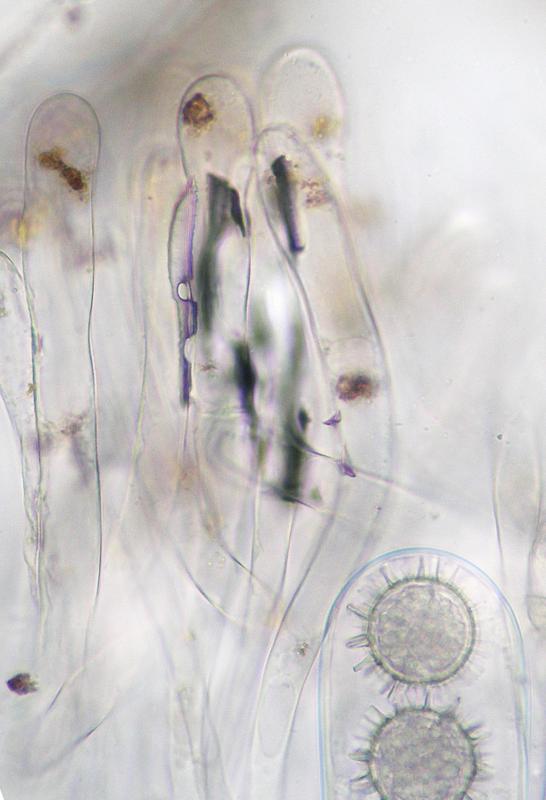
Apart from the pigmentation in the cells, there was still substance on the outside of the parafyses. That was something unknown to me and possibly just light refraction.
Lothar Krieglsteiner,
11-05-2026 14:16
Re : Boudiera from Portugal
thank you :-)