06-05-2026 17:23
Thomas Læssøehttps://svampe.databasen.org/observations/10594257
06-05-2026 11:25
 Castillo Joseba
Me mandan el material seco de Galicia (España) re
28-04-2026 20:07
 Lothar Krieglsteiner
... on twig in the air at standing Ceratonia siliq
05-05-2026 22:40
Gernot FriebesHi,I believe this is a Plagiostoma growing on a Sa
04-05-2026 18:13
 Stephen Martin Mifsud
ID request for what seems to be a true aquatic fun
04-05-2026 16:39
Stephen Martin Mifsud
ID request: This specimen was collected in Malta o
28-07-2011 18:31
 Alex Akulov
Dear FriendsToday I made the pdf file of Velenovsk
04-05-2026 09:50
Castillo Joseba
Me mandan el material seco de Galicia,(España) re
02-05-2026 12:42
Alain BRISSARDBonjour à tousJeuidi 30 avril dernier on m'a remi
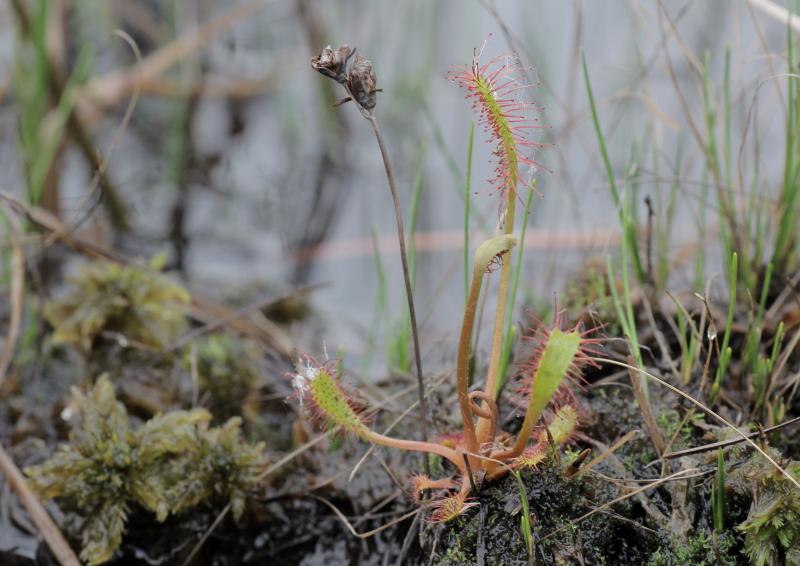
A carnivorous plant, sundew (Drosera anglica, D. rotundifolia) may have some special biochemical composition and accordingly adapted to it fungal community. I collected four morpho-species from this plant so far. Though its leaves are thick and there are many of them in the litter, they were. All collected species were growing at flowering shoots and at fruits. Probably, digestive enzymes in leaf drops ("due") could be repellent to fungi.
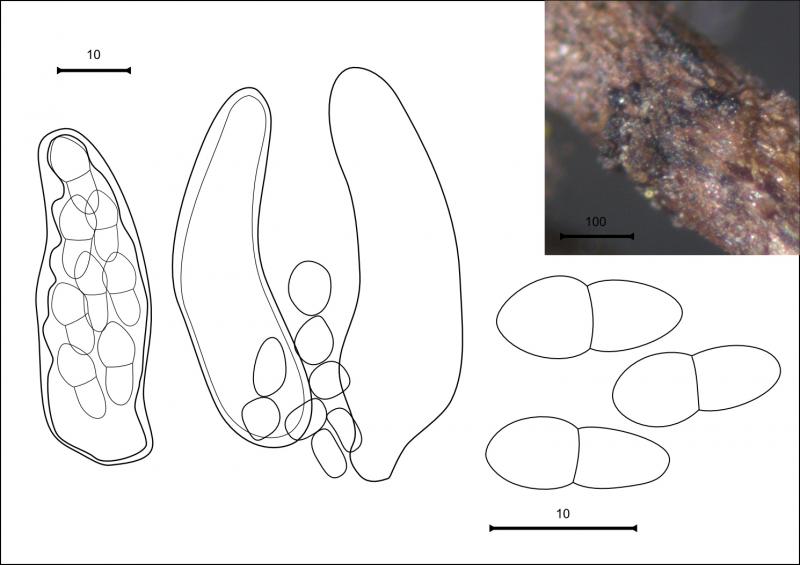
One common enough here species is a Mycosphaerella. The perithecia are very tiny, up to 100 mk and barely visible. But there are mature asci and two-celled hyaline spores inside, in reward for the tedious work with such a small objects. (#4204 - https://www.cubby.com/pl/%234204/_6eca9336e9e841359e9ced422c8bcf11)
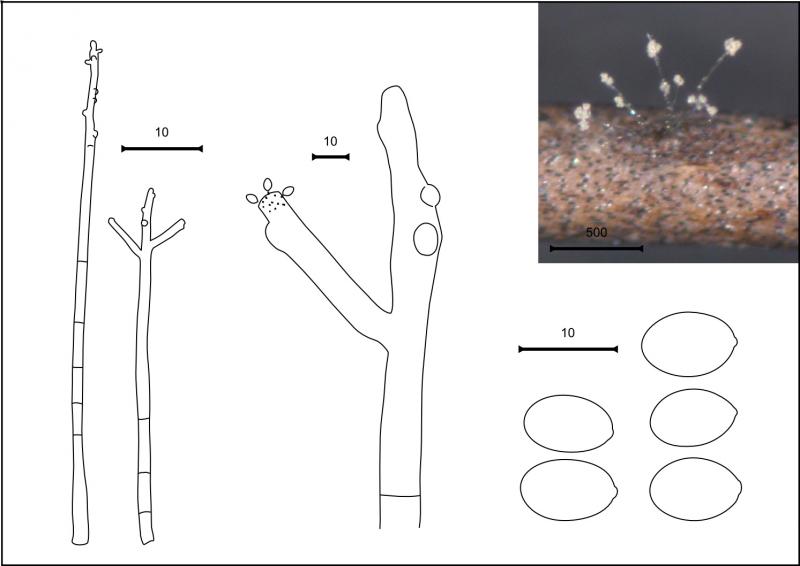
Some relative of Bortytis was spotted after the short incubation in a wet chamber.(#4201 - https://www.cubby.com/pl/%234201/_ca45a85a098d43a5b7e6de51328c4cac)
Another anamorphic species with surprising look was revealed at the scale of a fruit. Clavate conidiogenous cells bear at its tips several ellipsoid conidia. (#4205 - https://www.cubby.com/pl/%234205/_a06c63f7ce7d4c46b533d8d9769c6919)
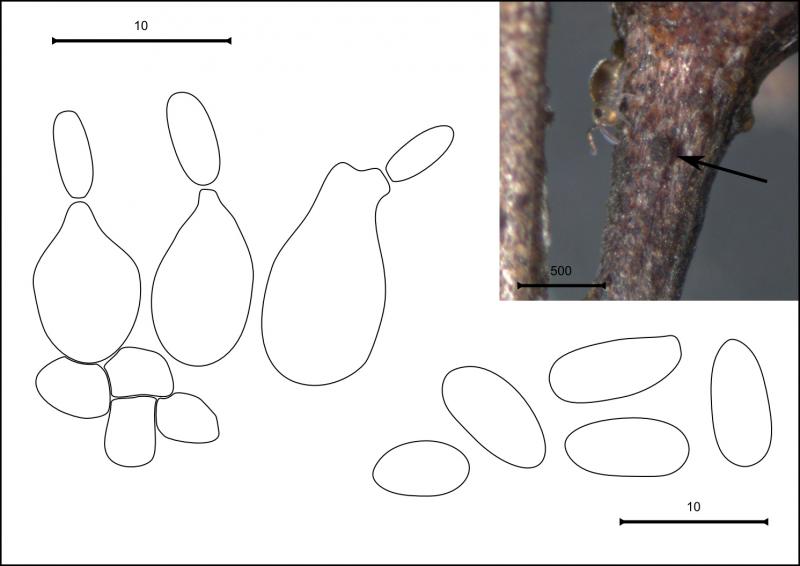
The last morpho-species is again anamorphic. Small perithecioid structures were spotted in upper part of a stem. They filled with drop-shaped conidiogenous cells, from upper narrowed part of those arise ellipsoid conidia. And look at the photo: obviously, this dinosaur threatens to our fungus ). (#4207 - https://www.cubby.com/pl/%234207/_fd8ac1df758742e2baa9e219b70a88ee)?