
06-05-2026 17:23
Thomas Læssøehttps://svampe.databasen.org/observations/10594257
06-05-2026 11:25
 Castillo Joseba
Me mandan el material seco de Galicia (España) re
28-04-2026 20:07
 Lothar Krieglsteiner
... on twig in the air at standing Ceratonia siliq
05-05-2026 22:40
Gernot FriebesHi,I believe this is a Plagiostoma growing on a Sa
04-05-2026 18:13
 Stephen Martin Mifsud
ID request for what seems to be a true aquatic fun
04-05-2026 16:39
Stephen Martin Mifsud
ID request: This specimen was collected in Malta o
28-07-2011 18:31
 Alex Akulov
Dear FriendsToday I made the pdf file of Velenovsk
04-05-2026 09:50
Castillo Joseba
Me mandan el material seco de Galicia,(España) re
02-05-2026 12:42
Alain BRISSARDBonjour à tousJeuidi 30 avril dernier on m'a remi
My last riddle was solved so fast I have to ask another one :)
Substrate: On dead twig of cf Sorbus on the bark
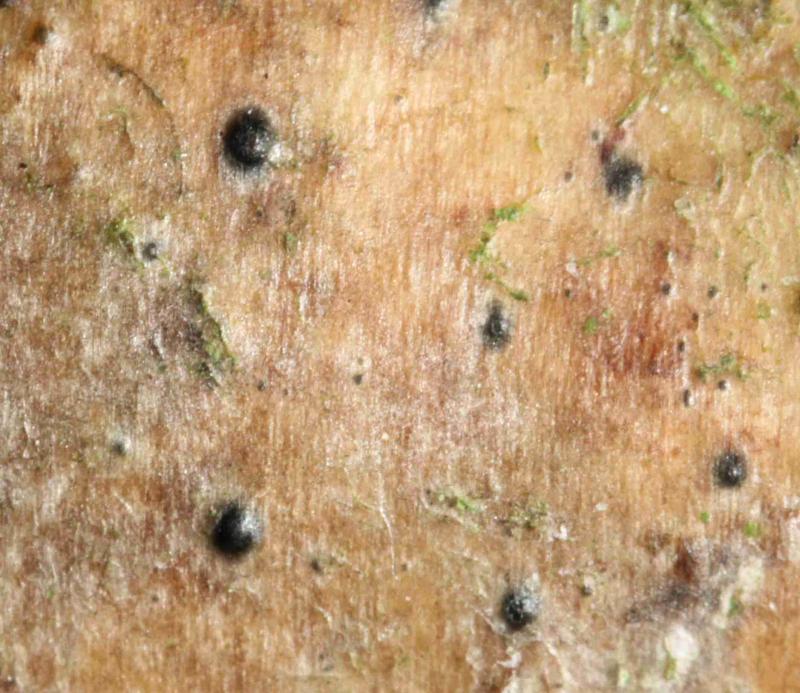
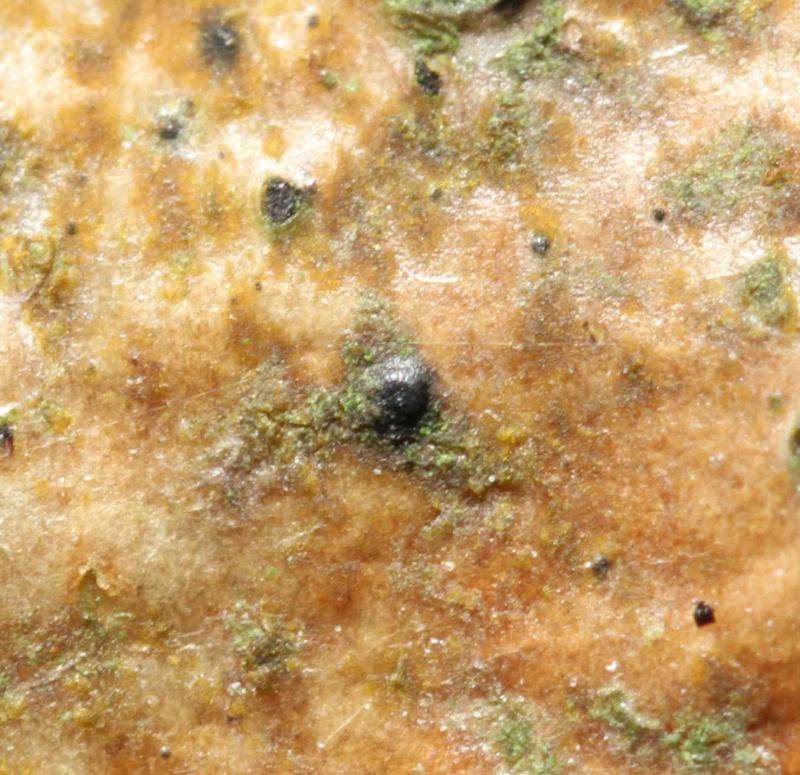
Macro: Bark with small, blackish bumps of 0.3 mm diam. Aside from this blackened surface, no clear delimitation of perithecia was visible. A very small pore was just visible in some of the bumps.
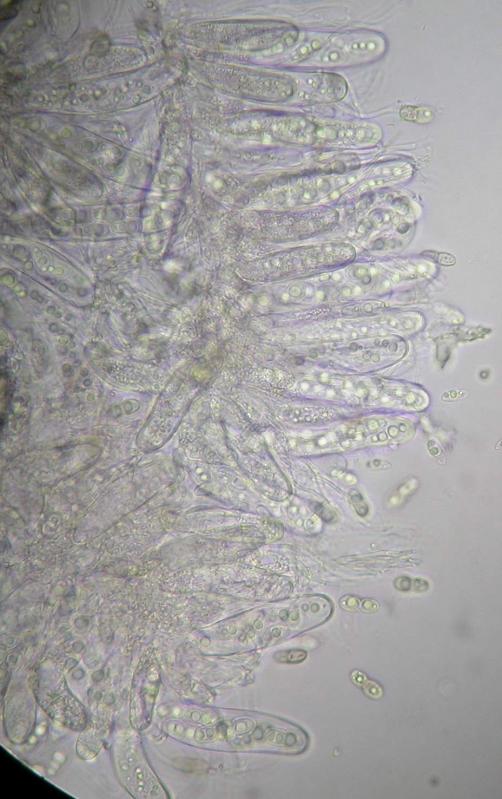
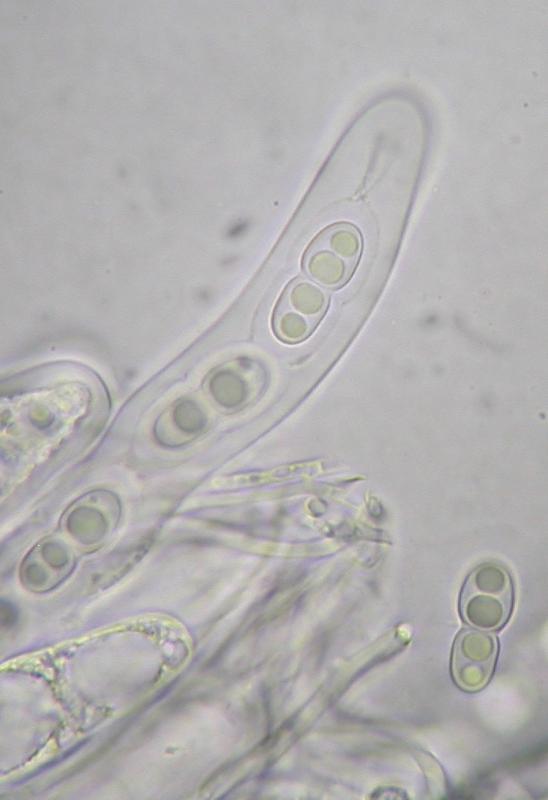
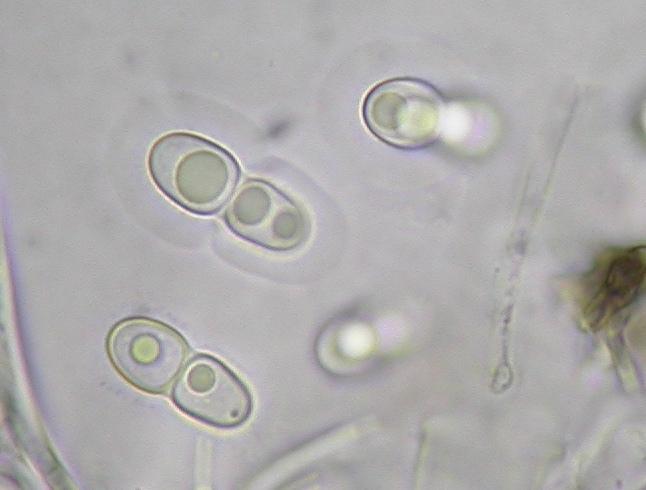
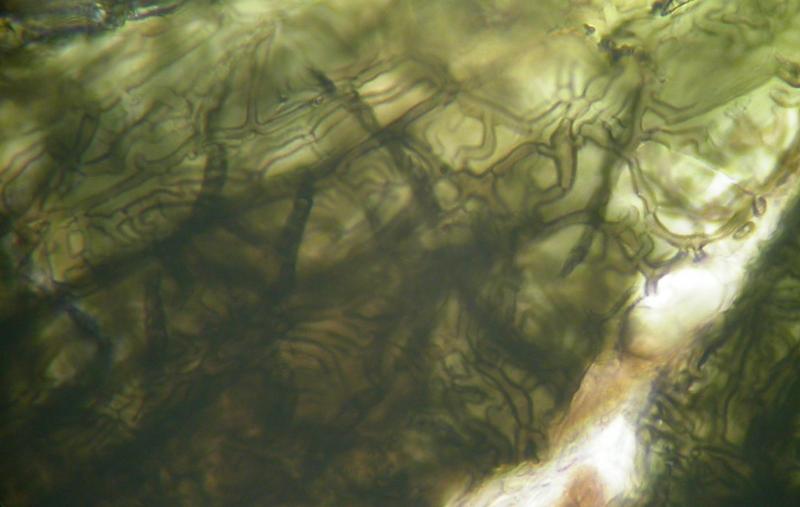
Micro: Asci cylindric, with short stalk, 85-95 x 16-18 µm. Spores hyaline, two-celled, usually with one cell slightly broader/bigger, constricted at septum, usually 1 or 2 large oildrops per cell, 18-19.5 x 6-7 µm . Spore surrounded by a slime sheath. (I have also observed some spores that are brownish and "warted": mature or just degrading?). Covering layer is formed of plant tissue which is intermingled with dark brown hyphae (see photos).
Thank you for any comments
Stefan
Cheers, Walter
Vielen Dank für den Hinweis. Nach allem, was ich bisher im Netz sichten konnte, dürfte diese Identifikation in makro- und mikroskopischer Sicht ziemlich sicher sein.
Gruss
Stefan

This fungi is often recorded by lichenologist on bark of different trees (Labbbaumen).
But there are several species and it's not always easy to give the right name.
Have you seen a thallus ? And what is the width of paraphyses (s.l.) ?
The last picture is in KOH ?
Alain
The last pic is in KOH, yes. I did not observe any algae in cuts, so I think its non-lichenized. I can not give you a measure of paraphyses at the moment, as I'm not at home (Will be next week). What would be alternatives to analepta then?
Merci bien
Stefan