06-05-2026 17:23
Thomas Læssøehttps://svampe.databasen.org/observations/10594257
06-05-2026 11:25
 Castillo Joseba
Me mandan el material seco de Galicia (España) re
28-04-2026 20:07
 Lothar Krieglsteiner
... on twig in the air at standing Ceratonia siliq
05-05-2026 22:40
Gernot FriebesHi,I believe this is a Plagiostoma growing on a Sa
04-05-2026 18:13
 Stephen Martin Mifsud
ID request for what seems to be a true aquatic fun
04-05-2026 16:39
Stephen Martin Mifsud
ID request: This specimen was collected in Malta o
28-07-2011 18:31
 Alex Akulov
Dear FriendsToday I made the pdf file of Velenovsk
04-05-2026 09:50
Castillo Joseba
Me mandan el material seco de Galicia,(España) re
02-05-2026 12:42
Alain BRISSARDBonjour à tousJeuidi 30 avril dernier on m'a remi
Litter of Red cottongrass
Nina Filippova,
04-07-2013 06:10
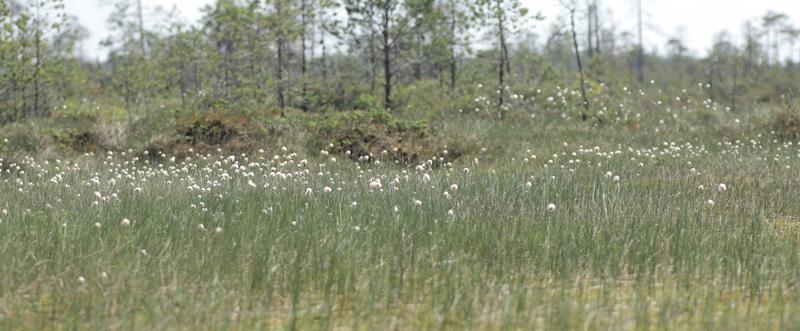
Surprisingly, litter of Eriophorum russeolum showed other species (from Er. vaginatum). The ecology of these species, and the consistensy of their leaves are quite different, what probably influences fungal species composition. The leaves of Er. russeolum are thicker, but are not abundant, and lie scarcely in sphaghum hollows. Er. russeolum occupies wetter places at the bog, alongside with Scheuchzeria and Carex limosa and hydrophilic sphagna.
Five species collected from its leaves are two pyrenomycetes, two discomycetes and an anamorphic species. Other noticed species are shared with litter of Scheuchzeria (Leptosphaeria sp.) and of Er. vaginatum (anamorphic species with large oval conidia).
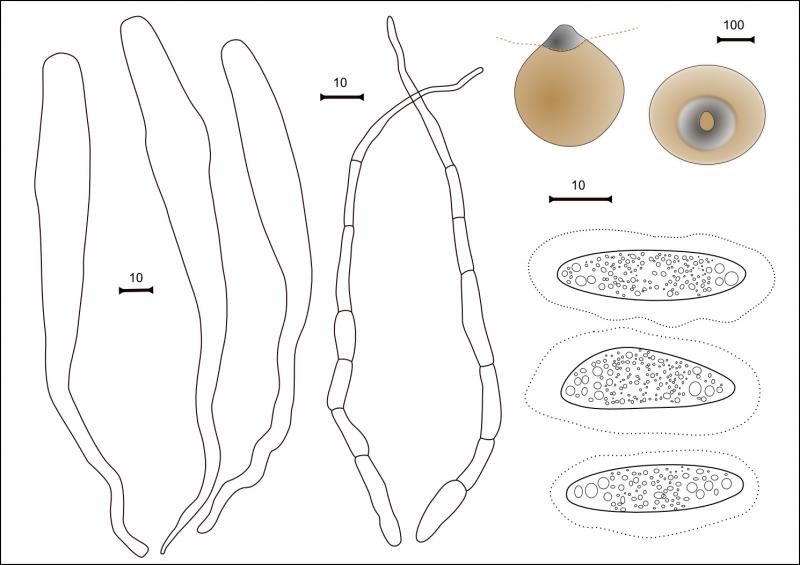
This perithecioid species with large spherical perithecia are very impressive. All what you could see at the surface is dark spot, but starting to delve deeper you suddenly realize that there is large balls, perithecia, hidden inside. The structure of hymenium is also very prominent, huge asci, abundant segmented paraphyses and large ellipsoid spores embedded in coating. (#4185 - https://www.cubby.com/pl/%234185/_fe42e98cf28042b9949f9131f75d45c2)
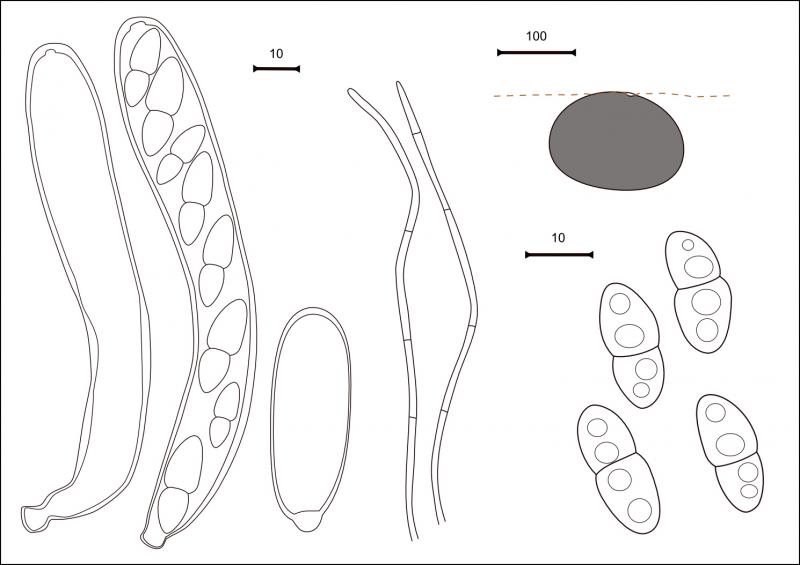
Second perithecioid species not less beautiful. Large two-celled spores with deep constriction are in fissitunicate asci, paraphyses thin and abundant, and the fruitbody is black ball about 200 mk, hidden under epidermis (only pore and dark area seen at the surface). (#4186 - https://www.cubby.com/pl/%234186/_61bcb9064680414cbcd7f41ada3fbac6)
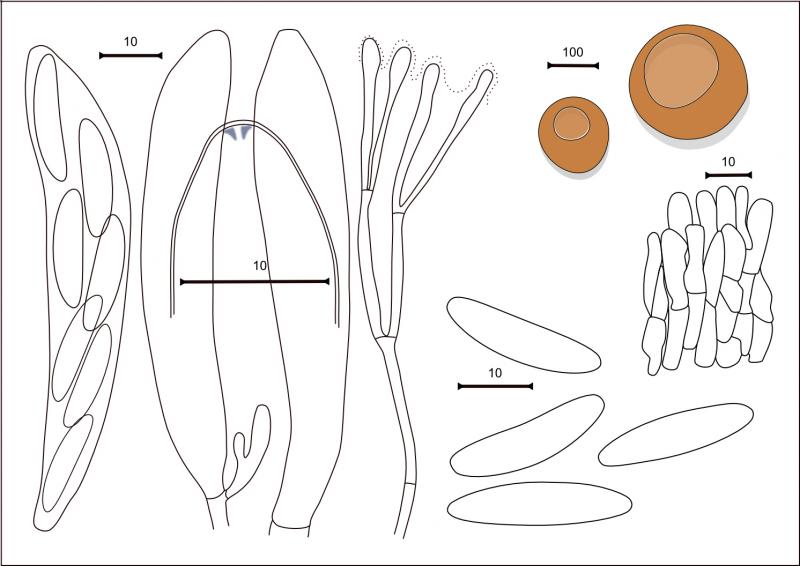
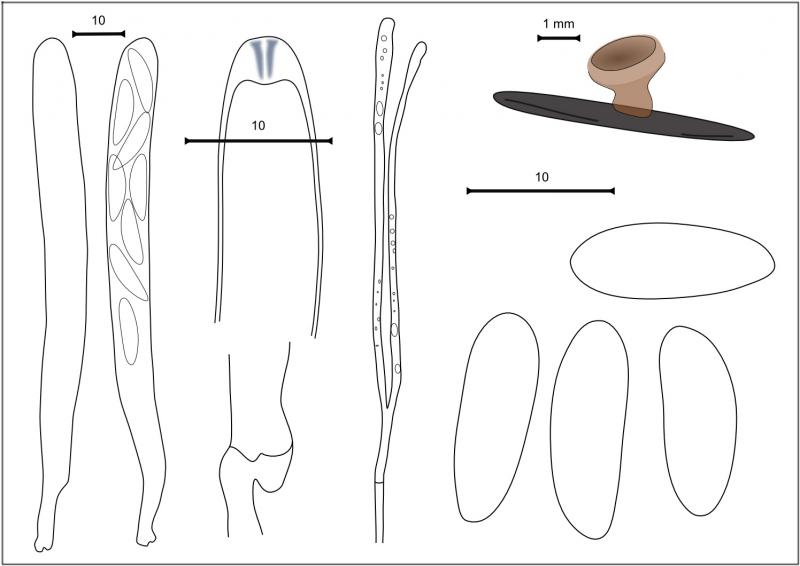
The discoid species (probably Helotiaceae) was met several times at very wet, soft leaves. They are small orangish thick cups, with slightly lighter hymenial surface. Asci show euamyloid reaction of ring, spores are oval and slightly curved, and paraphyses some enlarged at tips and embedded in gelatinous substance. (#4187 - https://www.cubby.com/pl/%234187/_1fa833b8b8dc49788c3e64dd6fbaa242)
Myriosclerotinia sp. grew at fruit stems lying in wet hollows. Brown pubescent discs well seen at the surface. (#4191 - https://www.cubby.com/pl/%234191/_865906158f1141a89af308f04f74503b)
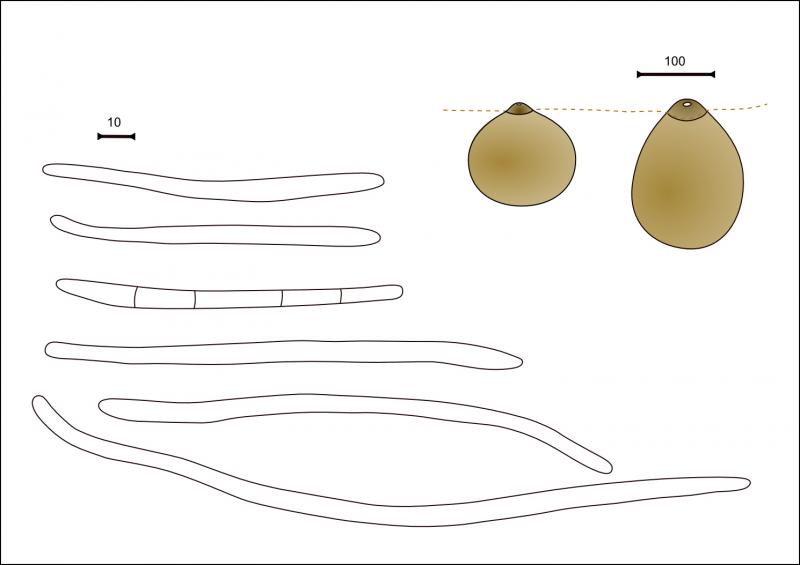
The last encountered species is very strange, probably anamorphic but i had not seen any conidiogenous cells there. The fruitbodies are near globose perithecioid structures. They are hidden under epidermis with darker spot seen at the surface. The conidia (if so) are long vermiform, hyaline, and some of them are septated. They are only the content of fruitbodies, a lot of them are tightly packed inside. (#4189 - https://www.cubby.com/pl/%234189/_81f88eaf6f894cdc979501f93775fa67)