
06-05-2026 17:23
Thomas Læssøehttps://svampe.databasen.org/observations/10594257
06-05-2026 11:25
 Castillo Joseba
Me mandan el material seco de Galicia (España) re
28-04-2026 20:07
 Lothar Krieglsteiner
... on twig in the air at standing Ceratonia siliq
05-05-2026 22:40
Gernot FriebesHi,I believe this is a Plagiostoma growing on a Sa
04-05-2026 18:13
 Stephen Martin Mifsud
ID request for what seems to be a true aquatic fun
04-05-2026 16:39
Stephen Martin Mifsud
ID request: This specimen was collected in Malta o
28-07-2011 18:31
 Alex Akulov
Dear FriendsToday I made the pdf file of Velenovsk
04-05-2026 09:50
Castillo Joseba
Me mandan el material seco de Galicia,(España) re
02-05-2026 12:42
Alain BRISSARDBonjour à tousJeuidi 30 avril dernier on m'a remi
Micropeziza sp. on Phalaris arundinacea
Chris Yeates,
30-06-2013 15:41
 Bonjour tous
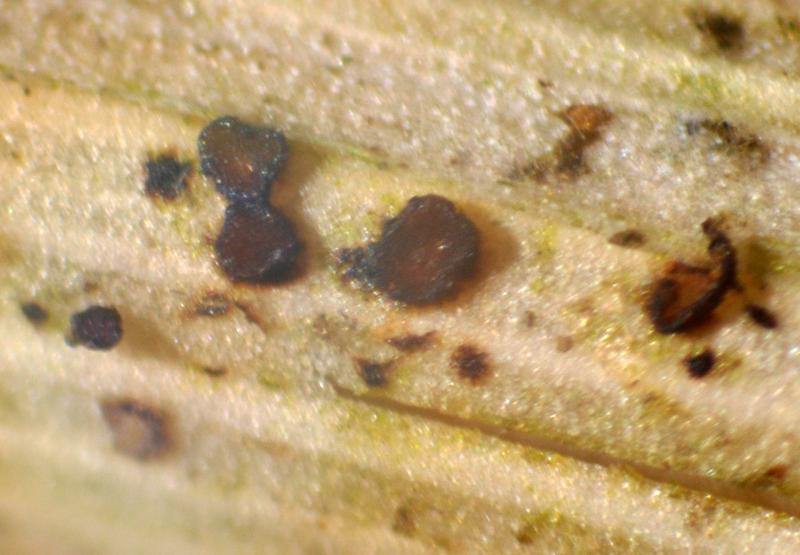
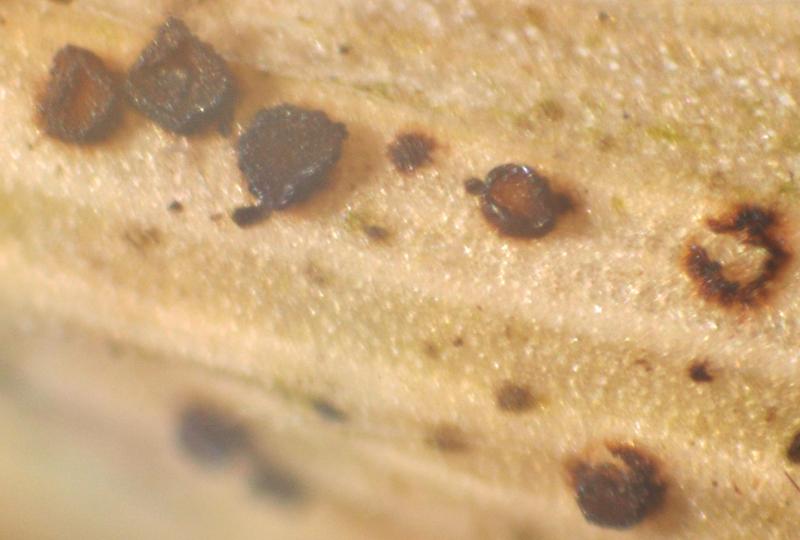
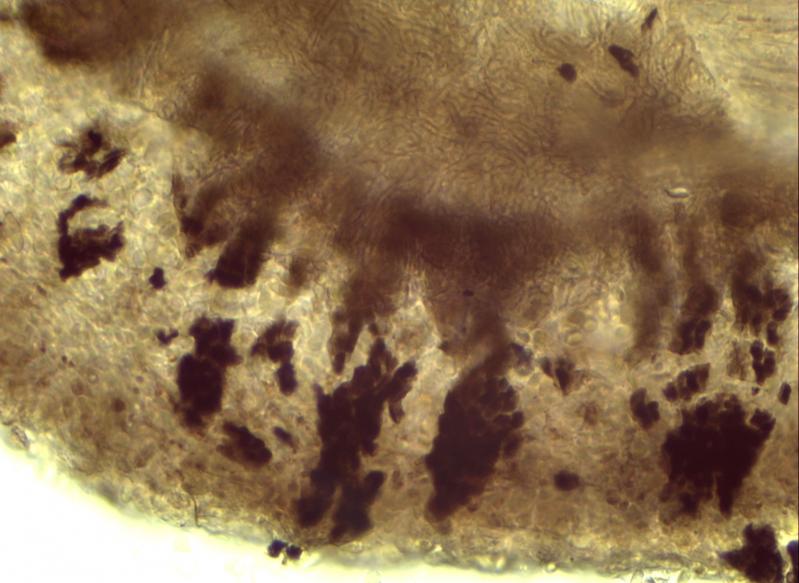
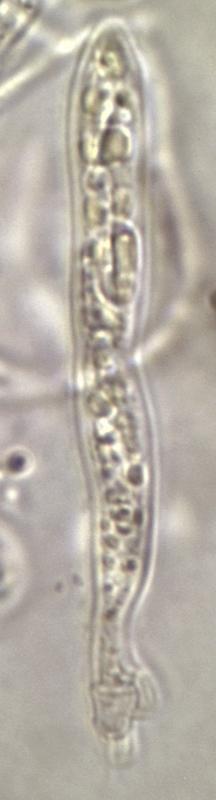
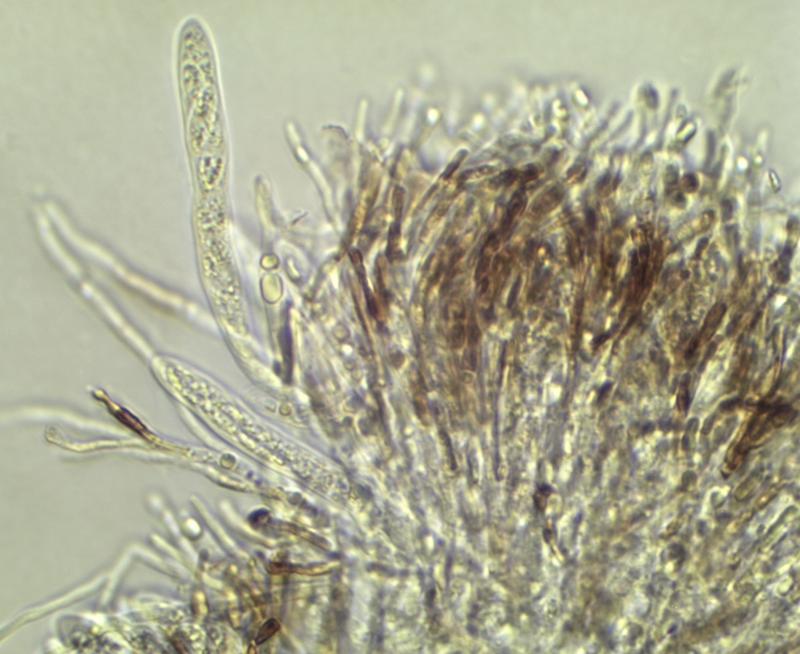
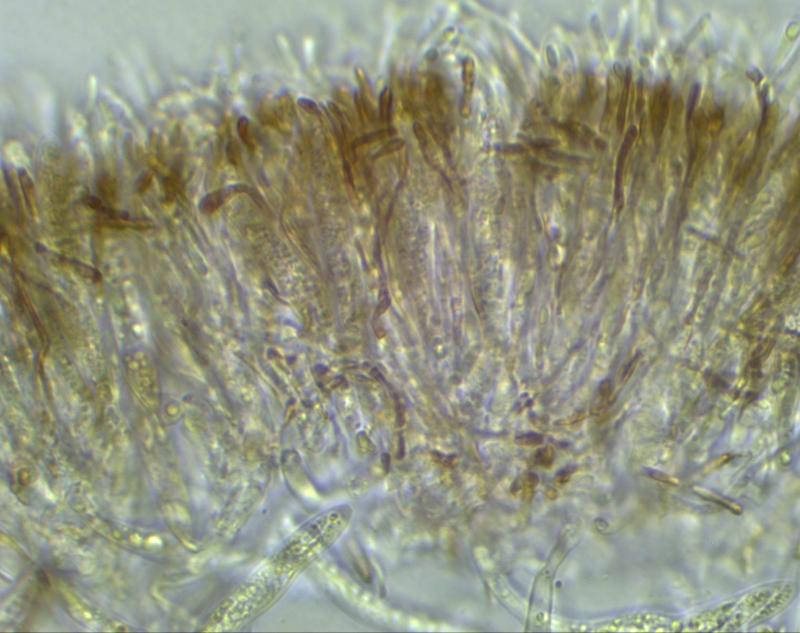
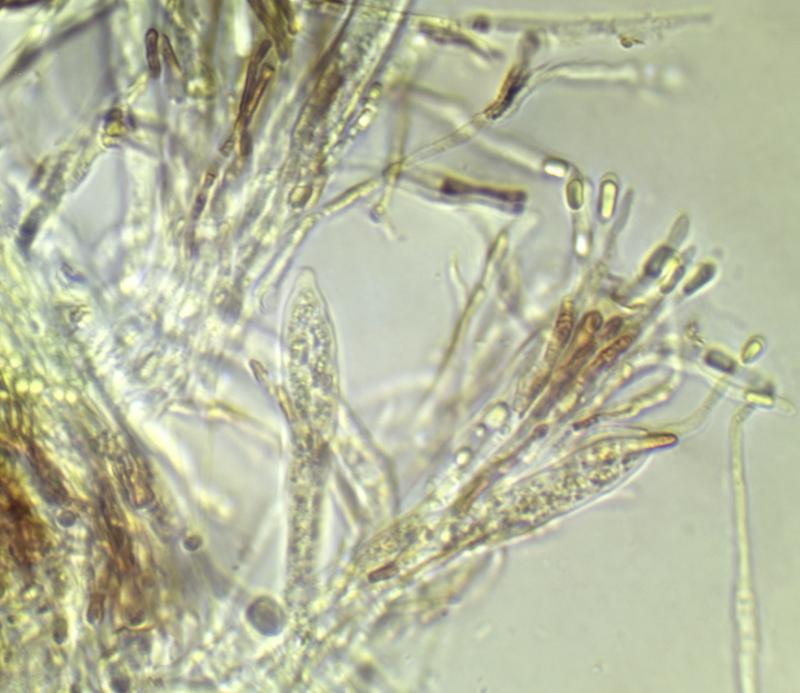
collected recently on Phalaris lying in a wet place with Polytrichum moss nearby. This is surely a Micropeziza; looking at Zotto's images I am uncertain of which Micropeziza it can be assigned to: M. karstenii or cornea - I suspect some confusion over types? but I may well be wrong. Asci were IKI BB, and croziers were present. The paraphyses varied from ones with greenish yellow apical contents - like those in HB5565 (see the last attached image here, right side), to ones in which a much longer apical portion (almost half) contained a rich amber pigment (see the sixth image).
I am keeping the material damp as, annoyingly, I am having difficulties finding ripe spores, although the material is abundant. NB All the images are of living material mounted in water.
Cordialement
Chris
Hans-Otto Baral,
30-06-2013 16:04

Re : Micropeziza sp. on Phalaris arundinacea
Hi Chris
wonderful that you find this species as we are just dealing with this genus. The exudate on the exterior is abundant as in Crustomollisia. I do not find a difference between M. cornea (on sedges) and karstenii (on Poaceae) and even M. poae.
A correction: Tose paraphyses with rich amber pigment are dead ones. Also the ascus and the spores within are dead, regrettably.
Zotto
wonderful that you find this species as we are just dealing with this genus. The exudate on the exterior is abundant as in Crustomollisia. I do not find a difference between M. cornea (on sedges) and karstenii (on Poaceae) and even M. poae.
A correction: Tose paraphyses with rich amber pigment are dead ones. Also the ascus and the spores within are dead, regrettably.
Zotto
Chris Yeates,
30-06-2013 17:01
Re : Micropeziza sp. on Phalaris arundinacea
Many thanks for the fast response Zotto; yes I was amused when I looked at this "Crustomollisia-like" discomycete under the microscope;-)!
We had several dry weeks here and then a period of heavy rain, so these appeared quite fresh, but were clearly not. I visit the site regularly so I should be able to get fresher apothecia.
nochmals vielen Dank
Chris
We had several dry weeks here and then a period of heavy rain, so these appeared quite fresh, but were clearly not. I visit the site regularly so I should be able to get fresher apothecia.
nochmals vielen Dank
Chris