
12-06-2026 14:50
 François Freléchoux
Bonjour, Voici la brève description d'une Mollis
10-06-2026 21:16
François Freléchoux
Bonsoir,Le dernier du jour, en attendant votre avi
11-06-2026 19:01
 William Slosse
Hello all,In an attempt to make a culture of a sus
11-06-2026 19:03
 Nicolas VAN VOOREN
Chers membres d'Ascofrance,Le site sera placé en

09-06-2026 18:32
Camille MertensSur morceau de roseau immergé 0,5 - 0,7 mm de dia
10-06-2026 12:54
Steve ClementsBonjour encore, Pouvez-vous m'aider, s'il vous pl
10-06-2026 21:07
François Freléchoux
Toutes les tiges de gentianes jaunes de l'an passÃ
10-06-2026 13:41
François Freléchoux
Bonjour à nouveau, Voici une trouvaille d'hier.
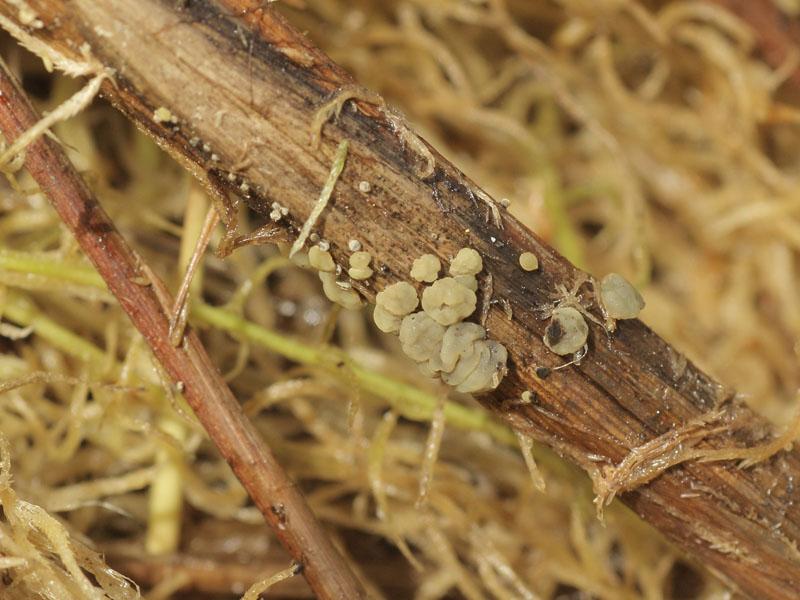
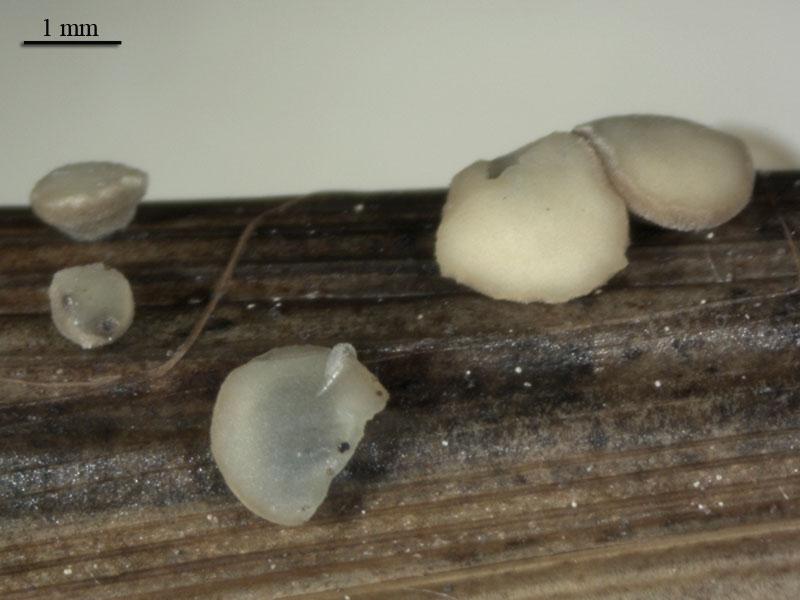
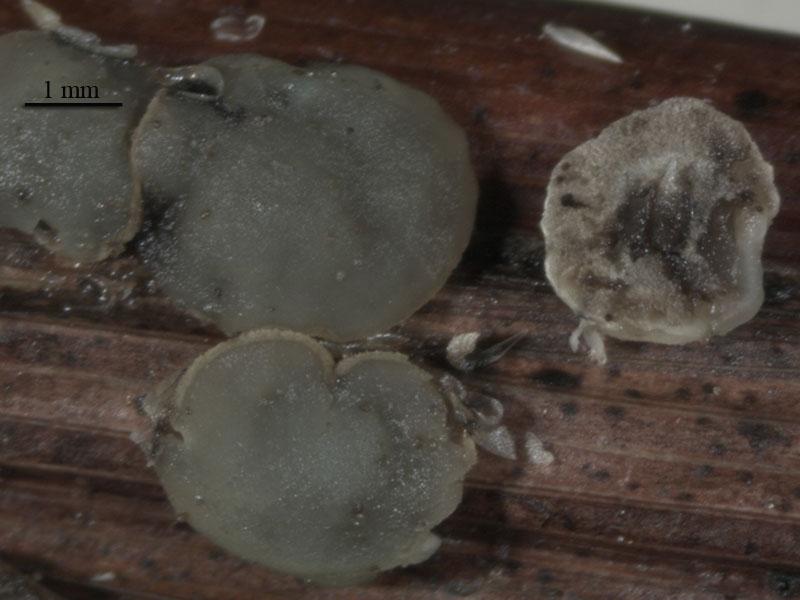
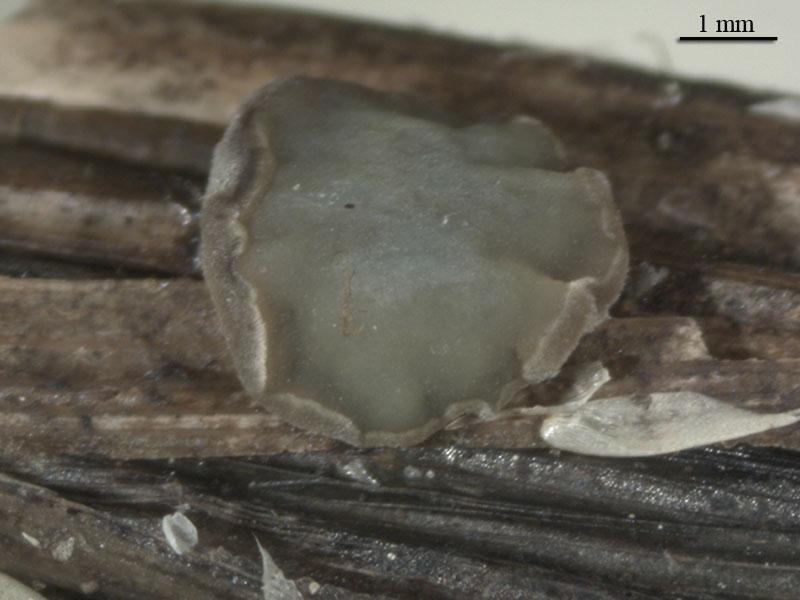
Apothecia first pustulate, then expanding to cupulate, disc-shaped with wavy margins, thick, up to 4 mm in diam, single or in clusters, emerged through the epidermis; outer surface velvety, brown, in young edge comes to disc surface, in older vanishes under concave hymenium surface, disc surface from greenish, olive, to light brown and yellowish gray.
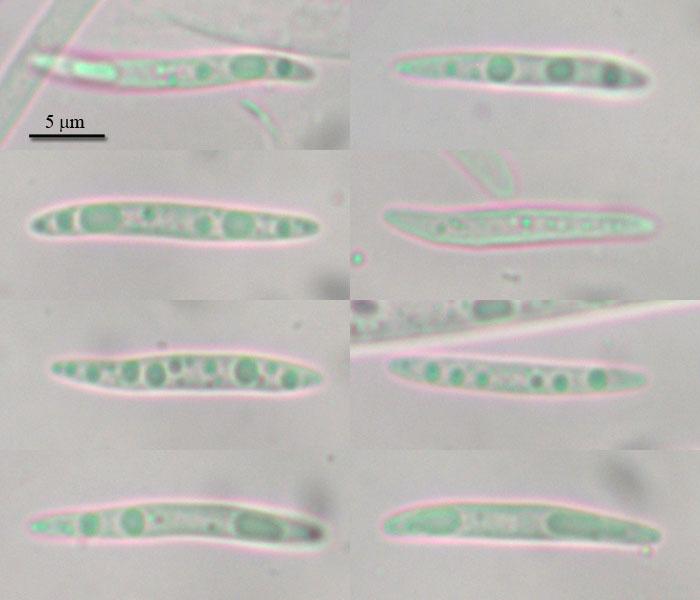
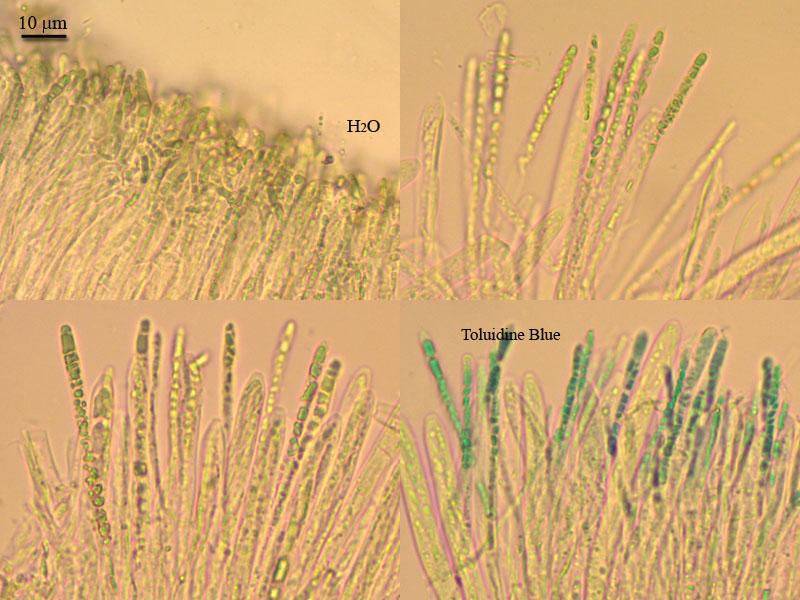
Excipulum from several layers, medullary from textura prismatica-intricata, hyphae about 4 mk broad, walls thickened, not gelatinose, in receptacle with brown exudates; hyphae from medullary layer radially arranged and form dense layer at outer surface; e.g. cells enlarged, globose, brown, (7-10 mk); hairs (to 40 mk long) cover all outer surface, from 3-5 globose cells at base and elongated end cell, clavate or cylindrical (25 x 5-8 mk), wider at flanks and narrower at margin, with oil content, which colored blue in TB; asci cylindrical, without clamp, pore euamyloid, 99-112 x 6-7,5; paraphyses cylidrical, segmented, branched, largest exceeding the asci, with oil content which colored blue in TB; spores narrow-fusoid or subfusoid, 18 (16-19) x 2,2 (2-2,4) (Q=8,23; N=15).
Growing on bases of stems of Carex rostrata (wet, decaying leaves) in bog.
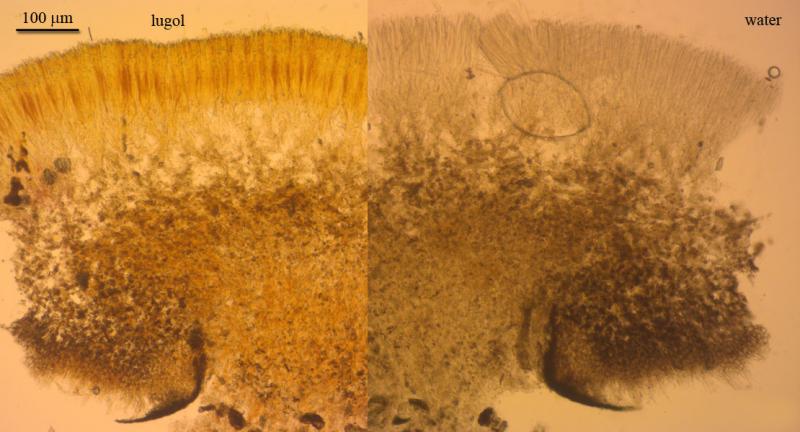
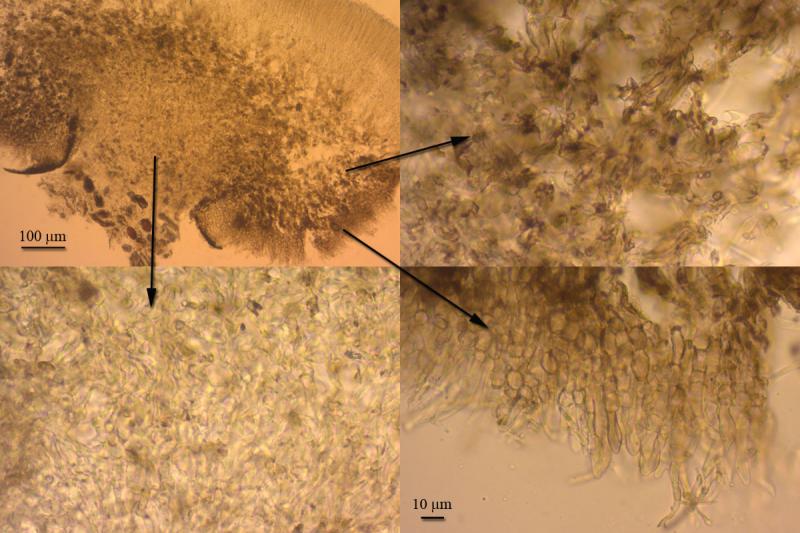
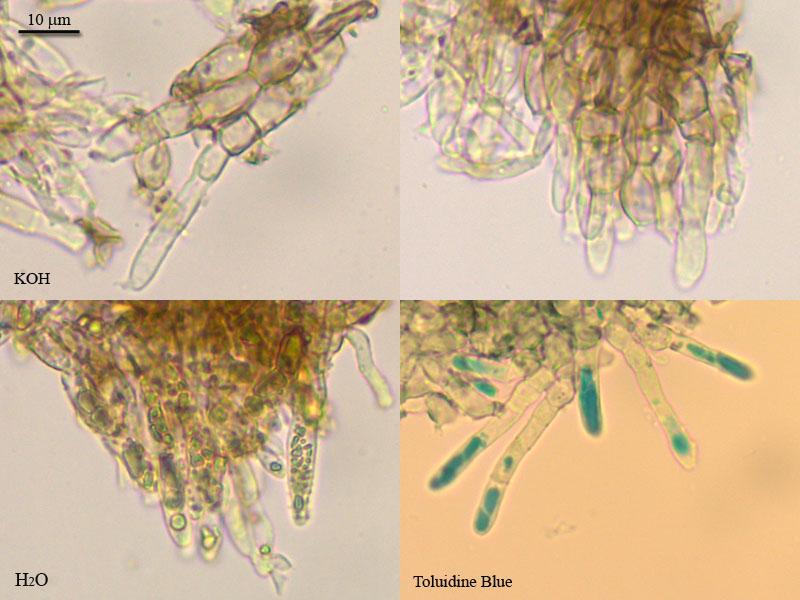
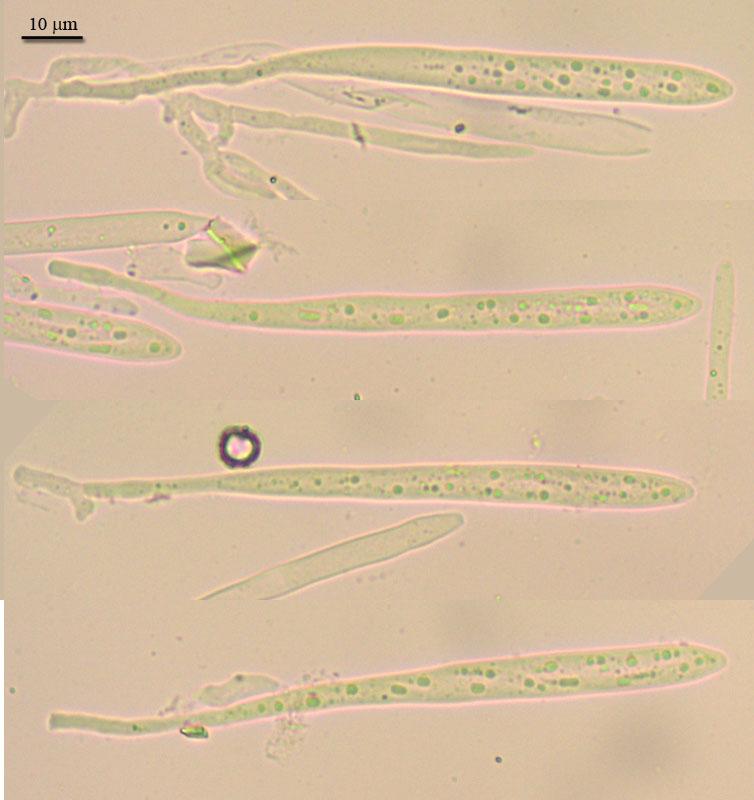
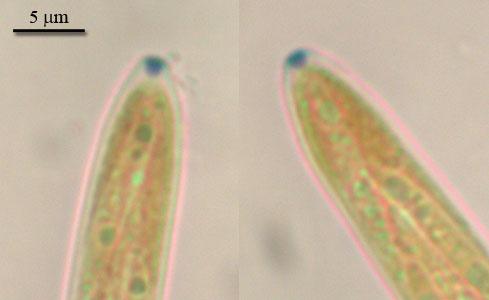
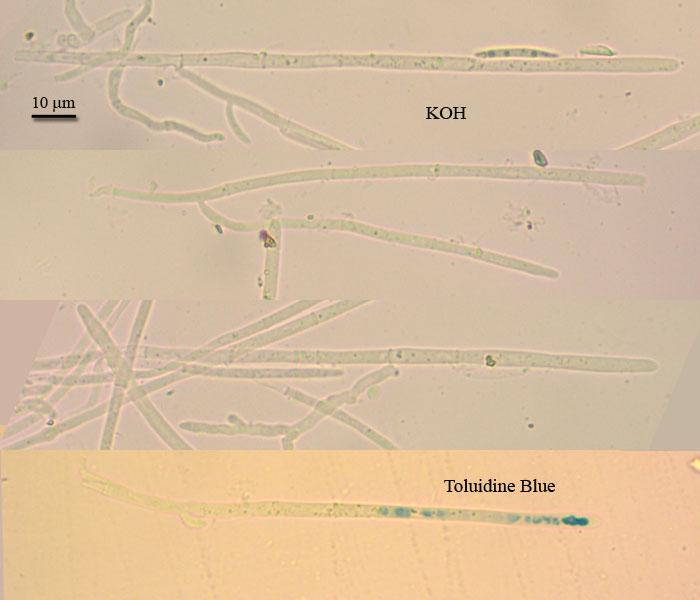

the presense of VBs in paraphyses/hairs excludes a Dennisiodiscus. lacking croziers and such spores remind me of Mollisia retincola, a species with a distinct yellow KOH-reaction adn particularly with abundant crystals in the medulla. I am not sure if you have any crystals there?
But the apos are extraordinarily large!
Zotto
The crystals present, they are in clusters and when the mount tapped they appear in abundance. I looked at your specimens of M. retincola. The habitat looks the same. But Mollisia is superficial and sited at subiculum. This specimen emergent, e.g. there is clear hole in the epidermis when the frb scraped from it. It is seen at picture of section (dark patch of leaf epidermis at base, and central part of frb going into the leaf).
I also had not described green content (oil) of paraphyses, this may be important. It is clear seen only in apos with green hymenium. Oil is colored blue in TB. And KOH dissolves all oil content (have not seen change to yellow, but it is dead stuff).
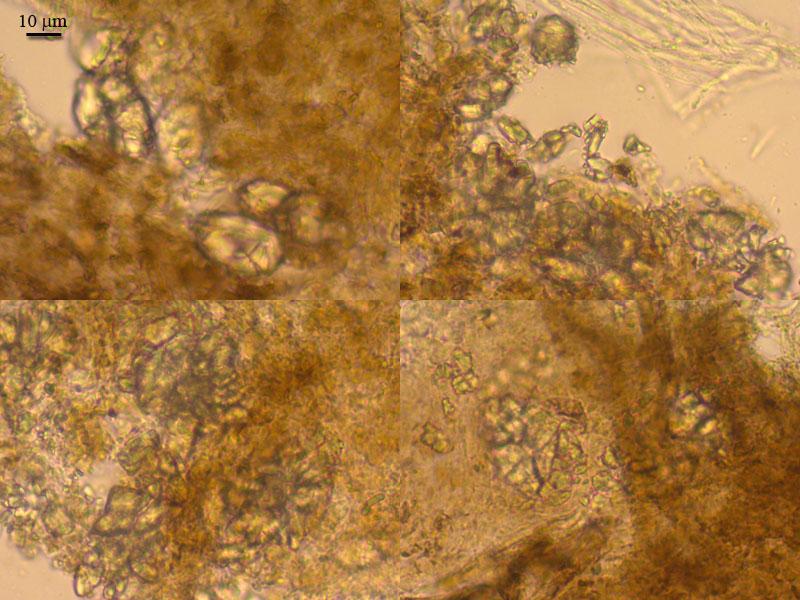
I have a folder "subretincola KOH-" which means that this is a species complex. Typical M. retincola I only know from Phragmites, whereas this one with KOH- is on Cyperaceae, so probably a different species with a deviating ecology.
VBs are recognized by their turquoise stain in CRB, oil drops do not stain. So I think your spore photo shows no clear blue of the drops, more a general colour effect.
I was following the dissolving of VBs in paraphyses now to be sure there is no change in color; and no, it has not showed up.
Oil in spores, of course, not blueing - now i hope i have learned this. Thanks for your instructions!