
06-05-2026 11:25
 Castillo Joseba
Me mandan el material seco de Galicia (España) re
28-04-2026 20:07
 Lothar Krieglsteiner
... on twig in the air at standing Ceratonia siliq
05-05-2026 22:40
Gernot FriebesHi,I believe this is a Plagiostoma growing on a Sa
04-05-2026 18:13
 Stephen Martin Mifsud
ID request for what seems to be a true aquatic fun
04-05-2026 16:39
Stephen Martin Mifsud
ID request: This specimen was collected in Malta o
28-07-2011 18:31
 Alex Akulov
Dear FriendsToday I made the pdf file of Velenovsk
04-05-2026 09:50
Castillo Joseba
Me mandan el material seco de Galicia,(España) re
02-05-2026 12:42
Alain BRISSARDBonjour à tousJeuidi 30 avril dernier on m'a remi
02-05-2026 13:06
Pauline. PennaBonjour Please can someone help me with this id
It has similar to H. diminuens spores, but shorter, asci there actually inamyloid, and paraphyses shape and incrustation very different.
At Carex rostrata, C. limosa leaves.
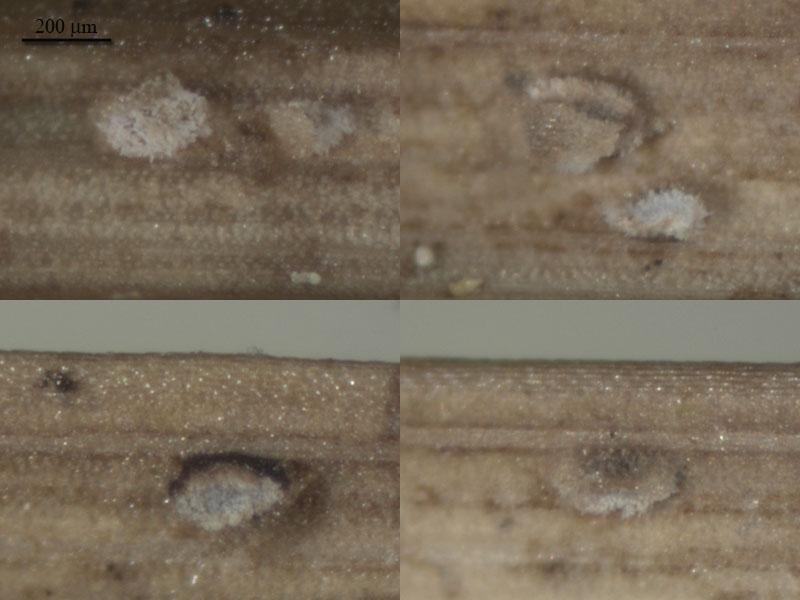
Apothecia submerged in leaf tissue, opening by ellipsoid lid, disc convex, white from reachly incrusted paraphyses.
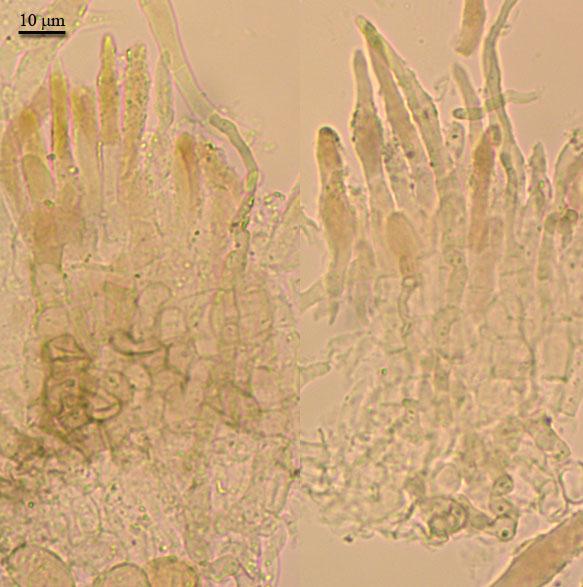
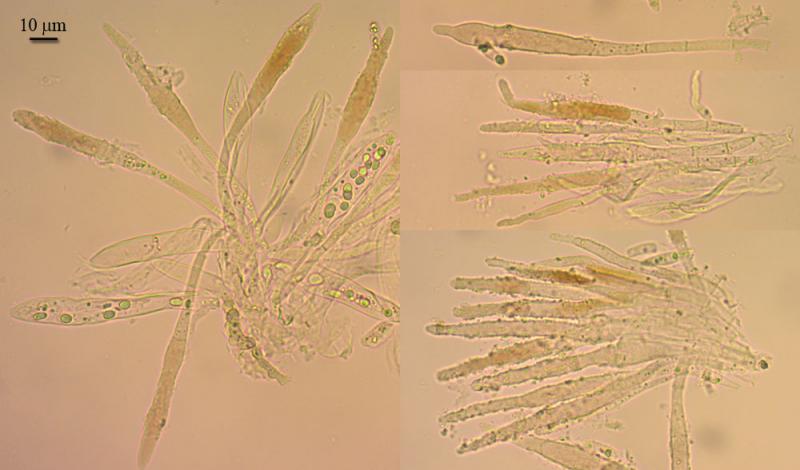
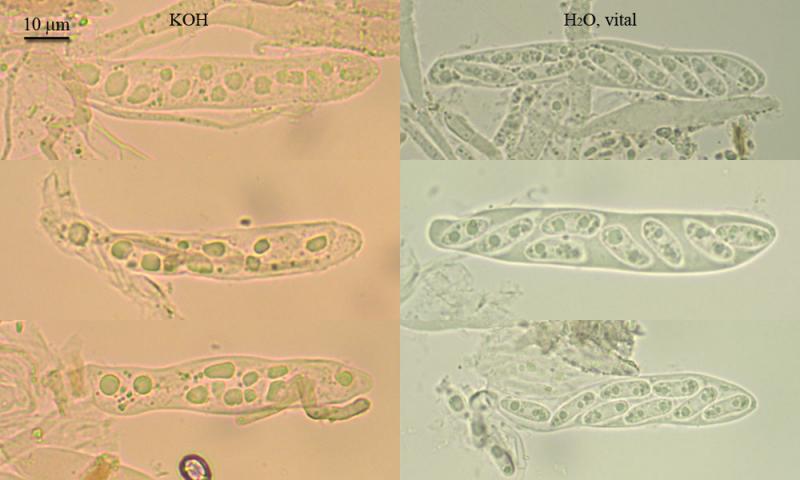
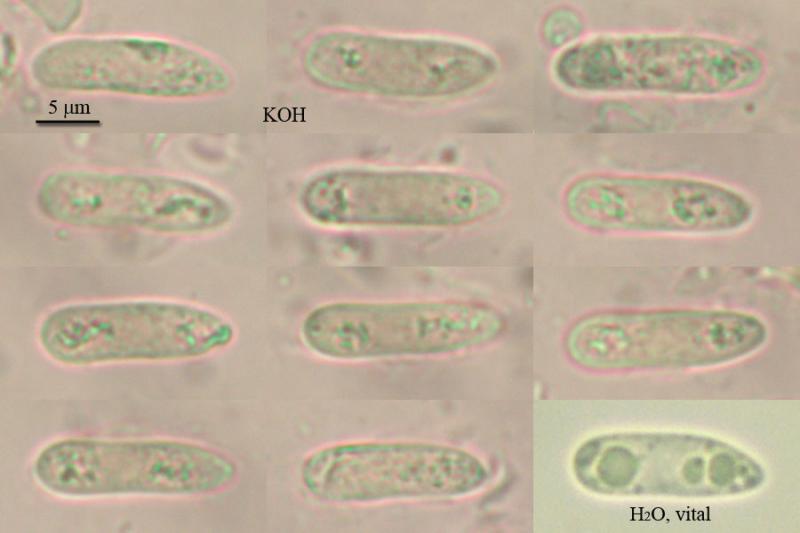
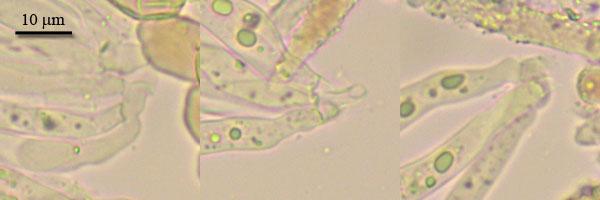
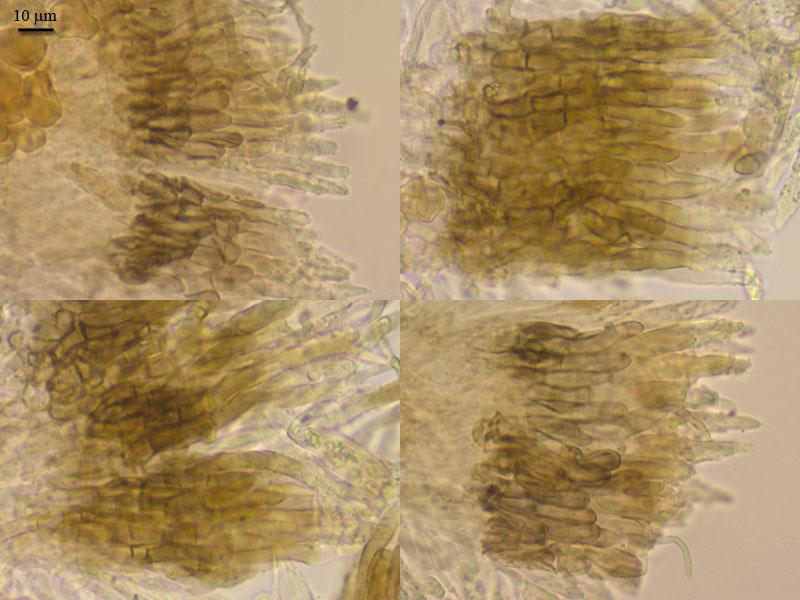
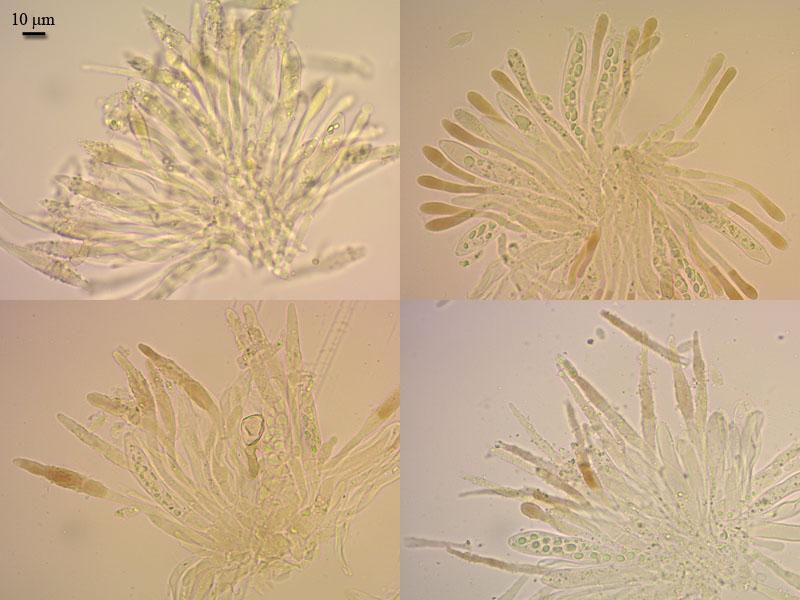
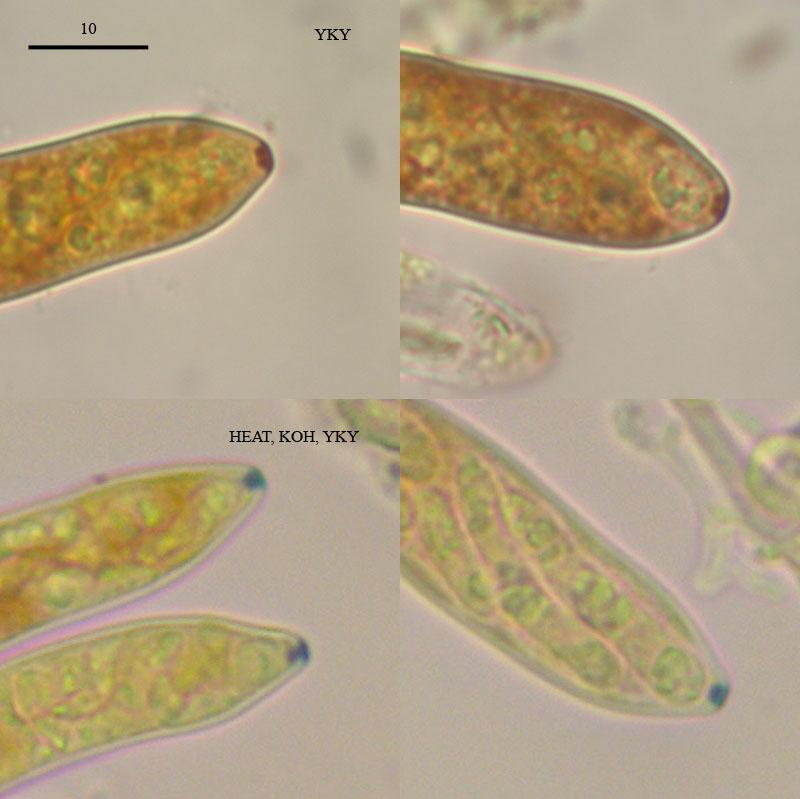
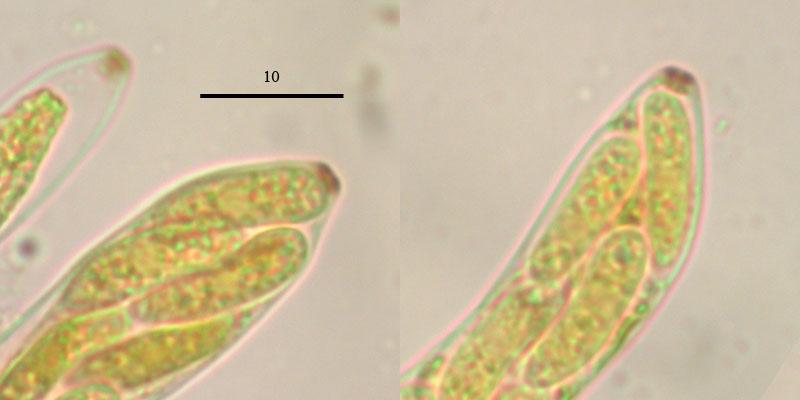
Excipulum from textura globosa-angularis at base and flanks, end cells fusoid, to 50 mk long, with brown content, encrusted; asci with inamyloid pore (after KOH, heat, MLZ), 70-82 x 10,3-13,4; paraphyses strongly encrusted, exeeding the asci up to 50 mk, with cylindrical lower half and fusoid upper, upper segment with yellowish-brown content, 3,3 mk at base, 8,6 in largest part; spores subfusoid, two-guttulate, 15,3 (14,4-16,2) x 4,4 (4,2-4,6) (Q=3,5; N=14).

Zotto
i was studying you paper about Coronellaria spec. (2008) and corrected observations of my specimens.
There was mistake in the description, actually ascus pore is RR in lugol, and becoming blue after koh pretreatment. I studied several apothecia to be sure that there is no mix of species, and i think there was only one. Asci without croziers. The excipulum brown (though sometimes, i suppose in underdeveloped frbs, hyaline).
Probably C. caricinella?
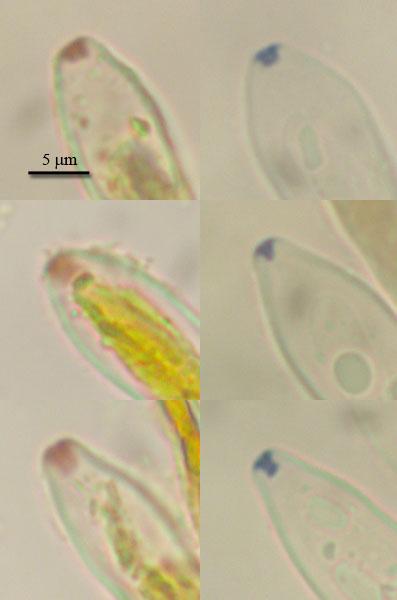
Zotto
Tnank you.
By the way, what I want to see in fresh state since decades is Crocicreas gramineum. I suspect it is also boreal - subalpine. On various monocots. Did you even encounter it?
Zotto
There are three collections prior marked as "Crocicreas", but not identified them yet. I looked at your drawings of C. gramineum, and one of them may be similar. It is from Milium effusum dead leaves. I will microscopy them soon.
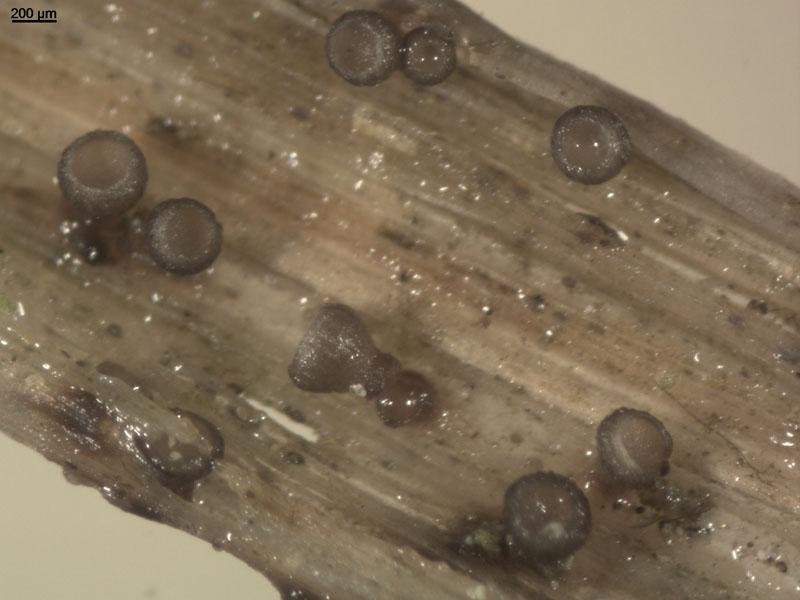
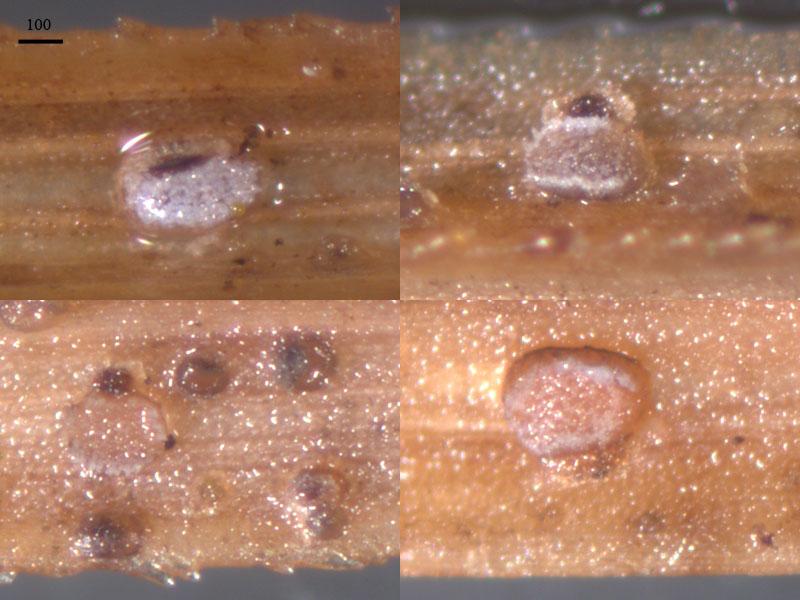
Apothecia circular to ellipsoid, submerged in tissue, with more or less pronounced dark edge, opening by a circular lid or sometimes irregularly, hymenium surface white powdery when dry, flat to convex, 200–330 mk by long axis, 120–220 mk broad.
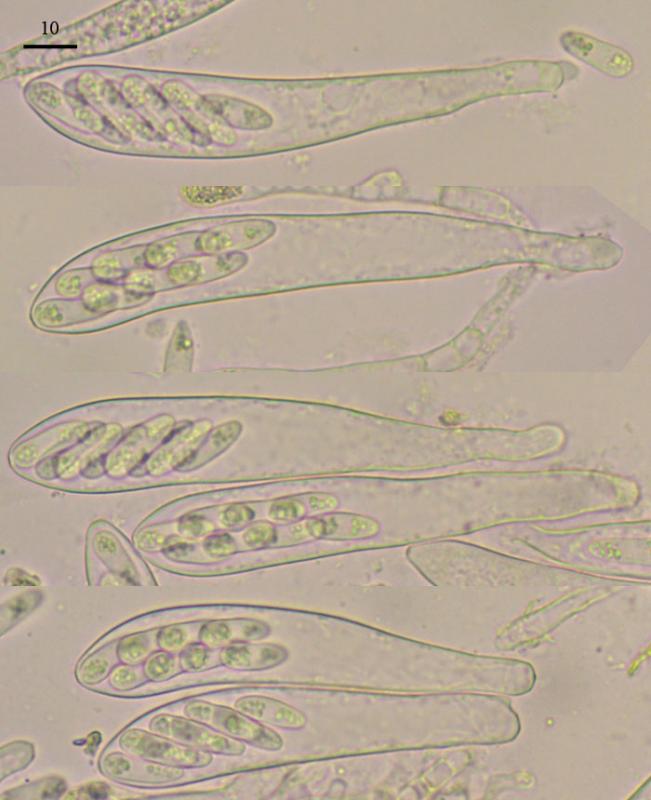
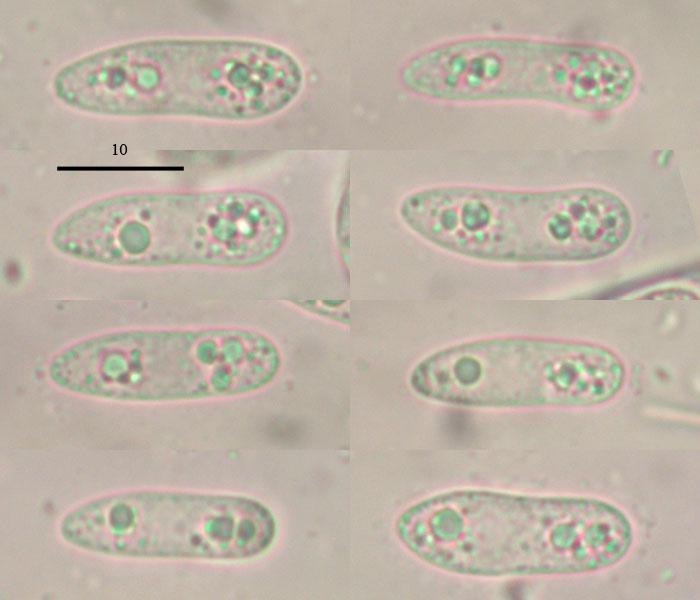
Asci clavate, without crozier, mean size in mature specimens 76–114 x 15–17.5 (much shorter when young), with hemiamyloid pore (water - lugol), amyloid reaction appears after KOH pretreatment with heat; paraphyses lanceolate, enlarged in upper part, with acute tip, 5-6 segmented, lower part filled with pale roound VBs, and other kind of tiny vacuoles (oils?) collected in the tip, upper part well incrusted, medium size 113 x 7; spores foot-shaped, with several medium and many small oils at each end, 18.4 (17–19.8) x 5.7 (5–6.8) (n=15).?
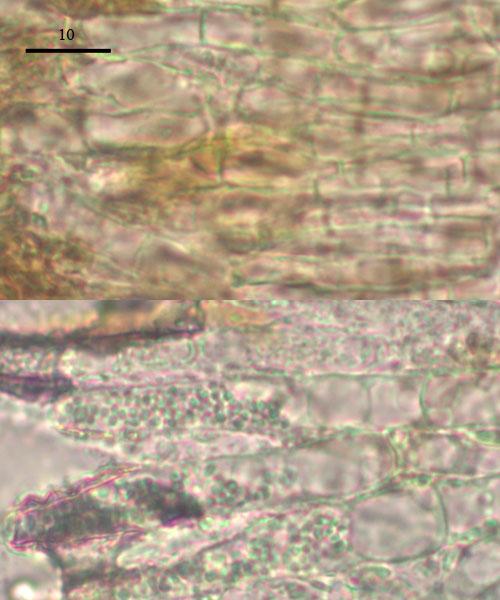
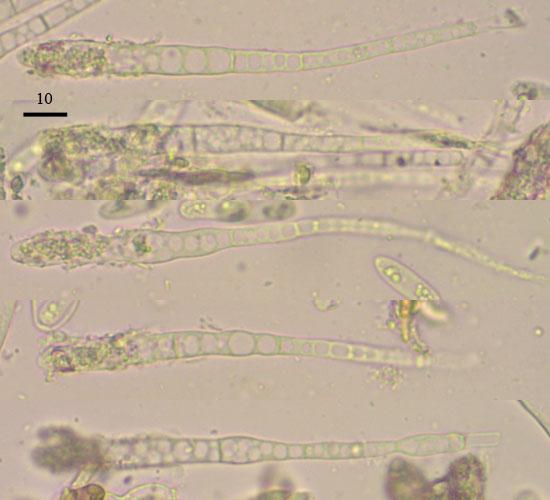
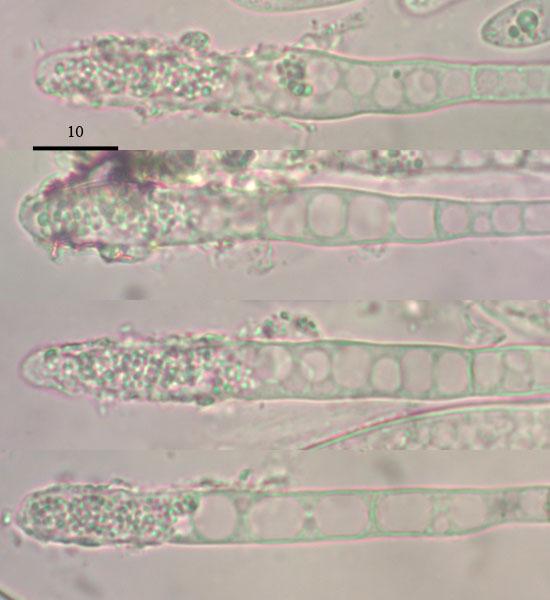
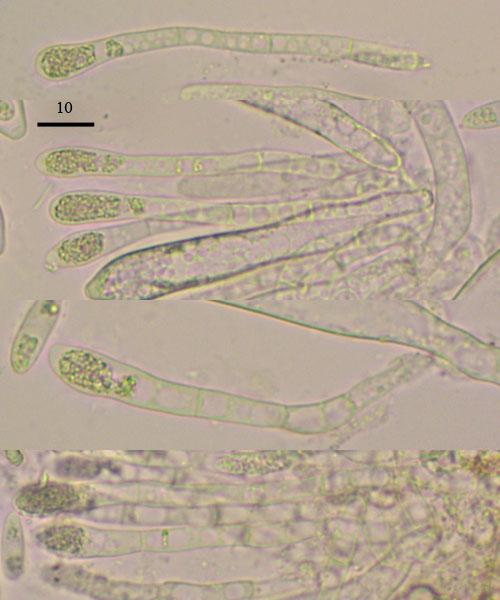
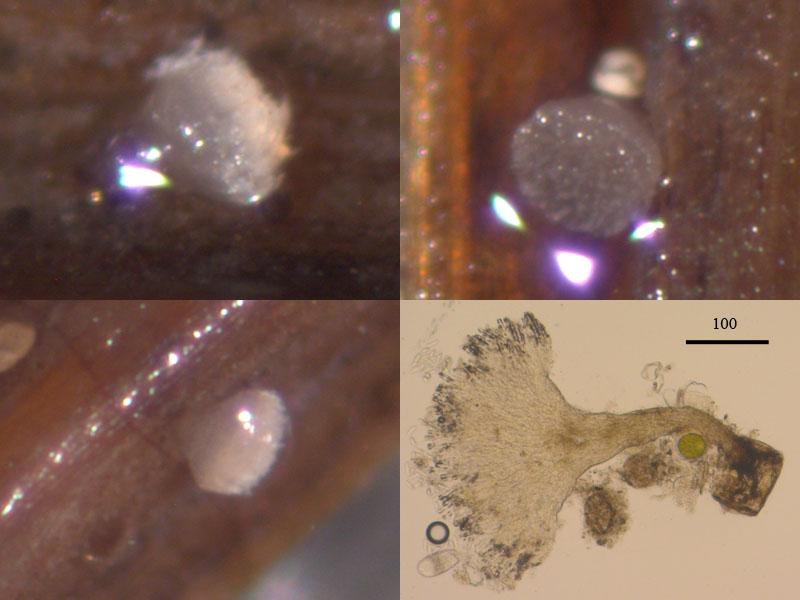
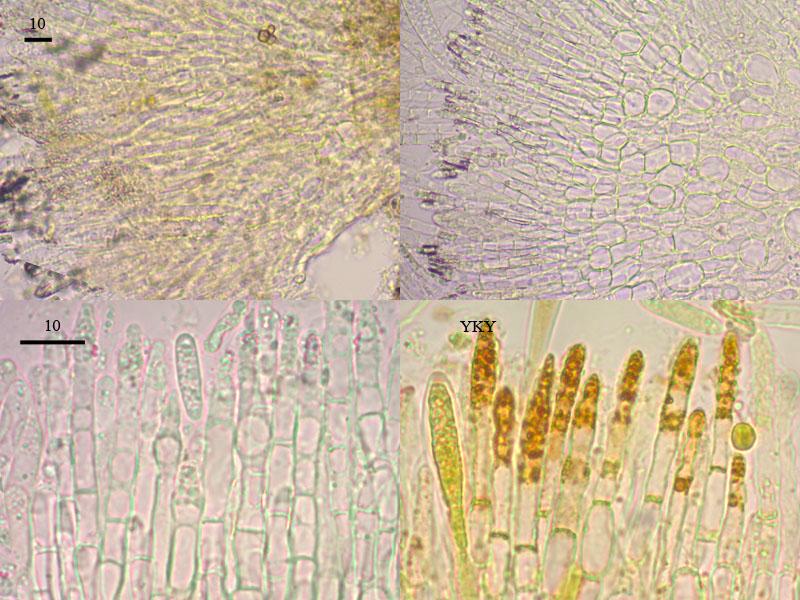
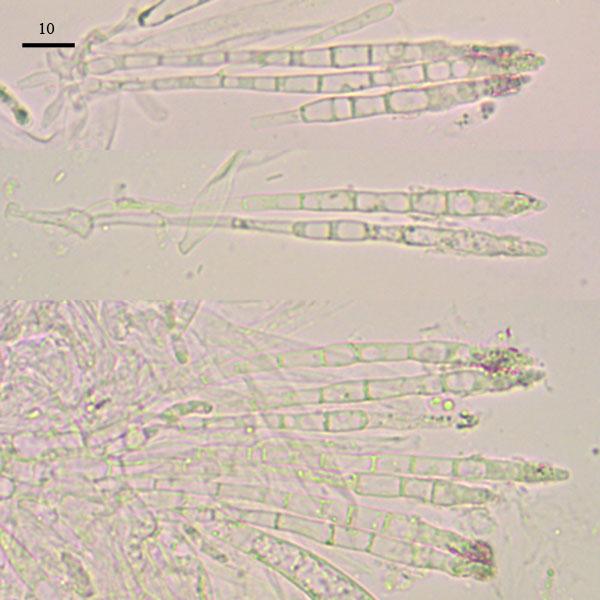
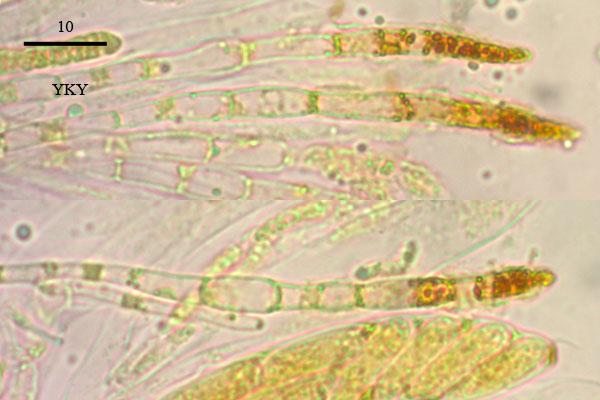
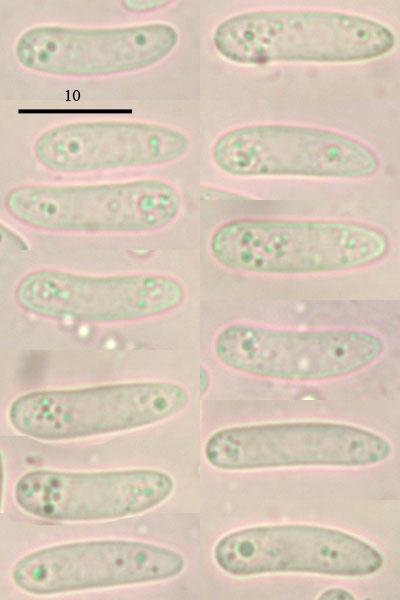
Apothecia cupulate, superficial, sessile to short-stipitate, white, hymenium powdery, 130–260 mk in diameter, 150–260 high.
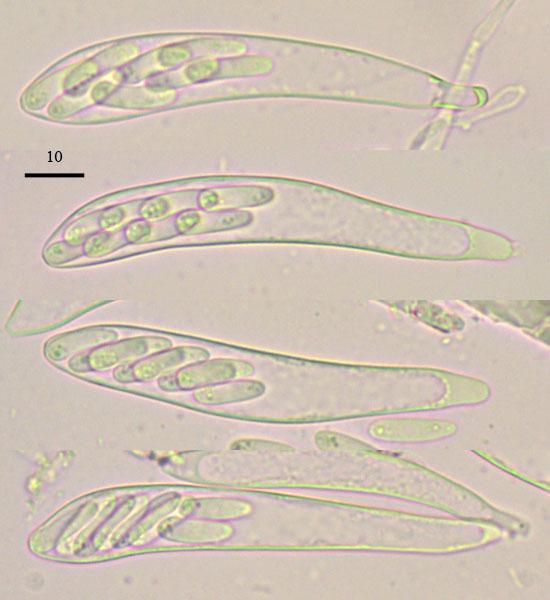
Excipulum from hyaline cells (brownish in stem), prismatica, edge from similar to paraphyses lanceolate incrusted structures; asci clavate, without crozier, with hemiamyloid pore, medium size 80 x 12.3; paraphyses cylindrical, with lanceolate not broad upper part, many segmented, VBs of the size of segments, tip incrusted (incrustation turn bright rusty in YKY), medium size 85 x 4.4; spores foot-shaped, with several small oils at the ends, 14.8 (13.3–16.2) x 4 (3.8–4.4) (n=14).?
Zotto