
22-04-2026 01:06
 Richard VALERI
Bonjour à tous.Je vous présente cette Nectria s.
21-04-2026 22:14
Margot en Geert VullingsThis cup fungus was found on April 10, 2026, on lo
21-04-2026 13:36
Gernot FriebesHi,I am out of ideas for this one. I collected Sal
21-04-2026 13:19
Gernot FriebesHi,this Lophodermium on Typha has ascospores measu
21-04-2026 13:05
Gernot FriebesHi,this hyphomycete feels familiar but I was not a
20-04-2026 22:00
 Malcolm Greaves
These pale yellow, hairy ascos were growing on cul
19-04-2026 21:23
Steve ClementsBonjour, I found this anamorphic fungus on old pl
19-04-2026 20:46
Steve Clements1 mm diameter approx spherical conidiophores on pl
12-04-2026 17:56
 Hardware Tony
Found on dead stems in February earlier this year
 Hello everybody,
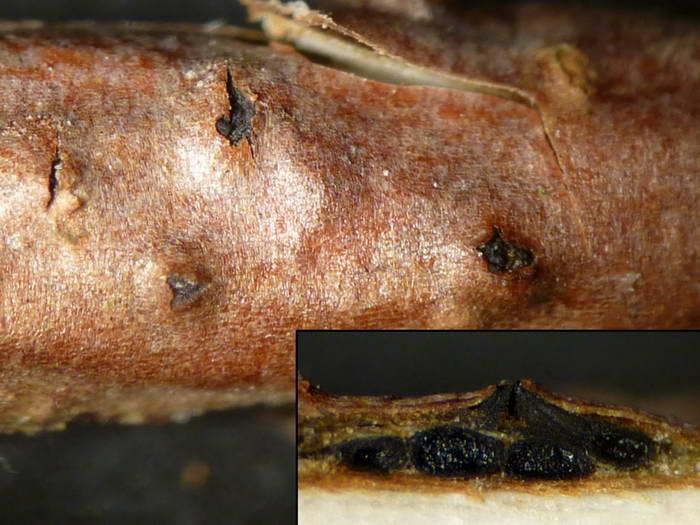
unfortunately I have another strange pyrenomycete growing on dead attached Ulmus twigs, of which I do not know what it can be. I have seen similarities to Anisogramma, Mamiania and Apioporthe, but there is no species which fits with this one here:
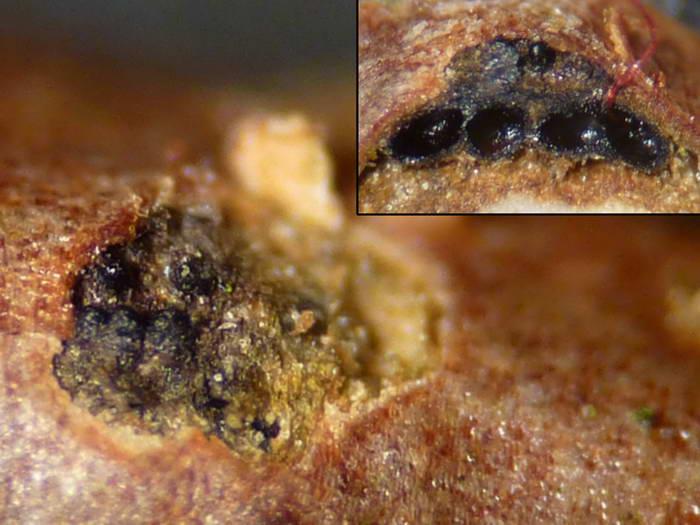
The fruitbodies grow between the surface of the wood and the bark, they consist of a stroma with hairy surface which is somewhat flattened, and several perithecia inside. Macroscopically it reminds me on some Splanchnonema or even Pseudomassaria.
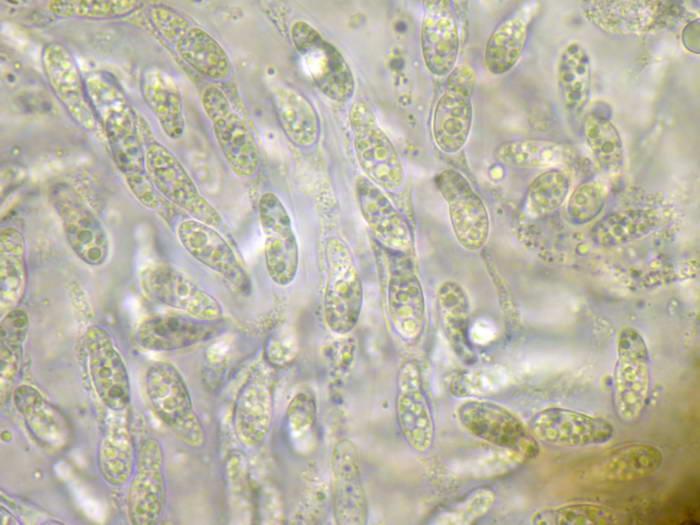
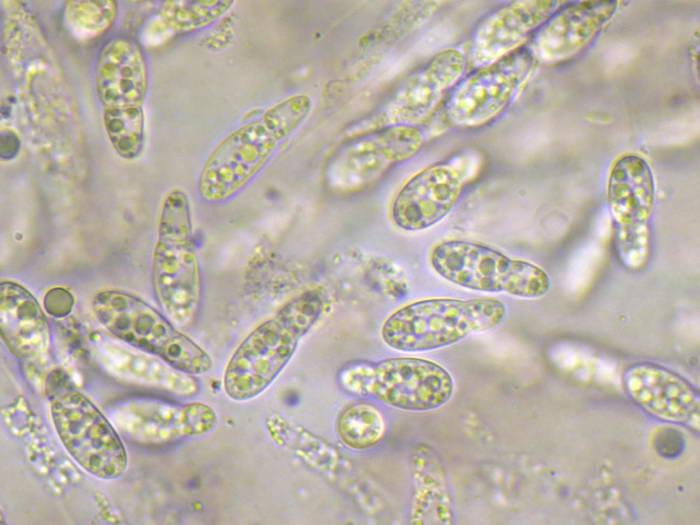
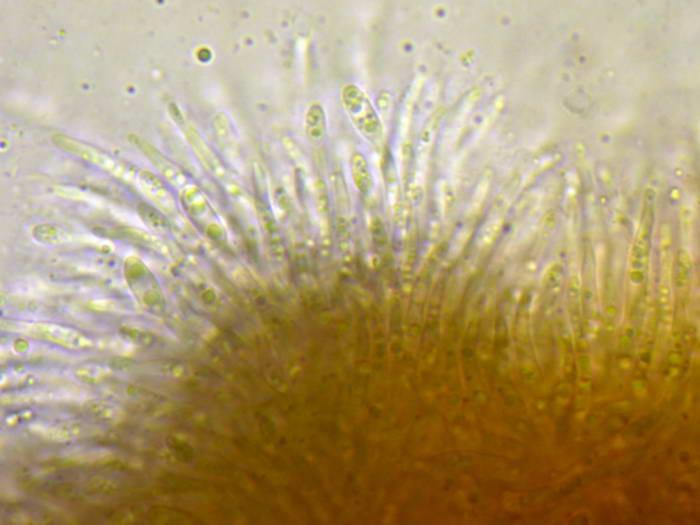
Sp 14-17x5-7µm, clearly apiosporous, hyalin, smooth, I have seen a rest of a hyaline sheath surrounding the spores. Asci with distinct apical apparatus (Congo), IKI-; Sp mostly uniseriate, sometimes partly biseriate.
Any idea?
regards,
björn
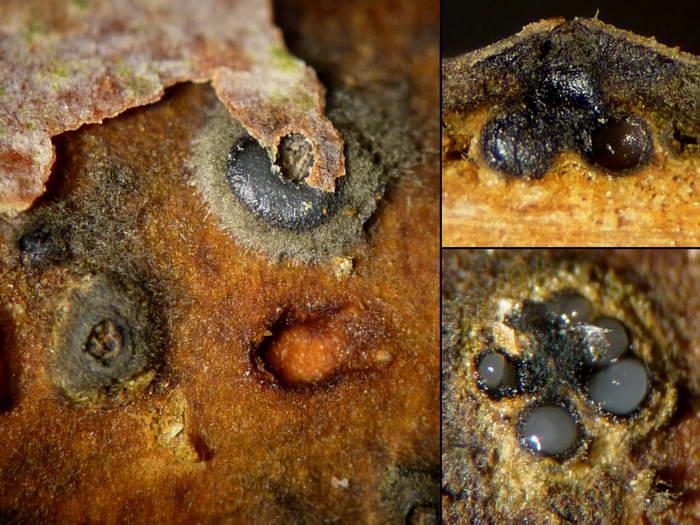
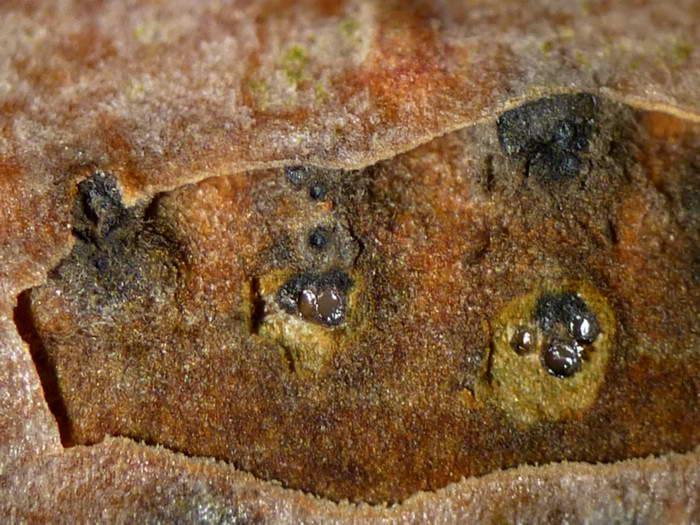
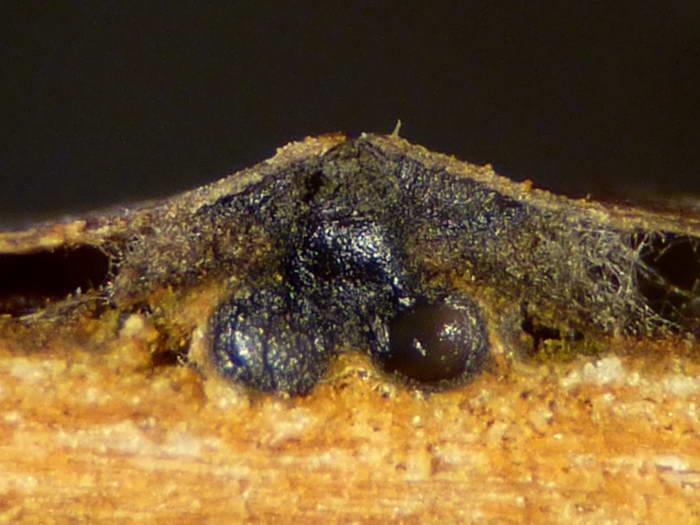
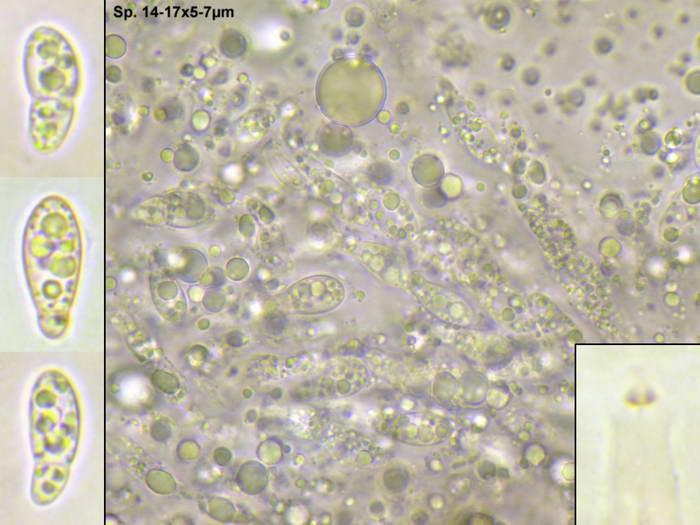

This reminds me of a species of Melanconis. Melanoconis chrysostroma has similar ascospores but grows on Carpinus spp. Does it produce conidia?
Dave
I haven't seen any conidia, and I do not believe that it is a Melanconis. I have compared the finding with several species of Melanconis, but it has very different features.
regards,
björn
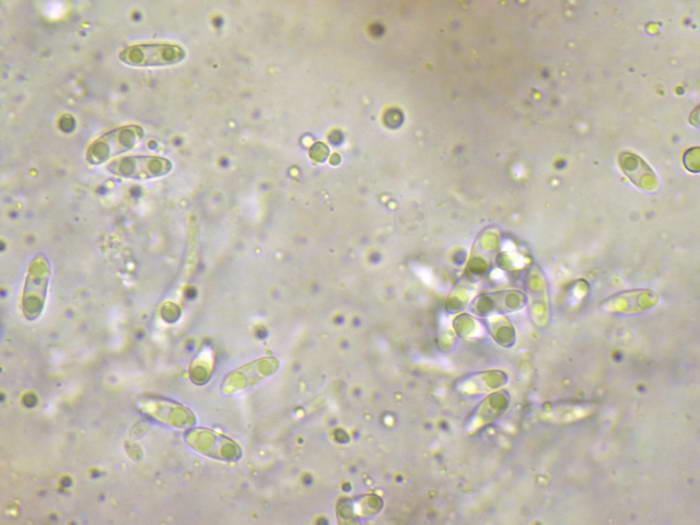
Conidia are 8-9x2,4-3,2µm, aseptated, hyaline.
I have also attached a new cross section of a fb.
Hi Björn,
Seems to me too that Anisogramma may be reasonable, but no idea for a species... Nice finding

I think that your species is very closed to Apiospora apiospora. But...
It's an american species growing on Ulmus and Wehmeyer gave : 11-14 x 2.5-5.5 µm, and Ellis & Everhart gave for the basionym Diaporthe apiospora : 11-15 x 6-10 µm.
Perhaps is it an european Apioporthe apiospora ?
Alain
I think Apioporthe apiospora comes closest. The description giving by Wehmeyer has similarities with my finding, except the spore size. But I think it is A. apiospora.
Perhaps there is another idea. I recently find another species on these Ulmus twigs: Eutypella stellulata.
Many thanks to all who have written here until now :)
regards,
björn
I agree with you. In Ellis & Ev. the width is like your one. But as I said, perhaps we can find some little differences between the two continents. Molecular study or culture perhaps would bring the answer to the question.
Eutypella stellulata is a common species in the Old Continent, ouf ! (ouf != ah ! = Ach !)
Alain
but E. stellulata is a new species for me, even if it seems to be common :P ouf ^^
Who is willing to have the Apioporthe for molecular studies?

if you want you can send your specimen to me, I will try to obtain molecular data
Christian
I have to thank Walter Jaklitsch, he has the idea of Melanconiella, which has aberrated spores due to the cold weather.
I am now also sure the substrate is not Ulmus, I have compared the twigs and there had been several from Carpinus, which we had collected per random. At least this was not a professional work, but we have gained a new very interesting species :)
regards,
björn