
28-04-2026 20:07
 Lothar Krieglsteiner
... on twig in the air at standing Ceratonia siliq
04-05-2026 18:13
 Stephen Martin Mifsud
ID request for what seems to be a true aquatic fun
04-05-2026 16:39
Stephen Martin Mifsud
ID request: This specimen was collected in Malta o
04-05-2026 09:50
 Castillo Joseba
Me mandan el material seco de Galicia,(España) re
02-05-2026 12:42
Alain BRISSARDBonjour à tousJeuidi 30 avril dernier on m'a remi
02-05-2026 13:06
Pauline. PennaBonjour Please can someone help me with this id
01-05-2026 22:45
 Thierry Blondelle
Bonjour à tous, Une récolte sur bouse séchée d
14-04-2026 05:32
Ethan CrensonHi all, A few weeks back a friend pointed out som
28-04-2026 20:33
Vitus SchäfftleinHello, I found Trochila ilicina on Ilex aquifoliu
Hymenoscyphus (?) on Quercus wood
Enrique Rubio,
27-11-2012 19:35
 Hi to all:
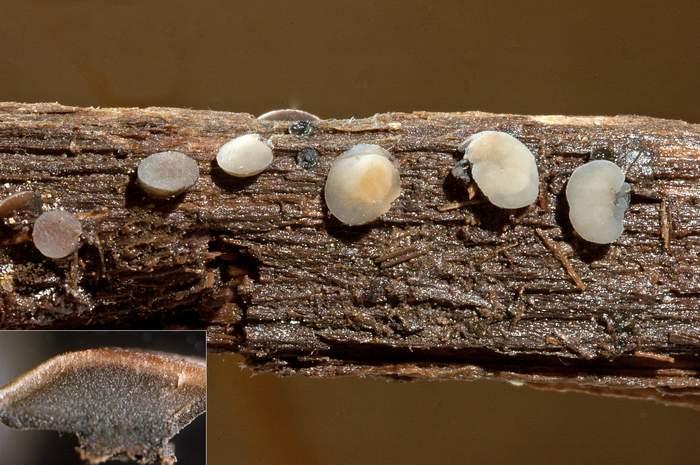
My friend F.J. Balda have sent to me from Navarra (NE of Spain) this rare fungus that grows on semirotten wood of Quercus.
The ascomata are shortly stipitate by a short and stout pseudostipe and they are up to 2 mm in diam.
The hymenium seems to be reddening with the age.
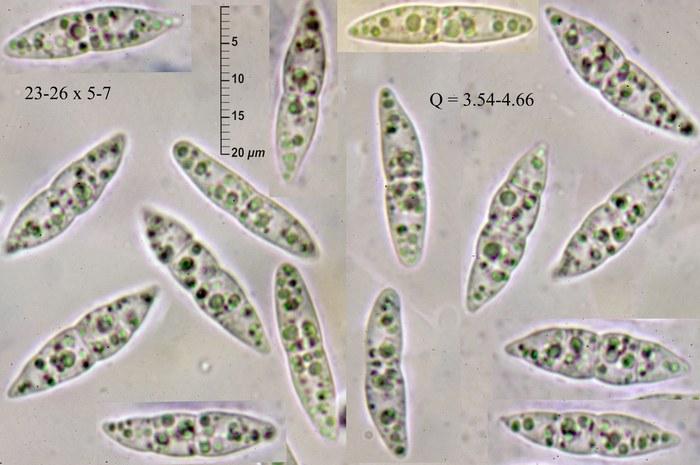
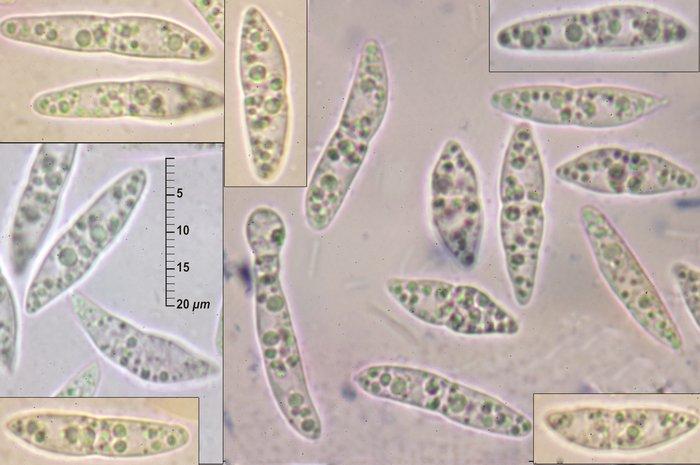
The spores are very polimorphic and up to 1-(2-3) septate at maturity. At the moment of the study they have septa inside the living asci.
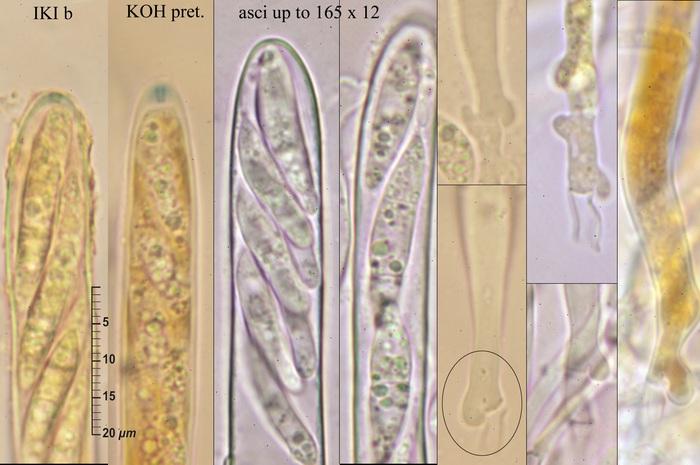
Asci IKI b of the Hymenoscyphus-type, Without croziers. Only repetitive false croziers or abortive croziers at their base. Paraphyses with multiguttulate Vb's.
Ectal excipulum made of a brownish textura globuloso-angularis or only angularis. Medullary excipulum textura intricata.
I feel my fungus is close to Hymenoscyphus. What's your opinion?
Many thanks again
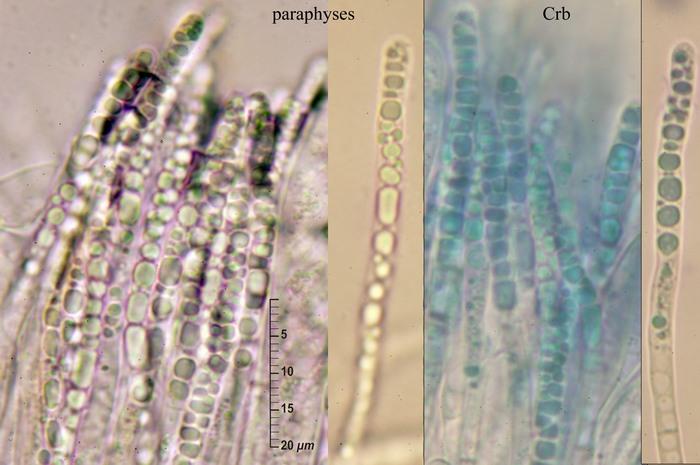
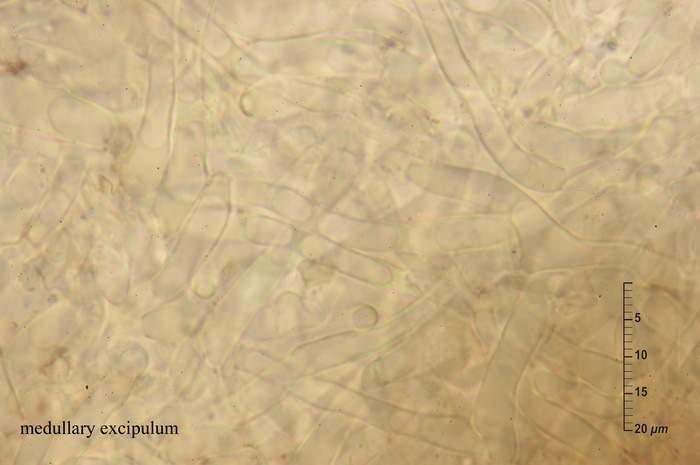
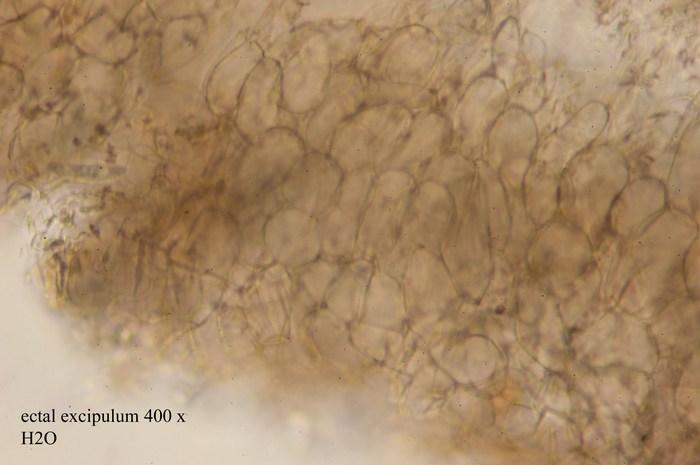
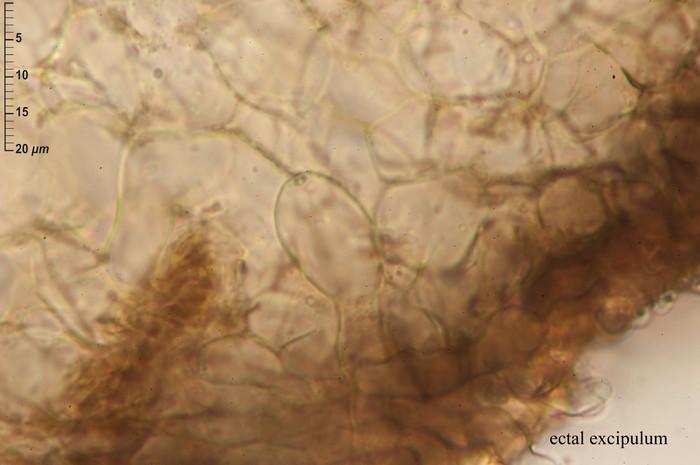
Hans-Otto Baral,
27-11-2012 20:28

Re : Hymenoscyphus (?) on Quercus wood
Wonderful!! This resembles my Hymenoscyphus "griseobrunneus" but that has smaller spores which are aspetate in the living asci. also true croziers.
H. fulvidulus comes closer in spore size but differs likewise.
But now I see I know your species from photos taken by Uwe Lindemann & Dirk Wischollek from a specimen from NW-Germany, on Rubus. Everything seems to fit!
Here you can study it:
http://www.ascofrance.fr/search_forum/9692?
Zotto
H. fulvidulus comes closer in spore size but differs likewise.
But now I see I know your species from photos taken by Uwe Lindemann & Dirk Wischollek from a specimen from NW-Germany, on Rubus. Everything seems to fit!
Here you can study it:
http://www.ascofrance.fr/search_forum/9692?
Zotto
Enrique Rubio,
27-11-2012 20:45
Re : Hymenoscyphus (?) on Quercus wood
Yes, Zotto. I think this is the same fungus!
Do you need my photos at higher resolution?
Many thanks for your quickly help
Do you need my photos at higher resolution?
Many thanks for your quickly help
Hans-Otto Baral,
27-11-2012 20:46
Re : Hymenoscyphus (?) on Quercus wood
Yes, you can send me.
thanks
thanks
DirkW,
30-11-2012 11:01

Re : Hymenoscyphus (?) on Quercus wood
hello enrique and zotto,
great to see this strange fungus again! the multi constricted septae are also there. with the greyisch-blue colours and the dark margo it looks like a hybris out of hymenoscyphus and mollisia. you could name it hymenoscyphus mollisius, if you publish! ;-)
unfortunately we failed to get another collection ... but now we know one thing: its not restricted to rubus - and not to quercus!
best
dirk
great to see this strange fungus again! the multi constricted septae are also there. with the greyisch-blue colours and the dark margo it looks like a hybris out of hymenoscyphus and mollisia. you could name it hymenoscyphus mollisius, if you publish! ;-)
unfortunately we failed to get another collection ... but now we know one thing: its not restricted to rubus - and not to quercus!
best
dirk
Enrique Rubio,
30-11-2012 12:16
Re : Hymenoscyphus (?) on Quercus wood
Hi Dirk
I think Pachydisca could be a good genus for it, if this genus can be segregated of Hymenoscyphus.
Regards
I think Pachydisca could be a good genus for it, if this genus can be segregated of Hymenoscyphus.
Regards
Nicolas VAN VOOREN,
30-11-2012 14:10

Re : Hymenoscyphus (?) on Quercus wood
Je ne pense pas que le genre Pachydisca Boud. puisse être utilisé (le cas échéant) car il est typifié par Helotium guernisacii P. Crouan & H. Crouan qui, si ma mémoire est bonne, est considéré comme un Rutstroemia par Mme Le Gal
Hans-Otto Baral,
30-11-2012 14:53
Re : Hymenoscyphus (?) on Quercus wood
Yes, Nicolas, the type (guernisacii) was classified in Rutstroemia by Le Gal, but I think it does not belong there. LeGal described an external gel which is reminiscent of the genus Discinella. Very complicated nomenclature!
And yes, Hymenoscyphus or Phaeohelotium mollisioides ?could be a good name.
Zotto
And yes, Hymenoscyphus or Phaeohelotium mollisioides ?could be a good name.
Zotto