
09-04-2026 15:25
Jac GelderblomOn bare soil between mosses Ifound an asco I deter
09-04-2026 13:55
Thomas Læssøehttps://svampe.databasen.org/observations/10589176
09-04-2026 10:12
Thomas Læssøehttps://svampe.databasen.org/observations/10587061
08-04-2026 20:33
 Vasileios Kaounas
Found 07-04-26, in Abies cephalonica. Diameter 1,
08-04-2026 10:39
FRANCIS FOUCHIERBonjour , je recherche en pdf cet article: KORF R

06-04-2026 21:36
 Viktorie Halasu
Hello, could anyone please send me the article wi
06-04-2026 19:40
 David Gibbs
Help with this one much appreciated, on rotting Fa
Helvella
Zykova Masha,
10-12-2011 22:56
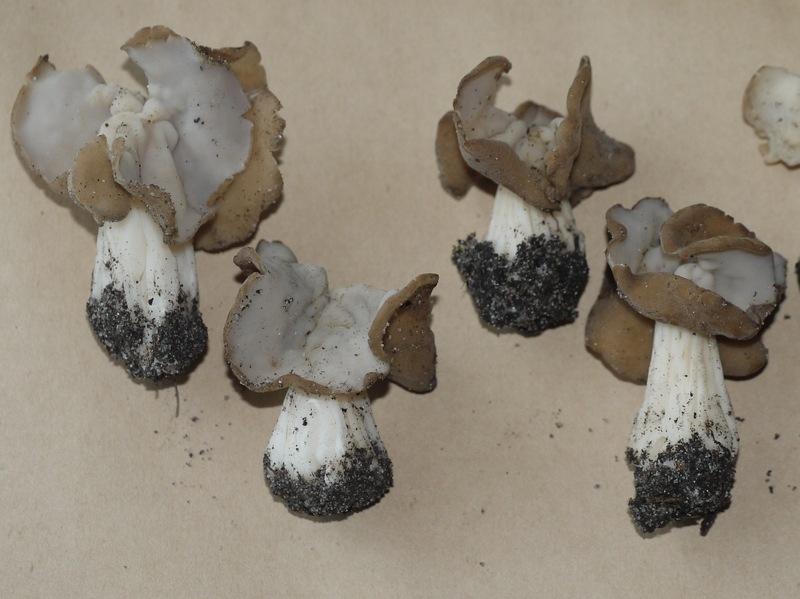
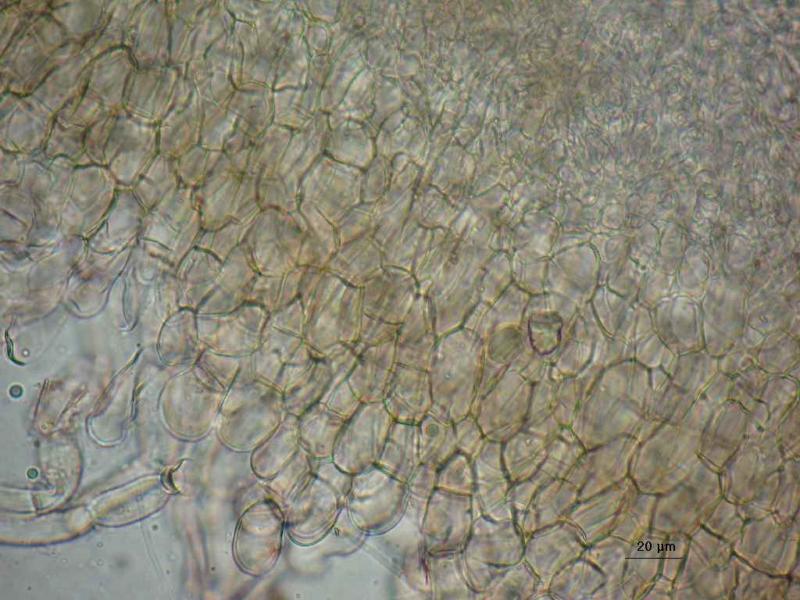
Please, help me identificate this fungus.
This species I found on the soil in deciduous forest this summer.
Fruit-bodies are 3-5 cm.
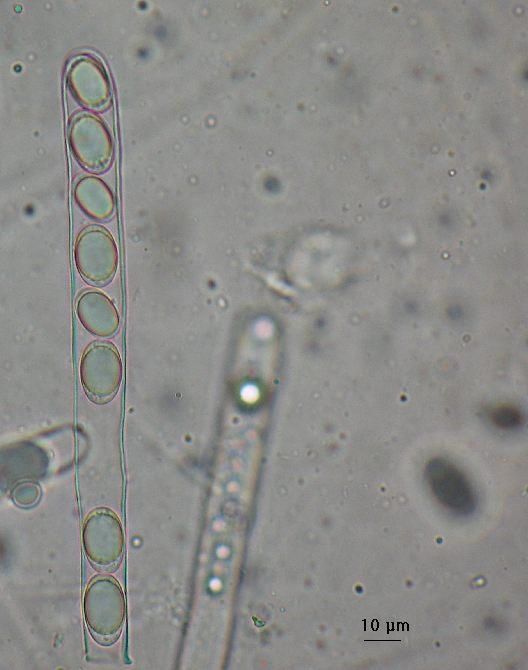
Spores 16-18*10-12 um.
With best wishes, Masha
François Valade,
10-12-2011 23:03

Re : Helvella
Hello
I suggest Helvella fusca Gillet with such color.
cheers
François
I suggest Helvella fusca Gillet with such color.
cheers
François
Illescas Tomás,
10-12-2011 23:50

Re : Helvella
Hello, Masha!
Under Populus sp....?
Saludos,
Tomás Illescas
Under Populus sp....?
Saludos,
Tomás Illescas
Zykova Masha,
11-12-2011 00:59
Re : Helvella
François, thanks for your version!
Tomás, this discomycetes grown in mixed forest with Querqus, Acer, Sambucus and Corylus.
Masha
Carlo Agnello,
11-12-2011 06:46

Re : Helvella
Hi to everybody
I suggest youngs Helvella crispa
in Helvella fusca normally, the hymenium is exposed (outside) and saddle-shaped (expecially when young); the sterile surface is traversed by large veins; finally is exclusive of Populus in spring often with Helvella leucopus.
Best, Carlo
I suggest youngs Helvella crispa
in Helvella fusca normally, the hymenium is exposed (outside) and saddle-shaped (expecially when young); the sterile surface is traversed by large veins; finally is exclusive of Populus in spring often with Helvella leucopus.
Best, Carlo
Neven Matocec,
11-12-2011 09:53

Re : Helvella
Hi Masha!
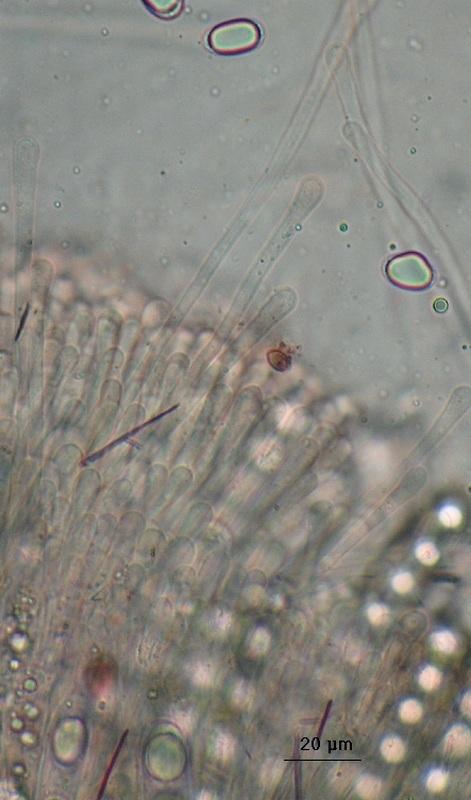
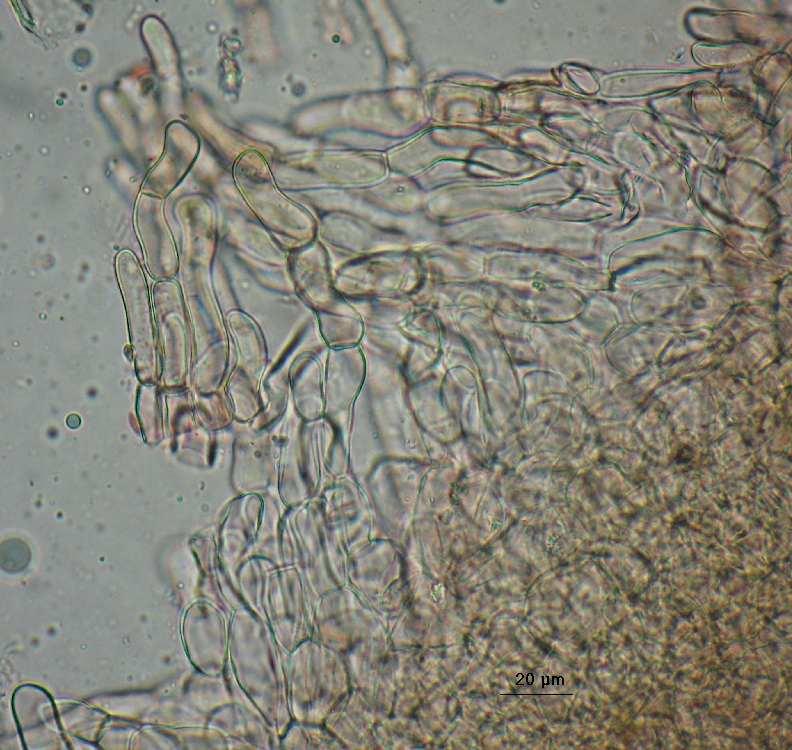
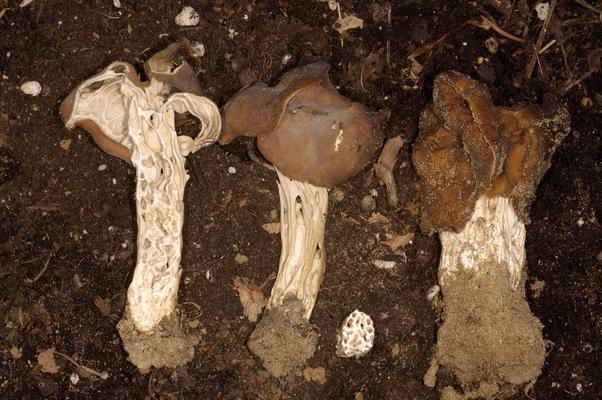
Of course it is H. crispa! I agree with Carlo. I would like to add Carlo's comments with few more info: The hymenial colour in these two (H. crispa and H. fusca) is also constantly different. H. crispa always has whitish to creamy((greyish)) hymenia, while H. fusca has fulvous-yellow to foxy-ochre to fuscous hym. from beginning. This is because H. fusca has paraphyses that contain yellowish pigments. H. crispa's paraphyses are hyaline - like in your microphoto. :-) Also, pileal margin when fruitbody is fully mature is still inrolled to almost even in H. crispa, while H. fusca has exrolled margin when fully ripe.
Average appearance of H. fusca in SE Europe is attached below
Ecology is also sharply different as Carlo already mentioned.
However, outside Europe, there is few superficially very similar Helvellas that could be very probably distingushed from H. crispa at specific level (e.g. in North America and China/Central Asia).
Masha, can you tell me just roughly geographical position of your collection?
Cheers,
Neven
Of course it is H. crispa! I agree with Carlo. I would like to add Carlo's comments with few more info: The hymenial colour in these two (H. crispa and H. fusca) is also constantly different. H. crispa always has whitish to creamy((greyish)) hymenia, while H. fusca has fulvous-yellow to foxy-ochre to fuscous hym. from beginning. This is because H. fusca has paraphyses that contain yellowish pigments. H. crispa's paraphyses are hyaline - like in your microphoto. :-) Also, pileal margin when fruitbody is fully mature is still inrolled to almost even in H. crispa, while H. fusca has exrolled margin when fully ripe.
Average appearance of H. fusca in SE Europe is attached below
Ecology is also sharply different as Carlo already mentioned.
However, outside Europe, there is few superficially very similar Helvellas that could be very probably distingushed from H. crispa at specific level (e.g. in North America and China/Central Asia).
Masha, can you tell me just roughly geographical position of your collection?
Cheers,
Neven
René Dougoud,
11-12-2011 09:57
Re : Helvella
Sans aucun doute H. crispa
Salutations
René
Salutations
René
Zykova Masha,
11-12-2011 10:32
Re : Helvella
Neven, many thanks for your full answer about my Helvella.
My material was collected in north-western part of Ukraine near the Polish border in Shatski NNP.
René, Thank you!
Masha
Neven Matocec,
11-12-2011 10:57
Re : Helvella
You're welcome Maša!
Yes, such area should be really free from Helvella crispa like surprises as far as I know!
Cordially,
Neven
Yes, such area should be really free from Helvella crispa like surprises as far as I know!
Cordially,
Neven