15-04-2026 19:33
Fátima Durán ManzanequeHi!! I need help, I found this Ascomycete but I d
14-04-2026 05:32
Ethan CrensonHi all, A few weeks back a friend pointed out som
14-04-2026 21:52
Gernot FriebesHi,found on dead leaves of Carex elata. Conidia: 4
14-04-2026 20:31
Gernot FriebesHi,can this be Psilachnum lateritioalbum on Phragm
12-04-2026 17:56
 Hardware Tony
Found on dead stems in February earlier this year
12-04-2026 15:52
Gernot FriebesHi,I'm looking for help with this anamorph collect
12-04-2026 12:22
 William Slosse
In a dune grassland in Oostduinkerke (Belgium), on
11-04-2026 15:45
 Zuzana Sochorová (Egertová)
Please, could anyone send me this paper?Moyne G.,
11-04-2026 13:34
Artem PtukhaHello, I am seeking assistance with the identific

 Dear Friends
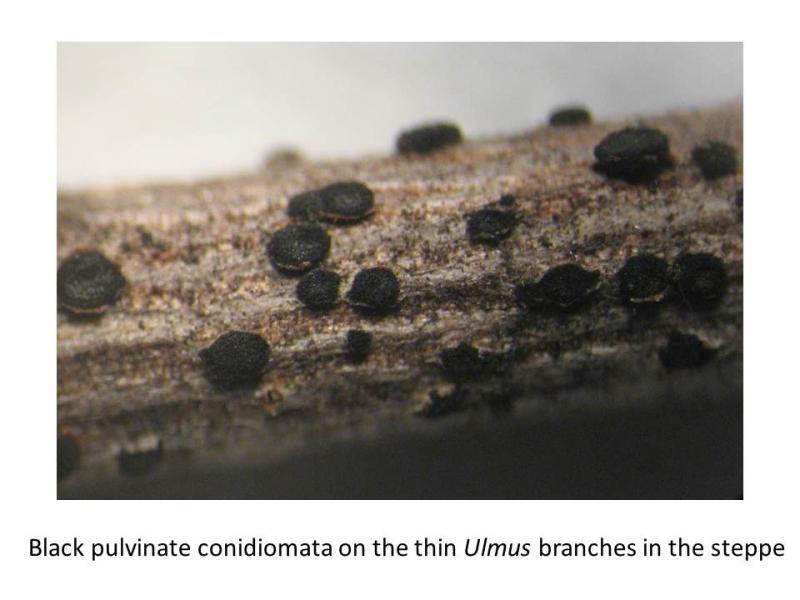
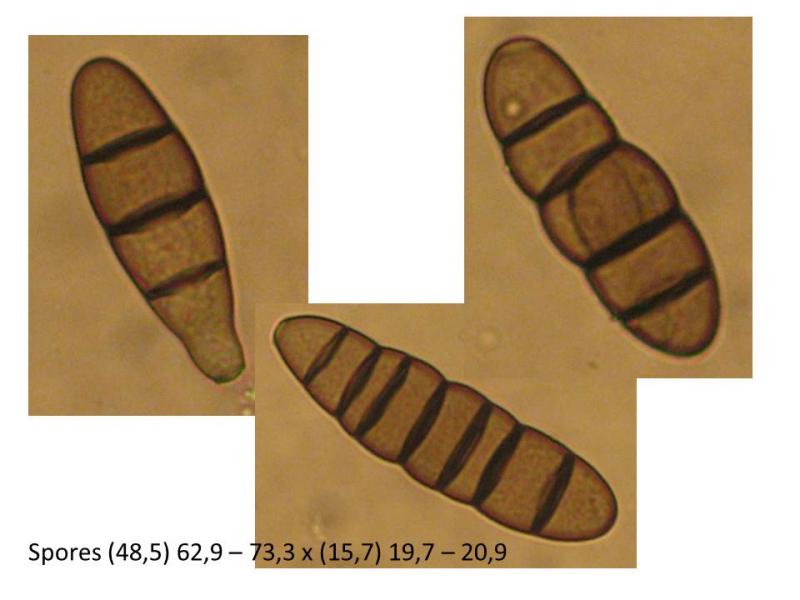
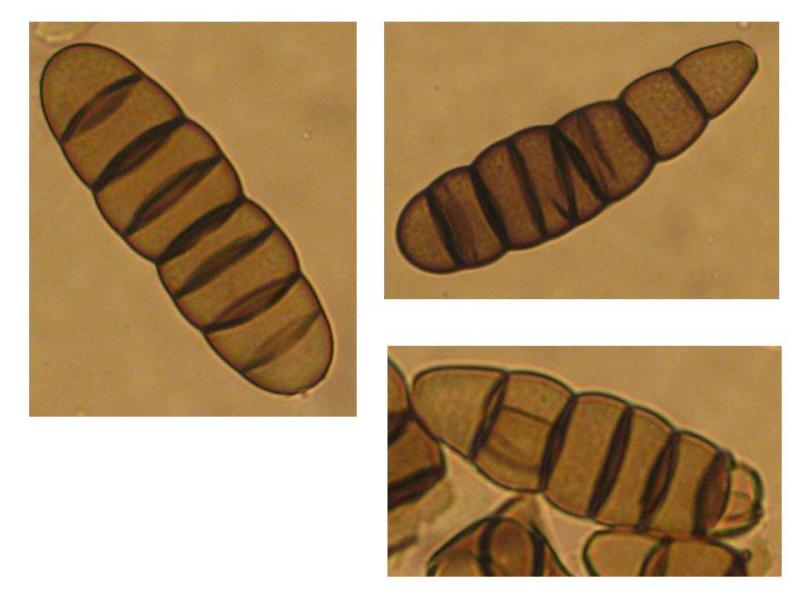
Did you know the species of coelomycete, photos of which are presented below?
Personally, I have no idea what it is. Spores are very abundant and formed on the thin dead twigs of Ulmus still attached to the tree.
Grateful before,
Alex

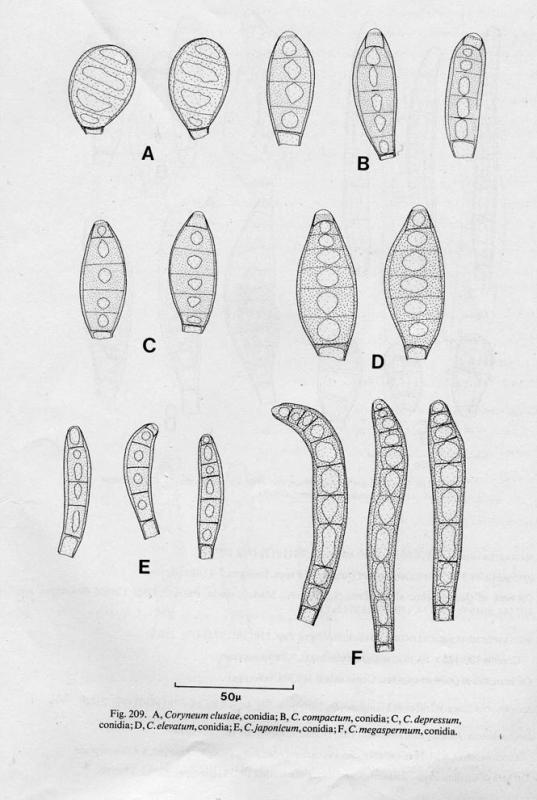
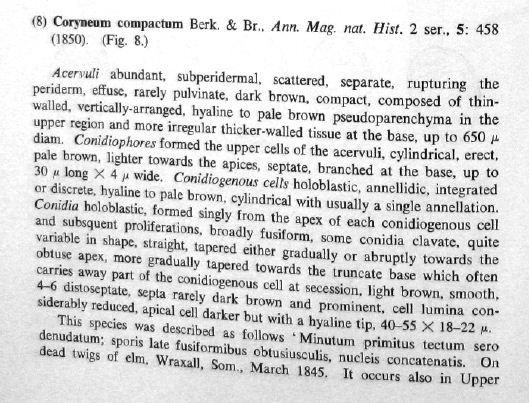
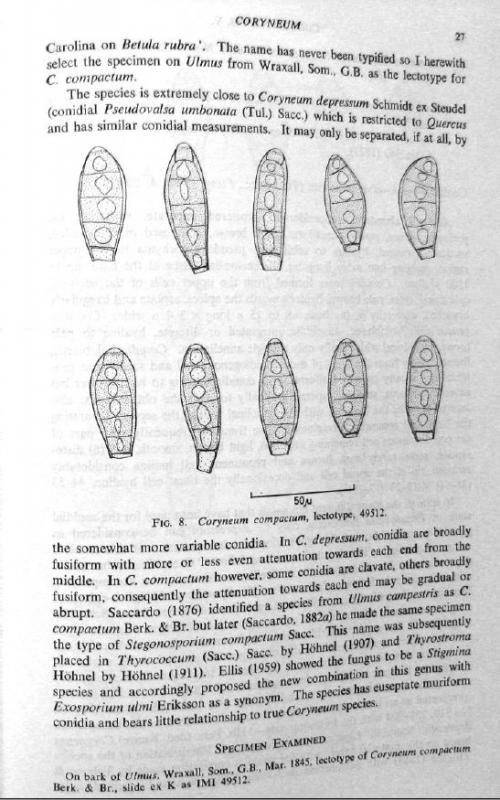
a close relative seems to be the Genus Coryneum. C. compactum is reported by Sutton (1980: 352) from Ulmus bark, though the conidia there are shorter as well.
Best regards,
Martin
Dear Friends
Thank you for advise very much!
I was thinking about species, about which you wrote me.
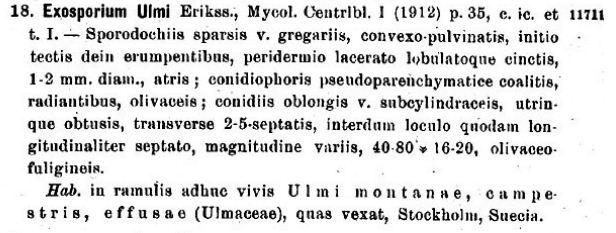
I think it's something else. What do you think about Exosporium ulmi Erikss., Mykol. Zentbl. 1: 35 (1912)?
Please look at the description of this species in the attached file. Size of spores corresponds quate good, the septation character - in some extent. Unfortunately, I do not have the opportunity to find the original article, where this species has been described. It is possible, more in detail description and iconotype is present there.
Alex
P.S.
Below I send also the description of Coryneum compactum and Seimatosporium macrospermum which I have.
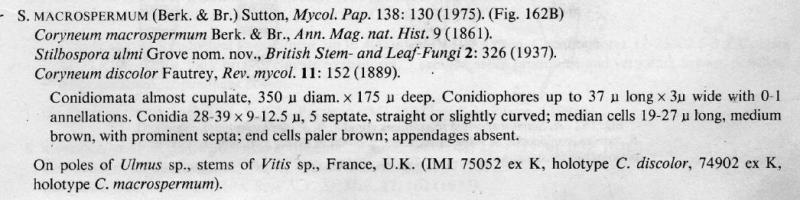
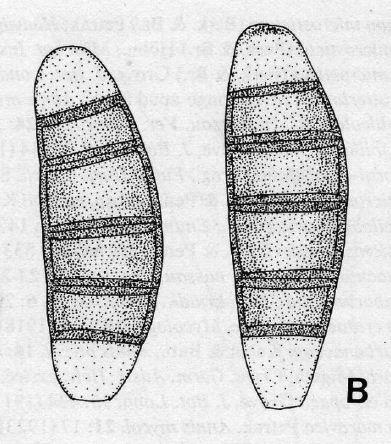
I'm pretty sure I know this species!
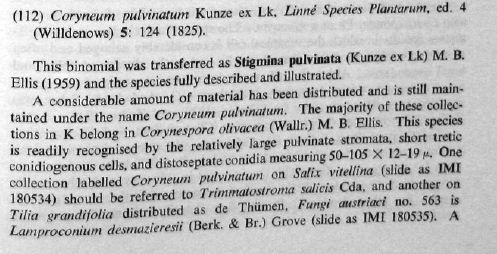
What do you think about Stigmina pulvinata (Kunze) MB Ellis (= Coryneum pulvinatum Kunze)? Below I attach a description and illustration of this species from Ellis, 1976. In my opinion it fits wonderfully :-)
Alex
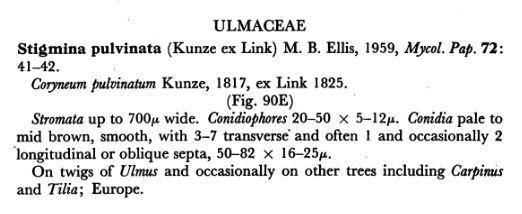
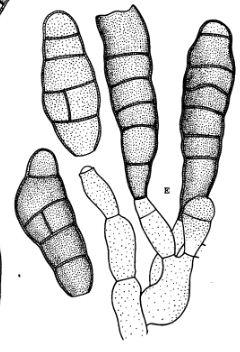
Regards
Martin
If I understood correctly, in 1975 Sutton noted that Stigmina pulvinata is doubtful species. A single studied sample of this species (France, vicinities of Paris, 1840) collected from Ulmus really was Stigmina compacta (= Coryneum compactum). My sample is true Stigmina pulvinata sensu Ellis (which is now considered to be the species-artifact)!
I'm at a loss, what I need to do with this find, to bring the work to the end. Coryneum is not "my" group of fungi and I had no intention of working with her deeply. And at the same time, losing this data would be unforgivable.
Alex