
15-05-2026 13:33
Sylvie Le GoffBonjour à tousJe serais très reconnaissante enve
16-03-2011 14:31
roman vargas albertoHi. I would like some opinion about this Peziza
14-05-2026 05:36
Ethan CrensonHi all, I haven't paid much attention to Lachnu
10-05-2026 23:17
 Andreas Gminder
Hello,today we found in a moist steep decidous for
11-05-2026 12:32
 Bernard CLESSE
Pourriez-vous m'aider à identifier cette héloti
13-05-2026 15:26
 François Freléchoux
Bonjour,Voici une récolte faite il y a quelques j
12-05-2026 15:41
 Nicolas VAN VOOREN
Dear Ascolovers, especially interested in Pezizale
13-05-2026 12:05
 Thierry Blondelle
Bonjour à tous,J'aimerais avoir confirmation de c
28-04-2026 20:07
 Lothar Krieglsteiner
... on twig in the air at standing Ceratonia siliq
27-04-2026 20:52
Lothar Krieglsteiner
Found on hanging tiwg of Olea europaea in dried-ou

Hi to all
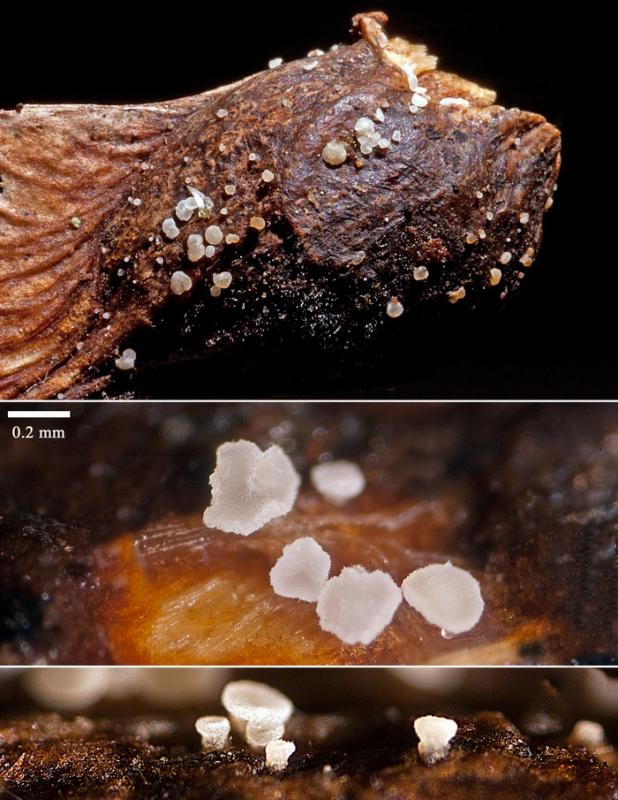
My friend J. Linde, a great discover of minute fungi, collected these small, white, downy, shortly stipitate, briefly cupulate later pulvinate apothecia, 0.3-0.5 mm in diameter on seeds (samara) of Acer pseudoplatanus.
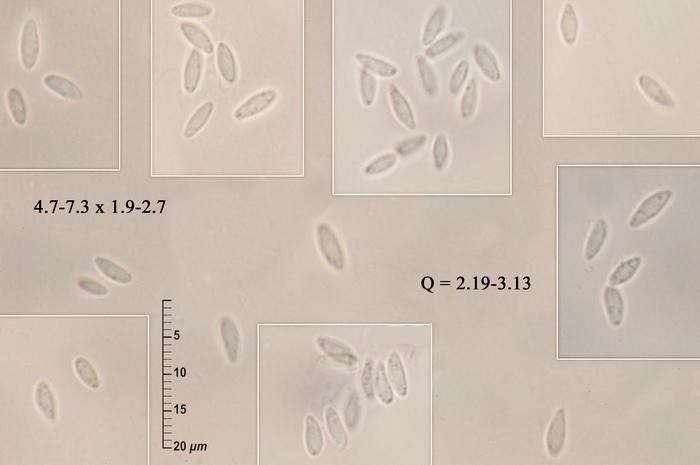
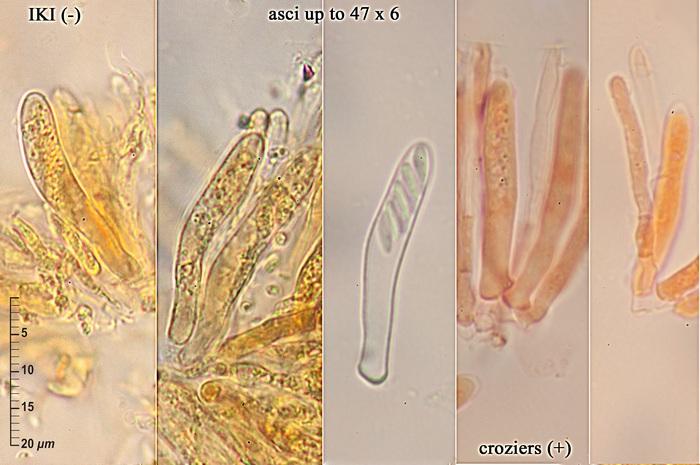
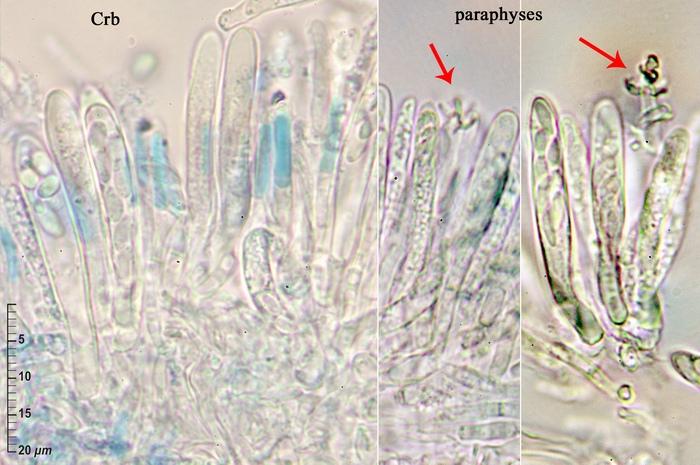
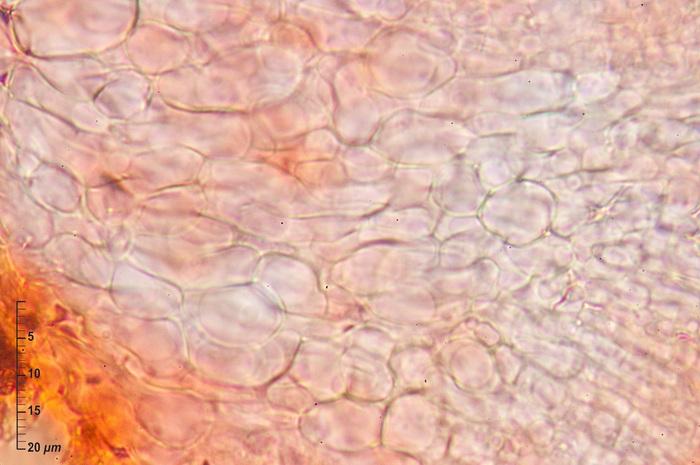
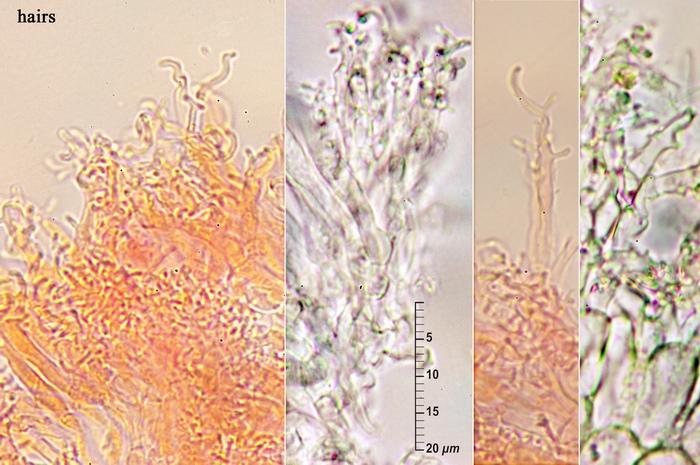
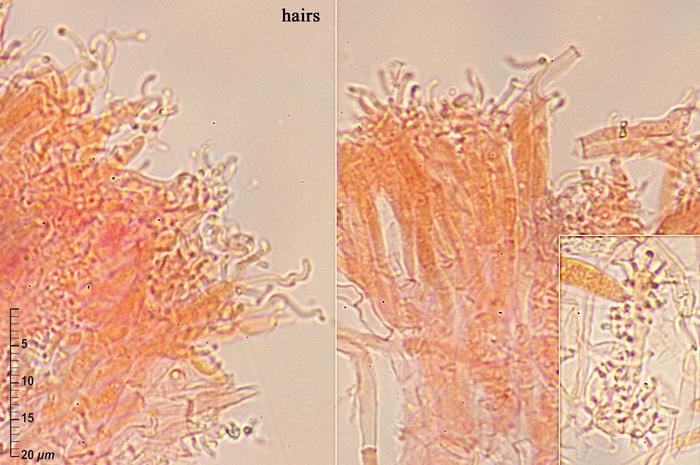
Thea asci, 8-spored, are IKI negative and with croziers. The spores have only few minute guttules. Excipulum with textura + or - prismatica. The paraphyses are cylindrical, without conspicuous Vb's in water but stain in Crb. Close to the margin they become branched as the excipular hairs (marked with red arrows in the pic).
The very dense excipular hairs have finger-like protuberances as the Mollisina species. I think it could be a Mollisina but I don't know a species that fits well with our fungus.
Thanks for your opinion
As-tu comparé avec Mollisina acerina ?
Amitiés, Guy
Salut Guy
My first idea was this species with IKI reddish asci and without croziers (fide Zotto). So I think is not possible.
Thanks

I agree with that species concept although I did note for my acerina collection IKI rb besides in acerina the spores are more ovoid (less pointed than in this collection). The only Mollisina I know with croziers is also undescribed on Pteridium leaves
regards,
Stip
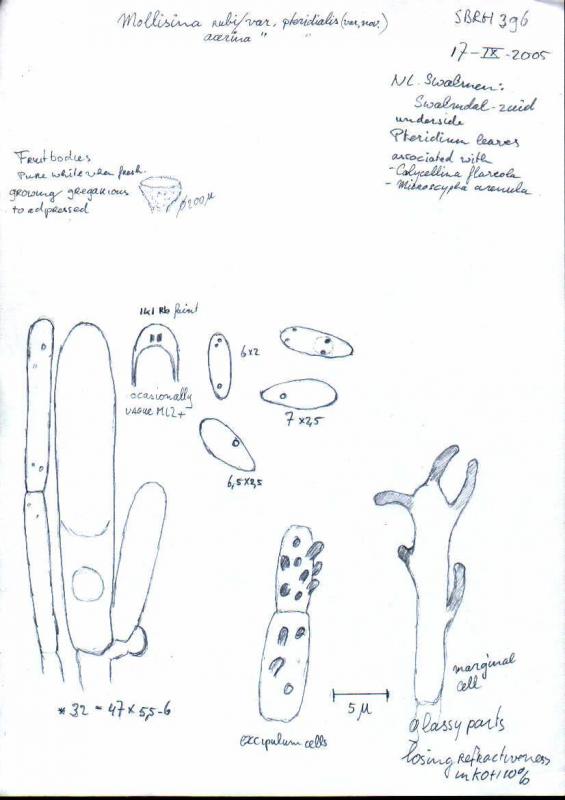

HB 9340, Chemnitz, Acer fruit. Ap. 0.3-0.6 mm diam., whitish, Calycina-like. Sp. cyl.-fusoid-clavate, *5-6.5 x 1.8-2 µm, Ölm.0,5-1. Asci ca. *28-37 x 5-6 µm, IKI 2rb, very dirty red. Hairs on exterior only as cortical cells with many small finger-like outgrowths. Exudate over exterior light golden-yellow.
I suppose it was with croziers, but my photos do not clearly show. I had it in the folder of Stip's one on Pteridium. I have kept the material and hope to reexamine it at some time.
Zotto
Hi Zotto
Your HB 9340 fits well but 'my asci' have any reaction in IKI. I'm very sure of it!
Thanks!