
12-06-2026 14:50
 François Freléchoux
Bonjour, Voici la brève description d'une Mollis
10-06-2026 21:16
François Freléchoux
Bonsoir,Le dernier du jour, en attendant votre avi
11-06-2026 19:01
 William Slosse
Hello all,In an attempt to make a culture of a sus
11-06-2026 19:03
 Nicolas VAN VOOREN
Chers membres d'Ascofrance,Le site sera placé en

09-06-2026 18:32
Camille MertensSur morceau de roseau immergé 0,5 - 0,7 mm de dia
10-06-2026 12:54
Steve ClementsBonjour encore, Pouvez-vous m'aider, s'il vous pl
10-06-2026 21:07
François Freléchoux
Toutes les tiges de gentianes jaunes de l'an passÃ
10-06-2026 13:41
François Freléchoux
Bonjour à nouveau, Voici une trouvaille d'hier.
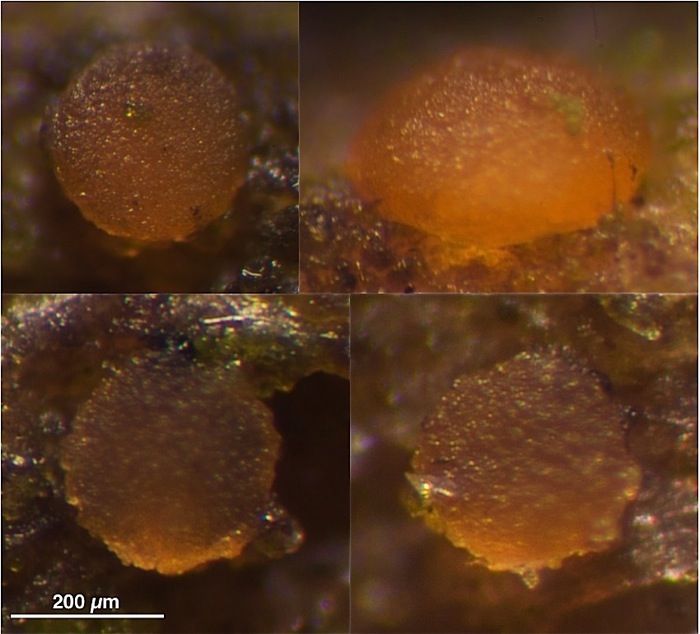
Orbilia spec. 2
Gernot Friebes,
29-11-2009 12:59
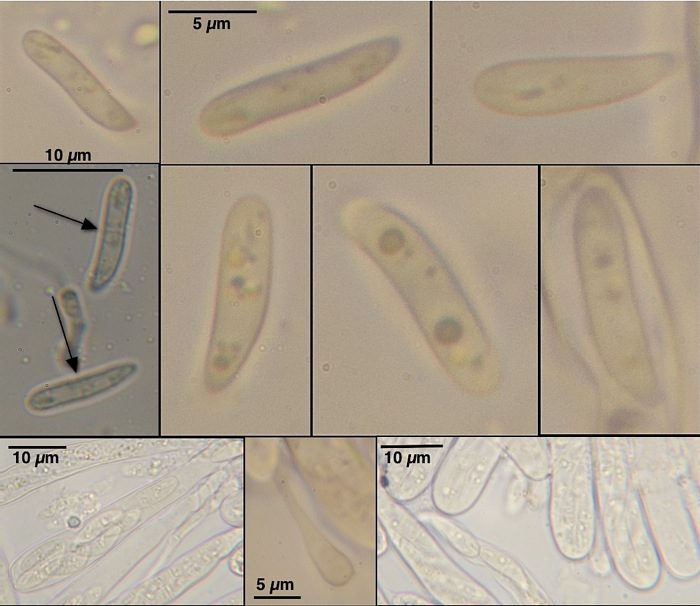
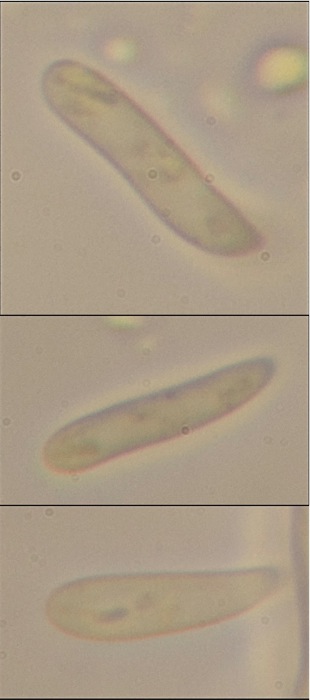
It grew together with the first Orbilia on a branch of Rosa ca. 150 cm above the ground. The spores are 11-14 x 2.5-3.5 µm, often septate (also in living state and inside the living asci!) with one (rarely two) septa. The SB is 3-4.5 µm long, slightly curved to sigmoid. The Asci are 8-spored and up to 53 x 7.5 µm.
Best wishes,
Gernot
Gernot Friebes,
29-11-2009 12:59
Re:Orbilia spec. 2
micros
Gernot Friebes,
29-11-2009 12:59
Re:Orbilia spec. 2
spores
Jean-Paul Priou,
29-11-2009 13:56

Re:Orbilia spec. 2
forme des sspores +et Spore body + septation conforme pour setispora. la seule Orbilia septée Rosa semble être un nouveau support pour ce taxon..
Attendons la confirmation du Docteur es Orbilia.
JPP
Attendons la confirmation du Docteur es Orbilia.
JPP
Hans-Otto Baral,
29-11-2009 15:24

Re:Orbilia spec. 2
Hi Gernot
seems actually to be O. septispora as Jean-Paul suggests! On your ascus photos it is not clear because they are so small, but if you say they were septate inside the living asci, and up to 2 septate, it cannot be O. quaestiformis, the alternative which has also also mostly much more curved spores.
Originally I found O. septispora on Melilotus but in later years finds were mainly on Phragmites. However, we finally had it also on Typha, Juglans and Lonicera. So indeed a new substrate.
Please let me know the collection data.
Zotto
seems actually to be O. septispora as Jean-Paul suggests! On your ascus photos it is not clear because they are so small, but if you say they were septate inside the living asci, and up to 2 septate, it cannot be O. quaestiformis, the alternative which has also also mostly much more curved spores.
Originally I found O. septispora on Melilotus but in later years finds were mainly on Phragmites. However, we finally had it also on Typha, Juglans and Lonicera. So indeed a new substrate.
Please let me know the collection data.
Zotto
Gernot Friebes,
29-11-2009 15:42
Re:Orbilia spec. 2
Hi,
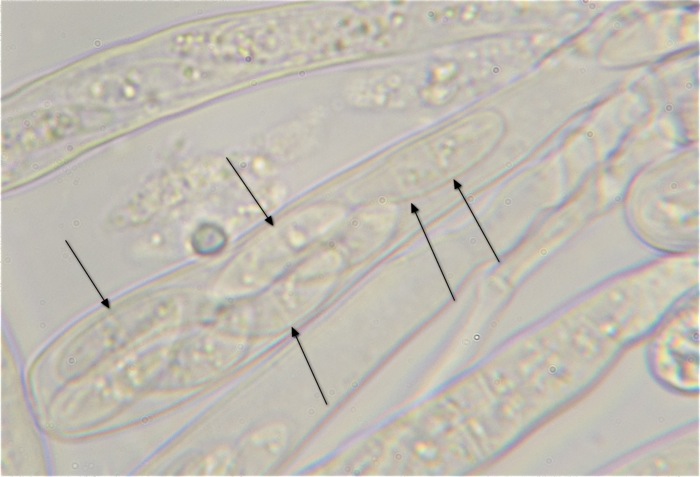
thanks to both of you! Here is another picture of an ascus.
Best wishes,
Gernot
thanks to both of you! Here is another picture of an ascus.
Best wishes,
Gernot
Hans-Otto Baral,
29-11-2009 15:50
Re:Orbilia spec. 2
yes, the septa are clearly seen, only the ascus is perhaps not really turgescent (difficult to say), at least there is one spore at the very base, maybe the ascus base was broken. Perhaps the ascus was alive when unbroken, but this cannot be said with certainty.
i am quite sure you will find mature living asci when making a hand section.
Zotto
i am quite sure you will find mature living asci when making a hand section.
Zotto