
30-05-2026 21:12
Philippe PELLICIERSur branche de mélèze (Larix) près de la neige,
25-05-2026 16:35
 Bernard CLESSE
Bonjour à toutes et tous,J'ai trouvé récemment,
29-05-2026 15:35
daniel FERREBonjour à tous,Je voudrais votre aide pour cette
28-05-2026 16:15
James MitchellHello,Does anyone have the original publication of
28-05-2026 11:06
Thomas Læssøehttps://svampe.databasen.org/observations/10596750
23-05-2026 11:44
 Charles Grapinet
Hello, I am having trouble identifying this copro
25-05-2026 16:44
François BartholomeeusenHi forum members,During an excursion organised by
26-05-2026 21:25
Dirk GerstnerHello everyone, I'm completely stumped by this li
26-05-2026 22:44
Ethan CrensonHi all, I think I have Incrucipulum capitatum her
22-05-2026 14:44
 Lothar Krieglsteiner
in unripe condition citrine yellow, then soon fadi
 Hello all,
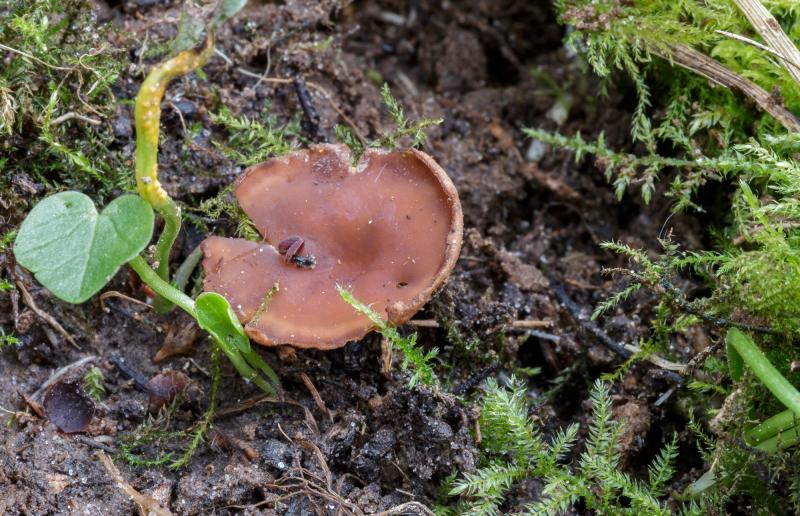
On 27/03/26, in Kraaiveld in Wingene (Belgium), in a damp forest zone consisting mainly of Prunus avium (old plantations), I found an asco that reminded me of Dumontinia.
It was a solitary, relatively old specimen on moss-covered clayey soil surrounded only by Ficaria verna. Within a radius of about five meters, not a single Anemone nemorosa could be found.
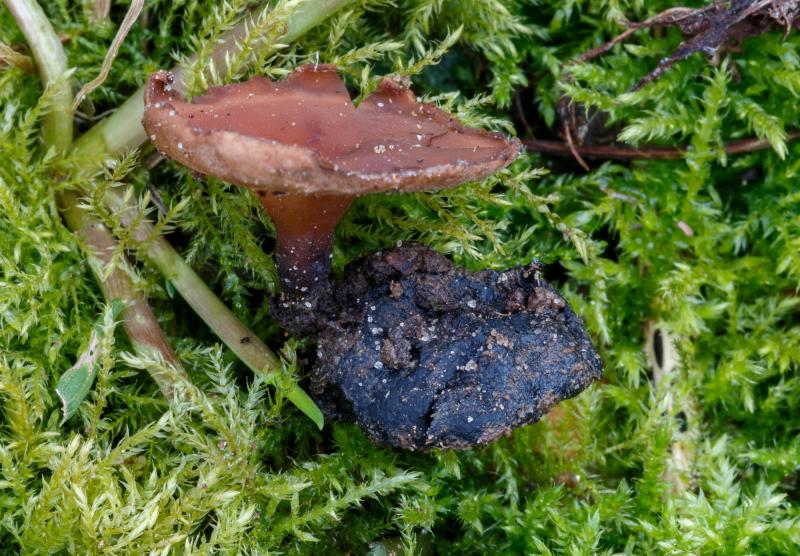
The mushroom was attached to a superficial buried sclerotium and clung to the roots of a young Ficaria verna plant.
Microscopy confirmed Dumontinia.
However, the fact that it occurred with only Ficaria deprives me of any certainty.
Is the occurrence of Dumontinia with only Ficaria a known phenomenon?
Macroscopic:
° apothecium: saucer-shaped; 16.5 mm diameter
° stalk: 7.5 mm and 1.7 mm diameter; black
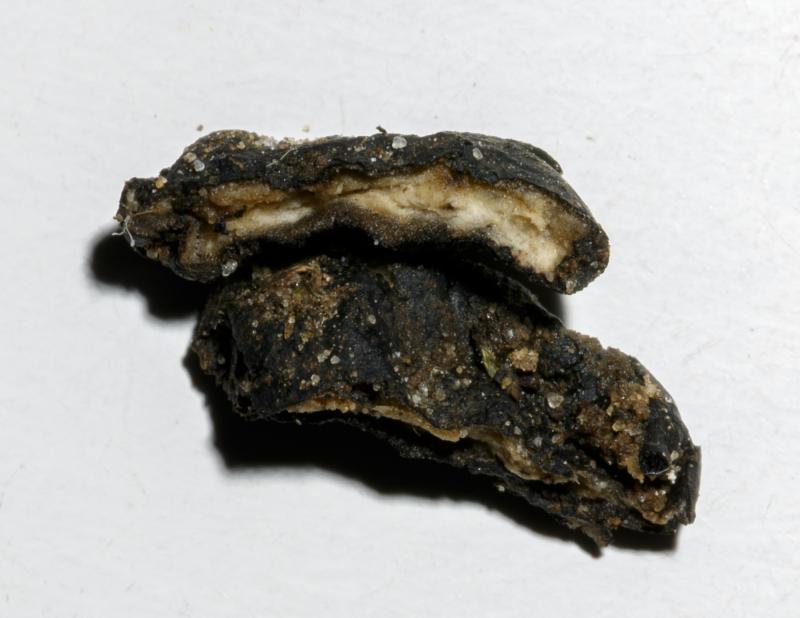
° sclerotium: 11x8.5 mm; black, wrinkled; contents cottony against the wall somewhat gelatinous and yellowish
Microscopic:
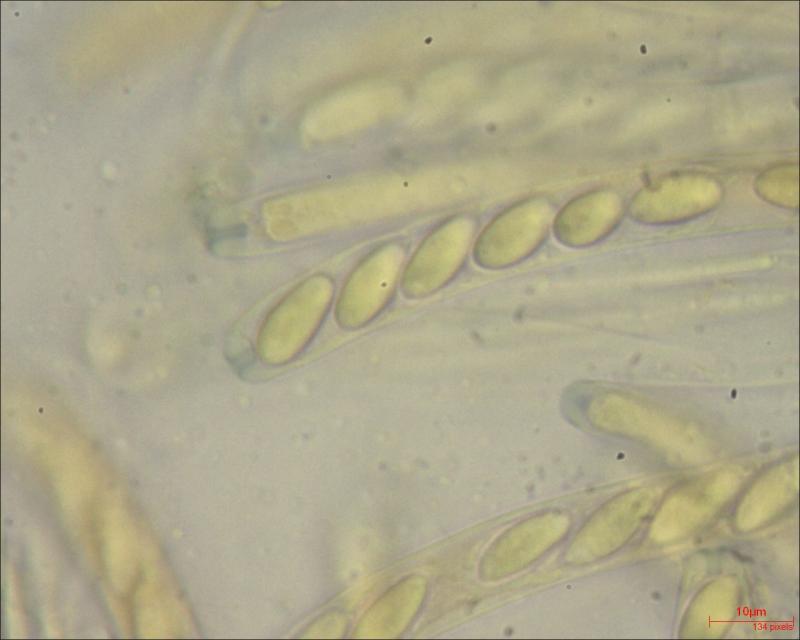
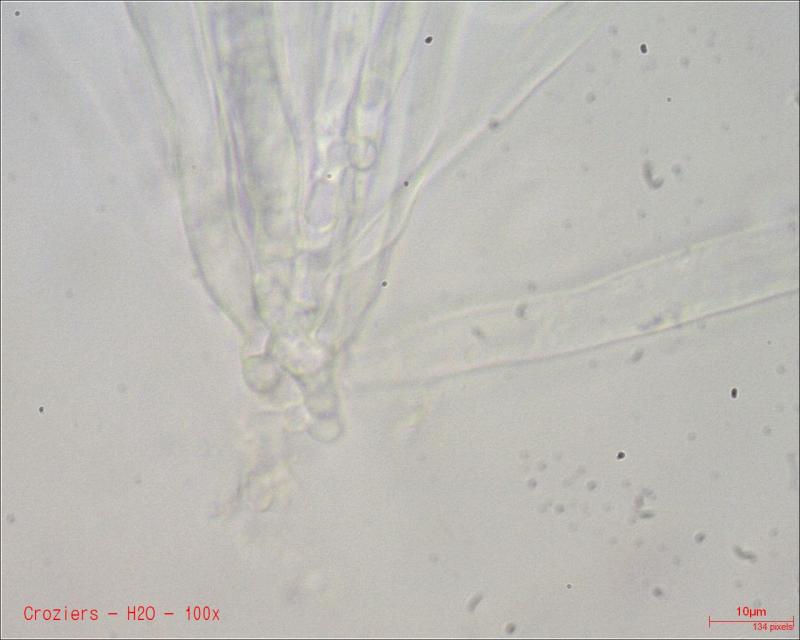
° asci: IKI+; with croziers
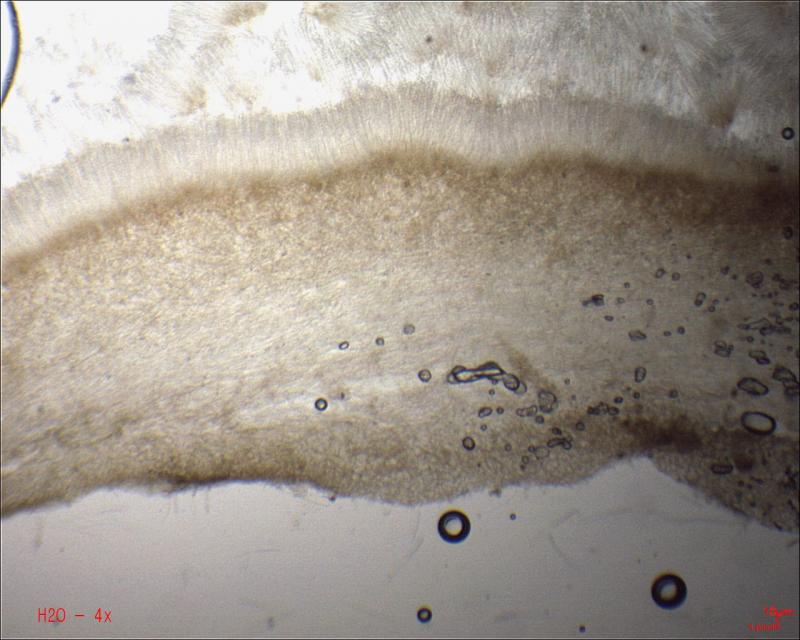
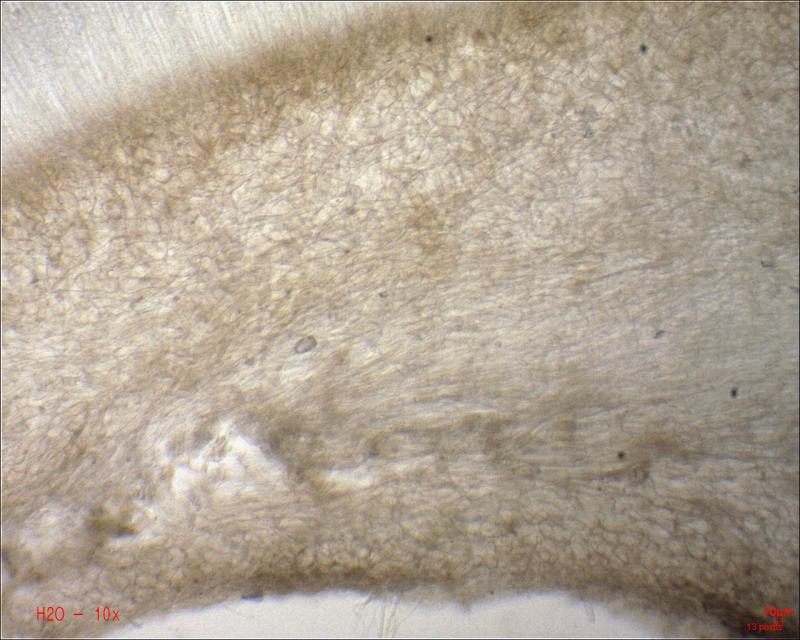
° layer of elongated cells present against ectal excipulum
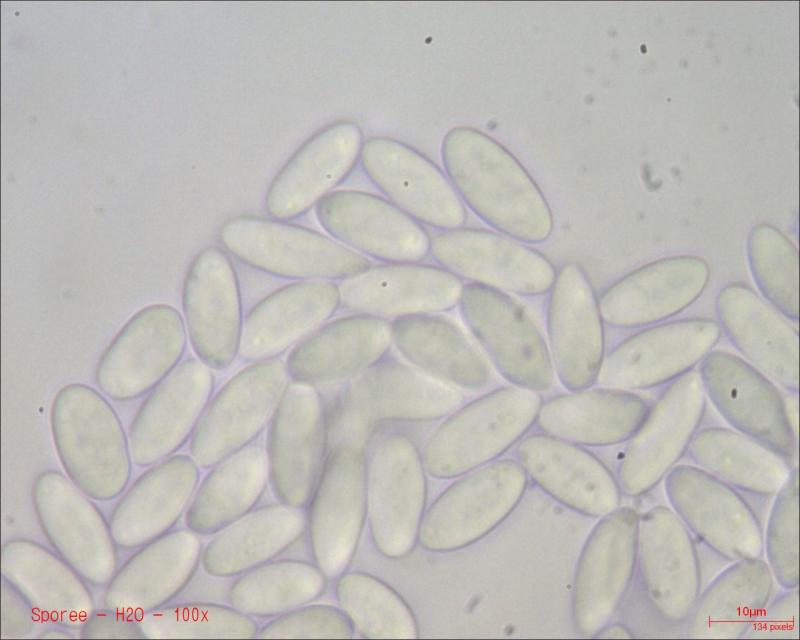
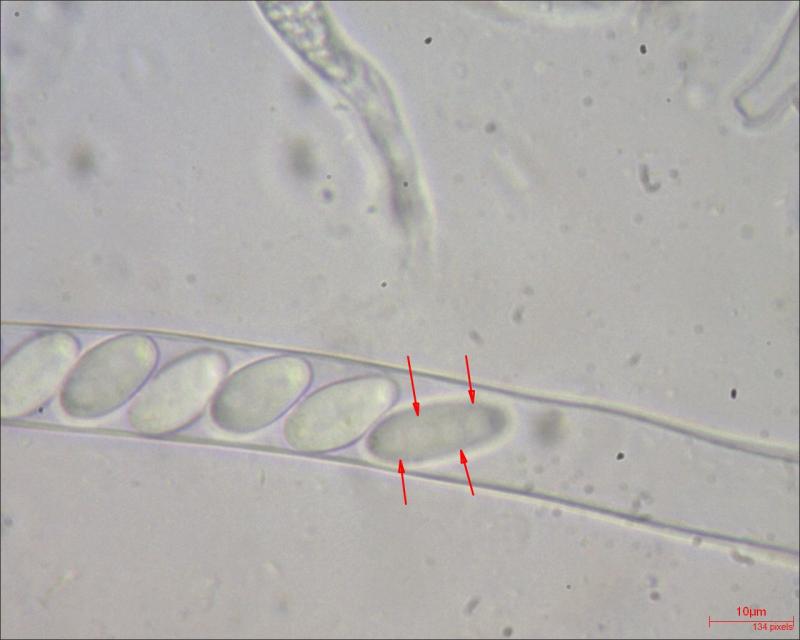
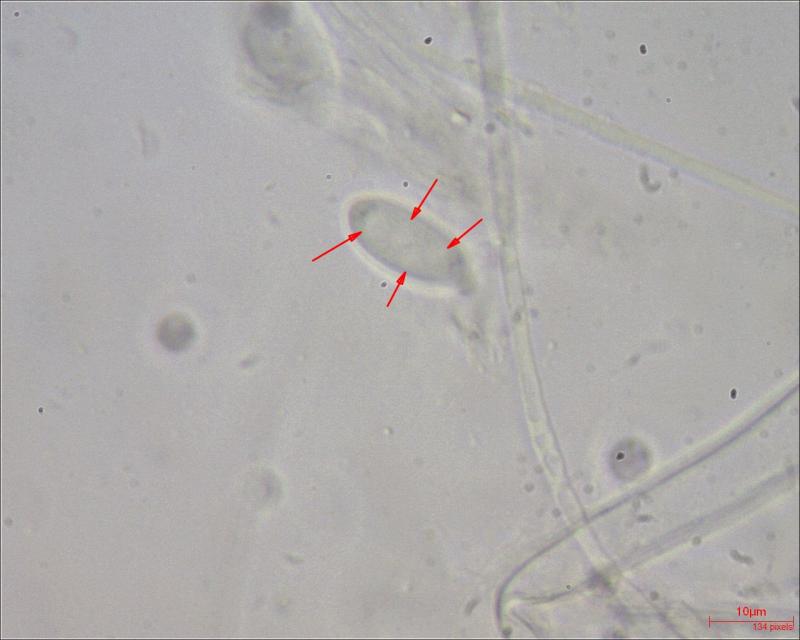
° spores: with 4 nuclei; elongated ovoid; one apex often slightly blunter than the opposite; mature not pinching off conidia;
- measurement 1 (free spores in preparation in water): (13.4) 14.1 - 16.6 (16.8) × (6.7) 6.8 - 7.4 (7.7) µm
Q = (1.9) 1.93 - 2.4 (2.5) ; N = 17
Me = 15 × 7.1 µm ; Qe = 2.1;
- measurement 2 (in spore in water): (12.9) 14.1 - 16.6 (17.2) × (6.1) 6.3 - 7.5 (8.6) µm
Q = (1.8) 1.9 - 2.5 (2.8) ; N = 35
Me = 15.2 × 7 µm ; Qe = 2.2
Thanks in advance,
William

I have emailed the exact location to you.
Regards,
William