

06-04-2026 21:36
 Viktorie Halasu
Hello, could anyone please send me the article wi
06-04-2026 19:40
 David Gibbs
Help with this one much appreciated, on rotting Fa
06-04-2026 11:07
Louis DENYBonjour forum, Trouvé sur bois de feuillu très d
06-04-2026 16:24
Juuso ÄikäsLast Tuesday I found some tiny white Helotiales gr
05-04-2026 20:40
 Robin Isaksson
Hi!Found i Japan on bark of Abies sp. Spores 35-4
06-04-2026 08:15
 Lothar Krieglsteiner
some days ago, on the lower surface of leaf of Que
05-04-2026 22:46
Lothar Krieglsteiner
on wood of Ceratonia, Algarve, 3.4.2026.The color
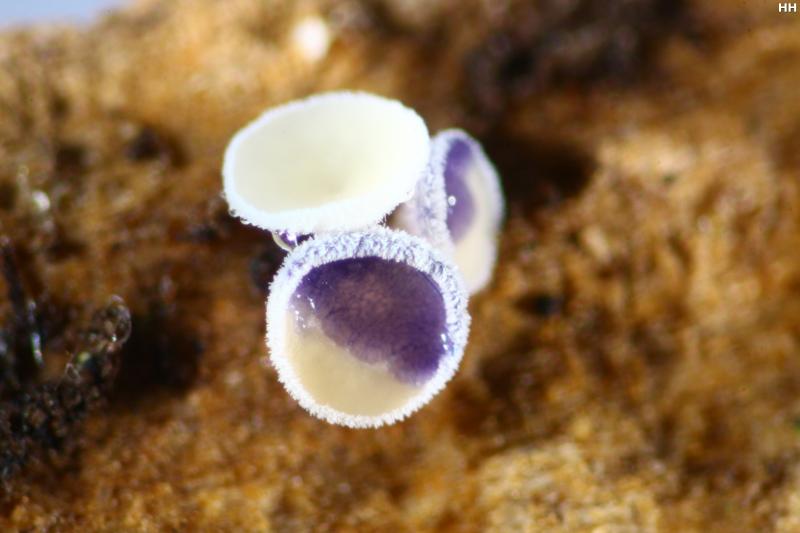
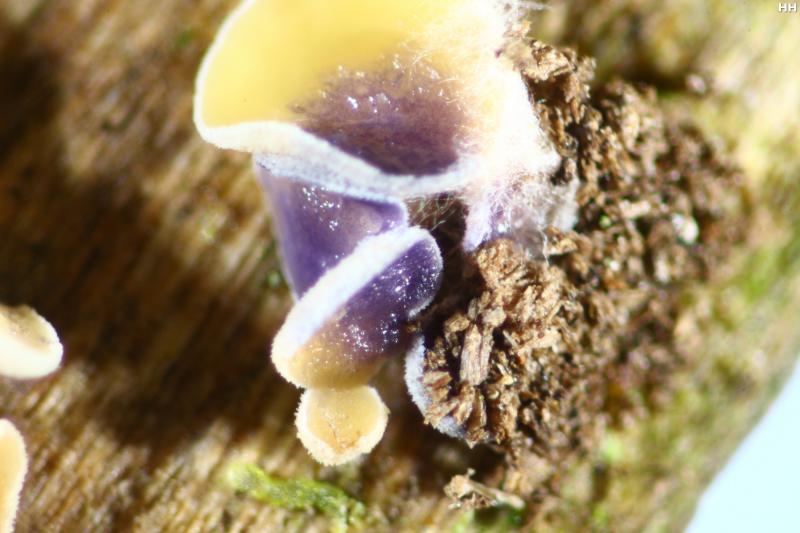
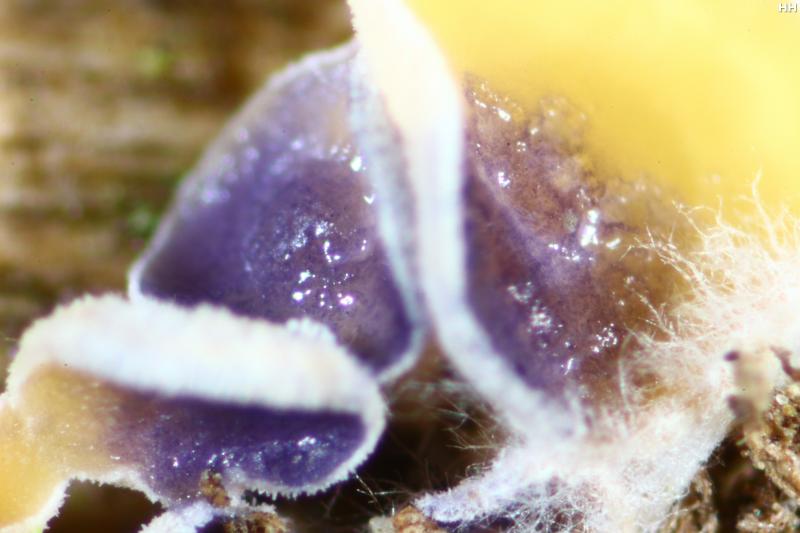
 Hello everyone!
While working through the finds from last Sunday, I found groups of fruiting bodies of Lachnum virgineum whose hymenium was discolored purple.
Since I do not remember any "chemical abuse" of the find, I suspect a parasite as the cause of the coloration.
Does anyone know this discoloration and its cause?
Many thanks and best regards
Harald
I think the coloration is due to growth of bacteria.
Yours, Lothar

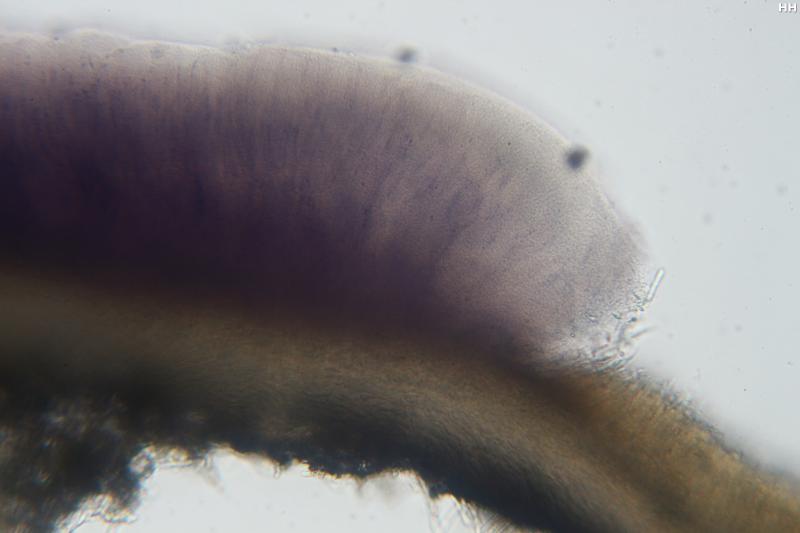
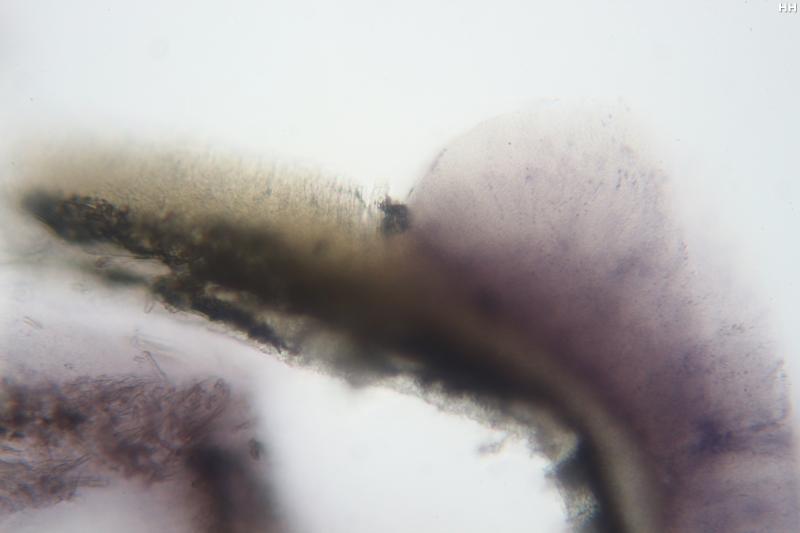
Following David's suggestion, I tried to make cross-sections of the infected fruiting bodies.
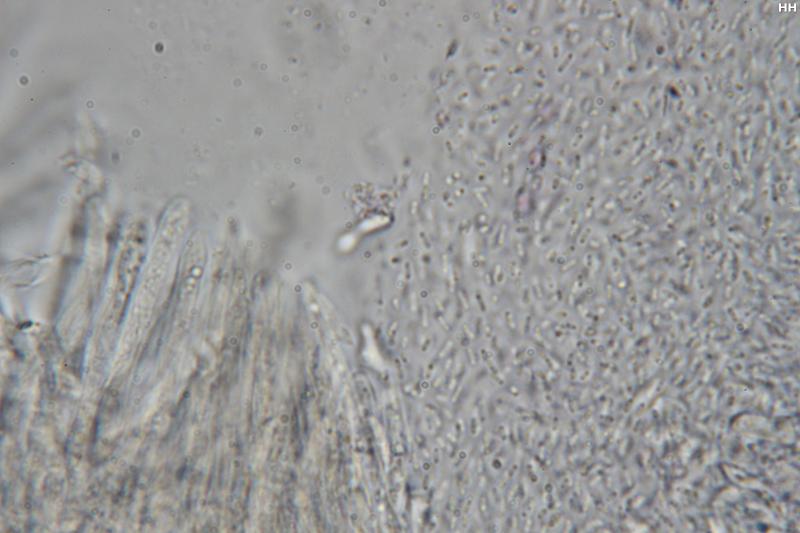
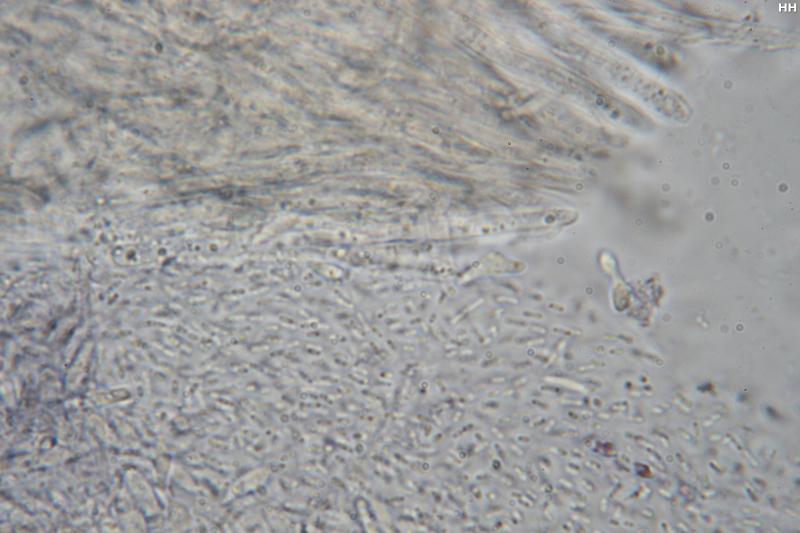
Here is the result with 16x and 100x objective.
It looks to me as if the hymenium is dissolved by the parasite and only the hairs, subhymenium and excipulum remain.
The obviously slimy layer of the parasite seems to have rod-like structures - bacterial parasite?
Best regards
Harald
This parasite is very common on Lachnum and Phaeohelotium, but not known which bacterium it is.
Maybe it could grow also on other Ascomycota.
I find it very exciting that the color changes.
best regards,
Thorben
Regards, Pimpek