
06-04-2026 16:24
Juuso ÄikäsLast Tuesday I found some tiny white Helotiales gr

05-04-2026 20:40
 Robin Isaksson
Hi!Found i Japan on bark of Abies sp. Spores 35-4
06-04-2026 11:07
Louis DENYBonjour forum, Trouvé sur bois de feuillu très d
06-04-2026 08:15
 Lothar Krieglsteiner
some days ago, on the lower surface of leaf of Que
05-04-2026 22:46
Lothar Krieglsteiner
on wood of Ceratonia, Algarve, 3.4.2026.The color
31-03-2026 21:18
 Miguel Ángel Ribes
Good evening. oes anyone have the original descrip
31-03-2026 20:57
Stefan BlaserHello everybody, I hope somebody can help me with
¿Capronia?
Josep Torres,
23-12-2024 14:37
 Hello.
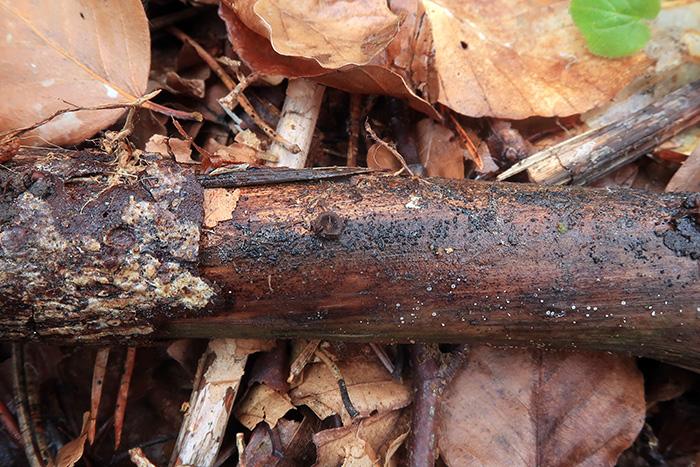
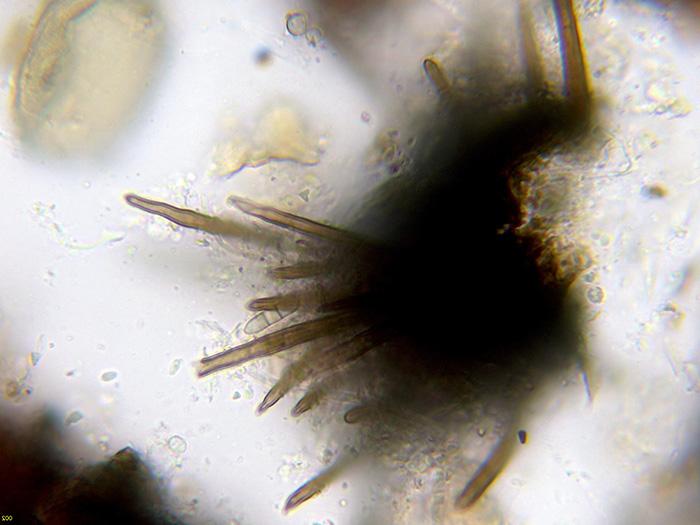
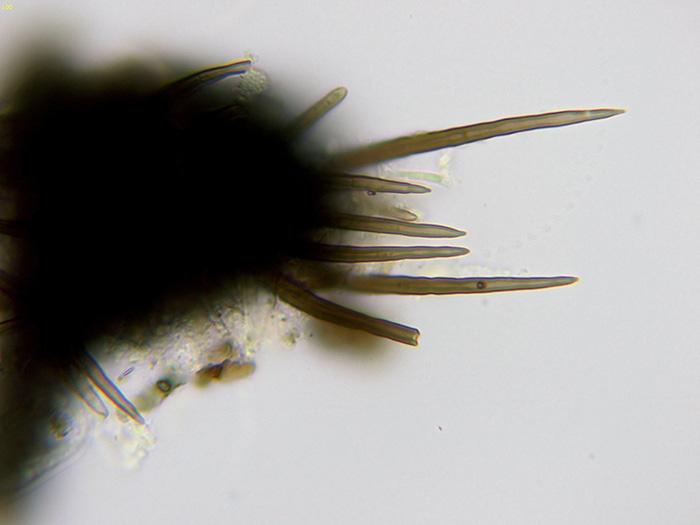
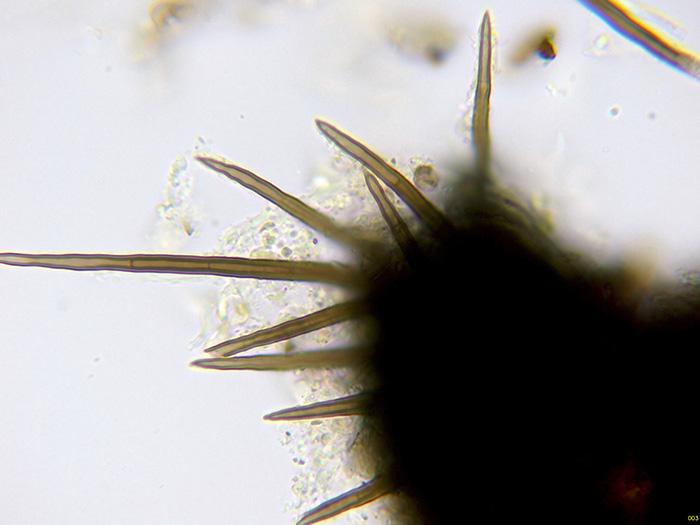
Some tiny globose black ascomata found on December 1st in a beech forest, although the trunk is most likely Pinus sylvestris, as they appeared next to some specimens of Hyalocypha aureliella, a very common ascomycete on this type of wood.
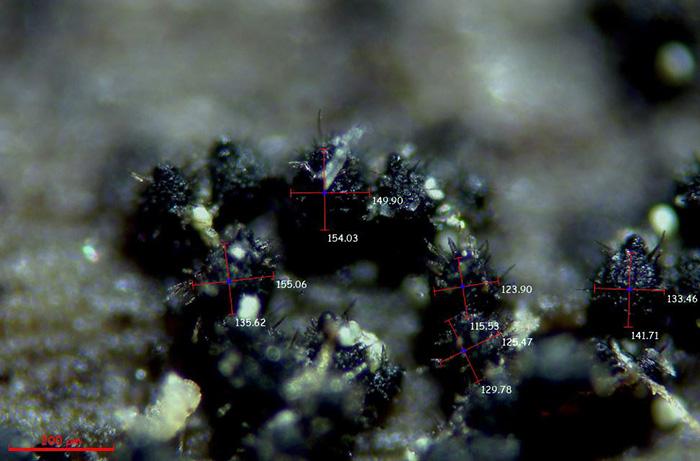
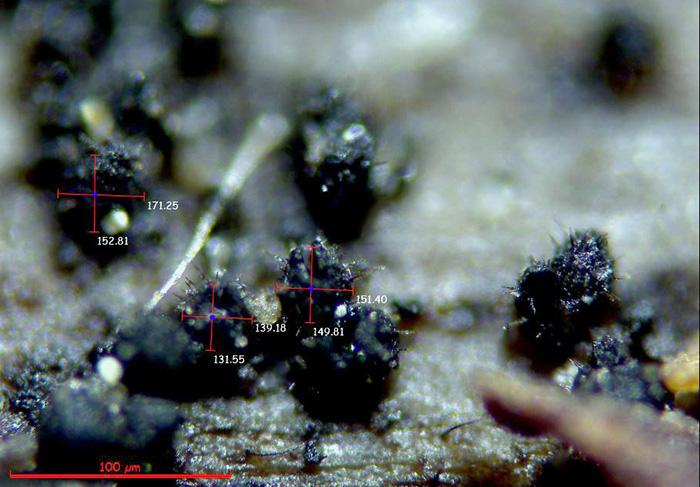
Ascomata with a size of only (123.9) 129.8 - 155.1 (171.2) × (115.5) 125.5 - 149.9 (152.8) µm. not counting the hairs.
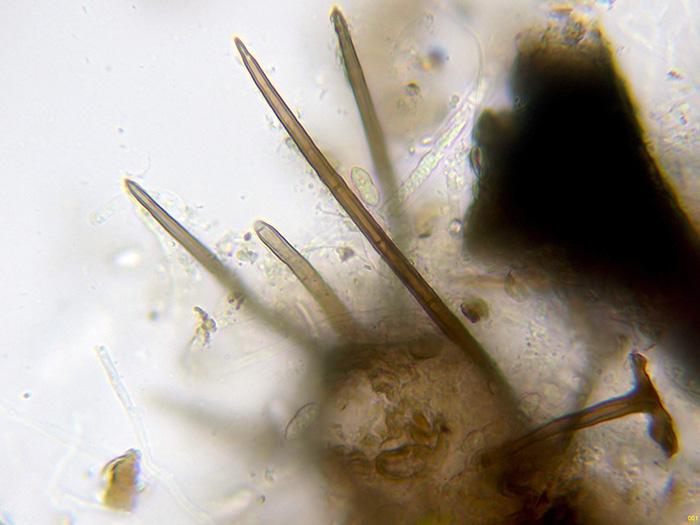
Brown hairs with thick walls, with one to four septa, measuring (25.4) 27.6 - 66.2 (90.9) µm., with a width at their base of (3.1) 3.2 - 4.6 (4.9) µm.
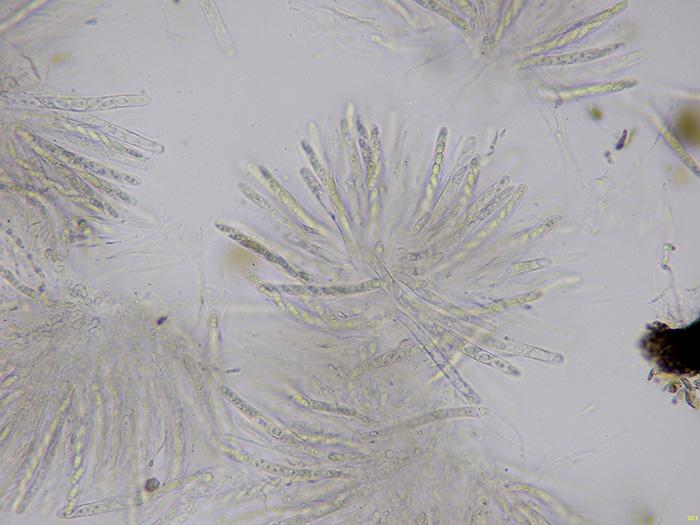
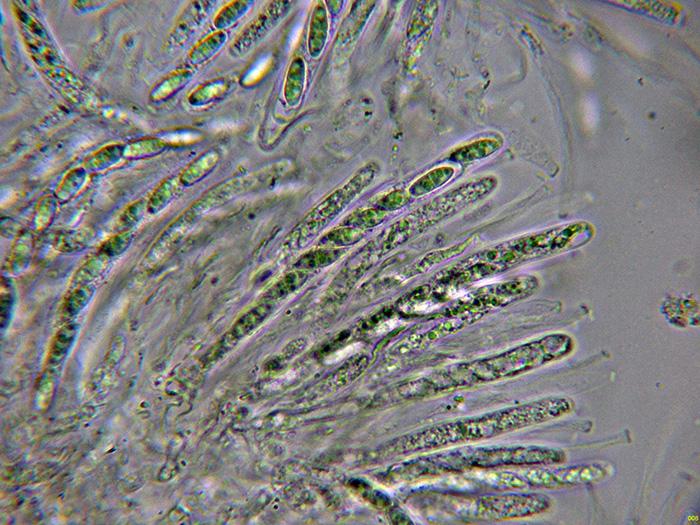
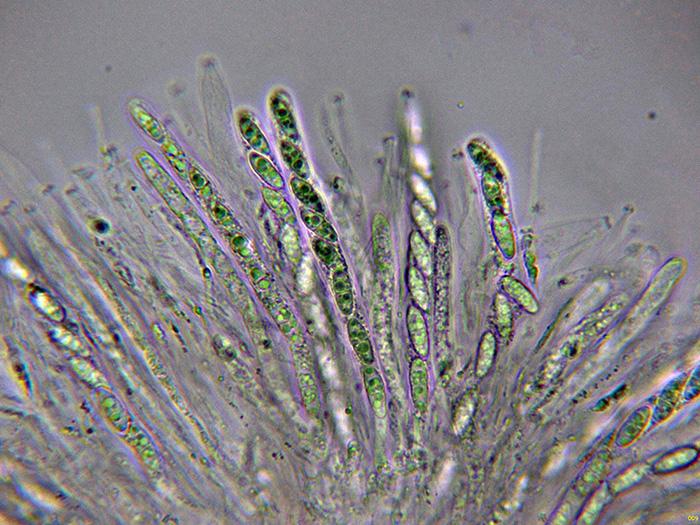
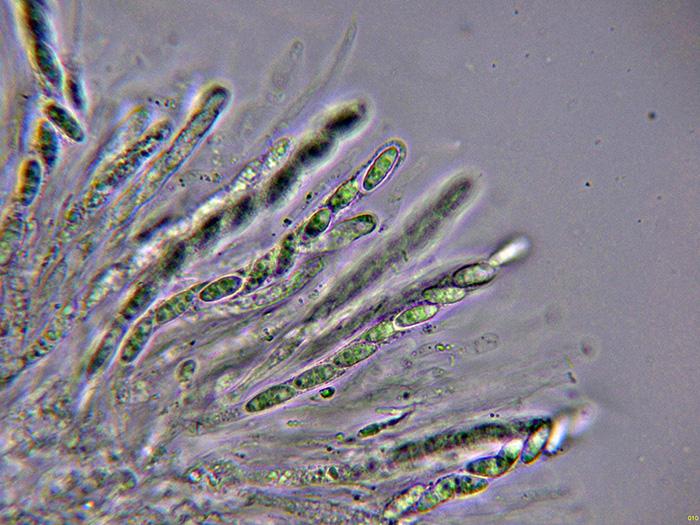
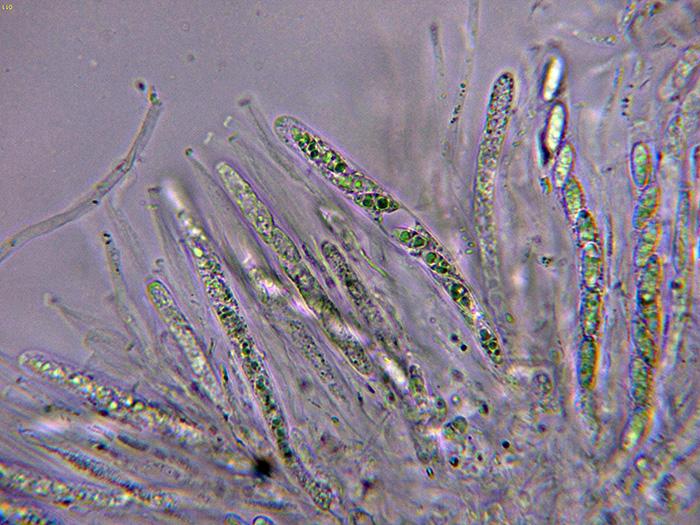
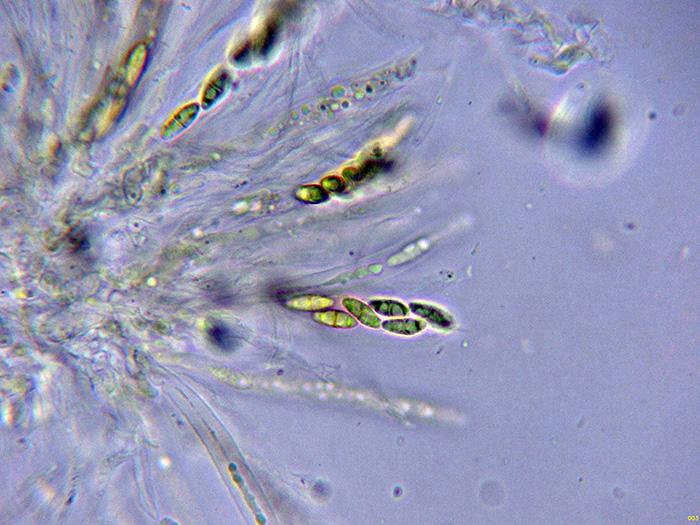
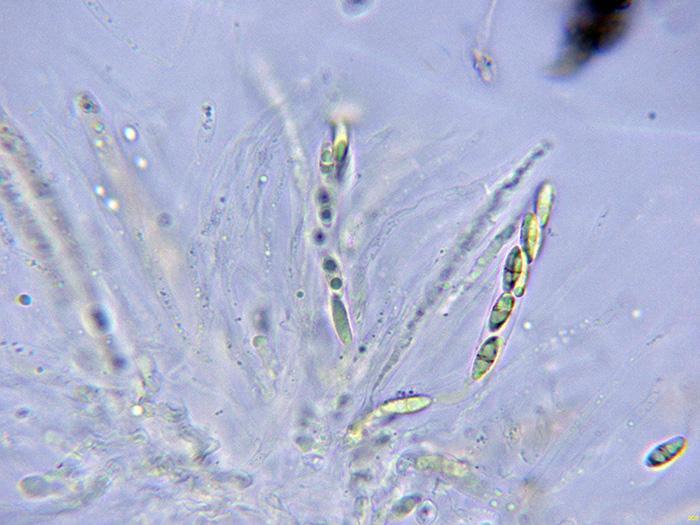
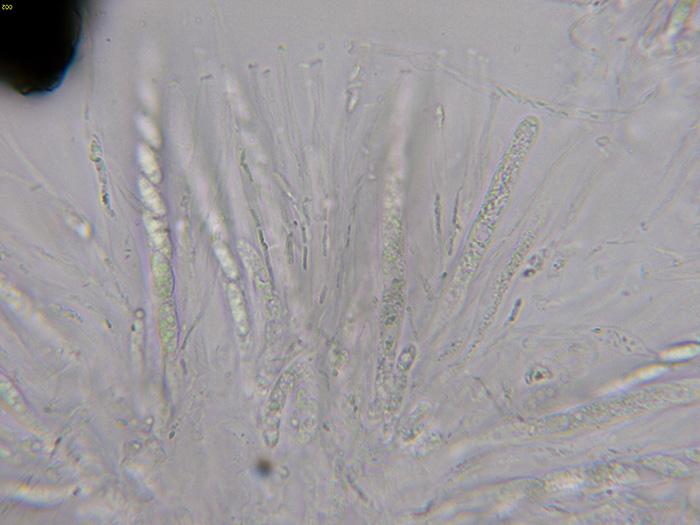
Asci are octosporic, inamyloid in Melzer form, measuring (63.5) 70.3 - 80.2 (84.2) × 4.9 - 6.9 (7.2) µm.
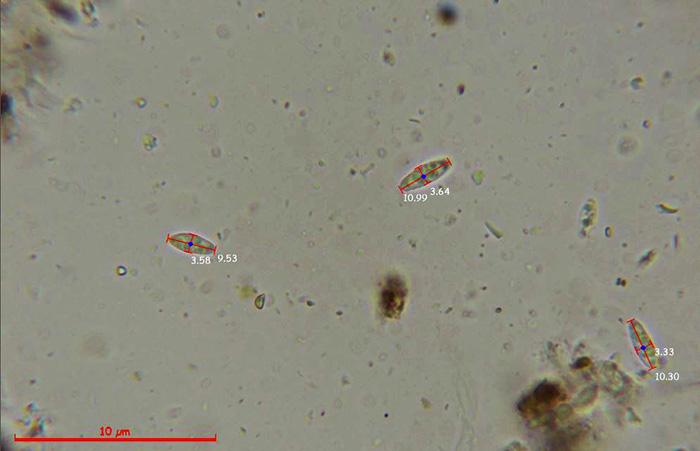
Few free spores observed, these hyaline spores, with a septum, with a constriction in it and with measurements of (9.5) 9.7 - 10.5 (11) × (3.3) 3.33 - 3.6 (4) µm., measurements practically identical to the mature spores inside the ascus, these spores inside the ascus with measurements of:
(9.1) 9.3 - 10.4 (10.8) × (3.2) 3.3 - 3.8 (3.9) µm
Q = (2.4) 2.6 - 3 (3.2) ; N = 32
Me = 9.8 × 3.6 µm ; Qe = 2.8
Given its characteristics, I am thinking of Capronia, although I cannot find any of the Keys to the genus that I have available that fit my proposal, and since I have seen something in some images that could correspond to paraphysis, I have even begun to doubt the genus.
Any suggestion from you will be well received.
Thank you very much in advance.
Greetings and Merry Christmas.
Josep Torres,
25-12-2024 12:13
Re : ¿Capronia?
Hello.
Any suggestions.
Since the Keys to Capronia are not leading me anywhere, could it be possible that with this spore morphology and its measurements it could be Helminthosphaeria?
Best regards and Merry Christmas.
Any suggestions.
Since the Keys to Capronia are not leading me anywhere, could it be possible that with this spore morphology and its measurements it could be Helminthosphaeria?
Best regards and Merry Christmas.
Thomas Læssøe,
29-12-2024 13:03
Re : ¿Capronia?
Capronia species have bitunicatae asci, so this genus is excluded since the asci in your fungus are unitunicate with a small refractive annulus. Helminthosphaeriaceae is a possibility as you imply.
happy new year
happy new year
Josep Torres,
30-12-2024 08:20
Re : ¿Capronia?
Thanks Thomas.
In any case, I'm already saving it in my files as Helminthosphaeria sp.
Happy New Year.
In any case, I'm already saving it in my files as Helminthosphaeria sp.
Happy New Year.