
28-05-2026 16:15
James MitchellHello,Does anyone have the original publication of
28-05-2026 11:06
Thomas Læssøehttps://svampe.databasen.org/observations/10596750
23-05-2026 11:44
 Charles Grapinet
Hello, I am having trouble identifying this copro
25-05-2026 16:44
François BartholomeeusenHi forum members,During an excursion organised by
26-05-2026 21:25
Dirk GerstnerHello everyone, I'm completely stumped by this li
26-05-2026 22:44
Ethan CrensonHi all, I think I have Incrucipulum capitatum her
22-05-2026 14:44
 Lothar Krieglsteiner
in unripe condition citrine yellow, then soon fadi
25-05-2026 16:35
 Bernard CLESSE
Bonjour à toutes et tous,J'ai trouvé récemment,
22-05-2026 13:29
Gernot FriebesHi,I am curious to hear your opinion on this mater
23-05-2026 18:57
Sylvie Le GoffBonjour à tousRécolté sur une branchette de Sal
Seeking ID
David Wasilewski,
03-06-2024 15:47
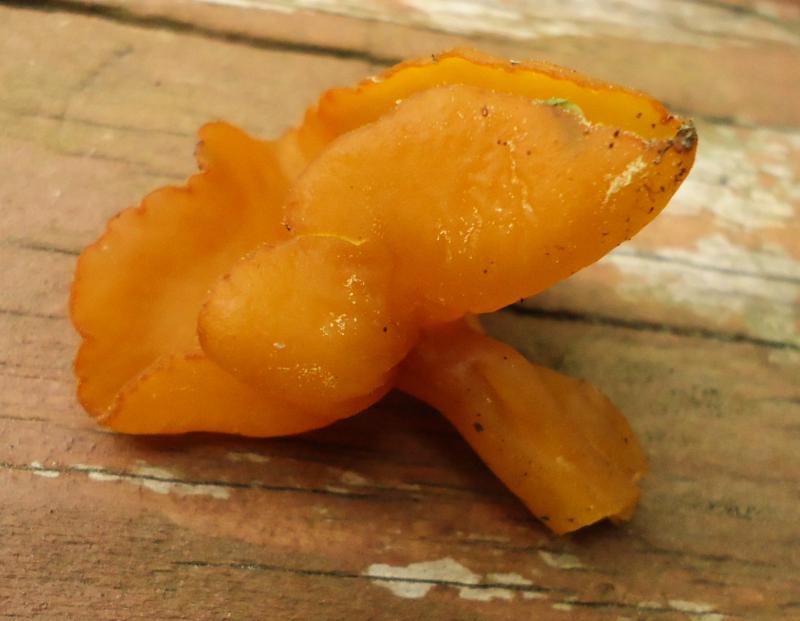
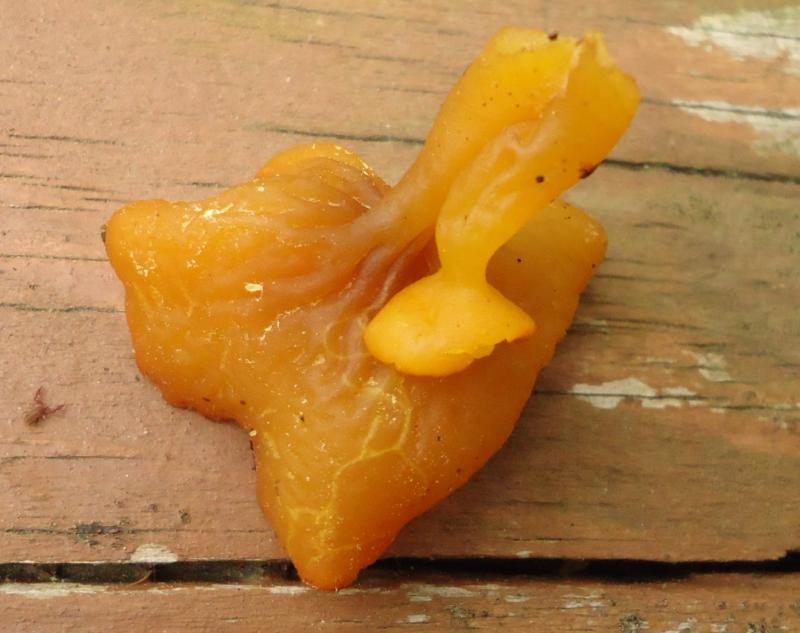
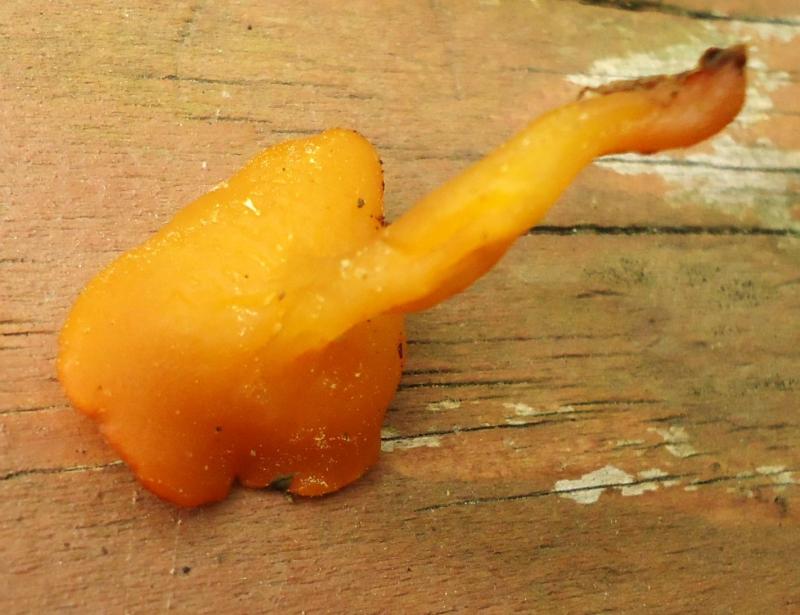
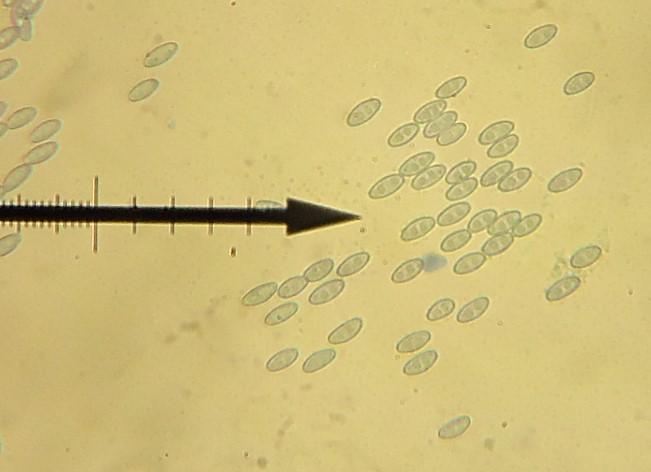
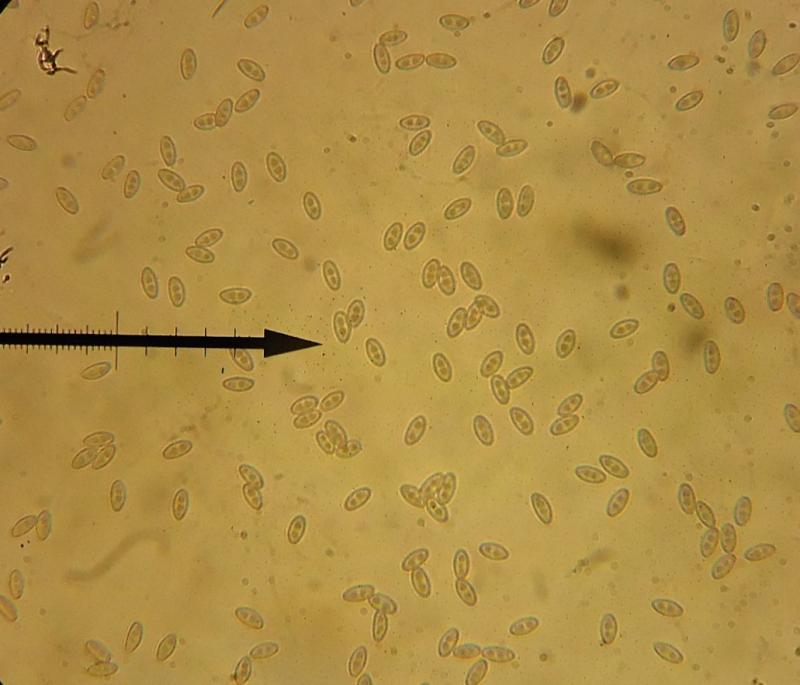
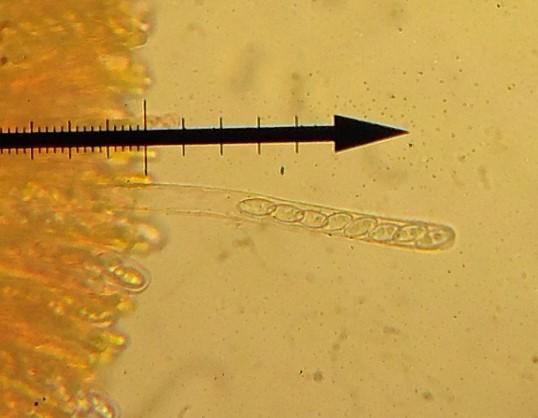
Spores smooth, ellipsoid, thin-walled, many biguttulate (more numerously for those from the 5-30 collection), 9-13 x 4-5.5.
Asci not amyloid, with 8 spores.
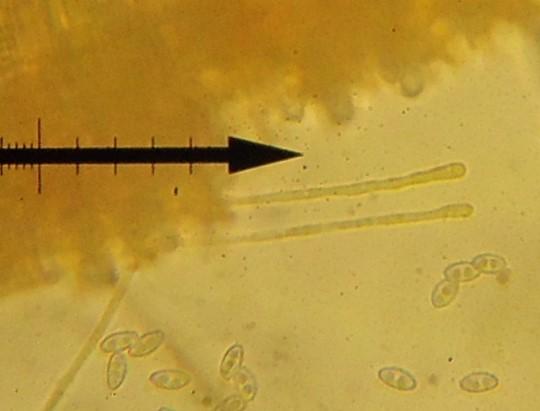
Paraphyses thinly stretched-clavate with slightly enlarged apices.
I scoped the spores mounted in each of cotton blue and Congo red (from prints on a slide), In Congo red the guttules are more eident.
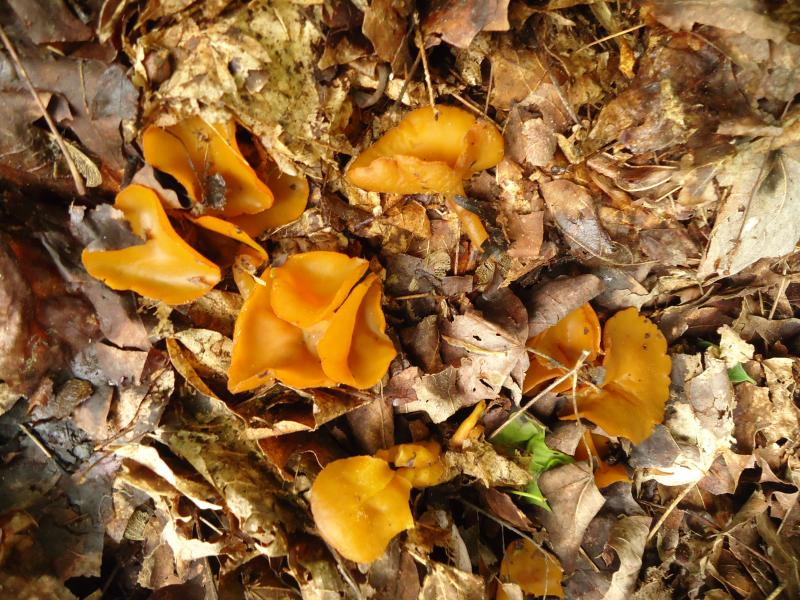
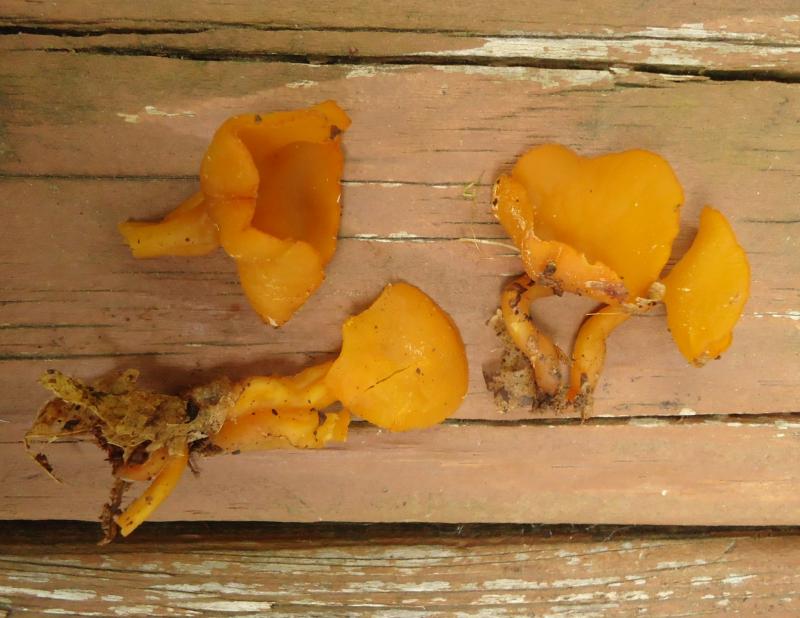
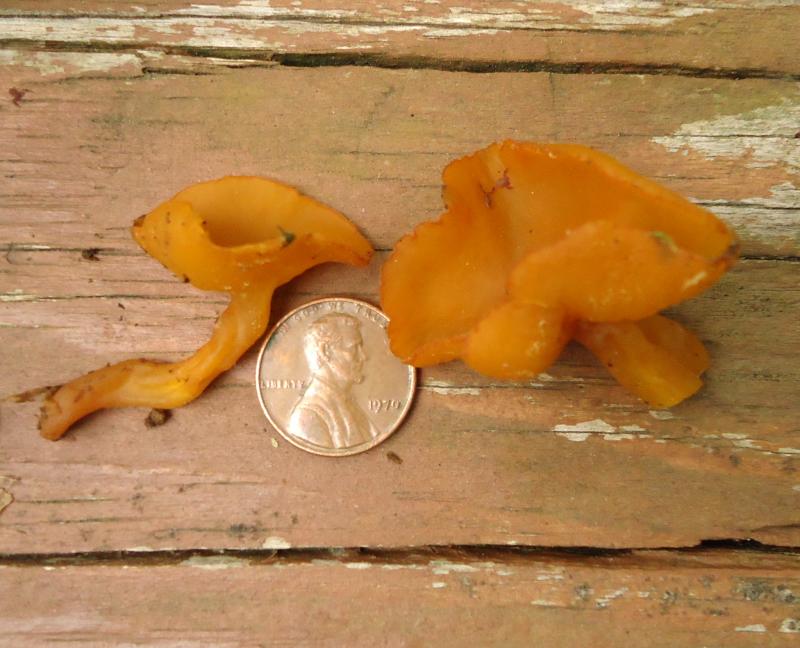
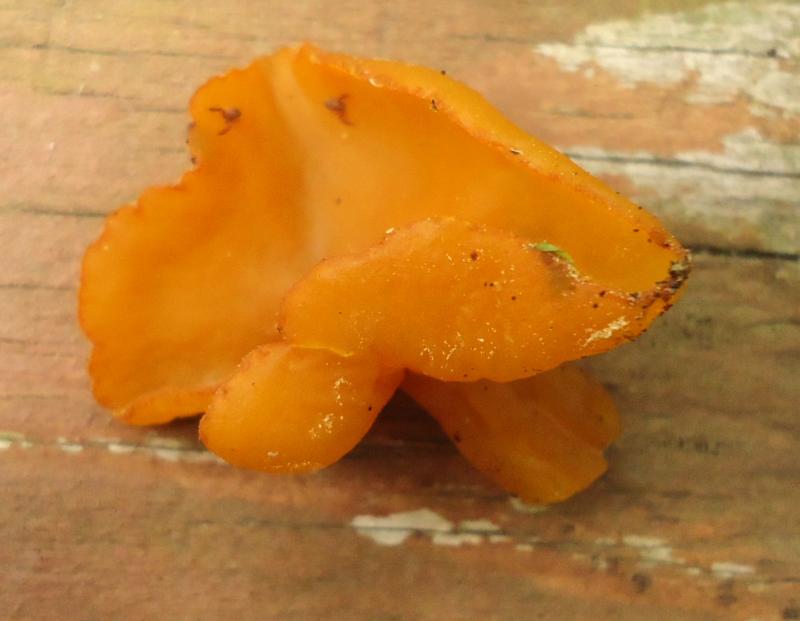
Observed in Northeastern Pennsylvania, USA.
Martin Bemmann,
03-06-2024 16:41

Re : Seeking ID
Hi David,
are you sure the spores are smooth? A larger magnification of the spores would be nice.
Maybe it is a Sowerbyella.
Regards
Martin
David Wasilewski,
03-06-2024 16:59
Re : Seeking ID
I am not certian the spores are smooth, although when viewed through my better binocular scope I did not detect ornamentation (at 400x). The two Sowerbyella species I compared have larger spores. The spores from my collection are ceertainly mature; the fruit bodies puffed clouds, and the spoores I examined/photographed come form a spore drop taken on a slide. 9-13 x 4-5.5, biguttulate.
Martin Bemmann,
03-06-2024 17:13
David Wasilewski,
03-06-2024 17:27
Re : Seeking ID
Thanks you, Martin! I'll have sime time this evening to use the key.
Lothar Krieglsteiner,
03-06-2024 21:21
Re : Seeking ID
I think this looks much like Sowerbyella fagicola, macroscopically. The spores should be ornamented then.
Yours, Lothar
https://www.pilzkunde.de/index.php/pilz-des-monats/pilz-des-monats-aeltere-beitraege/pilz-des-monats-2013?start=6
Yours, Lothar
https://www.pilzkunde.de/index.php/pilz-des-monats/pilz-des-monats-aeltere-beitraege/pilz-des-monats-2013?start=6
Nicolas VAN VOOREN,
04-06-2024 07:49

Re : Seeking ID
Look at the genus Acervus
David Wasilewski,
04-06-2024 15:26
Re : Seeking ID
I used the key and, although there are no exact matches, using the criteria spore dimensions, color of fruitt bodies, and habitat favoring deciduous trees (litter), I have three that at least lead in a favorable direction: S. radiculata var. kewensis; S. polaripustulata; S. brevispora. The latter seems to be the best fit, although the described color of the hymenium (both fresh and dried) is darker than for my observation.
I used the following chrome-extension://efaidnbmnnnibpcajpcglclefindmkaj/https://www.funga.fi/Karstenia/Karstenia%2024-1%201984-4.pdf . This document also mentions that S. brevispora has cyanophilic spores, which was observed for tthe spores I mounted in cotton blue. This featire was best seen through my better binocular scope that shows color fairly well 9nit pictured).
I used the following chrome-extension://efaidnbmnnnibpcajpcglclefindmkaj/https://www.funga.fi/Karstenia/Karstenia%2024-1%201984-4.pdf . This document also mentions that S. brevispora has cyanophilic spores, which was observed for tthe spores I mounted in cotton blue. This featire was best seen through my better binocular scope that shows color fairly well 9nit pictured).
David Wasilewski,
04-06-2024 15:29
Re : Seeking ID
Thanks you for the suggestion, Nicolas. The information I found on Acervus describes smaller fruit bodies and spores with significantly different dimensions (much smaller than mine).
David Wasilewski,
04-06-2024 15:32
Re : Seeking ID
Morphology fits S. fagicola well. But the spores dropped by my fruit bodies are significantly smaller than what is reported for S. fagicola; ie. for my spores L<13, for S. fagicola L>17.
David Wasilewski,
09-07-2024 18:57
Re : Seeking ID
ITS available at https://www.inaturalist.org/observations/220466300 .
Nicolas VAN VOOREN,
11-07-2024 10:54
Re : Seeking ID
Thanks.
Here is a ML tree integrating your sequence.
Here is a ML tree integrating your sequence.
 Phylogenetic tree of Sowerbyella nased on ITS