
09-06-2026 18:32
Camille MertensSur morceau de roseau immergé 0,5 - 0,7 mm de dia
10-06-2026 12:54
Steve ClementsBonjour encore, Pouvez-vous m'aider, s'il vous pl

10-06-2026 21:16
 François Freléchoux
Bonsoir,Le dernier du jour, en attendant votre avi
10-06-2026 21:07
François Freléchoux
Toutes les tiges de gentianes jaunes de l'an passÃ
10-06-2026 13:41
François Freléchoux
Bonjour à nouveau, Voici une trouvaille d'hier.
10-06-2026 11:53
Steve ClementsBonjour, This disco is abundant on dead stems of
10-06-2026 10:45
François Freléchoux
Bonjour à nouveau, Encore une détermination qui
08-06-2026 10:16
 Spooren Marco
I don`t have a clou about this fungus,it is not in
Summarizing the few topics about Rutstroemia maritima here on the Forum and the description of R. calopus in the article "Estudio de la micobiota de los ecosistemas dunares de la Peninsula Ibérica e Islas Baleares"
produces the following:
R. paludosa - R. calopus - R. maritima
Cyperaceae + Juncaceae - Poaceae - Ammophila arenaria
long stalk - short stalk - sessile or very short stalk
no real croziers - croziers - croziers
amyloid - amyloid - non-amyloid
and the conclusion that this complex still needs further study.
But the last topic is dated 2021 and perhaps new insights have now been emerged?
So, once again a Rutstroemia/Clarireedia maritima, R. calopus var or some spec.
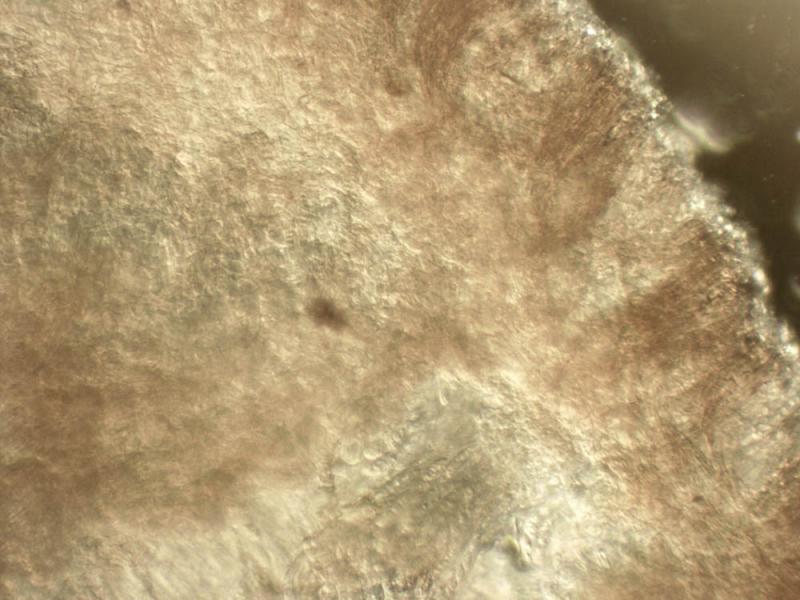
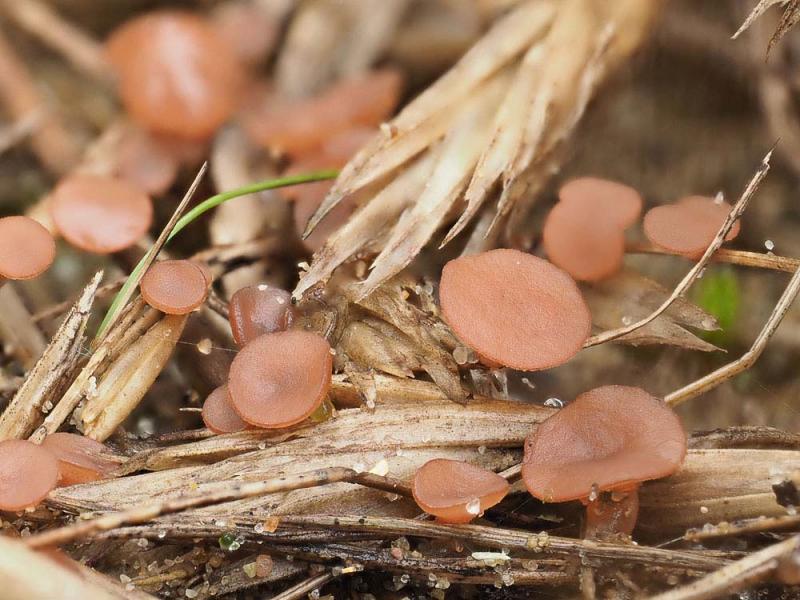
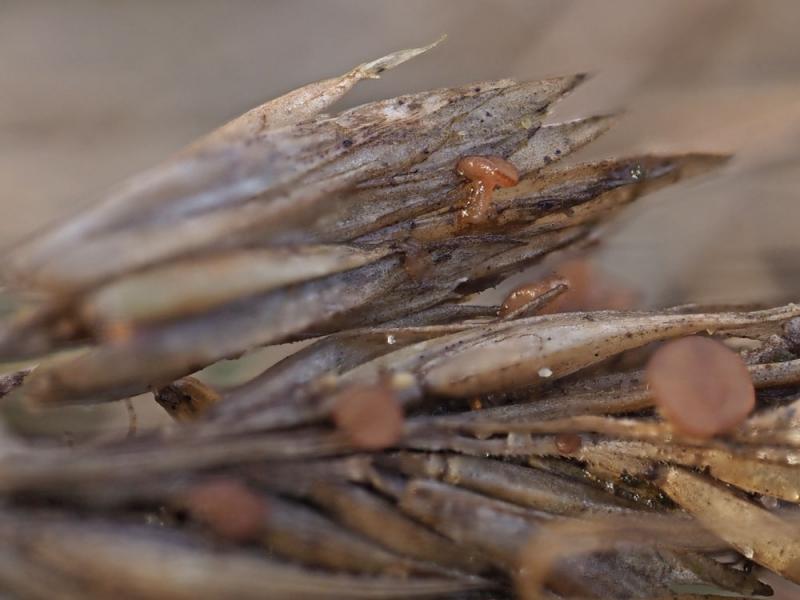
The substrate consists of the decaying spikelets of Ammophila arenaria, habitat is a small sand drift in the grey dunes.
The ascocarps are sessile-short stalked, the color is pale reddish-brown.
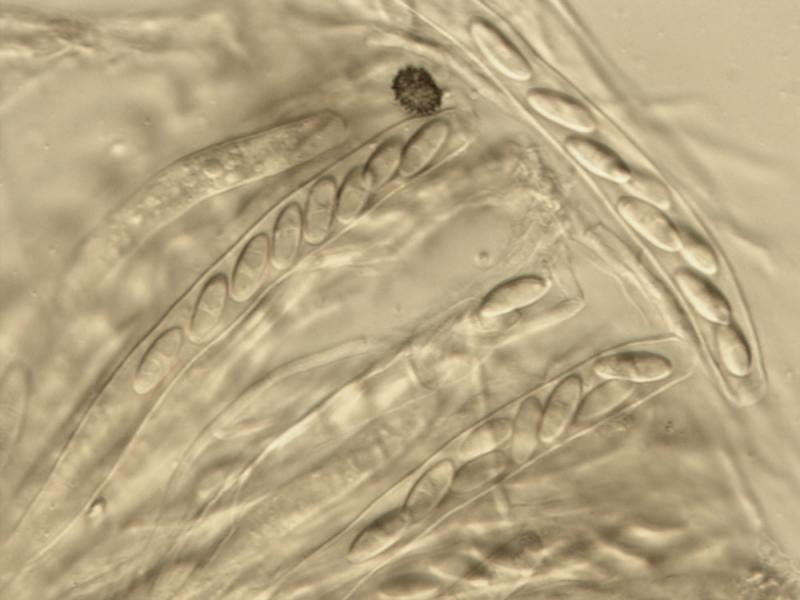
The asci are non-amyloid and they have croziers.
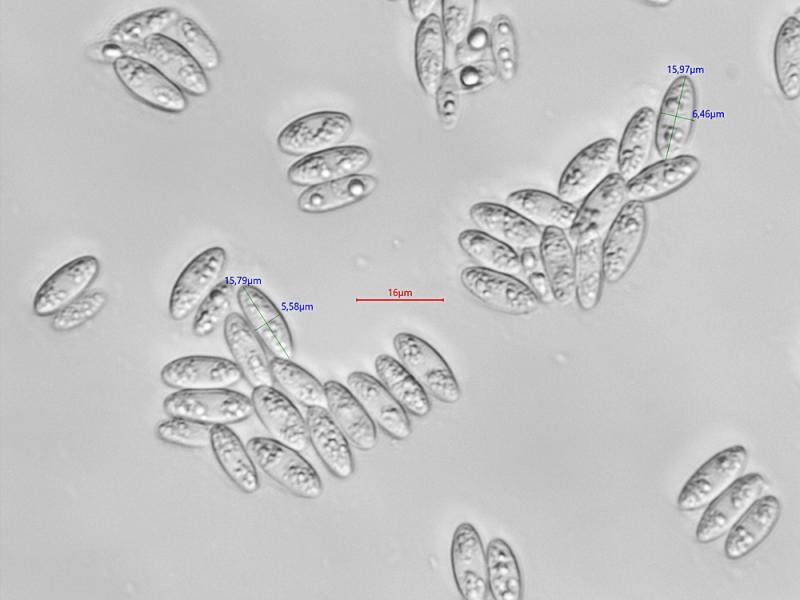
Spores measured (14) 12.0-17.0 x 5.0-7.0 mu, with small droplets.
Parafyses cilindric and a bit longer than the asci.
I think it should be C. maritima, but does C. maritima now exist?
thanks and regards
Bertien Roelandse
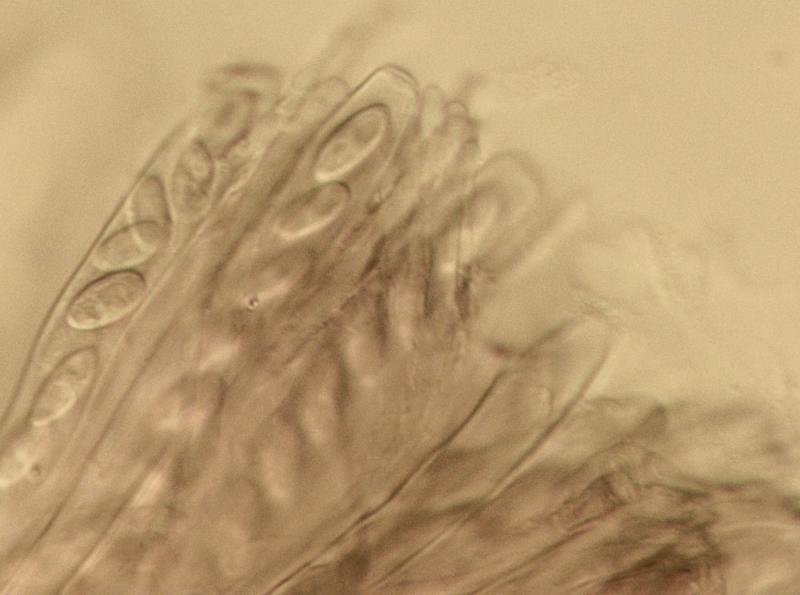
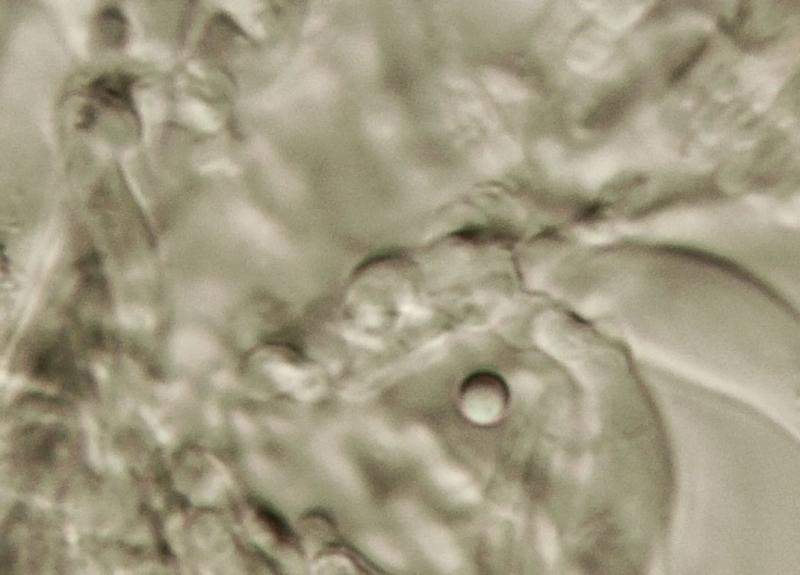
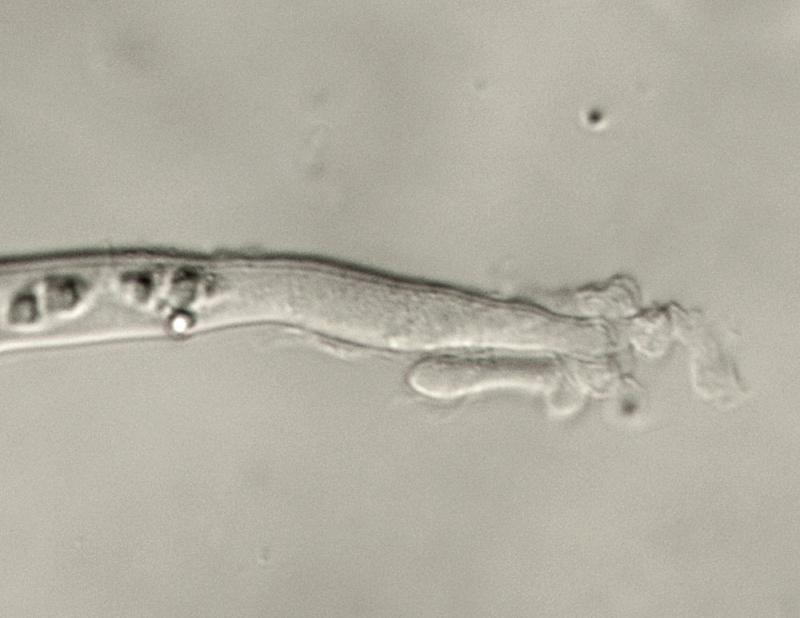
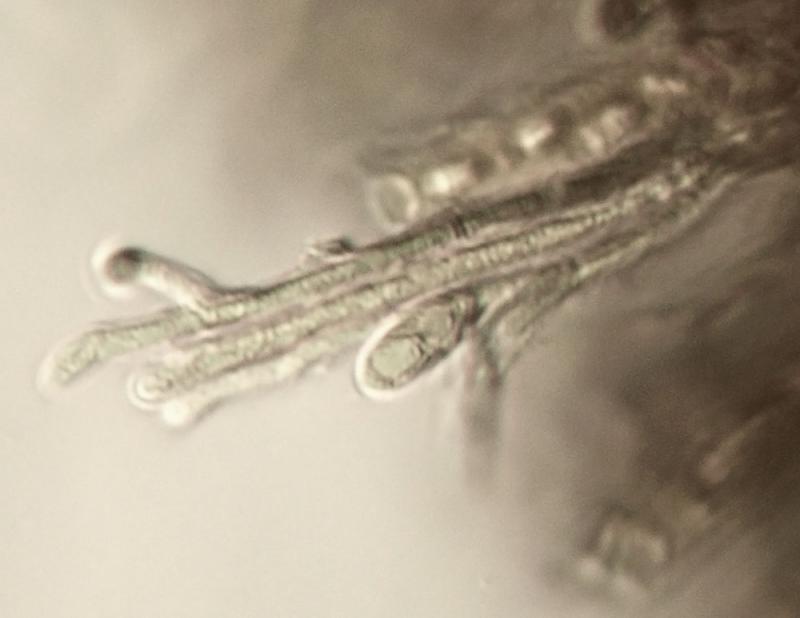

I thought the Clarireedia's were picky enough about their hosts to deserve their names, but you're right, thoughts are usually not enough in mycology.
My lovely Clarireedia's will have to wait until the specialists can prove that they are what they are. Too bad!
In any case, thanks for your answer.
Bertien
Thanks for your beautiful last sentence, it is a nice way to end my story about 'Clarireedia maritima'.
Bertien