
10-06-2026 12:54
Steve ClementsBonjour encore, Pouvez-vous m'aider, s'il vous pl
09-06-2026 18:32
Camille MertensSur morceau de roseau immergé 0,5 - 0,7 mm de dia

10-06-2026 21:16
 François Freléchoux
Bonsoir,Le dernier du jour, en attendant votre avi
10-06-2026 21:07
François Freléchoux
Toutes les tiges de gentianes jaunes de l'an passÃ
10-06-2026 13:41
François Freléchoux
Bonjour à nouveau, Voici une trouvaille d'hier.
10-06-2026 11:53
Steve ClementsBonjour, This disco is abundant on dead stems of
10-06-2026 10:45
François Freléchoux
Bonjour à nouveau, Encore une détermination qui
08-06-2026 10:16
 Spooren Marco
I don`t have a clou about this fungus,it is not in
10-06-2026 09:24
François Freléchoux
Bonjour, J'imagine que cette détermination ne do
Mollisia discolor?
Riet van Oosten,
03-11-2023 14:23

Hello,
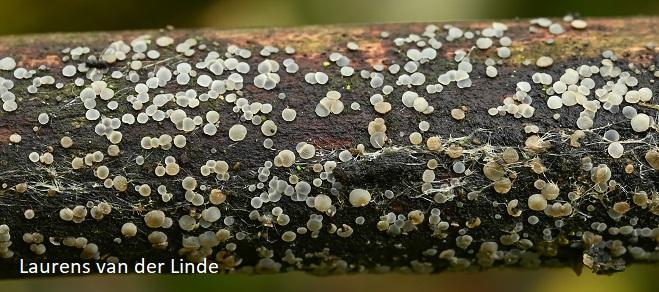
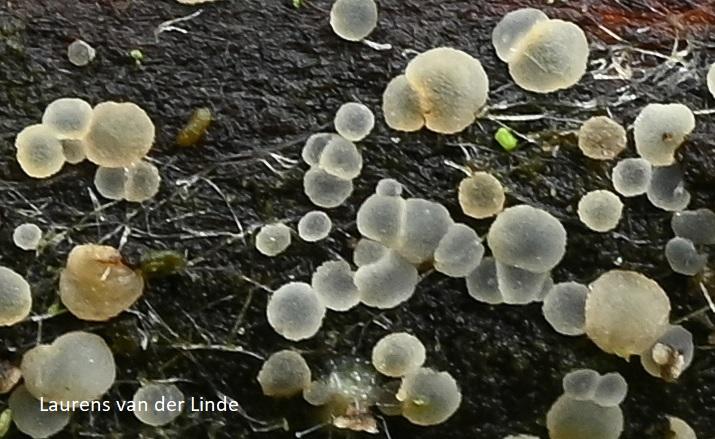
Found by Laurens van der Linde, 26-10-2023 on Cornus.
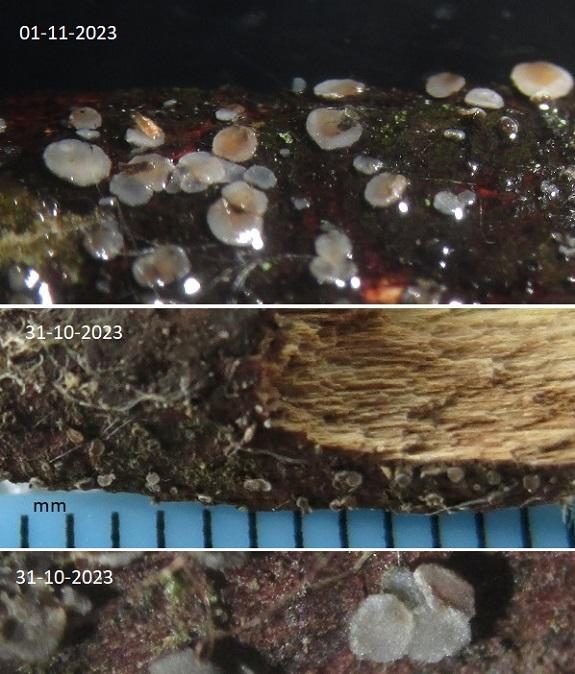
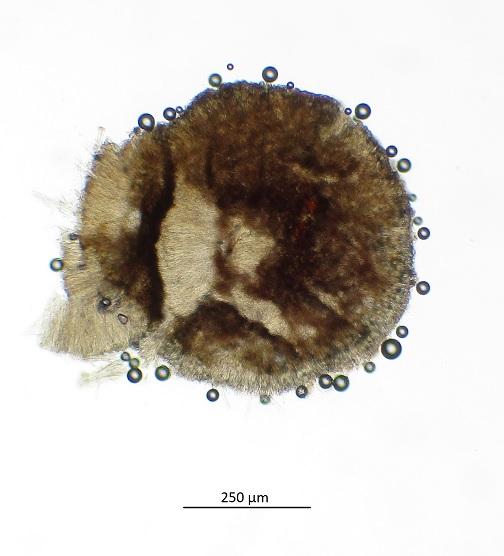
Very small fruitbodies, is this Mollisia discolor?
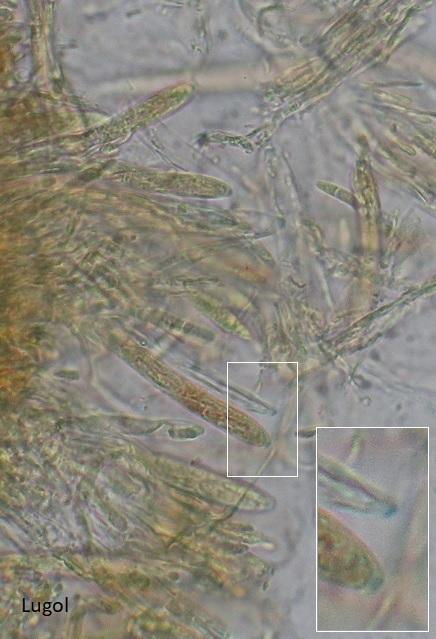
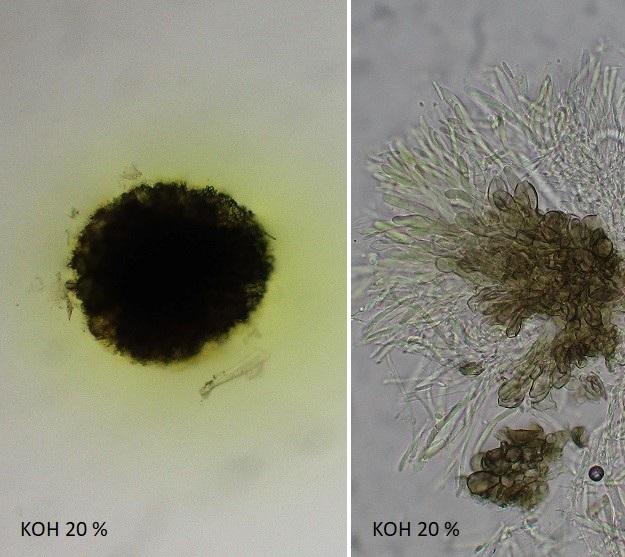
- KOH reaction yellow
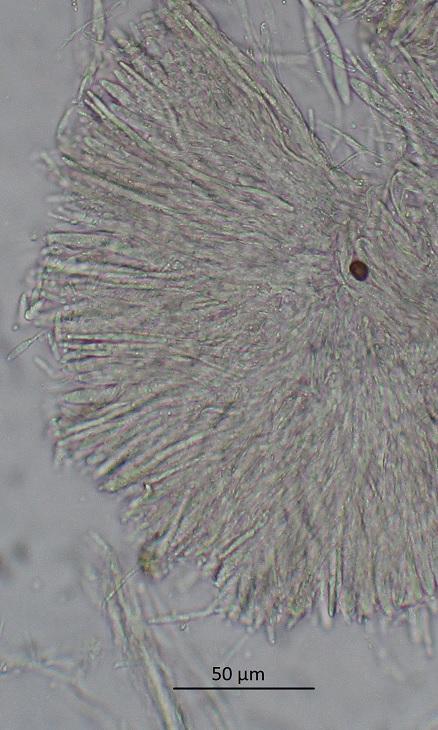
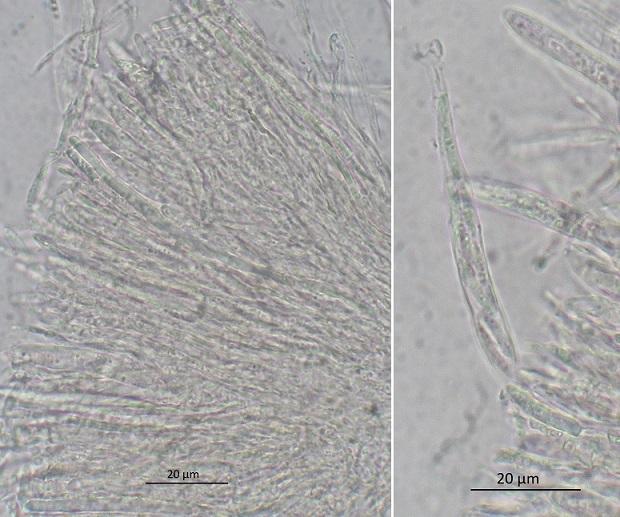
- Asci with croziers
- IKI+
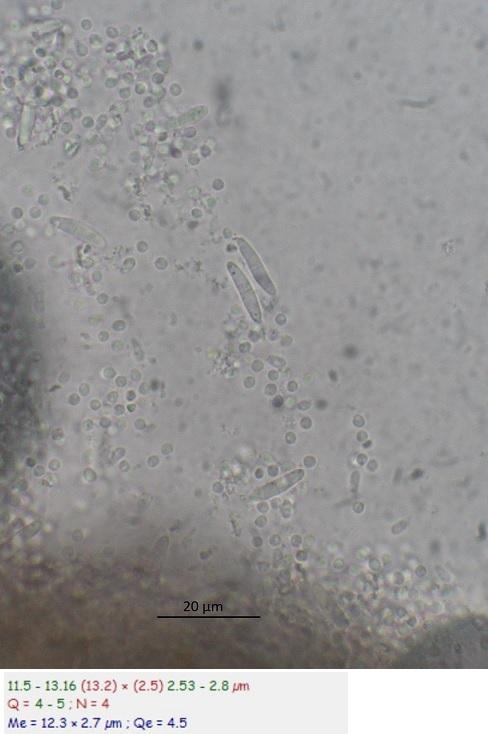
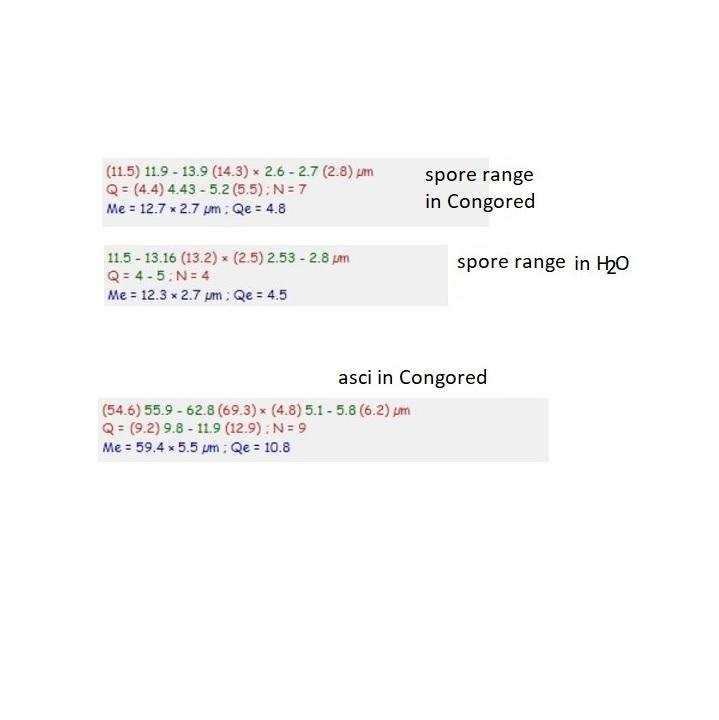
- spore sizes Me: 12.3 x 2.7 µm
Greetings, Riet
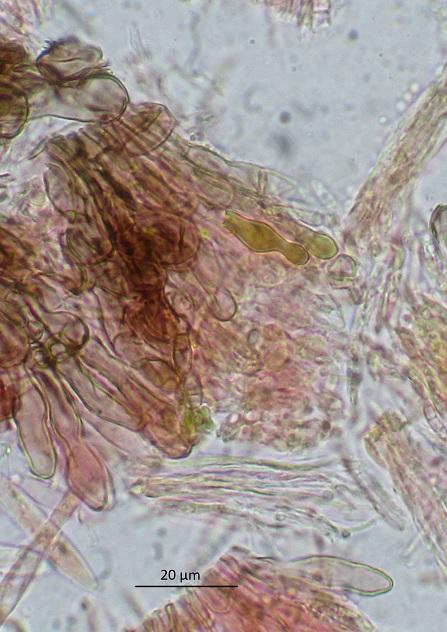
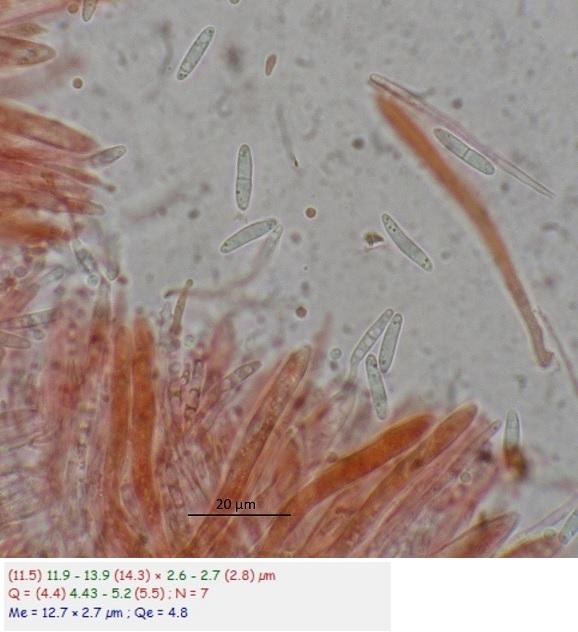
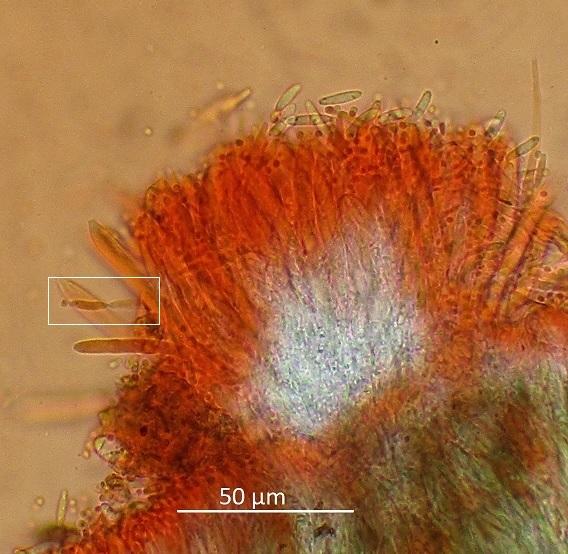
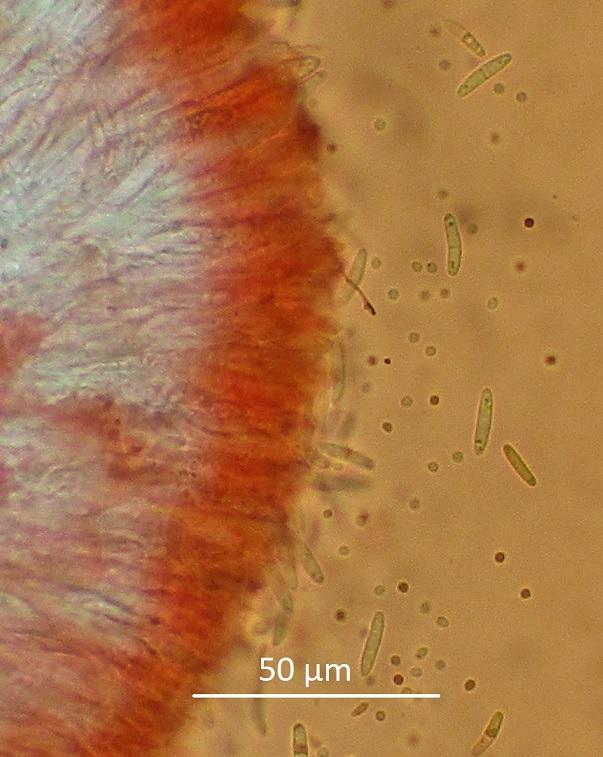
Hans-Otto Baral,
03-11-2023 15:54

Re : Mollisia discolor?
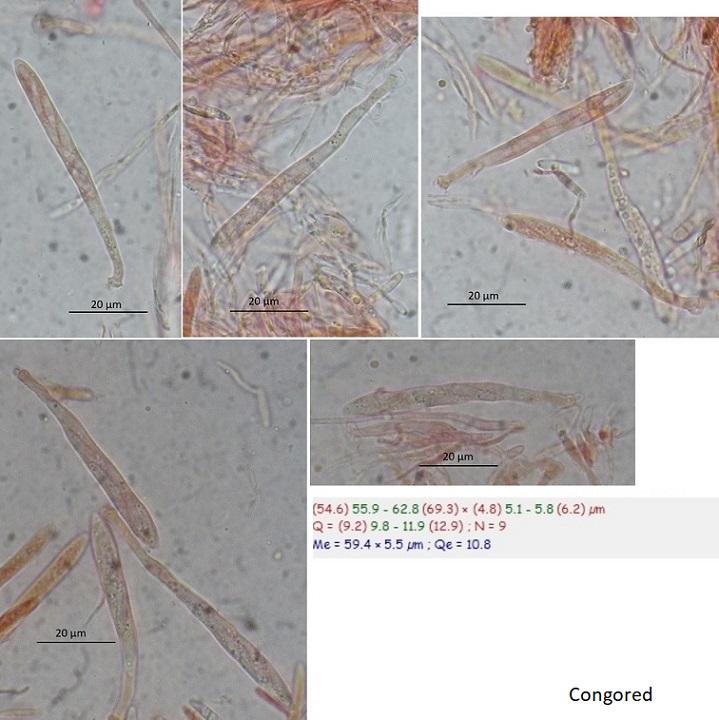
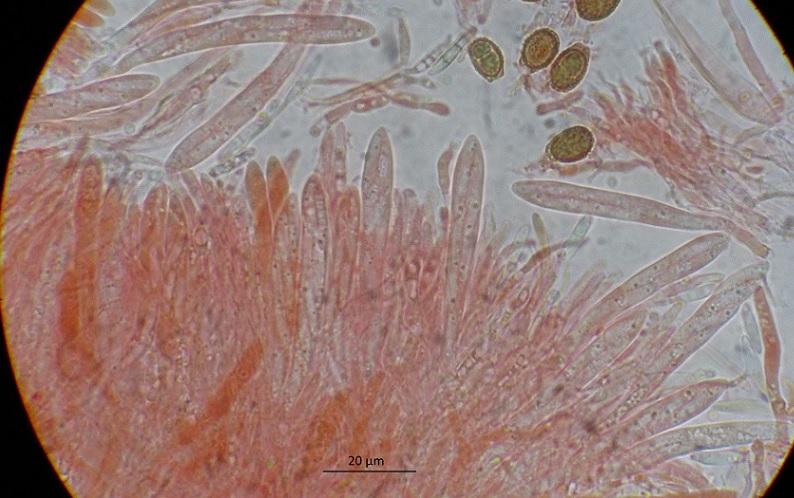
I used discolor for a species with biguttulate spores, the LBs in the middle of each half, and KOH negative reaction. Not sure what this is. The spores are surely ejected when non-septate but how is the spore range and how the size of the asci (either living or dead)?
Is this a corticated twig as it looks-like or is it bare wood?
The branch was on the moist ground?
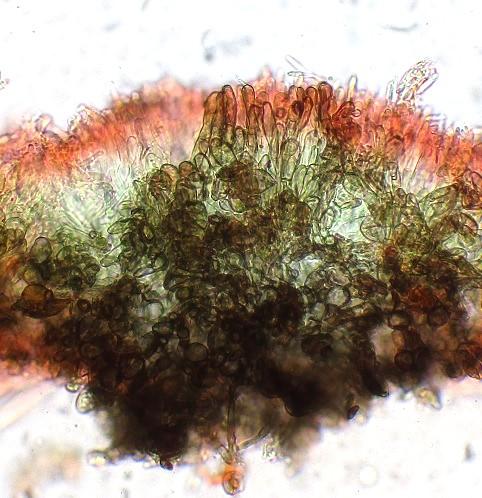
The apos on the first photo look like up to 0.5 mm at least, but the scale is on a photo with only a few perhaps much smaller apos. In fact, photos 4-5 show that the apos are up to 0.5 mm which is a medium size in Mollisia.
Riet van Oosten,
03-11-2023 17:45
Re : Mollisia discolor?
Got a message from Laurens: the twig was corticated (fresh bark) and connected to a group of branches (it is a young tree) about 1.5 m from the ground, the apos grew together with Encoelia fuckelii.
Hans-Otto Baral,
03-11-2023 20:25
Re : Mollisia discolor?
This is good. Anyway, Mollisia is extremely difficult and it is advisable to obtain a sequence. Did you test Andreas' key?
The asci are all dead on the photos, for living asci one must multiply the values by perhaps 1.2x. Spore size is the same in H2O and CR but I assume both cases refer to living spores, dead spores are usually distinctly smaller (e.g. in MLZ).
The species could be drought-tolerant, considering its habitat.
I have not the time to scroll through my folders, there are many species , some folders have data on spore size and KOH-reaction.
Riet van Oosten,
03-11-2023 20:36
Re : Mollisia discolor?
Thank you very much for your help Zotto!
This weekend I will scroll your folders and try the key!
Riet van Oosten,
06-11-2023 18:13
Re : Mollisia discolor?
With Andreas' key (2008) I soon end up with Mollisia prunicola .......
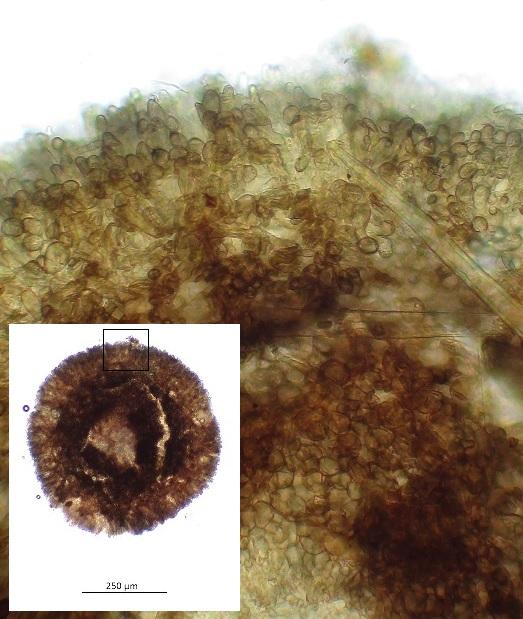
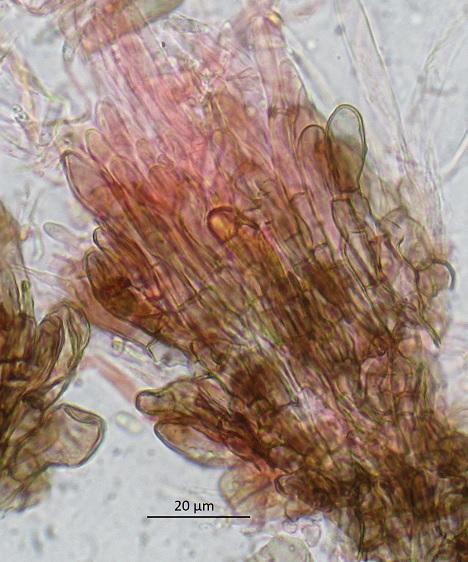
7a: marginal cells very conspicious, blackish-brown, evidently > 50 µm, and mostly encrusted and KOH-reaction always strongly lemon-yellow.
8b: sp 9-14 x 2.2-3 µm, oil 3-4, asci with croziers on Prunus spinosa = M. prunicola
(The apos grew together with Encoelia fuckelii/Xeropilidium dennisii)
Hans-Otto Baral,
06-11-2023 21:19
Re : Mollisia discolor?
Surely this is no option.
So the branch was exposed when there was Xeropilidium.
Riet van Oosten,
07-11-2023 15:12
Re : Mollisia discolor?
Laurens van der Linde: they were quite close together (10-20 cm distance) and on the same side of the twig.
Next time Laurens will check if there are any fruitbodies still present.
Next time Laurens will check if there are any fruitbodies still present.