09-06-2026 18:32
Camille MertensSur morceau de roseau immergé 0,5 - 0,7 mm de dia

10-06-2026 12:54
Steve ClementsBonjour encore, Pouvez-vous m'aider, s'il vous pl
10-06-2026 21:16
 François Freléchoux
Bonsoir,Le dernier du jour, en attendant votre avi
10-06-2026 21:07
François Freléchoux
Toutes les tiges de gentianes jaunes de l'an passÃ
10-06-2026 13:41
François Freléchoux
Bonjour à nouveau, Voici une trouvaille d'hier.
10-06-2026 11:53
Steve ClementsBonjour, This disco is abundant on dead stems of
10-06-2026 10:45
François Freléchoux
Bonjour à nouveau, Encore une détermination qui
08-06-2026 10:16
 Spooren Marco
I don`t have a clou about this fungus,it is not in
10-06-2026 09:24
François Freléchoux
Bonjour, J'imagine que cette détermination ne do
Under a pile of grass clippings (grass and herbs) I found several conidiomata. Under the microscope I found no conidiphores only loose conidia and hyphae.
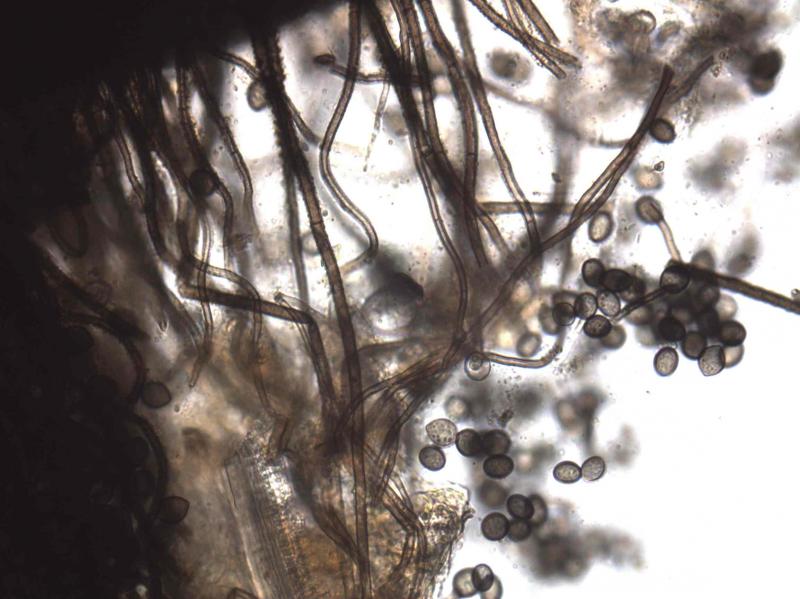
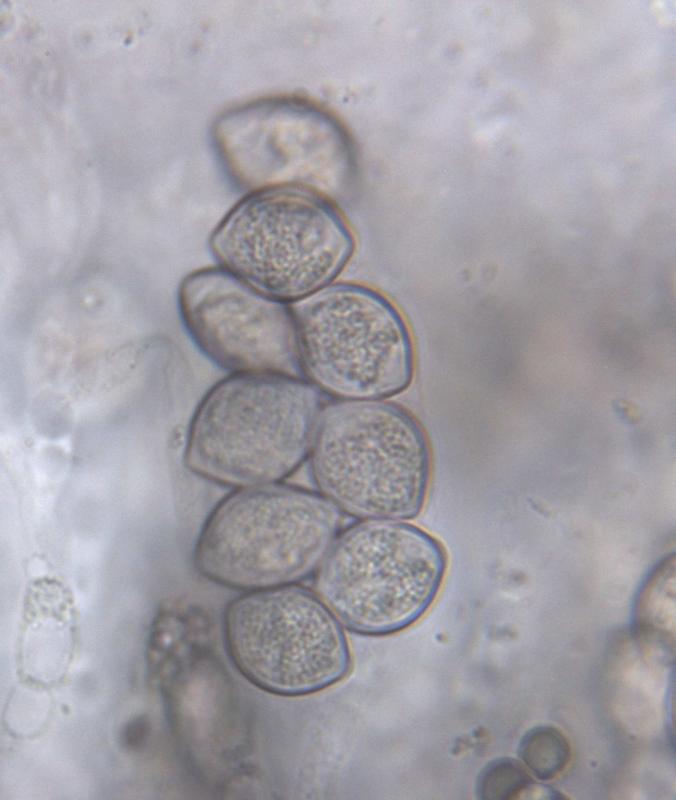
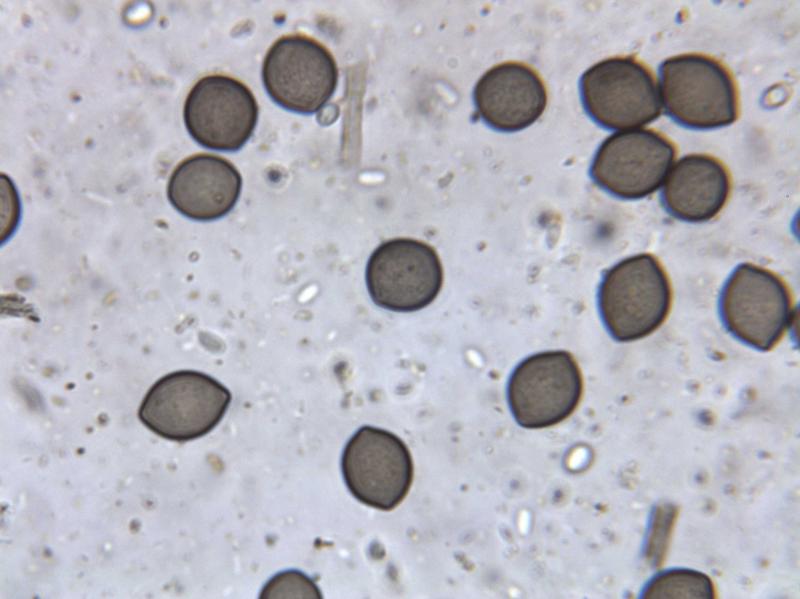
The hyphae are brown and thick-walled, smooth or sometimes also verruculose and septated. The conidia are citriform with conidial hila and following dimensions: Me = 13.1 × 10 µm ; Qe = 1.3. First hyaline later black.
Would this belong to the genus Cladosporium and can anyone determine the species?
After two weeks I found Rhopalomyces magnus on the substrate so probably among the rotten grass is also dung.
All help is welcome!
Best regards,
François Bartholomeeusen
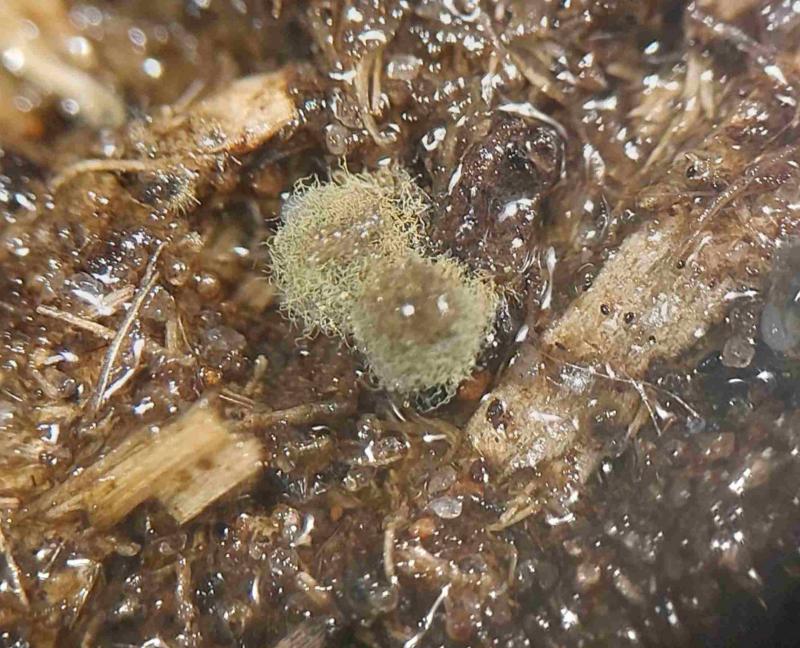
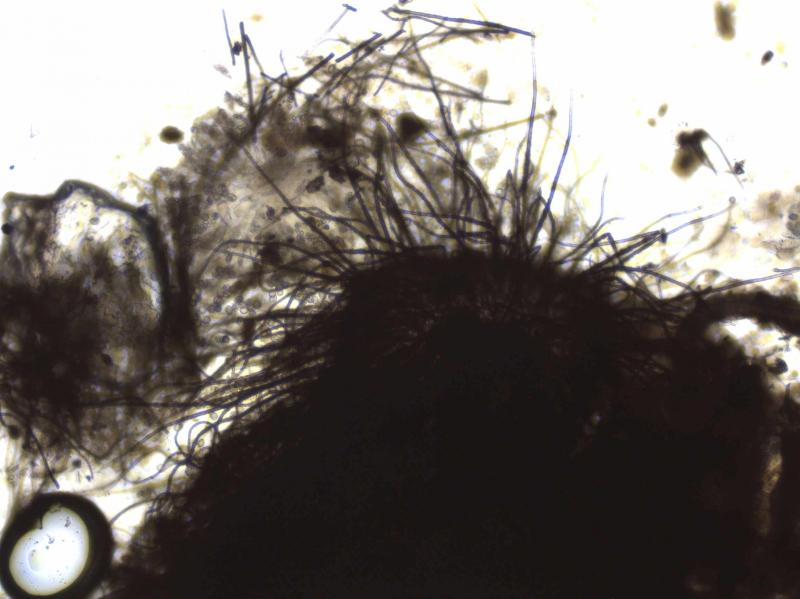
Regards Przemek
thanks to your help and the literature I found, I think I choose: Chaetomium elatum.
The spore dimensions and description seem correct: "limoniform, biapiculate or umbonate, bilaterally flattened, brown when mature, with an apical germ pore".
The description of the terminal hairs is also correct : "verrucose or warty, brown, erect or flexuous in the lower part, 2.5-4.5 ?m diam. near the base, repeatedly and dichotomously branched at right to nearly straight angles in the upper part, with relatively flexible, flexuous or undulate terminal branches".
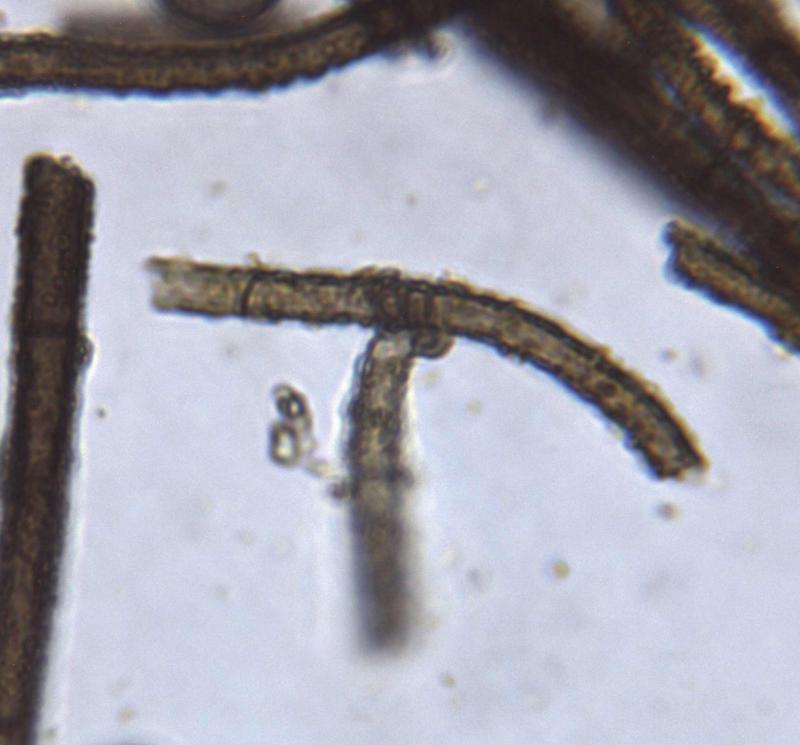
In the attached photo, near the septum, I see something that looks like a crozier!
Best regards and thanks again,
François