

09-06-2026 18:32
Camille MertensSur morceau de roseau immergé 0,5 - 0,7 mm de dia
10-06-2026 12:54
Steve ClementsBonjour encore, Pouvez-vous m'aider, s'il vous pl
10-06-2026 21:16
 François Freléchoux
Bonsoir,Le dernier du jour, en attendant votre avi
10-06-2026 21:07
François Freléchoux
Toutes les tiges de gentianes jaunes de l'an passÃ
10-06-2026 13:41
François Freléchoux
Bonjour à nouveau, Voici une trouvaille d'hier.
10-06-2026 11:53
Steve ClementsBonjour, This disco is abundant on dead stems of
10-06-2026 10:45
François Freléchoux
Bonjour à nouveau, Encore une détermination qui
08-06-2026 10:16
 Spooren Marco
I don`t have a clou about this fungus,it is not in
10-06-2026 09:24
François Freléchoux
Bonjour, J'imagine que cette détermination ne do
Earlier today I found a minute discomycete growing on dying leaves of Galium saxatile on a grassy streambank in the Lake District, NW England. Details as follows:
Apothecia 80-200 µm diam; with a short stalk; grey to pale greenish-blue (dark greenish-blue at the base of the stalk).
Asci 30-40 x 5-7 µm; 8-spored; apex blue in Lugols.
Ascospores fusiform; hyaline; 0-septate; 9-11 x 2-2.5 µm; 2 large oil bodies.
Paraphyses sparse; narrowly cylindrical; about as long as asci.
Hairs more or less cylindrical or slightly tapering to rounded apex; <40-45 x 2-3 µm; verruculose.
Some images attached.
I rarely look at discomycetes and I'm struggling to put a name to this specimen. Possibly a Cistella? I'd be grateful for any help anyone can provide.
Thanks
Marcus
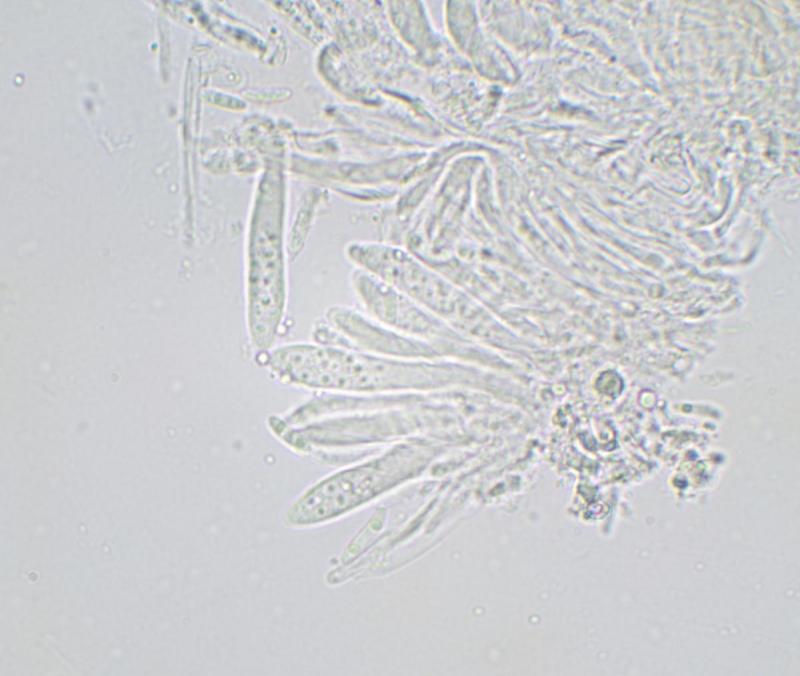
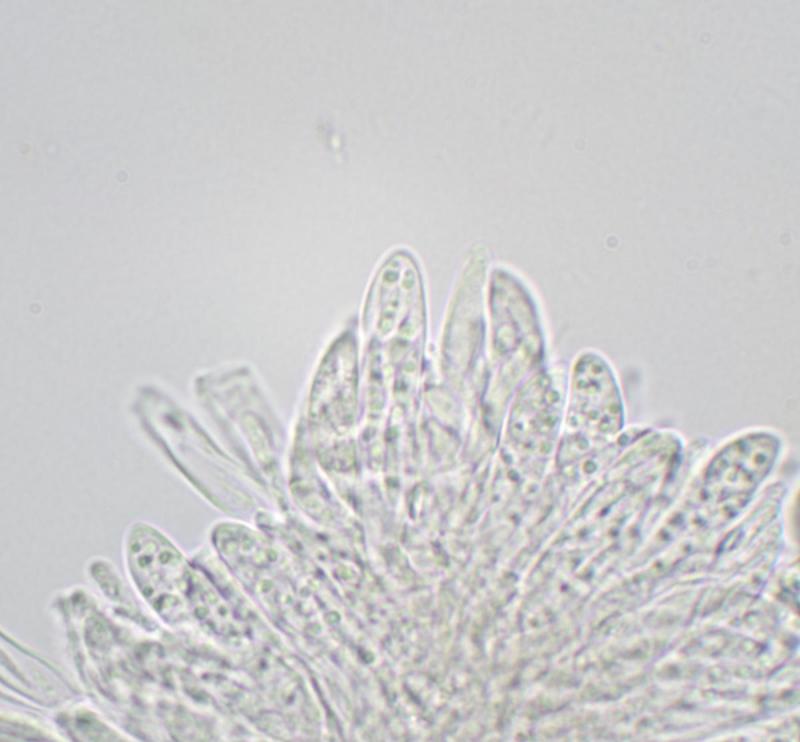
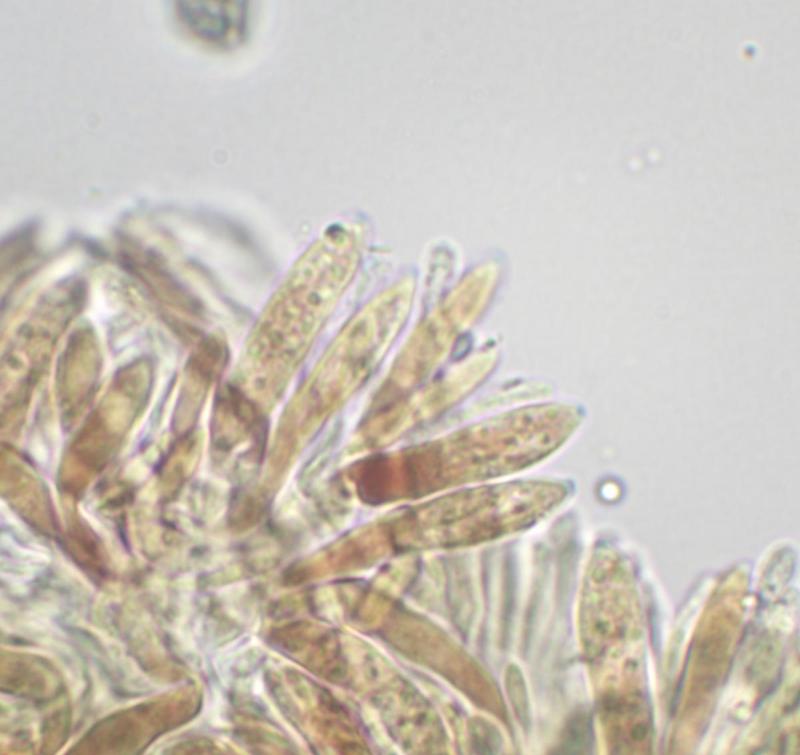
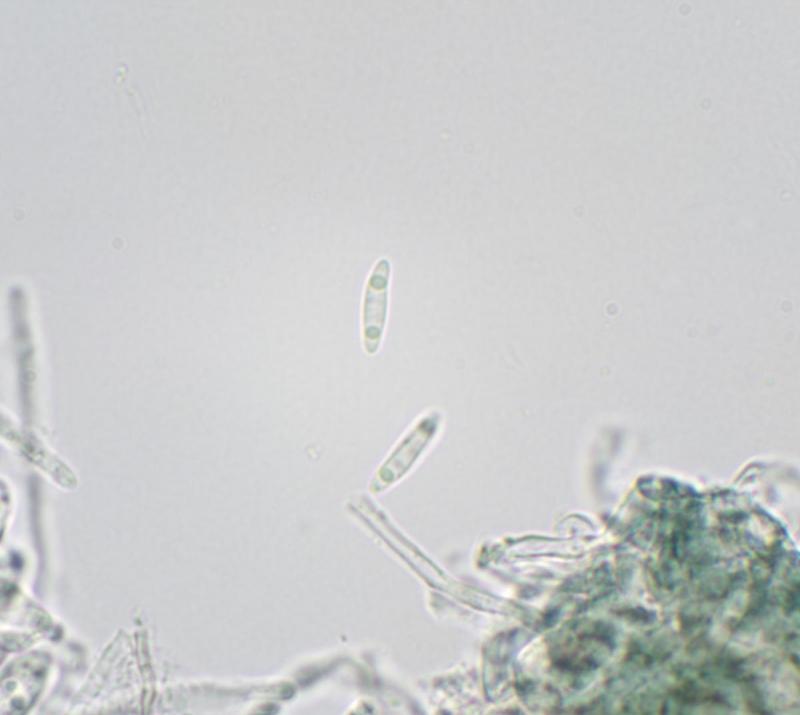
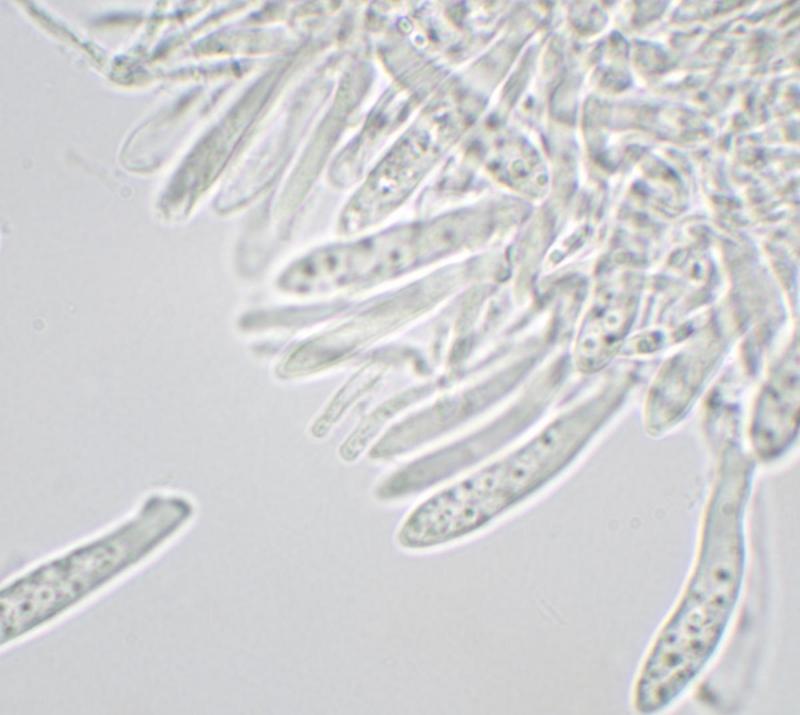
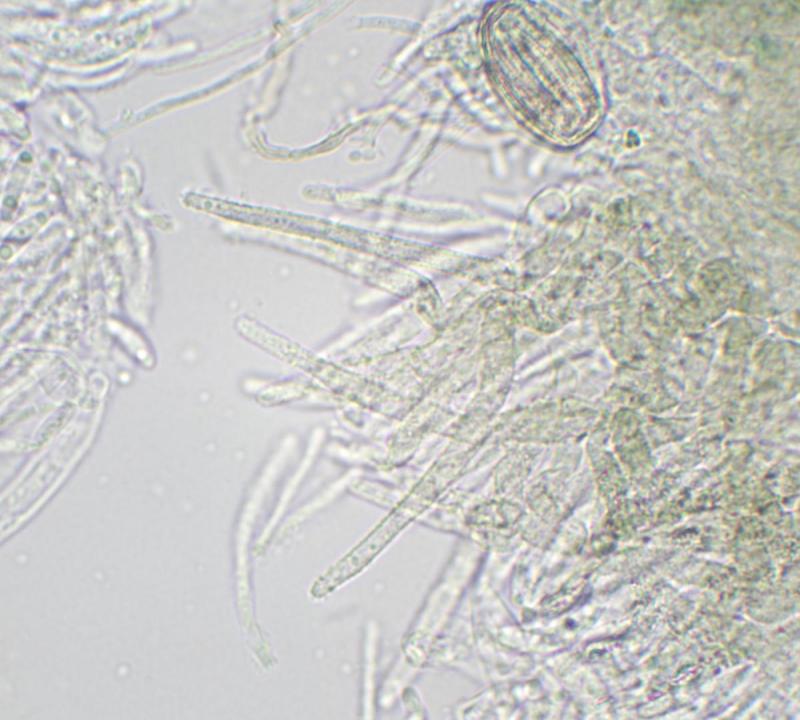

Thanks for replying.
Apothecia were 80-200 µm (mostly towards the lower end of the range) & were distinctly stalked. I don't think the ectal excipulum was gelatinised.
No macro images I'm afraid.
The specimen is indeed sparse but if I get the chance I'll revisit the site & try to find some more.
Marcus

What about Incrupila? -Then again, verrucose is not = thick crystalline crust on the hairs and hairs seem aseptate here as well. Green-blue colours certainly a rare character. Somewhere around Cistella or Hyphodiscus would be my guess (too). It doesnt look like a Hyaloscyphaceae (s str) or Lachnaceae (s lat), --kind of too fragile (?) for the latter.
Timo

 Chlorociboria.-Boletus-2002-0002.pdf
The apothecia in my collection are very small and the turquoise colour isn't very well developed but in other respects it fits descriptions of Chlorocibora aeruginella.
Marcus