12-06-2026 14:50
 François Freléchoux
Bonjour, Voici la brève description d'une Mollis
10-06-2026 21:16
François Freléchoux
Bonsoir,Le dernier du jour, en attendant votre avi
11-06-2026 19:01
 William Slosse
Hello all,In an attempt to make a culture of a sus
11-06-2026 19:03
 Nicolas VAN VOOREN
Chers membres d'Ascofrance,Le site sera placé en

09-06-2026 18:32
Camille MertensSur morceau de roseau immergé 0,5 - 0,7 mm de dia
10-06-2026 12:54
Steve ClementsBonjour encore, Pouvez-vous m'aider, s'il vous pl
10-06-2026 21:07
François Freléchoux
Toutes les tiges de gentianes jaunes de l'an passÃ
10-06-2026 13:41
François Freléchoux
Bonjour à nouveau, Voici une trouvaille d'hier.
Anamorph (??) on Ficaria verna
William Slosse,
10-04-2021 16:53
Hello everyone,recently I found a large growing place of Ficaria verna subsp on the edge of a Flemish polder forest.
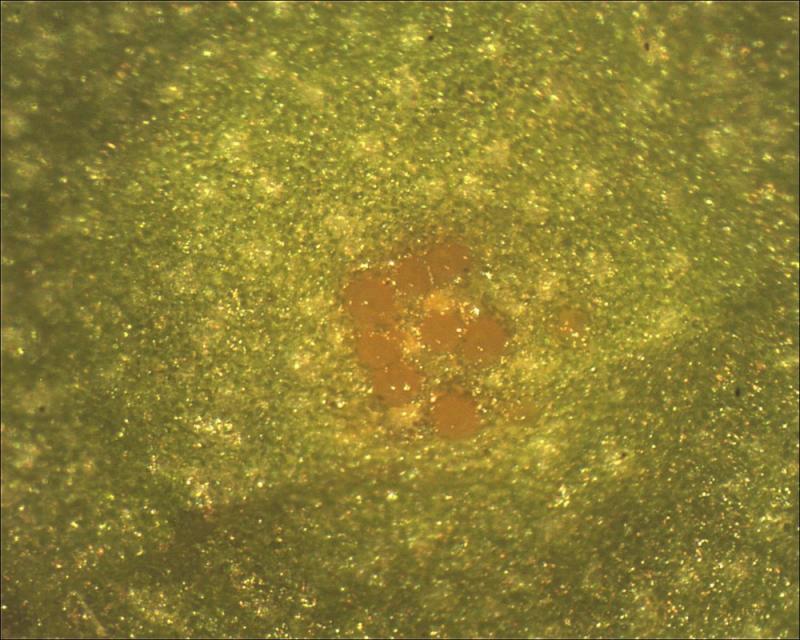
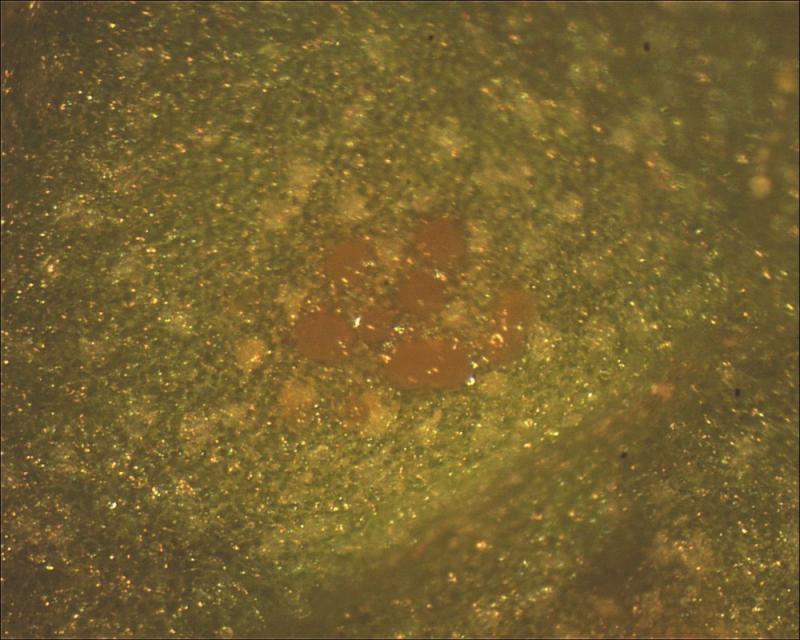
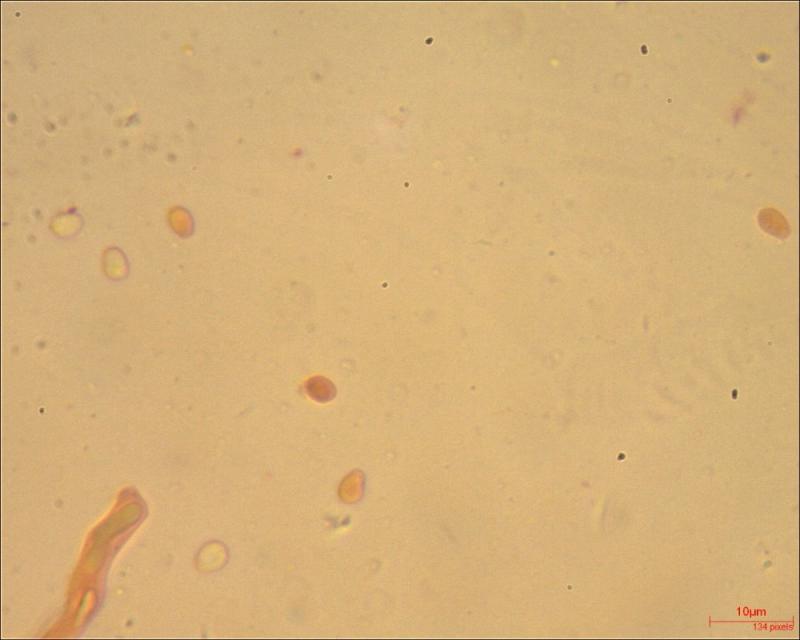
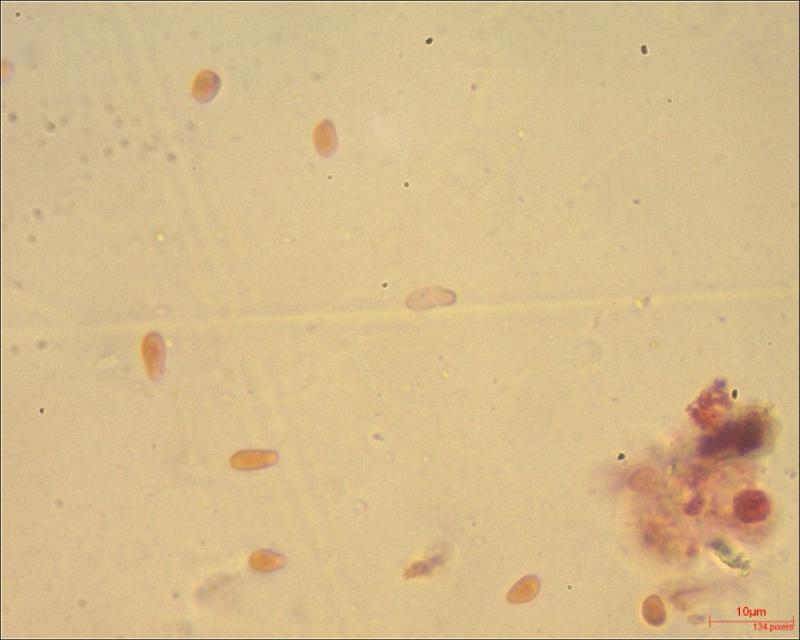
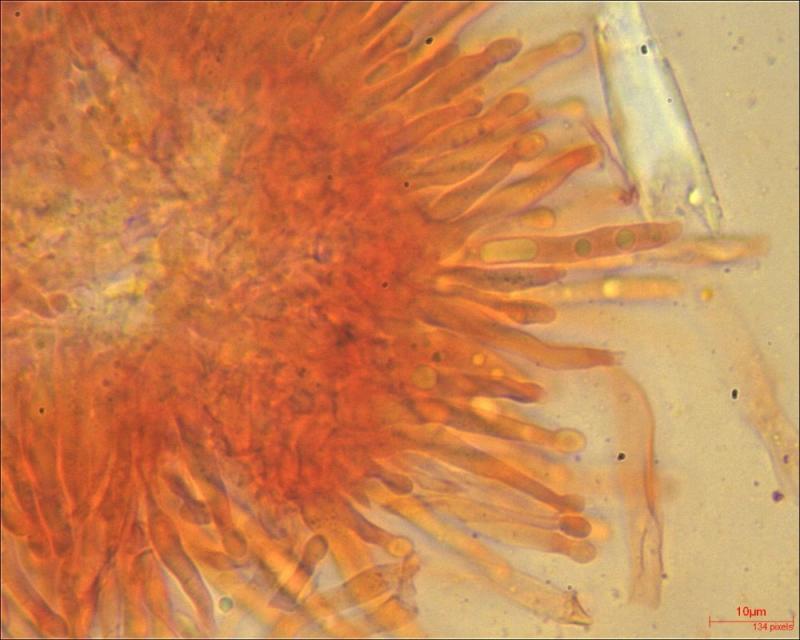
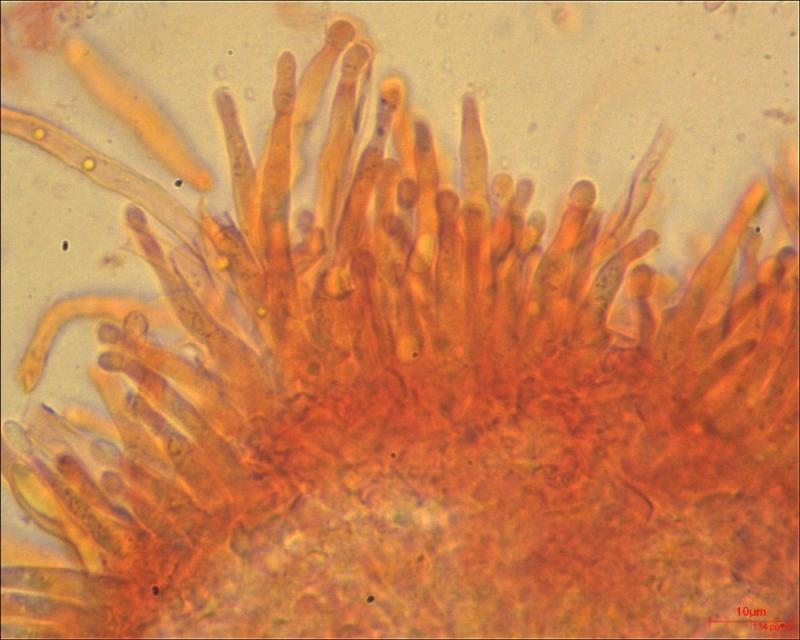
In search of the rust Uromyces dactylidis, which I also found, I discovered on the leaves several concentric growing clusters of yellow-orange structures that I thought were undeveloped aecia.
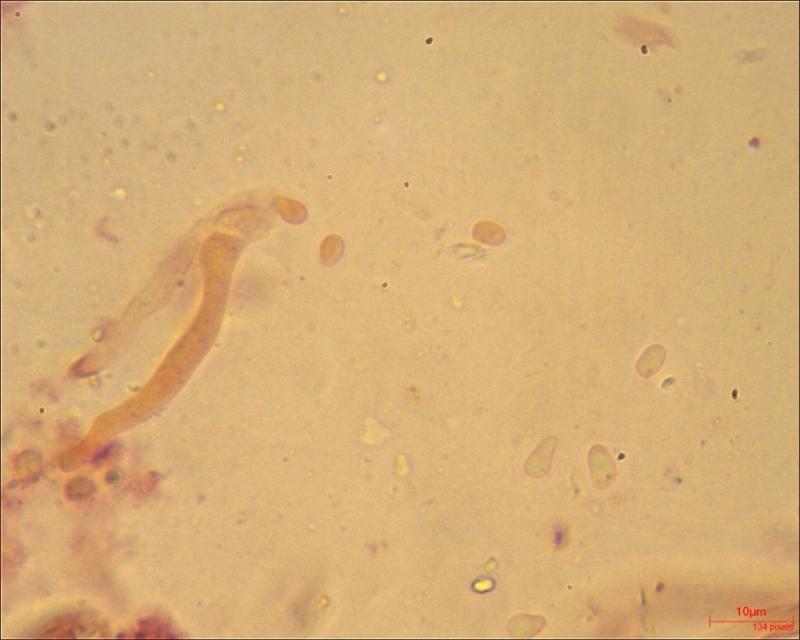
Under the microscope, the structures were found to be filled with conidia (?) and numerous conidiospores (?) were swimming in the reagent liquid.
I also noticed the pointed, paraphysis-like structures.
I don't find any leads in Ellis & Ellis.
Does this anamorph (?) ring a bell for someone?
Greetings, William
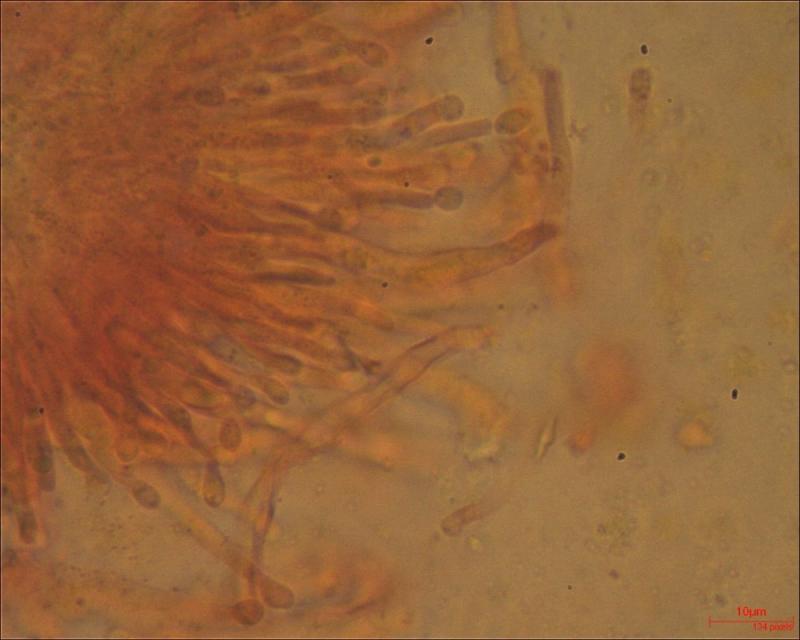
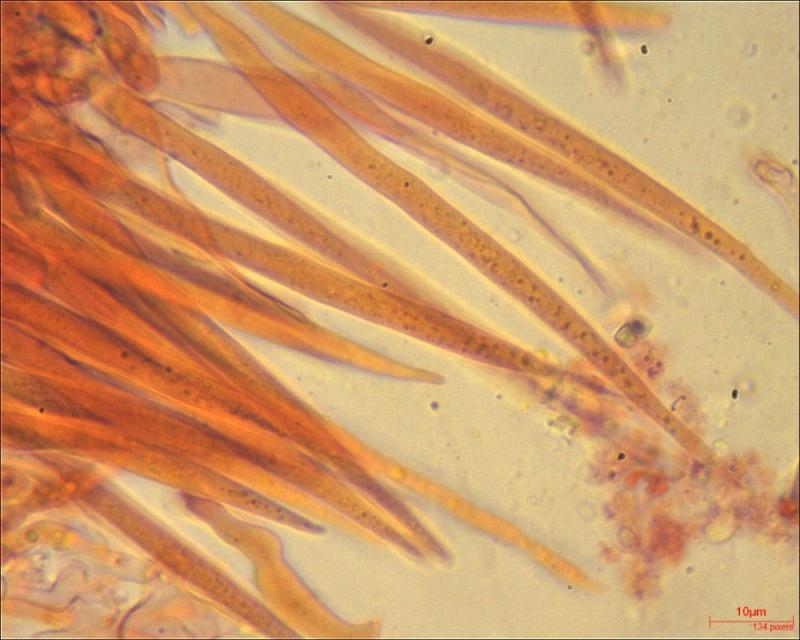
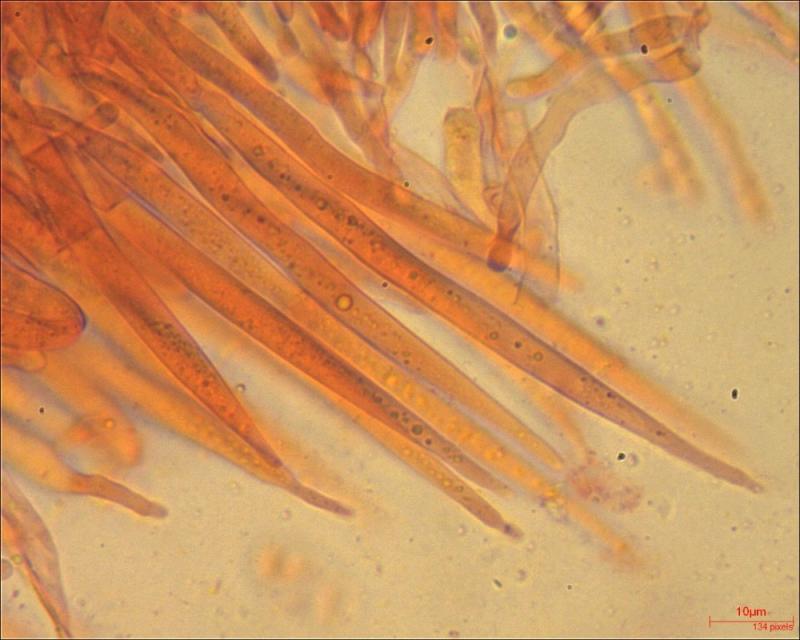
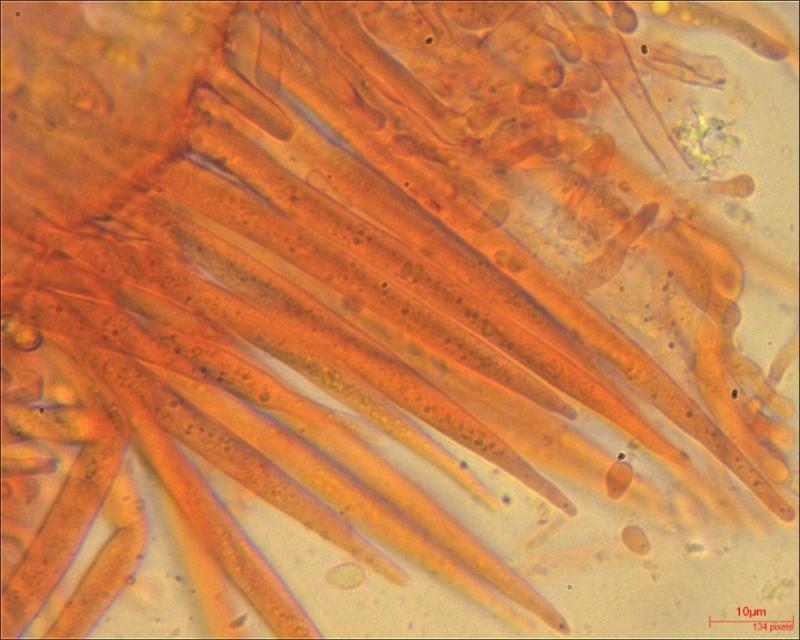
Björn Sothmann,
10-04-2021 17:00

Re : Anamorph (??) on Ficaria verna
Hi WIlliam,
macrroscopically this looks like spermogonia of a rust fungus. So if you found aecia of U. dactylidis/poae on the same leave,this most likely are the associated spermogonia, though there are two other Uromyces species on Ficaria that could of course have infected the same plant.
Björn
William Slosse,
10-04-2021 17:40
Re : Anamorph (??) on Ficaria verna
Thx for your suggestion, Björn.
Perhaps this also could be an Entyloma sp?
Regards,
William
Perhaps this also could be an Entyloma sp?
Regards,
William
Björn Sothmann,
11-04-2021 17:12
Re : Anamorph (??) on Ficaria verna
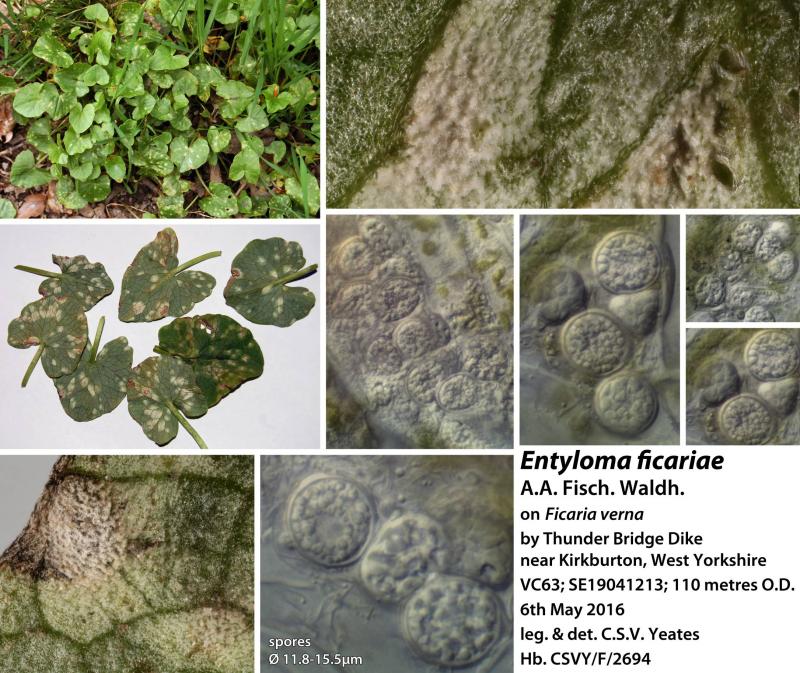
Entlyoma ficariae looks different. Macroscopically, it produces white leaf spots, sometimes covered with the corresponding anamorph. The conidia of the anamorph are lanceolate. Teliospores of the rust which are inside the leaf are thickwalled, hyaline and more or less round.
Chris Yeates,
12-04-2021 16:41

Re : Anamorph (??) on Ficaria verna
Indeed Björn is quite correct on both counts - here is a composite of the Entyloma
regards, Chris
* and I do appreciate we are not dealing with ascomycetes here, but people could possibly confuse the conidial phase of the Entyloma with a Ramularia