
12-04-2026 17:56
 Hardware Tony
Found on dead stems in February earlier this year
12-04-2026 15:52
Gernot FriebesHi,I'm looking for help with this anamorph collect
12-04-2026 12:22
 William Slosse
In a dune grassland in Oostduinkerke (Belgium), on
11-04-2026 15:45
 Zuzana Sochorová (Egertová)
Please, could anyone send me this paper?Moyne G.,
11-04-2026 13:34
Artem PtukhaHello, I am seeking assistance with the identific

11-04-2026 10:19
 Michel Hairaud
Chers amis d'Ascofrance , voici une très bonne no
11-04-2026 10:10
Michel Hairaud
Dear Ascofrance members, here is some very good ne
10-04-2026 23:22
Gernot FriebesHi,ascospores are 1- to 3-septate, approximately
10-04-2026 15:51
William Slosse
Hello everyone, On 08/04/26, I found a growth sit
On wooden litter under Crataegus
Christopher Engelhardt,
07-04-2021 15:46

Hello.
Under Crateagus I found this cup today, 10 mm in diameter.
At first - because of the Crateagus - I thought of of Monilinia johnsonii, but after digging it out it did not show a long stipe and it obviously was growing on some debris of wood or grass. Spores 9(10)-11,5 x 5,4-6 µ, smooth, Asci ~180-190 x 10-11 µ , 8sp, paraphyses swollen at the end
What did I find?
Thanks for your comments!
Sincerely, Chris
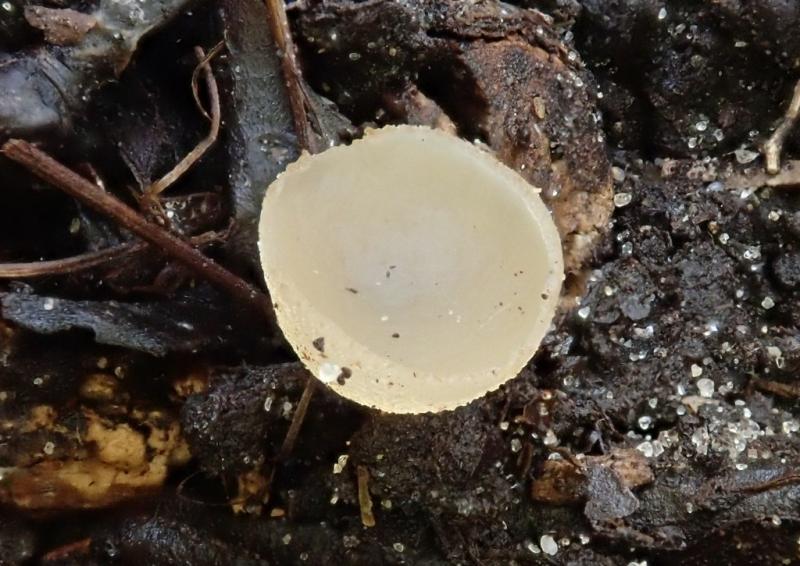
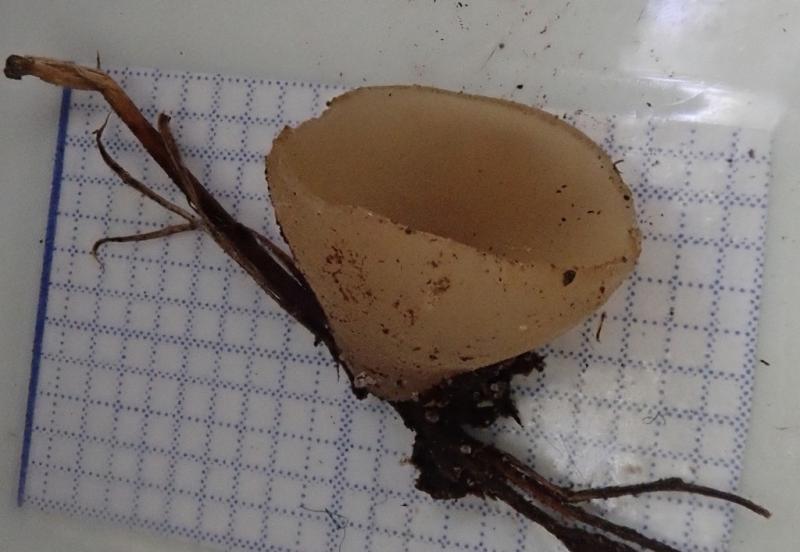
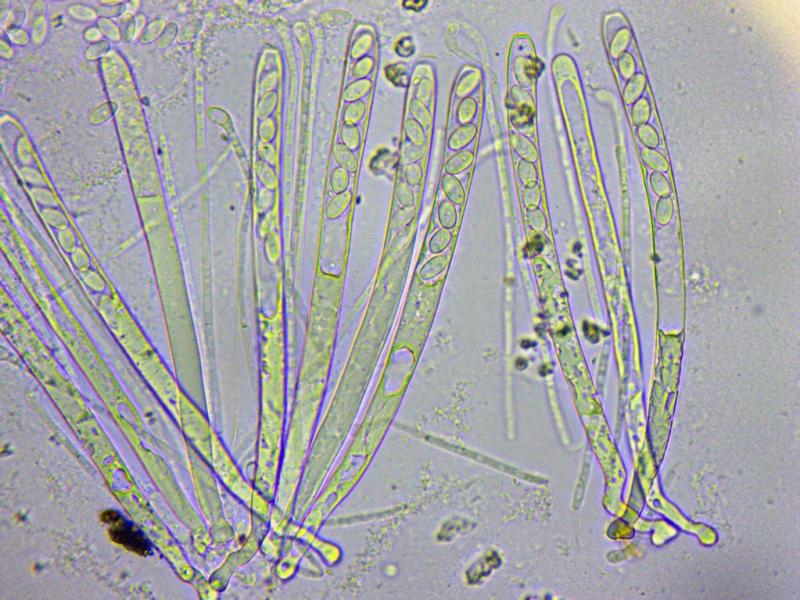
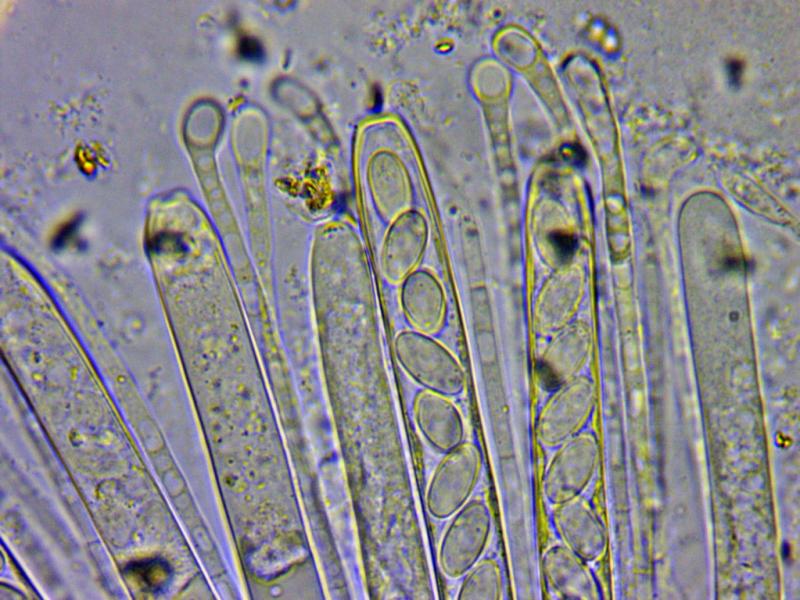
Lothar Krieglsteiner,
07-04-2021 19:21

Re : On wooden litter under Crataegus
This is surely operculate. First, I would check if the asci are IKI-positive (Peziza s.l.).
Viktorie Halasu,
07-04-2021 21:31

Re : On wooden litter under Crataegus
Hello,
how does the excipulum look like?
Viktorie
how does the excipulum look like?
Viktorie
Christopher Engelhardt,
08-04-2021 09:23
Re : On wooden litter under Crataegus
Thank you folks.
And Yes, Lothar, you are right. IKI-positive.
Here's two more pics in Lugol.
Cheers, Chris
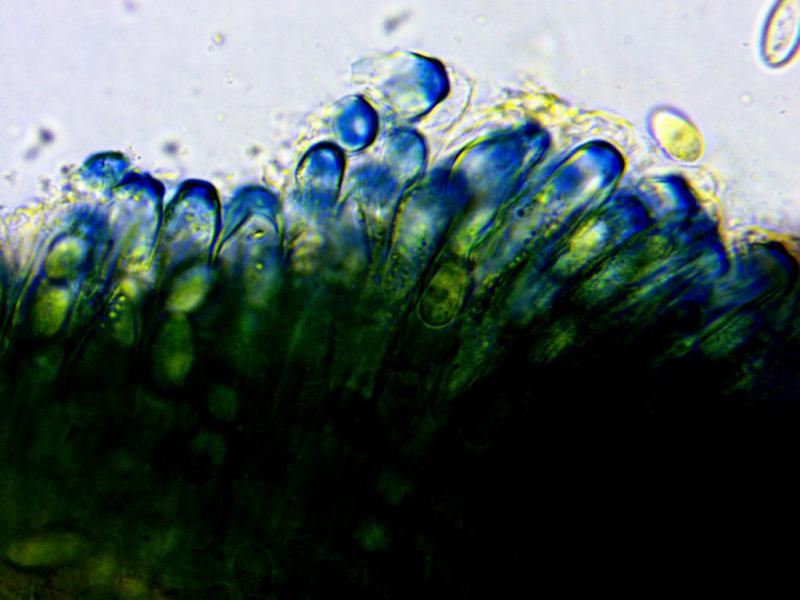
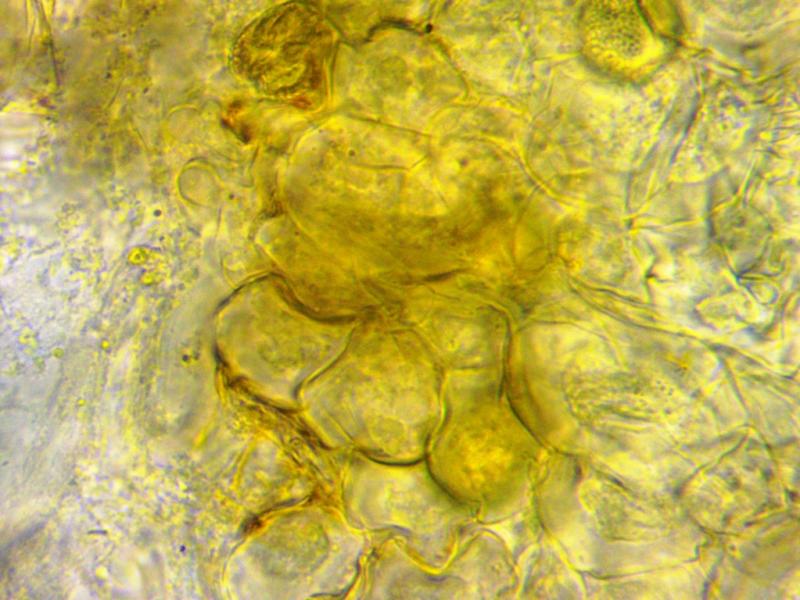
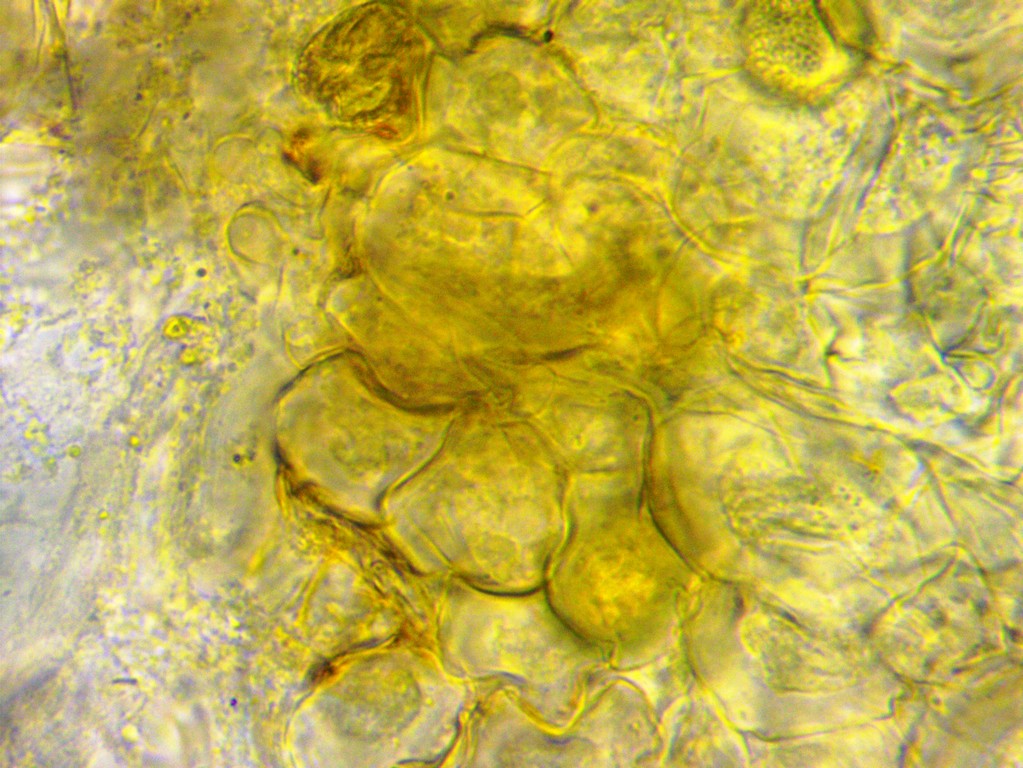 Zellen-tn-0001.jpg
Christopher Engelhardt,
08-04-2021 18:23
Re : On wooden litter under Crataegus
Addendum: the place of discovery is at a urination site for dogs - which might lead to Peziza moravecii, with such paraphyses: cylindrical, 2-3 µm wide, septate, with a rounded tip widened by up to 5 µm. Only the spores seem too small with 10-11.5 x 5-6 µ. In the literature there is a Peziza perdicina (Velen.) Svr?ek, which is apparently synonymous with it, with smoother and shorter spores (10-12 × 5-6 µ), which would fit exactly here.
Thank you folks for looking at my little brown fungus!