
17-04-2026 19:16
 Enrique Rubio
Hi to everybodyI would appreciate any assistance r
14-04-2026 05:32
Ethan CrensonHi all, A few weeks back a friend pointed out som
17-04-2026 15:14
 Bruno Coué
Bonjour.Récoltes du 16/04/2026, sur feuilles mort
12-04-2026 15:52
Gernot FriebesHi,I'm looking for help with this anamorph collect
14-04-2026 21:52
Gernot FriebesHi,found on dead leaves of Carex elata. Conidia: 4
16-04-2026 22:09
Buckwheat PeteHello, I'd like to ask about this older specimen:
15-04-2026 19:33
Fátima Durán ManzanequeHi!! I need help, I found this Ascomycete but I d
14-04-2026 20:31
Gernot FriebesHi,can this be Psilachnum lateritioalbum on Phragm
12-04-2026 17:56
 Hardware Tony
Found on dead stems in February earlier this year
12-04-2026 12:22
 William Slosse
In a dune grassland in Oostduinkerke (Belgium), on
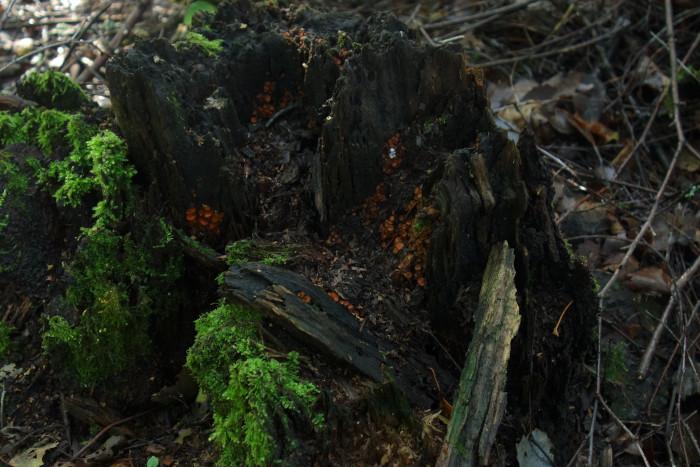
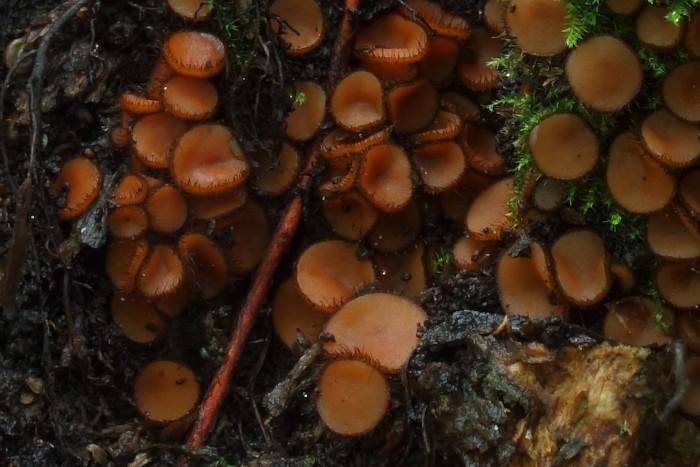
Scutellinia colensoi?
Juuso Äikäs,
31-07-2020 21:08
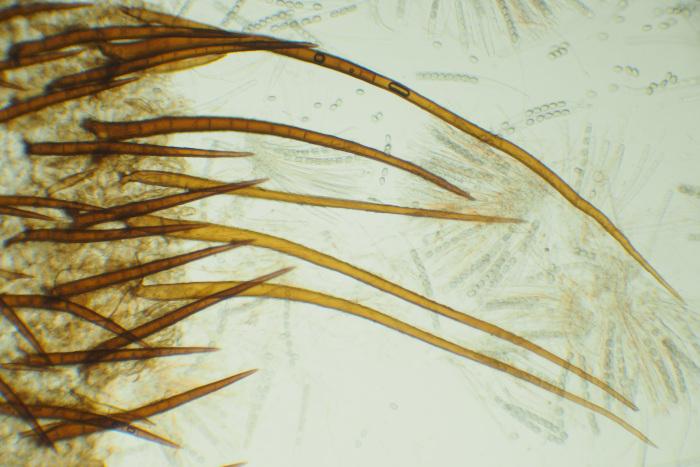
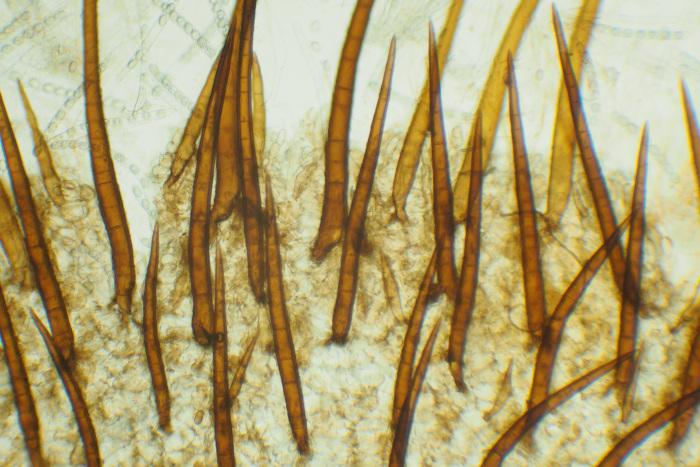
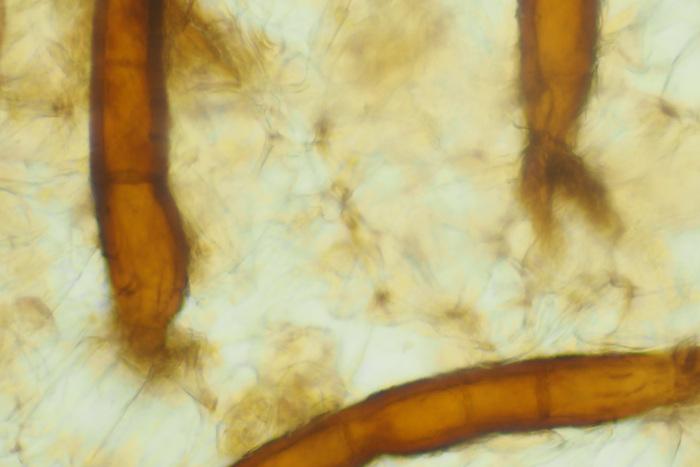
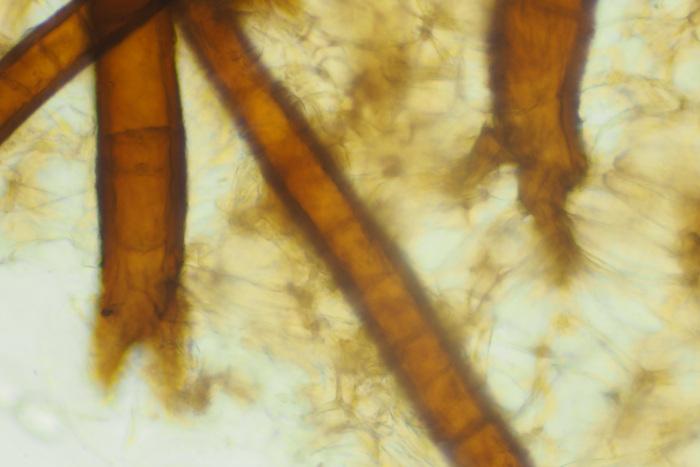
The hairs are max. 1350 µm long and 35 µm wide. Most of them are septate but there are some long, aseptate hairs as well.
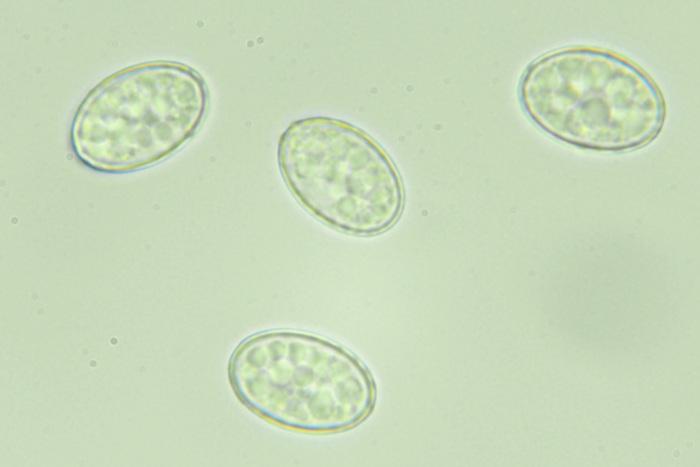
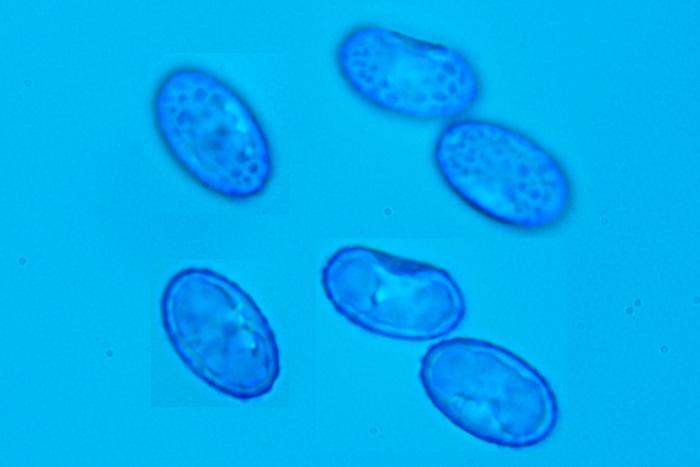
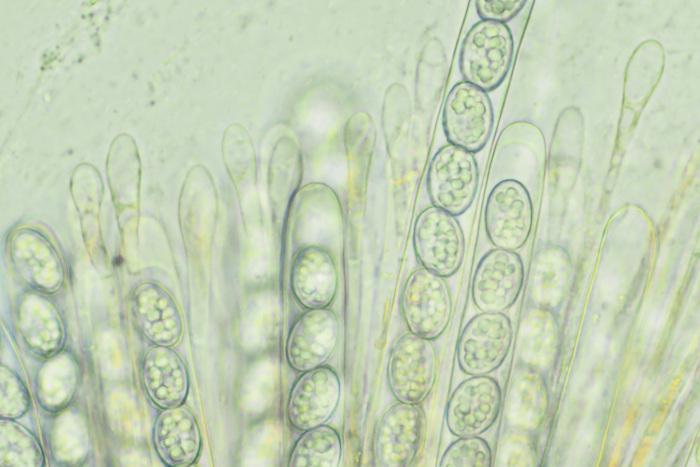
The spores don't have a loosening perispore in heated CB, and the measurements are:
(16.5) 16.7 - 18.2 (18.4) × (10.7) 10.8 - 11.3 (11.8) µm
Q = (1.5) 1.51 - 1.65 (1.7) ; N = 15
Me = 17.4 × 11.1 µm ; Qe = 1.6.
Using Jeannerot's key I arrived at S. colensoi but am not entirely sure if this is the right species. Other opinions are welcome.
Viktorie Halasu,
31-07-2020 21:53

Re : Scutellinia colensoi?
Hello,
did you compare with S. vitreola too? The warts look more isolated and angular, than those colensoi-like ridges, also hairs are much too short for colensoi.
Best regards,
Viktorie
did you compare with S. vitreola too? The warts look more isolated and angular, than those colensoi-like ridges, also hairs are much too short for colensoi.
Best regards,
Viktorie
Juuso Äikäs,
31-07-2020 22:21
Re : Scutellinia colensoi?
Thanks for the opinion.
The spore size would fit S. vitreola and the ornamentation looks pretty good to me too, but according to the info I found, the hairs are too long for that species!
The spore size would fit S. vitreola and the ornamentation looks pretty good to me too, but according to the info I found, the hairs are too long for that species!
Viktorie Halasu,
01-08-2020 09:16
Re : Scutellinia colensoi?
Regarding the hair length:
* (340)370-570(640) um (original description in Kullman 1982, based on two collections)
* 225-975 um (Matocec et al 1995, based on five collections)
* 300-900(1100) um (Schumacher 1990, based on holotype and 9 norwegian colls.).
In my opinion, it's still the same kind (group) of hairs, 3-4-multifurcate base and length somewhere between 800-1200 um. Kullman wrote 1-2-3-many roots, that is ok, perhaps she just found a deviating specimen with shorter hairs. I've seen several half-mature collections of S. crinita with multifurcate and branched hair base, but hair length < 1000 um.
S. colensoi, pennsylvanica and partly S. trechispora are in another group, with hairs up to 2000 um (or sometimes exceeding).
I'm more concerned about the spore shape, vitreola should have Q like scutellata, i.e. around 1,7-1,8. Mato?ec et al wrote about "two types" of vitreola found by them, with narrower or broader spores respectively. Hopefully someone here has more experience with the species than me.
* (340)370-570(640) um (original description in Kullman 1982, based on two collections)
* 225-975 um (Matocec et al 1995, based on five collections)
* 300-900(1100) um (Schumacher 1990, based on holotype and 9 norwegian colls.).
In my opinion, it's still the same kind (group) of hairs, 3-4-multifurcate base and length somewhere between 800-1200 um. Kullman wrote 1-2-3-many roots, that is ok, perhaps she just found a deviating specimen with shorter hairs. I've seen several half-mature collections of S. crinita with multifurcate and branched hair base, but hair length < 1000 um.
S. colensoi, pennsylvanica and partly S. trechispora are in another group, with hairs up to 2000 um (or sometimes exceeding).
I'm more concerned about the spore shape, vitreola should have Q like scutellata, i.e. around 1,7-1,8. Mato?ec et al wrote about "two types" of vitreola found by them, with narrower or broader spores respectively. Hopefully someone here has more experience with the species than me.