
12-04-2026 17:56
 Hardware Tony
Found on dead stems in February earlier this year
17-04-2026 19:16
 Enrique Rubio
Hi to everybodyI would appreciate any assistance r
14-04-2026 05:32
Ethan CrensonHi all, A few weeks back a friend pointed out som
17-04-2026 15:14
 Bruno Coué
Bonjour.Récoltes du 16/04/2026, sur feuilles mort
12-04-2026 15:52
Gernot FriebesHi,I'm looking for help with this anamorph collect
14-04-2026 21:52
Gernot FriebesHi,found on dead leaves of Carex elata. Conidia: 4
16-04-2026 22:09
Buckwheat PeteHello, I'd like to ask about this older specimen:
15-04-2026 19:33
Fátima Durán ManzanequeHi!! I need help, I found this Ascomycete but I d
14-04-2026 20:31
Gernot FriebesHi,can this be Psilachnum lateritioalbum on Phragm
12-04-2026 12:22
 William Slosse
In a dune grassland in Oostduinkerke (Belgium), on
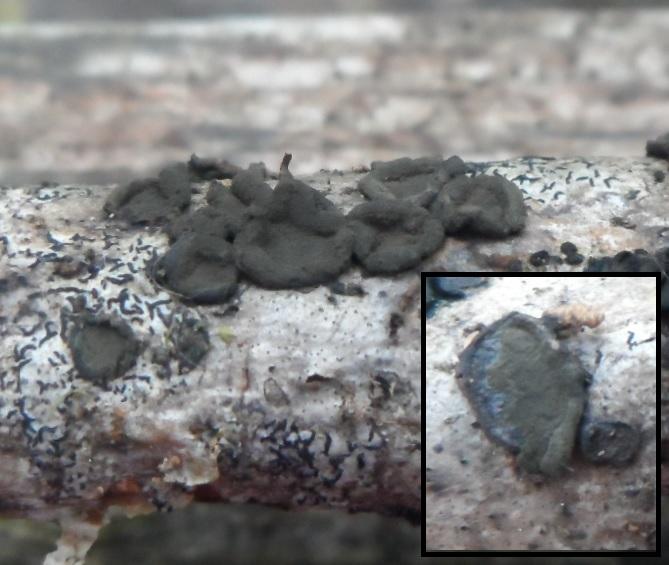
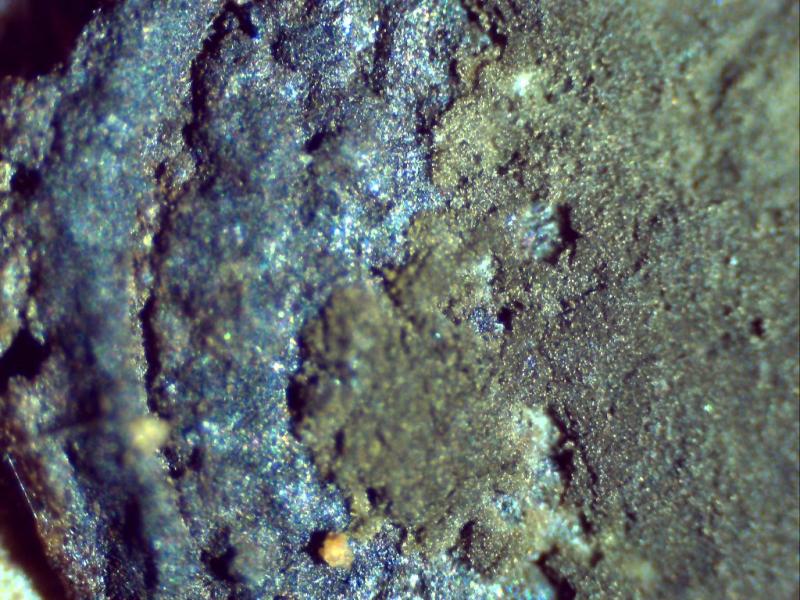
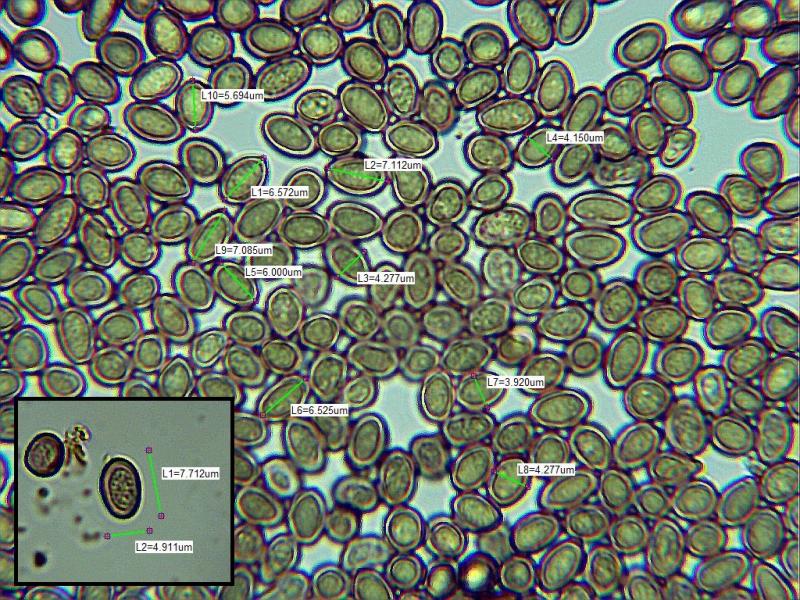
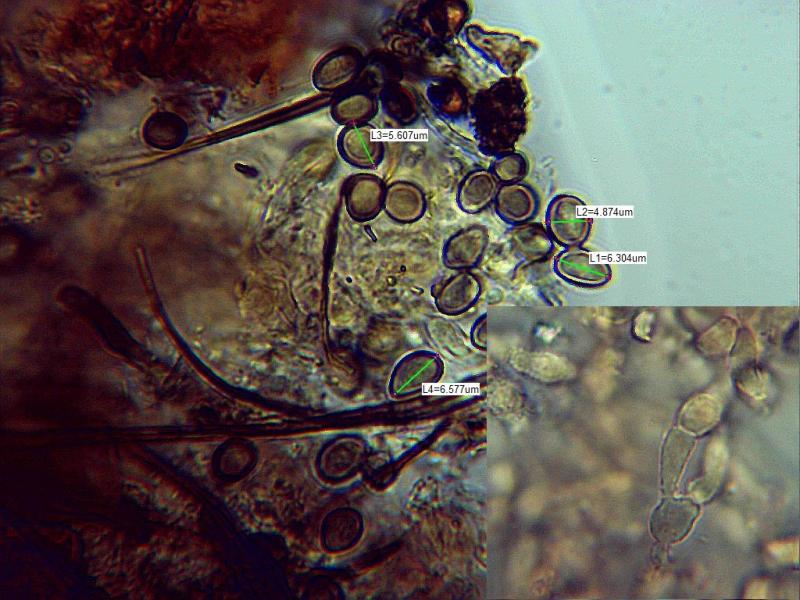
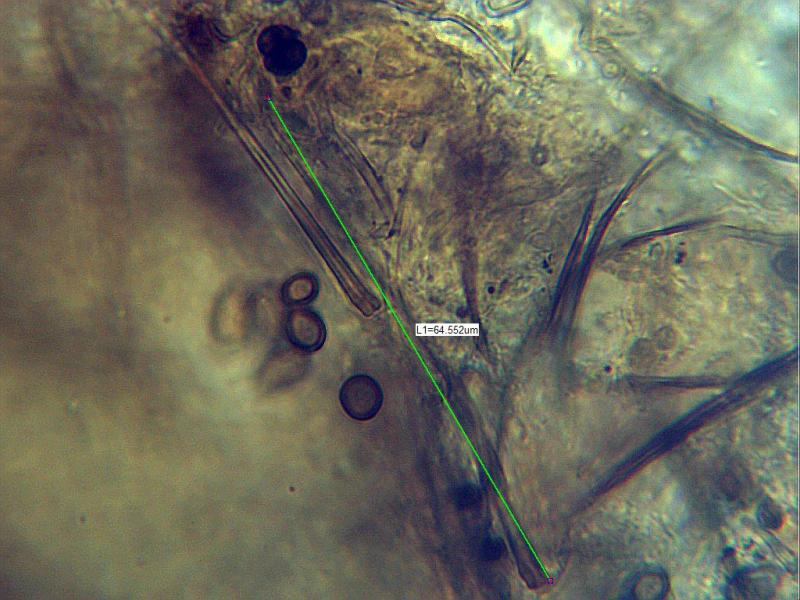
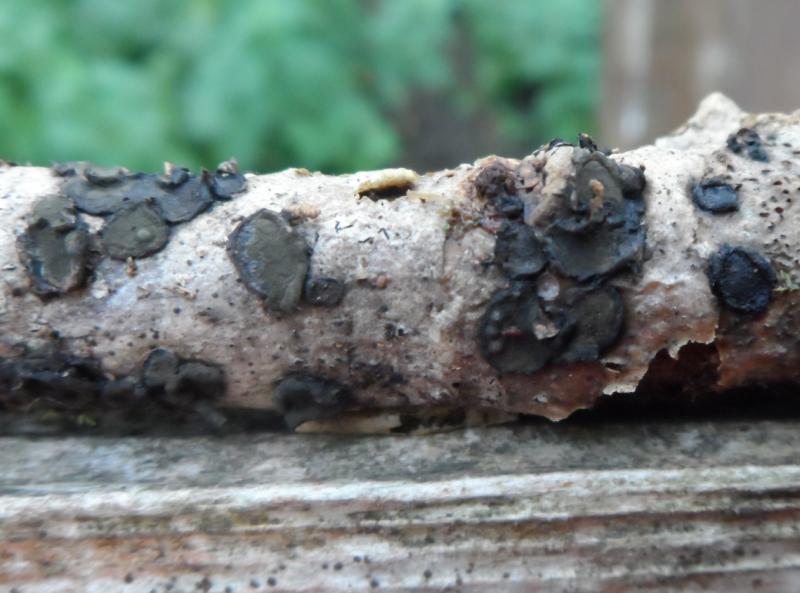
Not sure if anyone can help here, as rather unusual small fungus growing on a Corylus branch/twig found in litter of a damp, mossy woodland by a river. Each FB is well under 1cm. Spores are the best I can do, other than the macro appearance and tight fitting nature to the substrate. The excipulum appears blue/bck with the apothecia clearly olive green. The spores measure 6.80 - 7.62?m x 4.26 - 4.85µm, at 1000x are verrucose and also dark olive looking with a heavy thick wall. The whole body of the fungus was strongly gelatinous in the state found here and possibly has probasidial sac spore production, which I guess doesn't make this an ascomycete. It all suggests an asco then no asci/paras to be seen. Don't expect an immediate ID but maybe just a suggestion where I should look some more if not an asco.Looked at Bulgariella pulla but no match.
With many thanks
Tony Hardware

Hi Tony,
I think this might be a dessicated Exidia that has become overgrown with an olive-green hyphomycete.
Kind regards,
Charles.

Hi ,
It reminds me more Hadrotrichum pyrenaicum, anamorph of Hypoxylon cercidicolum, growing on Fraxinus.
Alain
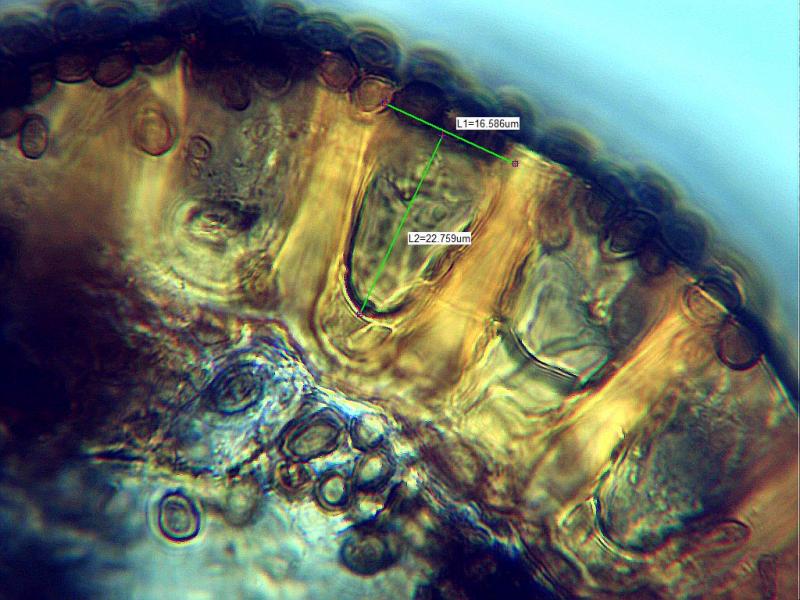
Alain your suggestion seems spot on to me just from a macro point of view. The Hypoxylon is quite unusual in the way is sits on the substrate and nothing I can find matches this elsewhere. The spores are correct for the conidia state for Hadrotrichum pyrenaicum. Found on a twig on the woodland floor in dark damp mostly Corylus trees. Obviously there is a Fraxinus among these I didn't see. You probably have helped identify a 1st for the UK, with grateful thanks. No records on British Mycol. Soc and one possible record from Scotland earlier this year. That cited the mature state, but probably was H. pyrenaicum if a genuine record.
Added one more image found showing the cross-section of the structure producing perithecia.
So grateful thanks to you and to AscoFrance.
Tony
This is species 506 in my book. There are 27 records in CATE2, mainly from southern England, but not Cornwall. 14 of these are Ainsworth's records, so they should be in the BMS database too.
The conidial state and sexual state of a fungus count as one species, for any where the relationship has been scientifically proven.
One very common example is the ascomycete Rhytisma acerinum, for which the conidial state Melasmia acerina is much more frequently found throughout the year.
With Best Wishes,
Peter.
Tony