
12-04-2026 17:56
 Hardware Tony
Found on dead stems in February earlier this year
17-04-2026 19:16
 Enrique Rubio
Hi to everybodyI would appreciate any assistance r
14-04-2026 05:32
Ethan CrensonHi all, A few weeks back a friend pointed out som
17-04-2026 15:14
 Bruno Coué
Bonjour.Récoltes du 16/04/2026, sur feuilles mort
12-04-2026 15:52
Gernot FriebesHi,I'm looking for help with this anamorph collect
14-04-2026 21:52
Gernot FriebesHi,found on dead leaves of Carex elata. Conidia: 4
16-04-2026 22:09
Buckwheat PeteHello, I'd like to ask about this older specimen:
15-04-2026 19:33
Fátima Durán ManzanequeHi!! I need help, I found this Ascomycete but I d
14-04-2026 20:31
Gernot FriebesHi,can this be Psilachnum lateritioalbum on Phragm
12-04-2026 12:22
 William Slosse
In a dune grassland in Oostduinkerke (Belgium), on
Apiospora montagnei telemorph state alongside Arthrinium state
Hardware Tony,
12-06-2020 19:59
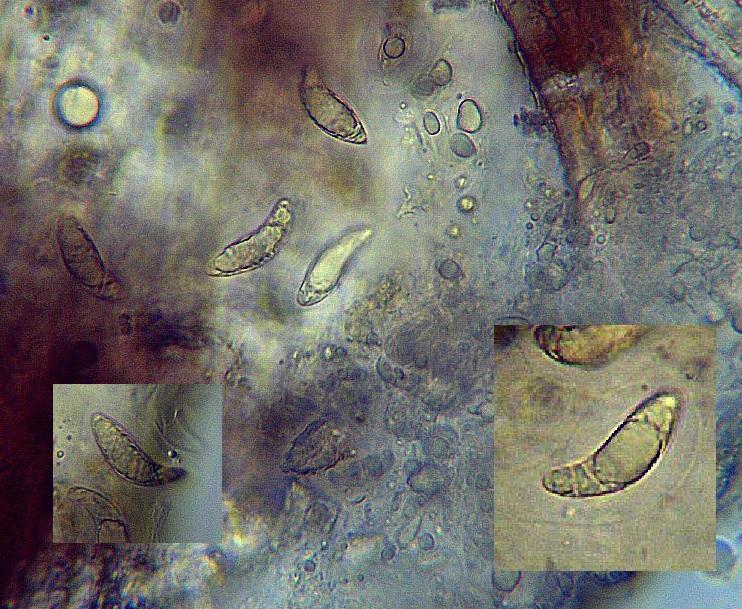
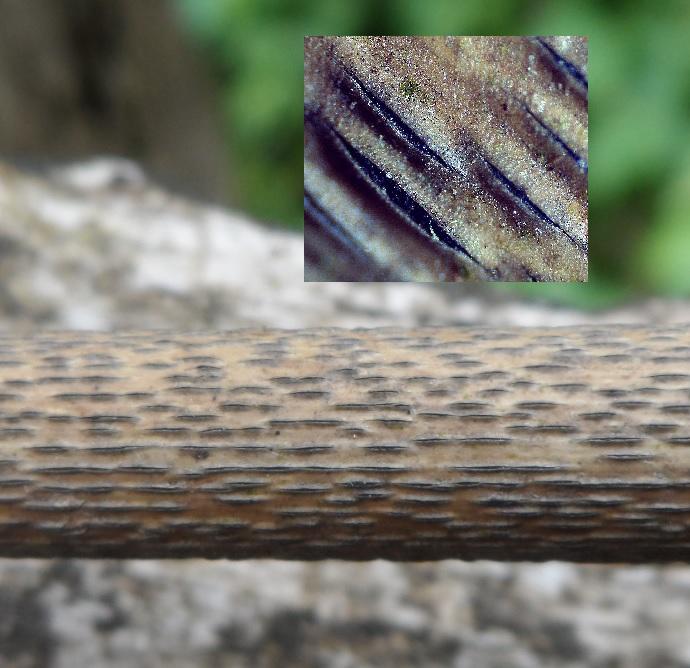
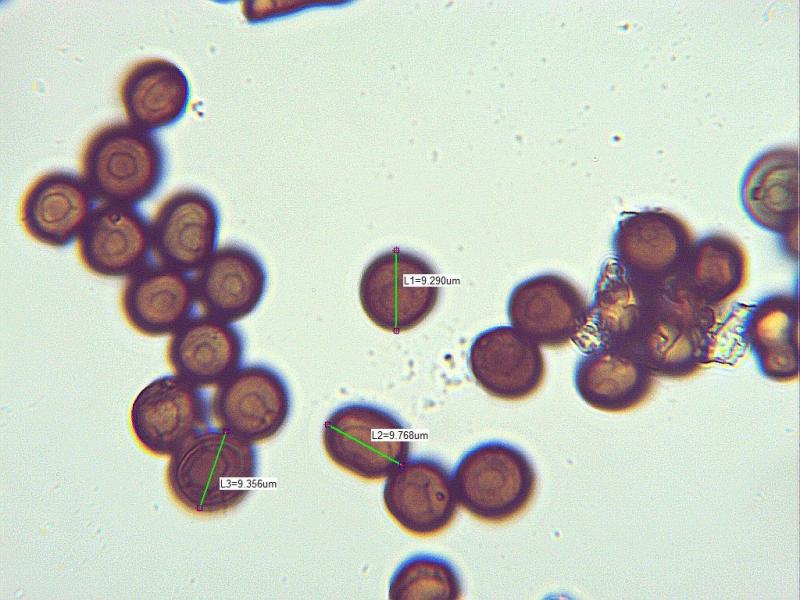
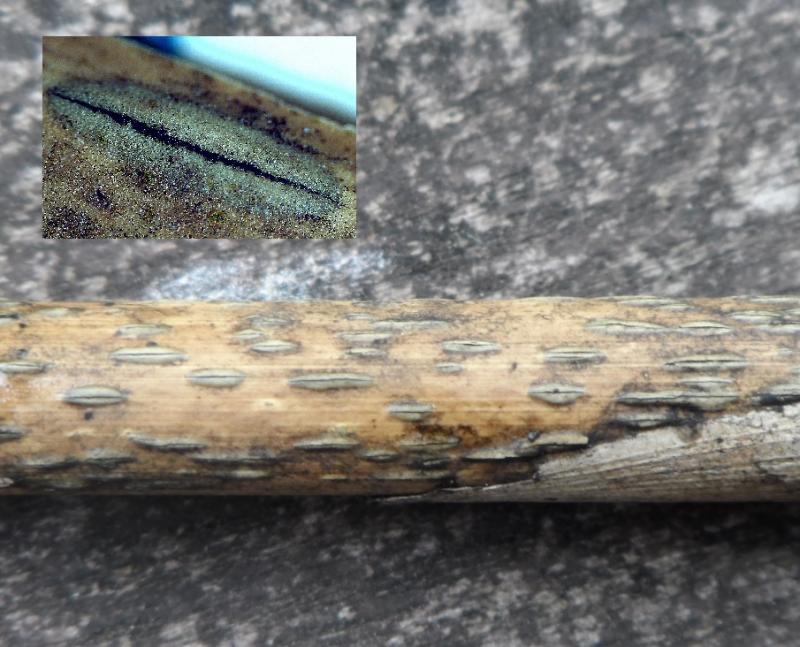
Found on Bambusa, I first thought these were two different species. After research, I think that A. montagnei is showing the teleomorph state and spores and the same species is showing the Arthrinium state with anamorph spores. They were within six inches of each other on the same dead stick of Bambusa. Can anyone confirm this is the case or they are two distinct species?With thanks Tony Hardware
Angel Pintos,
12-06-2020 21:10

Re : Apiospora montagnei telemorph state alongside Arthrinium state
Hi Tony,
Both states could be be the same species, but with the measures of the conidia of your images, surely it is not the asexual morph of Apiospora montagnei as we understand it today.
Knowing the measurements of the conidia, I would say that it is A. phragmites or A. marii.
can you measure the ascospores?
Best wishes
Angel
Both states could be be the same species, but with the measures of the conidia of your images, surely it is not the asexual morph of Apiospora montagnei as we understand it today.
Knowing the measurements of the conidia, I would say that it is A. phragmites or A. marii.
can you measure the ascospores?
Best wishes
Angel
Hardware Tony,
13-06-2020 14:02
Re : Apiospora montagnei telemorph state alongside Arthrinium state
Hello Angel,
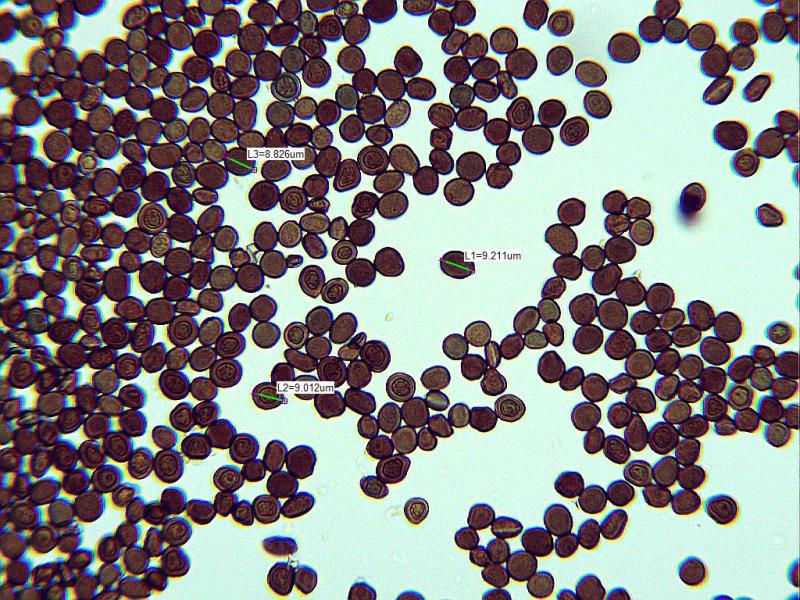
Many thanks for looking at this, expect you are correct in your observations as looking again A. arundinis the conidia spores seem too small at around 5µm or so. I added another pic here taken at 400x showing more conidia which suggests from the size and looking at the majopiry I may have measured the oversized conidia spores more than the rest and looks at around 8µm plus. This suggests A. marii more than A. phragmites perhaps, also A. Marii has been found on bambusa before whereas I could find no ref to the other except on traditional grasses. A Marii macro size is much closer at 2-6mm, as there were quite large stromata slits rather than the A. phragmite is much smaller. I checked at ref articles at: https://mycokeys.pensoft.net/article/32115/ and
https://www.researchgate.net/publication/253340268_A_phylogenetic_re-evaluation_of_Athrinium I'm no expert for sure and was astounded to see the different species in this genus that could be found. Apprecaite your lead on this and hopefully going somewhere closer to the right ID. Tony
Many thanks for looking at this, expect you are correct in your observations as looking again A. arundinis the conidia spores seem too small at around 5µm or so. I added another pic here taken at 400x showing more conidia which suggests from the size and looking at the majopiry I may have measured the oversized conidia spores more than the rest and looks at around 8µm plus. This suggests A. marii more than A. phragmites perhaps, also A. Marii has been found on bambusa before whereas I could find no ref to the other except on traditional grasses. A Marii macro size is much closer at 2-6mm, as there were quite large stromata slits rather than the A. phragmite is much smaller. I checked at ref articles at: https://mycokeys.pensoft.net/article/32115/ and
https://www.researchgate.net/publication/253340268_A_phylogenetic_re-evaluation_of_Athrinium I'm no expert for sure and was astounded to see the different species in this genus that could be found. Apprecaite your lead on this and hopefully going somewhere closer to the right ID. Tony
Hardware Tony,
13-06-2020 14:13
Re : Apiospora montagnei telemorph state alongside Arthrinium state
Angel,Also I couldn't measure the ascospores, none found at the time. Tony
Angel Pintos,
13-06-2020 15:11
Re : Apiospora montagnei telemorph state alongside Arthrinium state
Hi, Tony,
In the article you mention, it shows that different stages of different Arthrinium species can cohabit in the same culm. For this reason we cannot be sure that the conidia you show in the photographs are of the same species as the stroma of the photographs and therefore we cannot link both stadiums.
We could only link it by isolating the ascospores and comparing the conidia resulting from the culture.
It would be nice to know the measurements of the ascospores because that could help to discard or confirm it, without being definitive.
It is very complex to identify some species of Arthrinium, especially those that have an sexual morph Apiospora-like because the measurements of the ascoporas and the measurements of the conidia overlap and makes it almost impossible to identify it. This is also mentioned in the article by Crous 2013, and before Samuels 1981.
Best wishes
Angel Pintos
In the article you mention, it shows that different stages of different Arthrinium species can cohabit in the same culm. For this reason we cannot be sure that the conidia you show in the photographs are of the same species as the stroma of the photographs and therefore we cannot link both stadiums.
We could only link it by isolating the ascospores and comparing the conidia resulting from the culture.
It would be nice to know the measurements of the ascospores because that could help to discard or confirm it, without being definitive.
It is very complex to identify some species of Arthrinium, especially those that have an sexual morph Apiospora-like because the measurements of the ascoporas and the measurements of the conidia overlap and makes it almost impossible to identify it. This is also mentioned in the article by Crous 2013, and before Samuels 1981.
Best wishes
Angel Pintos
Angel Pintos,
13-06-2020 20:49
Re : Apiospora montagnei telemorph state alongside Arthrinium state
If you put some stromata in water for one night or one day it probably produce ascospores
Hardware Tony,
14-06-2020 15:21
Re : Apiospora montagnei telemorph state alongside Arthrinium state
Hello Angel,
Firstly, apologises didn't see you were one of the key authors of the paper I quoted. I have learnt a great deal already about this species and next time I will endeavour to match the ascospores with conidia as you suggest. No luck this time, but getting closer perhaps.
Many thanks for your help, the article was very helpful.
Tony
Firstly, apologises didn't see you were one of the key authors of the paper I quoted. I have learnt a great deal already about this species and next time I will endeavour to match the ascospores with conidia as you suggest. No luck this time, but getting closer perhaps.
Many thanks for your help, the article was very helpful.
Tony
Angel Pintos,
14-06-2020 18:13
Re : Apiospora montagnei telemorph state alongside Arthrinium state
Hi Tony,
you are wellcome
you are wellcome