
12-04-2026 17:56
 Hardware Tony
Found on dead stems in February earlier this year
17-04-2026 19:16
 Enrique Rubio
Hi to everybodyI would appreciate any assistance r
14-04-2026 05:32
Ethan CrensonHi all, A few weeks back a friend pointed out som
17-04-2026 15:14
 Bruno Coué
Bonjour.Récoltes du 16/04/2026, sur feuilles mort
12-04-2026 15:52
Gernot FriebesHi,I'm looking for help with this anamorph collect
14-04-2026 21:52
Gernot FriebesHi,found on dead leaves of Carex elata. Conidia: 4
16-04-2026 22:09
Buckwheat PeteHello, I'd like to ask about this older specimen:
15-04-2026 19:33
Fátima Durán ManzanequeHi!! I need help, I found this Ascomycete but I d
14-04-2026 20:31
Gernot FriebesHi,can this be Psilachnum lateritioalbum on Phragm
12-04-2026 12:22
 William Slosse
In a dune grassland in Oostduinkerke (Belgium), on
Diaporthe On Leaves of Berberis
Peter Thompson,
27-05-2020 17:31
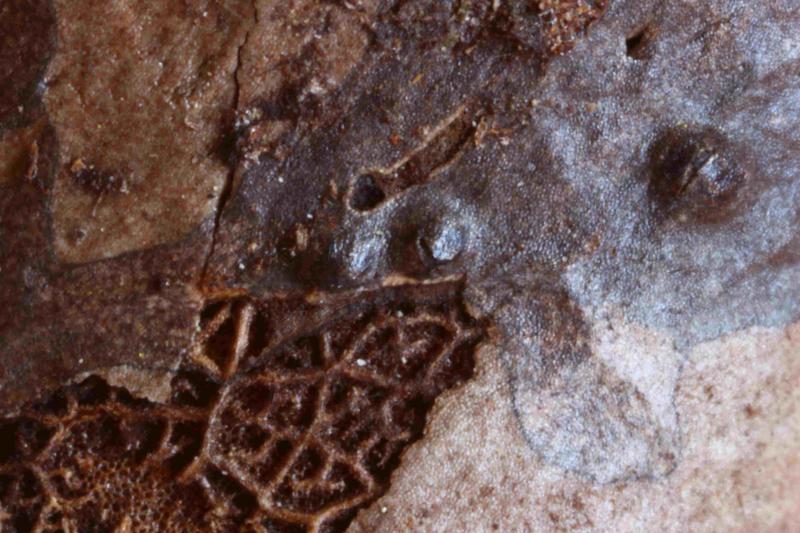
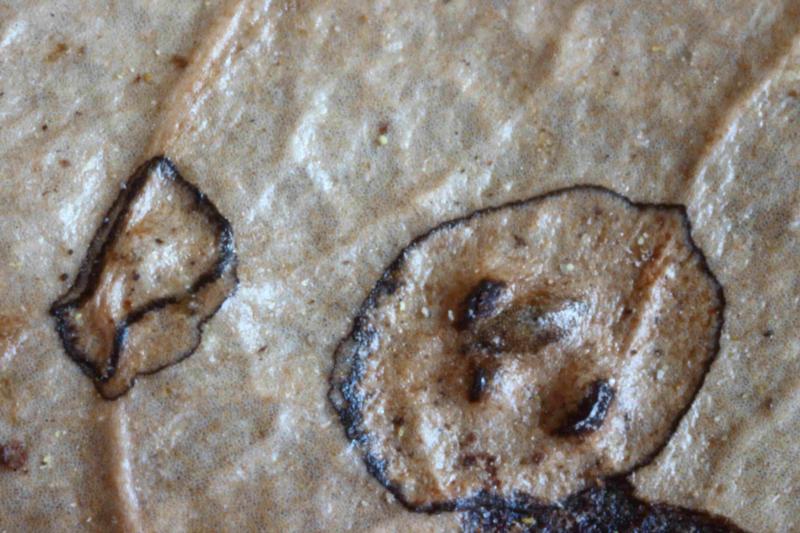
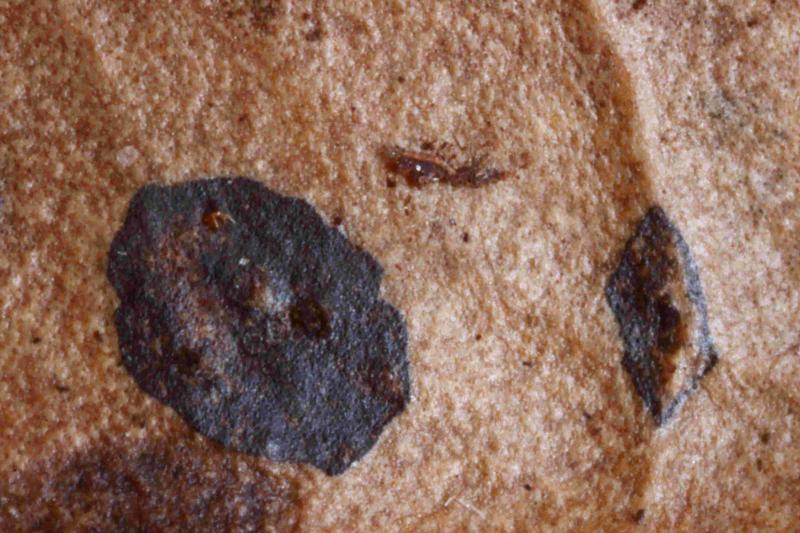
I have found two leaves of Berberis which apparantly have a Diaporthe fungus growing on them. There is no protruding ostiole, unlike with most Diaporthe species.
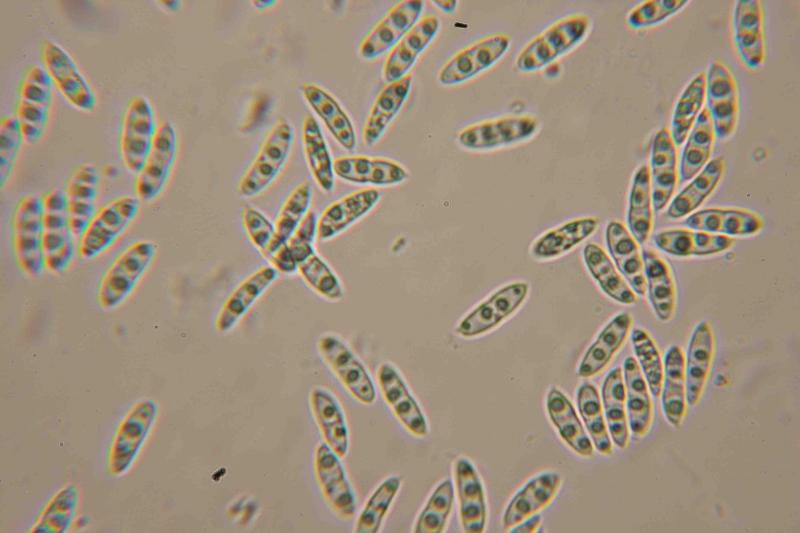
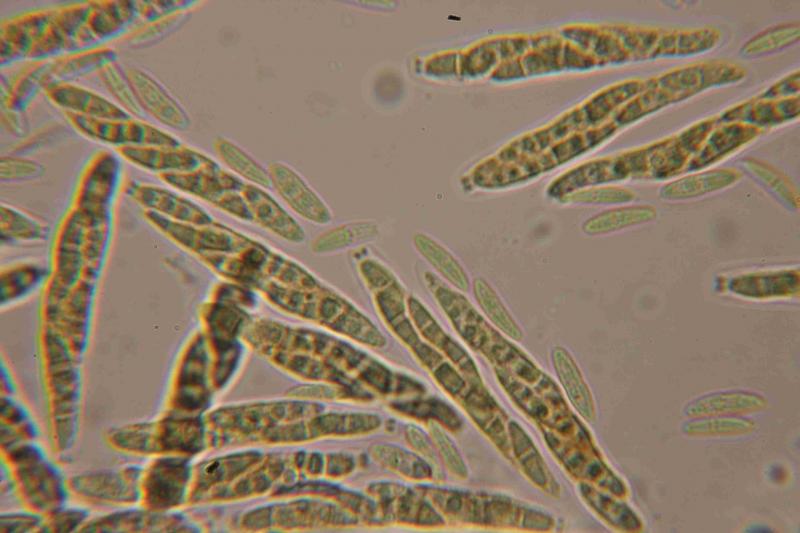
The spores are 1-septate, 4-guttulate, hyaline and with a small appendage ~ 0.75 um at each end. Also, they appear to be longitudinally striate and measure between 12.5 - 14.5 x 4 um.
The 8-spored ascus tips react blue to lugol.
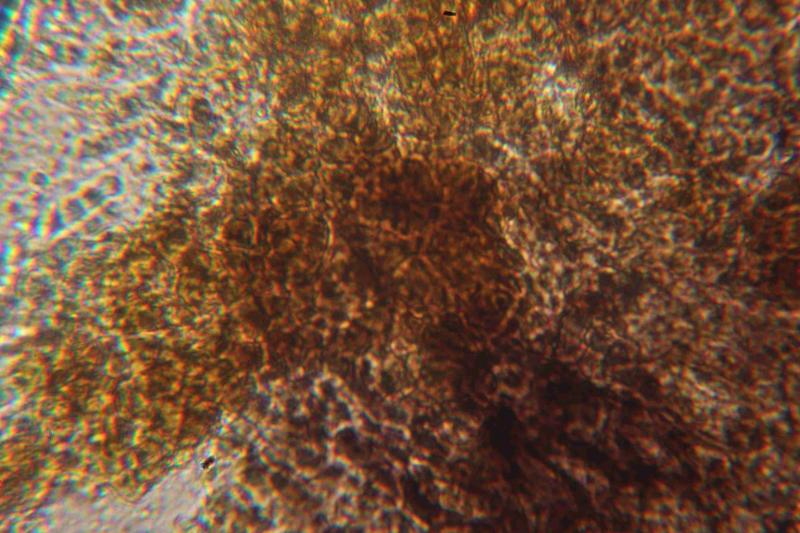
I have attached photos of the hemispherical fruit bodies contained within a blackened area of an old leaf, which is becoming skeletal. Also two more photos showing fruit bodies within an area demarked by stromatic lines on the upper side of a less decayed leaf. On the underside of this leaf, the demarked area is blackened.
A photo of the appendaged spores is attached, along with an image of asci and spores in lugol, showing the longitudinal striations. The excipulum seems to be brown to reddish brown.
The closest species to mine, which I can find, is Diaporthe scobina, but from the sparse information which I have found, this species seems to grow on wood of Fraxinus and reacts red to lugol at the ascus tip.
I wonder if anyone has an idea as to which species mine might be?
Thank You,
With Best Wishes,
Peter.
Chris Yeates,
27-05-2020 21:00

Re : Diaporthe On Leaves of Berberis
Hello Peter
All I can say is that I have almost given up on this area - which is no use to you, I fear. In an email conversation about Diaporthales recently someone said:
"It must also be admitted that species concepts in Diaporthe/Phomopsis are completely up in the air, indications from molecular studies are that (a) the species are frequently not host-specific and (b) there are lots of them. The worst of both worlds..."
Best wishes and stay safe
Chris
Peter Thompson,
28-05-2020 17:46
Re : Diaporthe On Leaves of Berberis
Hello Chris,
Thanks for your reply.
The email which you received and quoted from perfectly illustrates the 'can't do' attitude which currently exits in British field mycology. In contrast, the professional mycologists across Continental Europe have a genuine interest in the ascomycota and species found in countries other than their own.
Still, fortunately you, me and about eight other English and Scottish field workers, spread around the country, have the commitment to do what we can with the fungal ascomycota, in spite of the British mycological shambles going on around us.
With Best Wishes,
Peter.
Thanks for your reply.
The email which you received and quoted from perfectly illustrates the 'can't do' attitude which currently exits in British field mycology. In contrast, the professional mycologists across Continental Europe have a genuine interest in the ascomycota and species found in countries other than their own.
Still, fortunately you, me and about eight other English and Scottish field workers, spread around the country, have the commitment to do what we can with the fungal ascomycota, in spite of the British mycological shambles going on around us.
With Best Wishes,
Peter.