
12-04-2026 17:56
 Hardware Tony
Found on dead stems in February earlier this year
17-04-2026 19:16
 Enrique Rubio
Hi to everybodyI would appreciate any assistance r
14-04-2026 05:32
Ethan CrensonHi all, A few weeks back a friend pointed out som
17-04-2026 15:14
 Bruno Coué
Bonjour.Récoltes du 16/04/2026, sur feuilles mort
12-04-2026 15:52
Gernot FriebesHi,I'm looking for help with this anamorph collect
14-04-2026 21:52
Gernot FriebesHi,found on dead leaves of Carex elata. Conidia: 4
16-04-2026 22:09
Buckwheat PeteHello, I'd like to ask about this older specimen:
15-04-2026 19:33
Fátima Durán ManzanequeHi!! I need help, I found this Ascomycete but I d
14-04-2026 20:31
Gernot FriebesHi,can this be Psilachnum lateritioalbum on Phragm
12-04-2026 12:22
 William Slosse
In a dune grassland in Oostduinkerke (Belgium), on
Orbilia rose
Camille Mertens,
24-05-2020 11:31
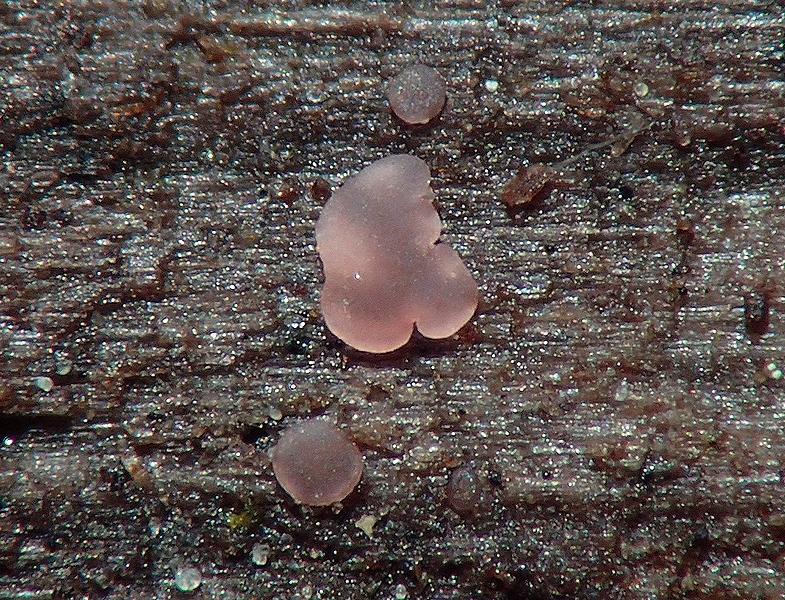
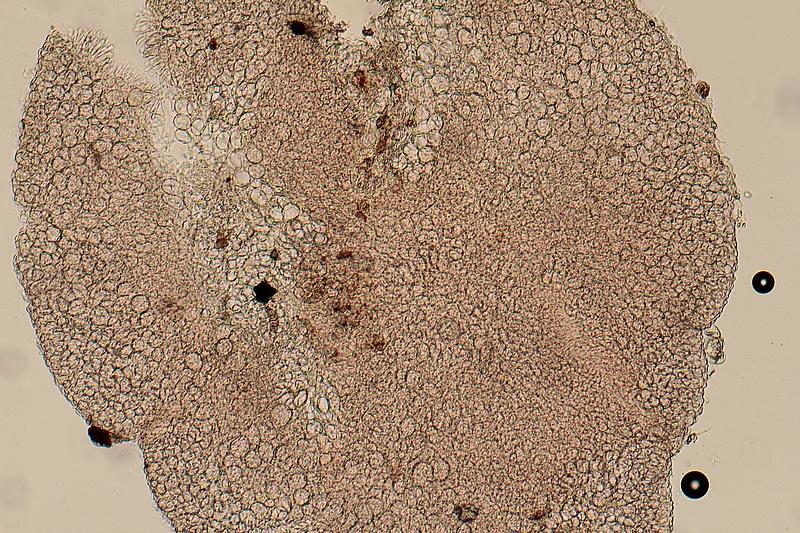
Sur branche (alnus?), en bordure d'un petit ruisseau et en compagnie de Hymenoscyphus kathiae.
Diamètre : max 1mm
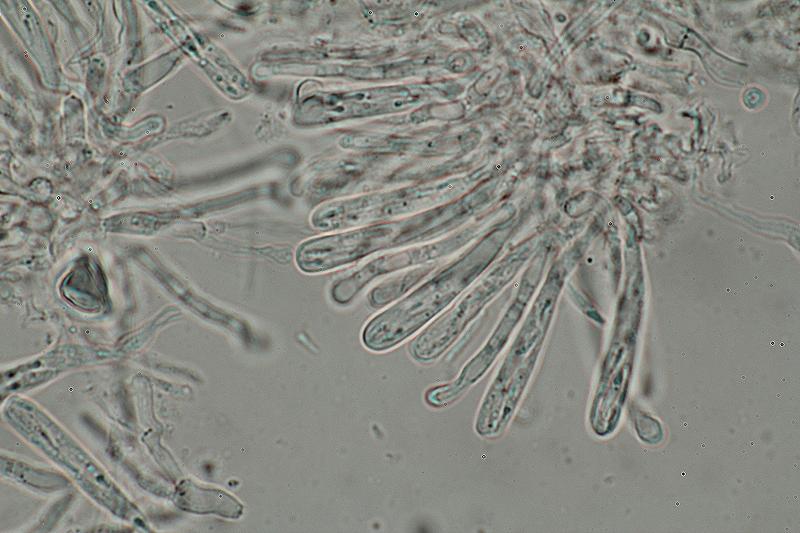
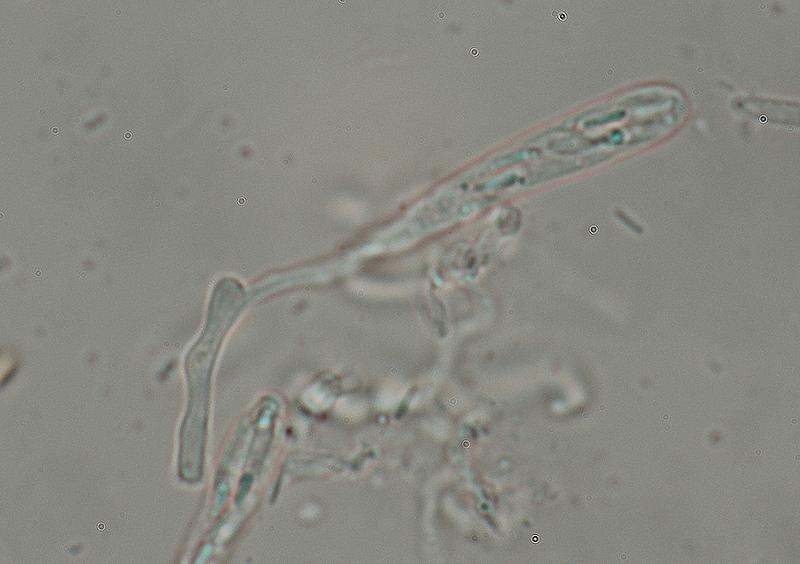
Spores : 6,6 - 8,7 x 1,25 - 1,4 µm
Difficile de trancher entre plusieurs espèces proches l'une de l'autre.
Merci de votre aide.
Camille
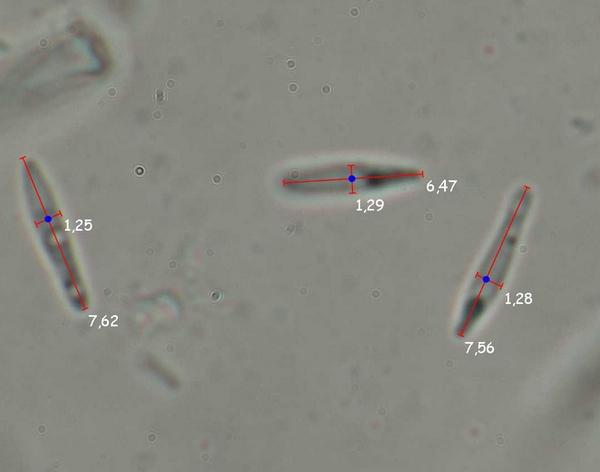
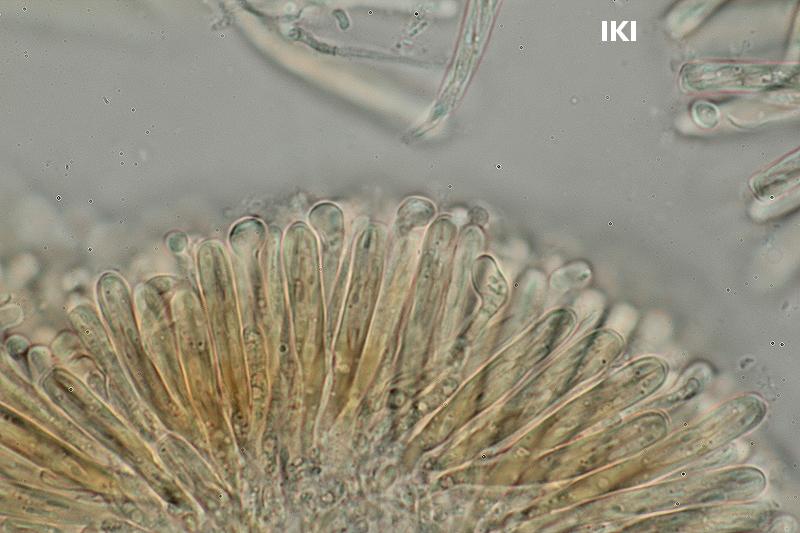
Hans-Otto Baral,
24-05-2020 11:49

Re : Orbilia rose
Should be Orbilia rosea indeed :-)
No joke. O. sarraziniana is similar but differs in the upper spores inverted in the ascus (SBs downwards).
Camille Mertens,
24-05-2020 12:03
Re : Orbilia rose
Vielen Dank Zotto
Camille Mertens,
25-05-2020 10:31
Re : Orbilia rose
Hi Zotto.
Looking again under the microscope I found this.
Could it be the helicoon conidia stage?
Regards.
Camille
Looking again under the microscope I found this.
Could it be the helicoon conidia stage?
Regards.
Camille
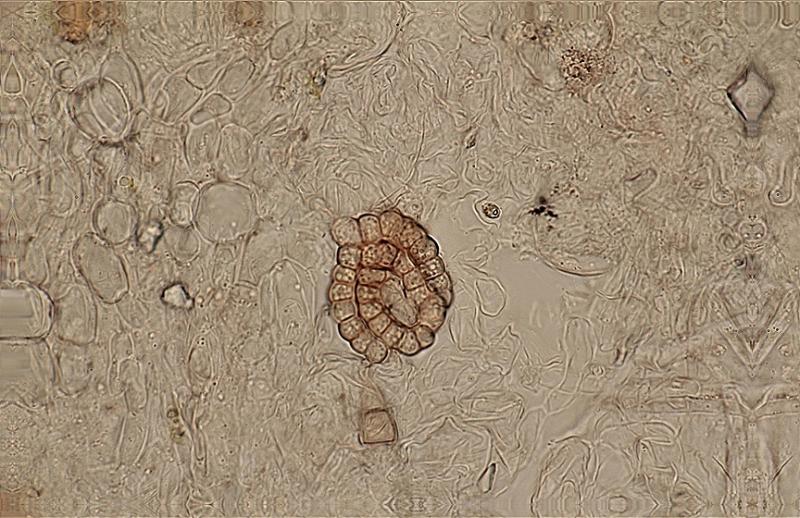
Hans-Otto Baral,
25-05-2020 11:03
Re : Orbilia rose
No, these are coloured conidia of a different shape.
Lothar Krieglsteiner,
25-05-2020 18:03

Re : Orbilia rose
Hello Zotto,
is rosea another Name for luteorubella? In my Memory sarraziniana and luteorubella were the two species separated mainly by spore orientation in the Ascus.
I never heard of rosea.
Best regards, Lothar
is rosea another Name for luteorubella? In my Memory sarraziniana and luteorubella were the two species separated mainly by spore orientation in the Ascus.
I never heard of rosea.
Best regards, Lothar
Hans-Otto Baral,
25-05-2020 20:46
Re : Orbilia rose
Hi Lothar
you need to wait for the 2nd part of the monograph :-)
Section Helicoon will be there on top.
O. rosea is very similar to O. luteorubella but has anguillospora-like conidia in contrast to O. luteorubella with Helicoon. So without the conidia it is difficult. Our idea was that pure rose apothecia more probably belong to O. rosea. Genetically they are very different. And O. rosea goes up the mountains and prefers running water, whereas helicoon-like conidia are adapted to standing water bodies.
Zotto
Juuso Äikäs,
25-05-2020 23:30
Re : Orbilia rose
I wonder what is the best way to find the conidia from a sample. Is there a particular technique for it or does it just sometimes show up in a microscope view? I think I read somewhere that with some species it is present only in a culture. I've still got a last year's sample that I posted here that was O. rosea or luteorubella and was thinking that maybe it's possible to find the conidia and arrive at a more accurate conclusion...
Hans-Otto Baral,
26-05-2020 06:35
Re : Orbilia rose
This is very difficult. In this group of semi-aquatic species you will very rarely see them on the substrate. In culture it is more probable though not easy to trigger their formation. The "easiest" way is a sequence.