
12-04-2026 17:56
 Hardware Tony
Found on dead stems in February earlier this year
17-04-2026 19:16
 Enrique Rubio
Hi to everybodyI would appreciate any assistance r
14-04-2026 05:32
Ethan CrensonHi all, A few weeks back a friend pointed out som
17-04-2026 15:14
 Bruno Coué
Bonjour.Récoltes du 16/04/2026, sur feuilles mort
12-04-2026 15:52
Gernot FriebesHi,I'm looking for help with this anamorph collect
14-04-2026 21:52
Gernot FriebesHi,found on dead leaves of Carex elata. Conidia: 4
16-04-2026 22:09
Buckwheat PeteHello, I'd like to ask about this older specimen:
15-04-2026 19:33
Fátima Durán ManzanequeHi!! I need help, I found this Ascomycete but I d
14-04-2026 20:31
Gernot FriebesHi,can this be Psilachnum lateritioalbum on Phragm
12-04-2026 12:22
 William Slosse
In a dune grassland in Oostduinkerke (Belgium), on
 I have a Hysterium on resin from bark of Picea abies. It deviates from H. pulicare found on a nearby tree. The ascomata are narrower and more upright with a slightly "sharper" apical edge, and a narrower base. Spores measure 20-26 x 6-8 microns, 3-septate without constrictions and end-cells not notably paler (only on a few of the spores). Could it be H. angustatum? (Is H. angustatum synonymous with H. acuminatum?). Or is this within the variability of H. pulicare?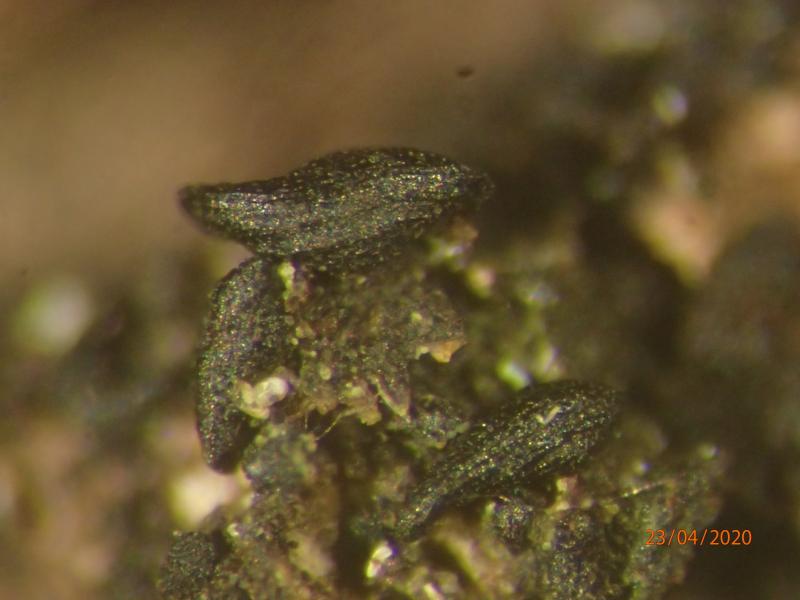
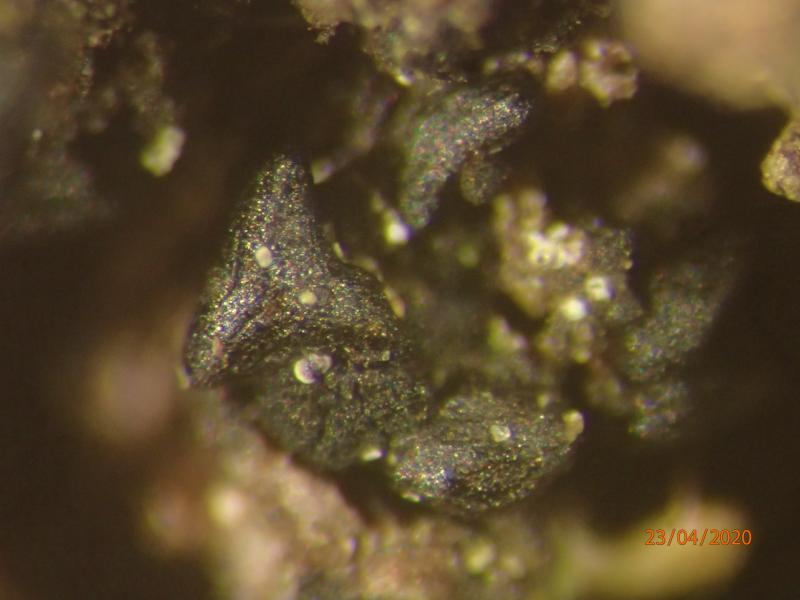
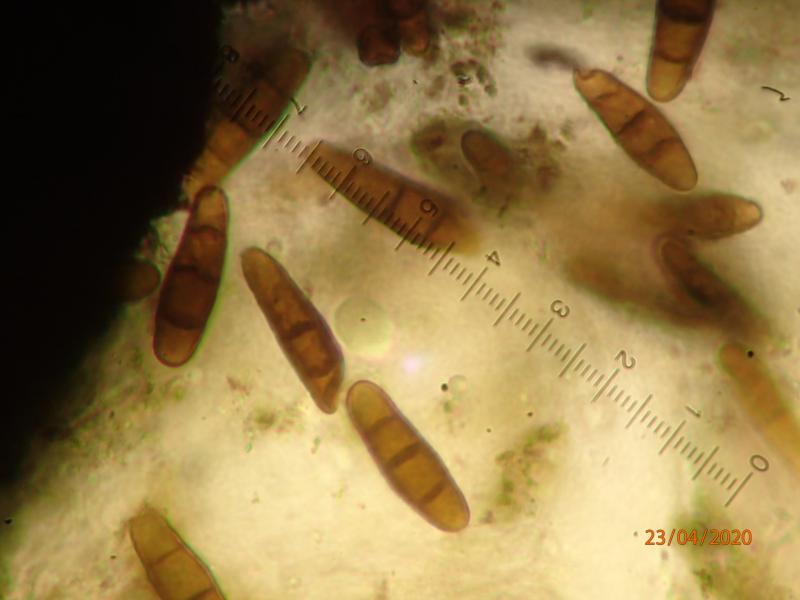
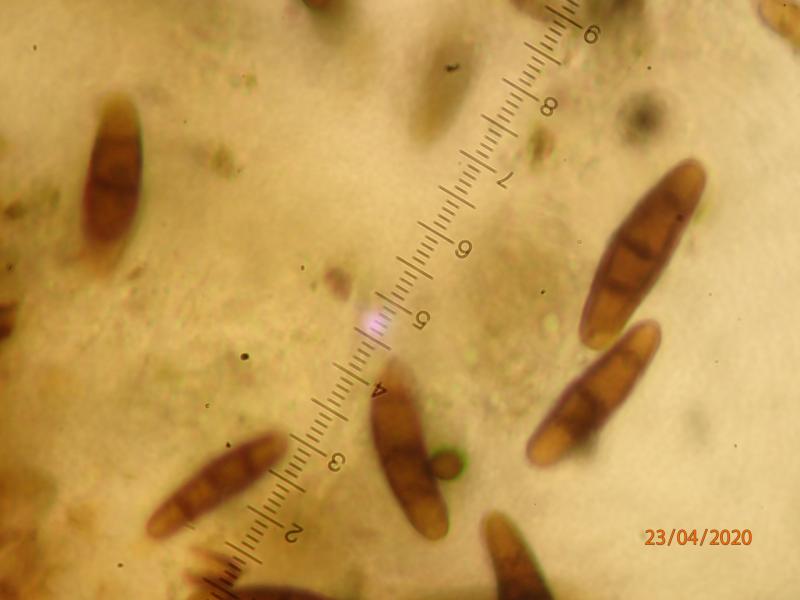
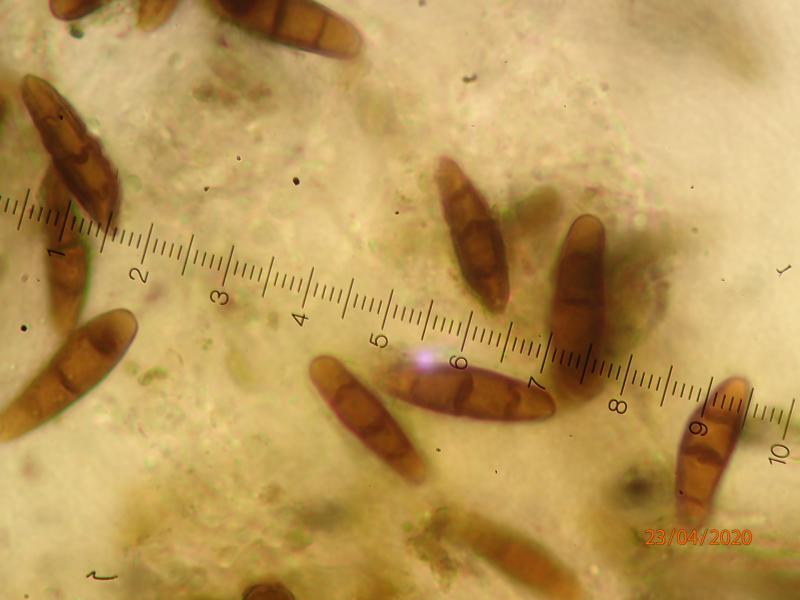

Hi Edvin,
To my mind, it's definitively not H. pulicare.
H. angustatum is considered to be the most widespread species, in a variety of substrates (including Picea). But your collection, which I would link to H. angustatum, is still atypical. Perhaps a serious study would be necessary to better understand what H. angustatum really is.
Getting molecular data could be an excellent idea, as an anticipation.
Alain