
27-04-2026 09:59
Pauline. PennaBonjour Can anyone advise me on these pycnidia fo

22-04-2026 20:54
 Enrique Rubio
Hi to everybody.This Pyrenopeziza grew in moist le
24-04-2026 03:16
 David Chapados
Found while looking at something else from wood in
22-04-2026 01:06
 Richard VALERI
Bonjour à tous.Je vous présente cette Nectria s.
22-04-2026 20:17
 Marian Jagers
Is anyone familiar with the Hyphomycetes genus Pse

21-04-2026 22:14
Margot en Geert VullingsThis cup fungus was found on April 10, 2026, on lo
Tiny (0.5mm) pale yellow ascocarps (Hymenoscyphus sp.)
Stephen Martin Mifsud,
28-11-2017 14:51
 I found a cluster of tiny ascocarps between 0.3-0.8mm, astipitate, disc to funnel shaped, pale yellow, often with a rim, entire or a bit irregular.
My problem is that when I checked their micro-features, I only saw a lump of paraphyses (asci? ascospores?)
These were found sitting on decaying branch of a carob tree (I suppose)
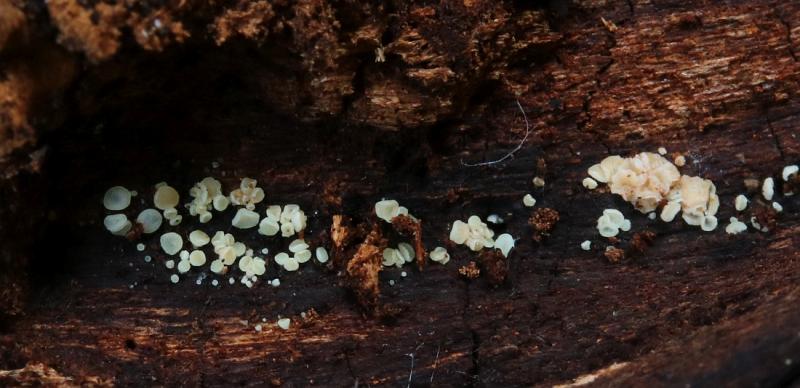
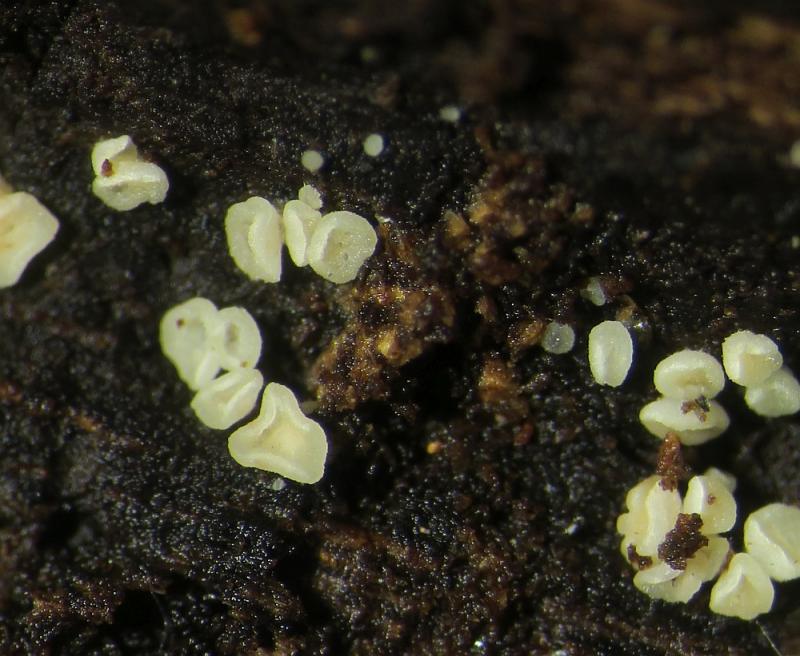
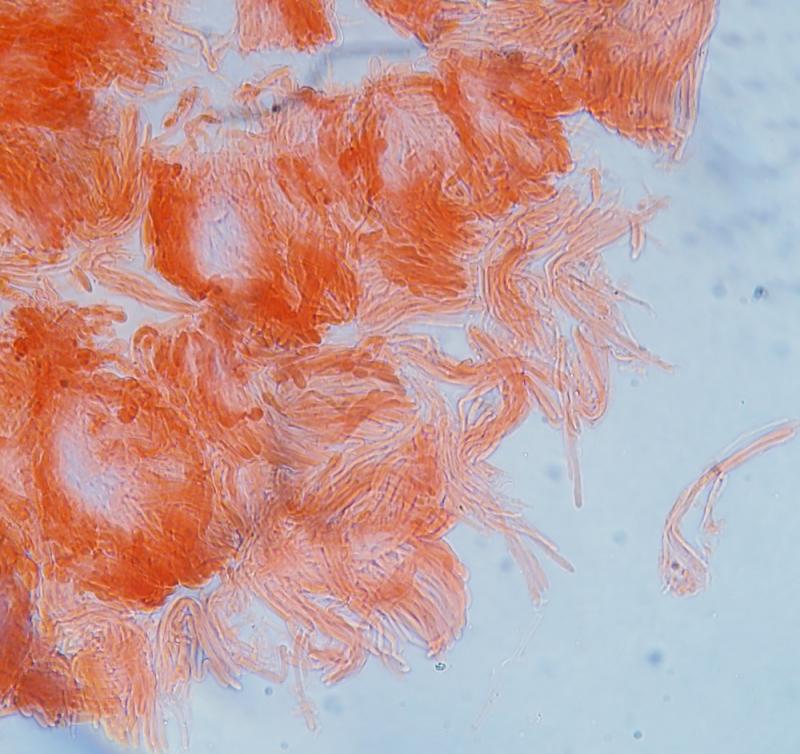
Hans-Otto Baral,
28-11-2017 15:58

Re : Tiny (0.5mm) pale yellow ascocarps.
Do you have it fresh? if so then better take water as medium and avoid any stronger pressure.
Stephen Martin Mifsud,
28-11-2017 18:45
Re : Tiny (0.5mm) pale yellow ascocarps.
Ok, maybe because I cleaned it in KOH and pressed too much hard?.
So now, I made few other gently squashed mounts straight into congo red, Melzer and Phloxine. I found few spores (fusiform with 1-2 septa, 11-13um long) and hyphae of the excipulum (spherical, c 10um wide) but the asci are difficult to observe. They seem not to stain well and they form tight bundles that do not get loose. In Melzer there is no hint of blue so inamyloid.
So now, I made few other gently squashed mounts straight into congo red, Melzer and Phloxine. I found few spores (fusiform with 1-2 septa, 11-13um long) and hyphae of the excipulum (spherical, c 10um wide) but the asci are difficult to observe. They seem not to stain well and they form tight bundles that do not get loose. In Melzer there is no hint of blue so inamyloid.
I think we are dealing with a Hymenoscyphus sp. and a quick search as "sessile Hymenoschyphus" resulted in H. fagineus which is similar in some aspects but not the habitat ! Hymenoscyphus fructigenus is also a close match although usually, it is stipitate but on EOL I saw sessile forms (if ID is correct?)
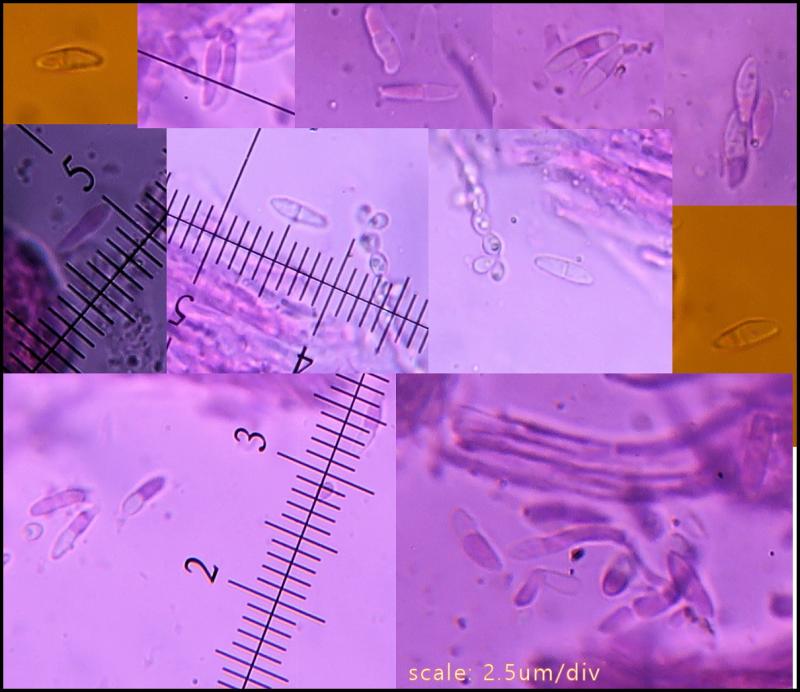
Stephen Martin Mifsud,
28-11-2017 20:30
Re : Tiny (0.5mm) pale yellow ascocarps.
I followed the key The genus HYMENOSCYPHUS S.F.Gray sensu lato in Belgium. Key to the species and varieties by Bernard Declercq, and in my unexperience but reaonable follow up of the key I am into
>> Apothecia pale to ochraceous yellow, sessile to shortly stipitate. Excipulum at least basally with isodiametrical cells.
and then Table 7 :
>>>> Apothecia not reddening when damaged. Paraphyses with low refractive guttules or eguttulate. Spores ciboroid, cylindrical to fusiform.
What would you say if I suggest Phaeohelotium immutabile (Fuckel) D (= Hymenoscyphus immutabilis ) ?
In the meantime, in IKI I saw these hyphae with swollen rounded ends slightly J+.
>> Apothecia pale to ochraceous yellow, sessile to shortly stipitate. Excipulum at least basally with isodiametrical cells.
and then Table 7 :
>>>> Apothecia not reddening when damaged. Paraphyses with low refractive guttules or eguttulate. Spores ciboroid, cylindrical to fusiform.
What would you say if I suggest Phaeohelotium immutabile (Fuckel) D (= Hymenoscyphus immutabilis ) ?
In the meantime, in IKI I saw these hyphae with swollen rounded ends slightly J+.
Hans-Otto Baral,
28-11-2017 20:54
Re : Tiny (0.5mm) pale yellow ascocarps.
Well, as I was saying, put it straight in water (without any ingredients). All these reagents like MLZ or KOH or Congo (if not aqueous) kill the cells within less than a second.
I cannot identify with only dead elements.
I cannot identify with only dead elements.
Stephen Martin Mifsud,
28-11-2017 23:22
Re : Tiny (0.5mm) pale yellow ascocarps.
Dear Hans-Otto, first of all, thank you for your time. Now I got it, and I've mounted under drinking bottle water. As expected the contrast is not so enhanced, but workable images. Scale are all 2.5um / division.
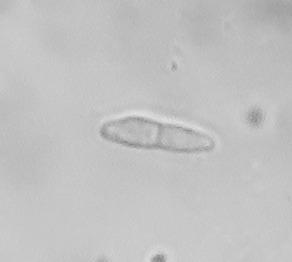
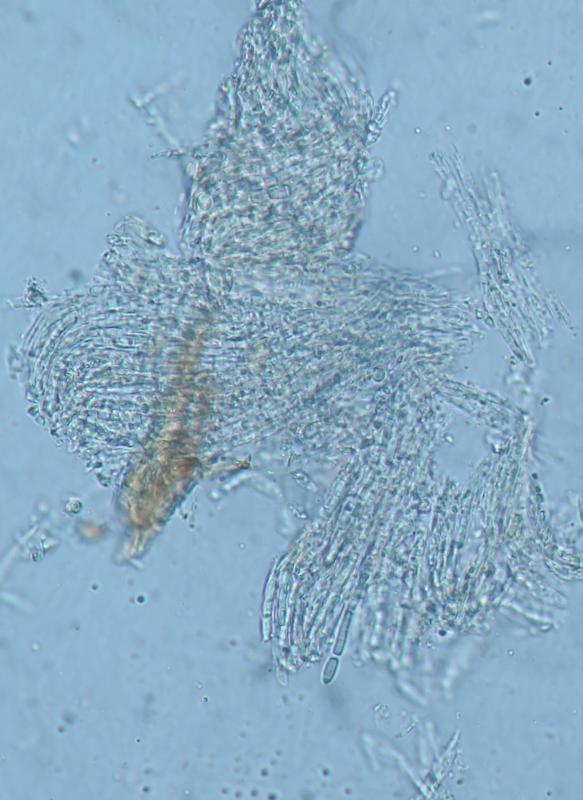
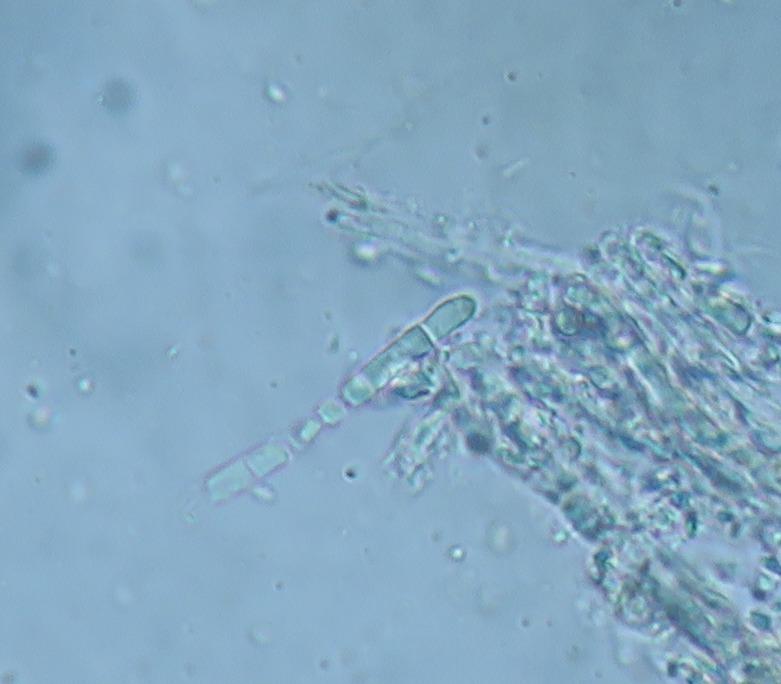
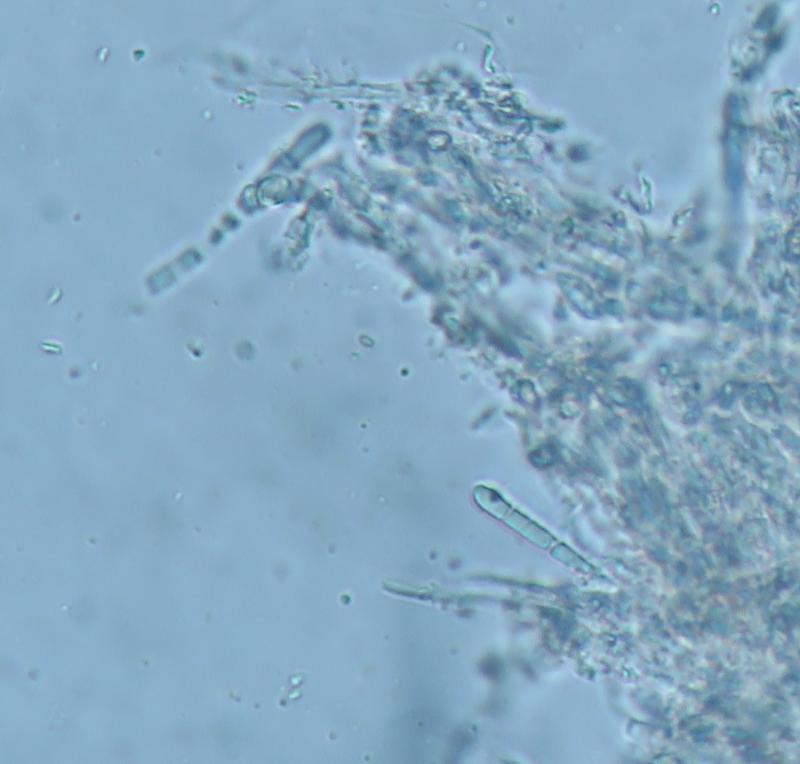
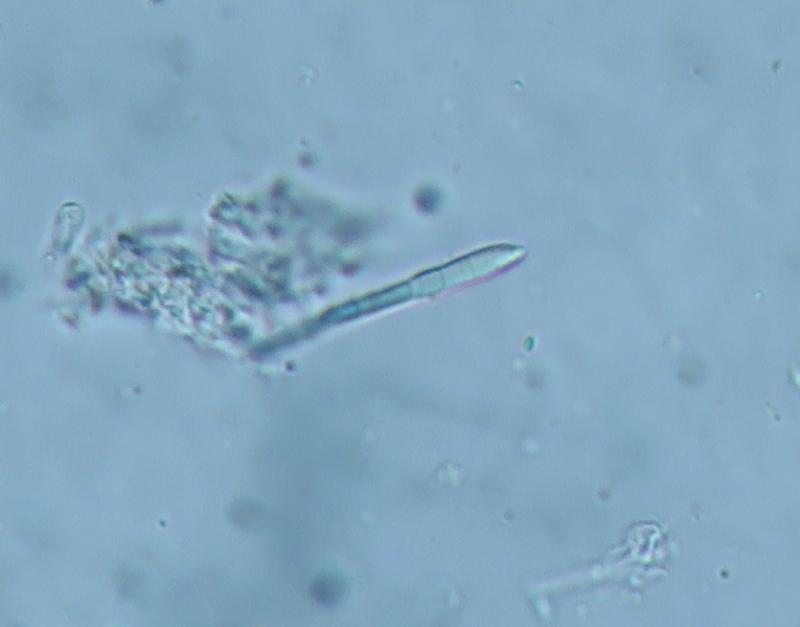
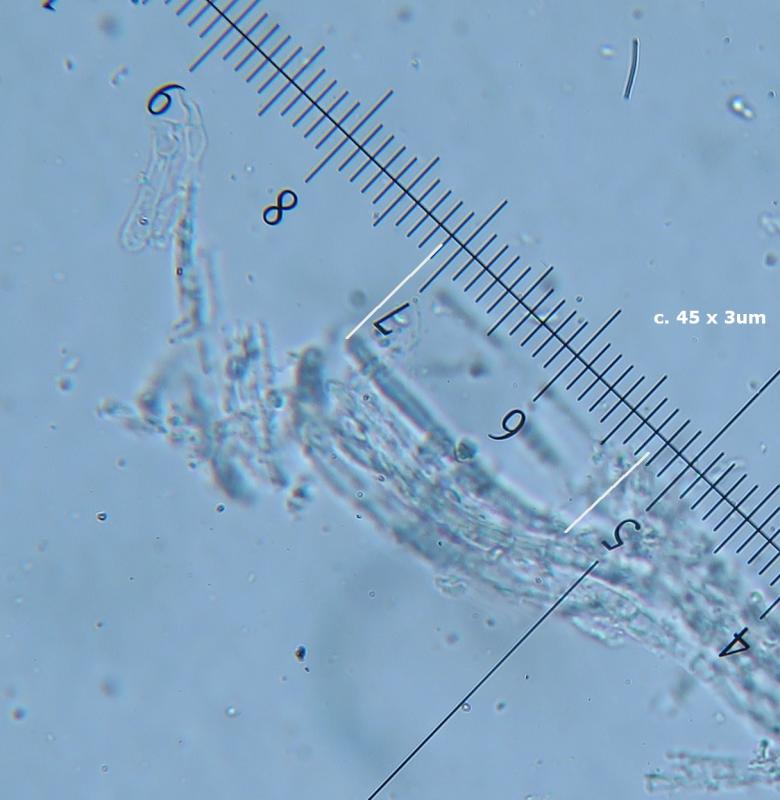
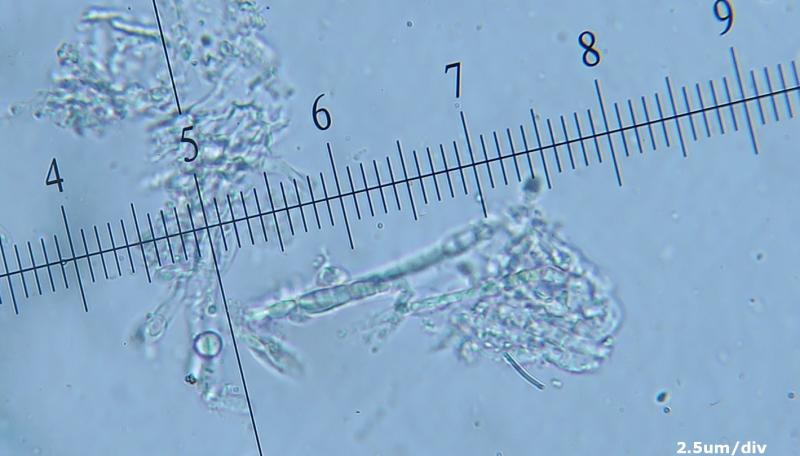
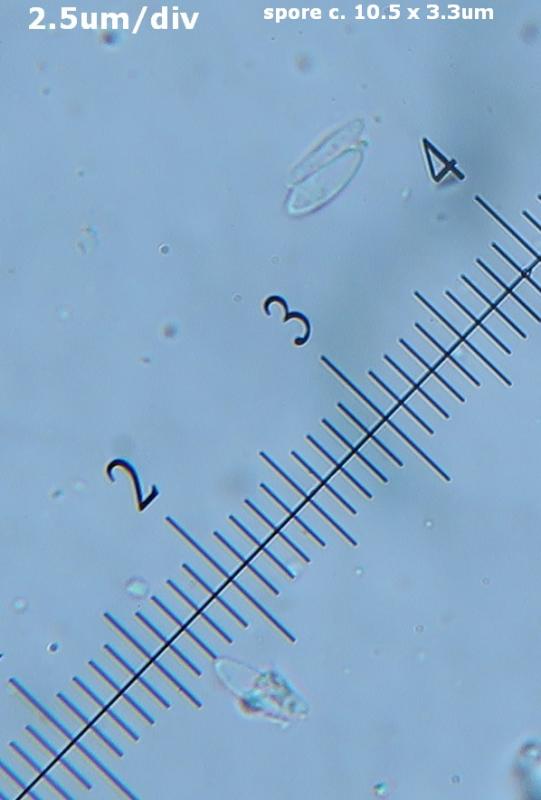
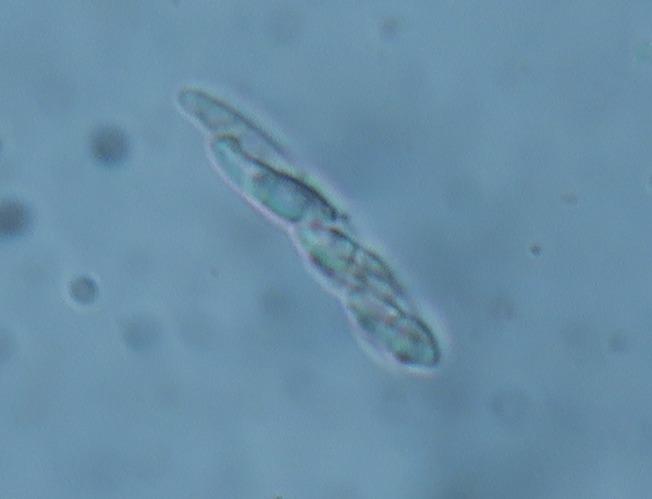
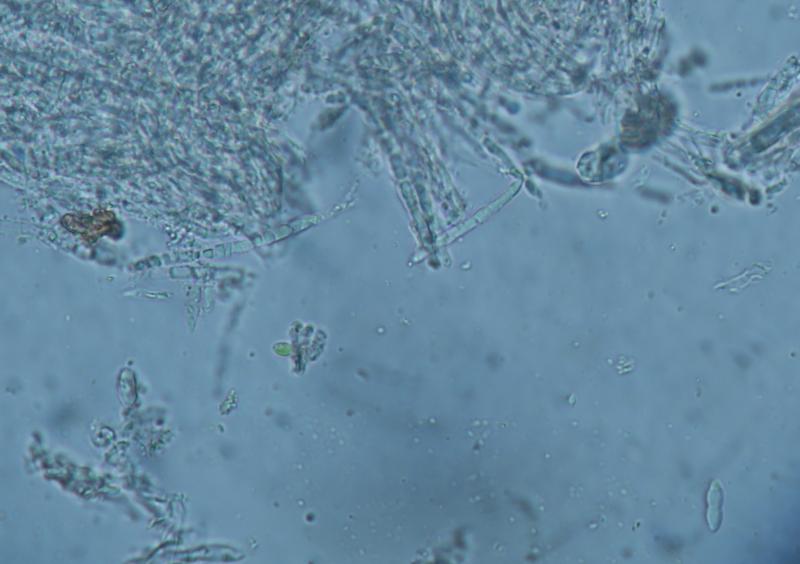
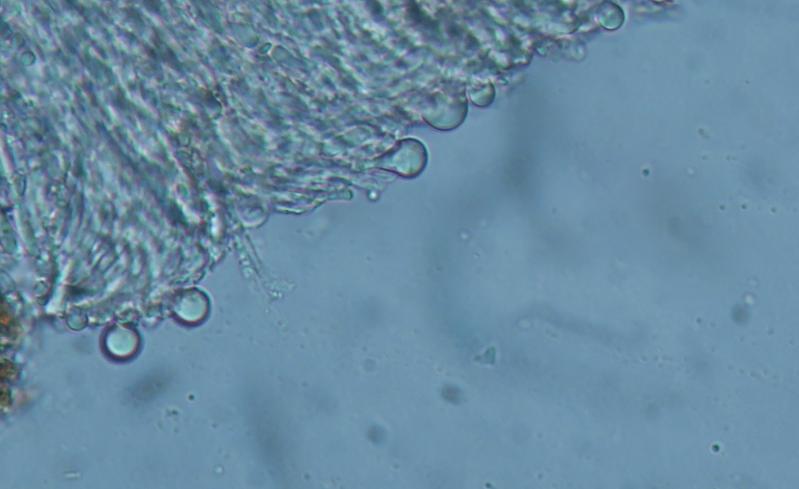
Stephen Martin Mifsud,
28-11-2017 23:24
Re : Tiny (0.5mm) pale yellow ascocarps.
Another image
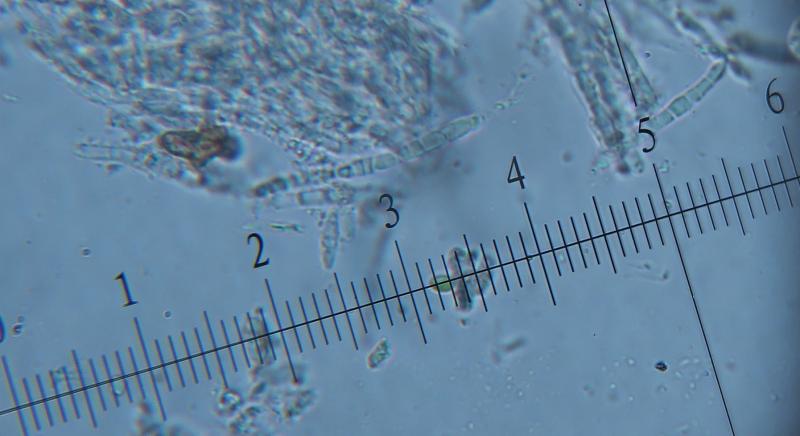
Hans-Otto Baral,
29-11-2017 09:54
Re : Tiny (0.5mm) pale yellow ascocarps.
To my taste the contrats isn't bad. In water you have sometimes the problem to see septa in paraphyses, which is much easier in Congo.
But: in vivo you have these strongly refractive vacuoles in the paraphyses which totally disappear in any lethal mountant, or even when you put a flame under the slide. These VBs are very important to identify the genus. In this case it points to the genus Calycina which typically has these VBs.
Now you say nothing about the substrate. I assume it is woody (looks so). To identify a Calycina needs info about
- ascus apex reaction in IKI
- croziers
- living mature asci in order to see if the spore septation occurs there or perhaps only in overmature spores
- living mature (not overmature!) spores to see the guttulation.
Your sample seems to be somewhat overmature, or immature because of frost. Then it ist difficult to identify.
Zotto
But: in vivo you have these strongly refractive vacuoles in the paraphyses which totally disappear in any lethal mountant, or even when you put a flame under the slide. These VBs are very important to identify the genus. In this case it points to the genus Calycina which typically has these VBs.
Now you say nothing about the substrate. I assume it is woody (looks so). To identify a Calycina needs info about
- ascus apex reaction in IKI
- croziers
- living mature asci in order to see if the spore septation occurs there or perhaps only in overmature spores
- living mature (not overmature!) spores to see the guttulation.
Your sample seems to be somewhat overmature, or immature because of frost. Then it ist difficult to identify.
Zotto
Stephen Martin Mifsud,
29-11-2017 14:47
Re : Tiny (0.5mm) pale yellow ascocarps.
Dear Lotto,
Thank you so much for the lecture. I have printed the page and put it in my notes. The specimen was collected on a decaying branch presumingably of a carob tree (at least there were carobs growing there) located in a damp area and which I collected Thursday 23rd November. The specimen spent a day on the table at room temp (22 deg C) and 3 other days in a humid chamber at 18C. It was Monday that I examined it with stains.
Under the stereo microscope, the ascocarps looks healthy. There are some individuals which seem young (right hand side of pics above) and subturbinate (not disc shaped) but that may still make them overmature.
I agree that I can't find typical asci with spores and that puzzled me for long, but now I know why. I will give another try on the youngest individuals, but what i can do is to leave the branch in a humid chamber at room temp (or outdoors) and perhaps I would get a second wave of growth.
Thank you so much for the lecture. I have printed the page and put it in my notes. The specimen was collected on a decaying branch presumingably of a carob tree (at least there were carobs growing there) located in a damp area and which I collected Thursday 23rd November. The specimen spent a day on the table at room temp (22 deg C) and 3 other days in a humid chamber at 18C. It was Monday that I examined it with stains.
Under the stereo microscope, the ascocarps looks healthy. There are some individuals which seem young (right hand side of pics above) and subturbinate (not disc shaped) but that may still make them overmature.
I agree that I can't find typical asci with spores and that puzzled me for long, but now I know why. I will give another try on the youngest individuals, but what i can do is to leave the branch in a humid chamber at room temp (or outdoors) and perhaps I would get a second wave of growth.
Hans-Otto Baral,
29-11-2017 15:02
Re : Tiny (0.5mm) pale yellow ascocarps.
Indeed you can try to grow it in the moist chamber, preferably at moderate temperature (around 10°).