
25-03-2026 10:35
Hulda Caroline HolteHello,I collected this species growing on a dead b
26-03-2026 15:31
 Åke Widgren
Hello,I found this one in October last year, on r


25-03-2026 22:23
 Marc Detollenaere
Dear Forum,On a debarked stem of Tilia, we found s
24-03-2026 15:44
Åge OterhalsI hope someone can confirm the name of this collec
25-03-2026 20:53
François BartholomeeusenDear forum members,On 23 March 2026, I found sever
23-03-2026 20:16
 Miguel Ángel Ribes
Good eveningI'm unable to identify this Coprotus o
25-03-2026 15:06
 Bernard CLESSE
Bonjour à toutes et tous,Pourriez-vous me confirm
25-03-2026 13:54
 Enrique Rubio
Does anyone know where I could download Paoletti's
 Hi to everyone,
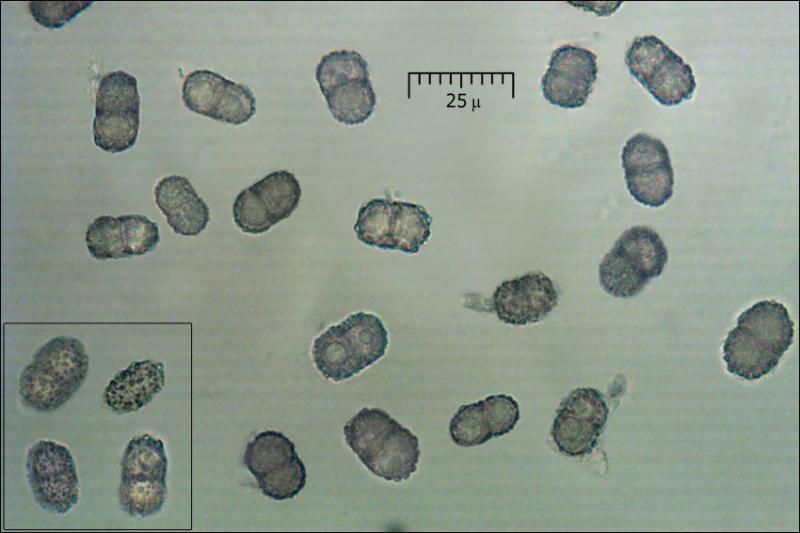
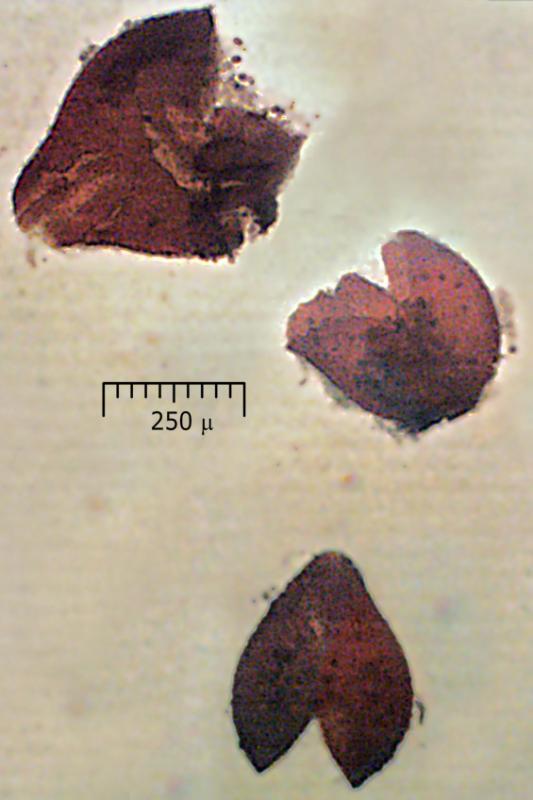
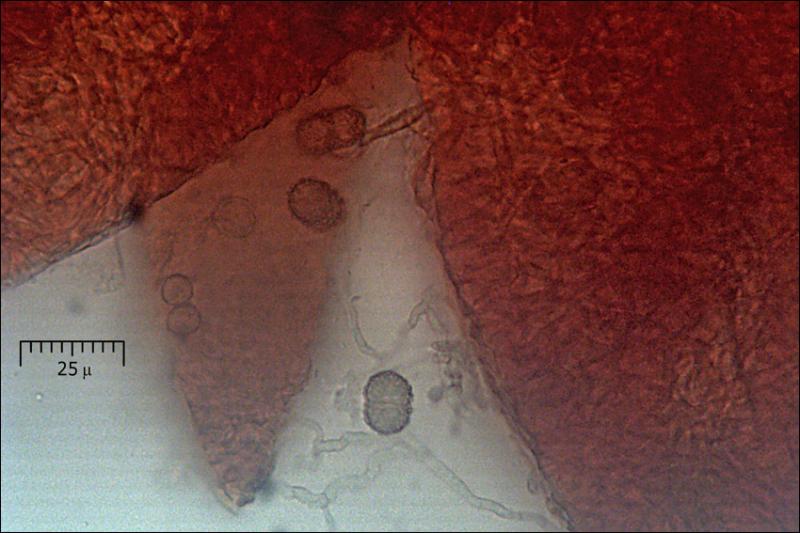
I found this small (probably) asco on heavily decayed Polyporaceae (Phellinus punctatus and Inonotus nodulosus most common at this place) on fallen off, rotten branch of Fagus sylvatica. First I thought I found Nectria peziza (since on polypore). However, spores seem too big and too verrucose. Also perithecia seem pyriforme rather than globose and they apparently do not degrade to widely open 'peziza' type cups when old as I expected. Surprisingly I was unable to find asci? In the literature available to me I found no fit to this find.
Would appreciate if somebody could help me by instructing me where to look for further information or how to proceed to come up with an identification? Many thanks in advance.
Amadej Trnkoczy
__________________________________
Date of find: March 25. 2017
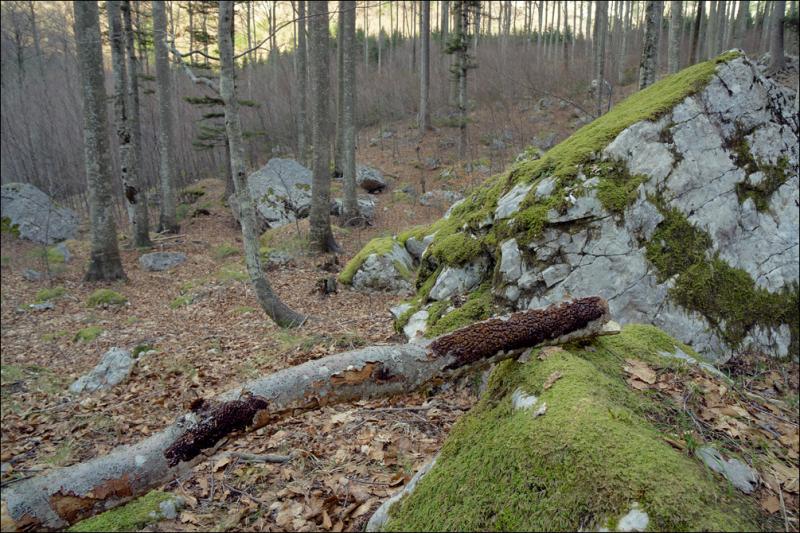
Place: Zadnjica valley west of Mt. Triglav, East Julian Alps, northwest Slovenia.
Habitat: alpine Fagus sylvatica forest with some Picea abies; in shade, rather cool and humid place; elevation 950 m, average temperature 5 -7 deg C, average precipitations ~ 3.000 mm/year, alpine phytogeographical region.
Spore dimensions: 14.3 [16.5 ; 17.6] 19.8 x 8.6 [10.2 ; 11] 12.6 microns; Q = 1.3 [1.6 ; 1.7] 1.9; N = 24; C = 95%; Me = 17 x 10.6 microns; Qe = 1.6.
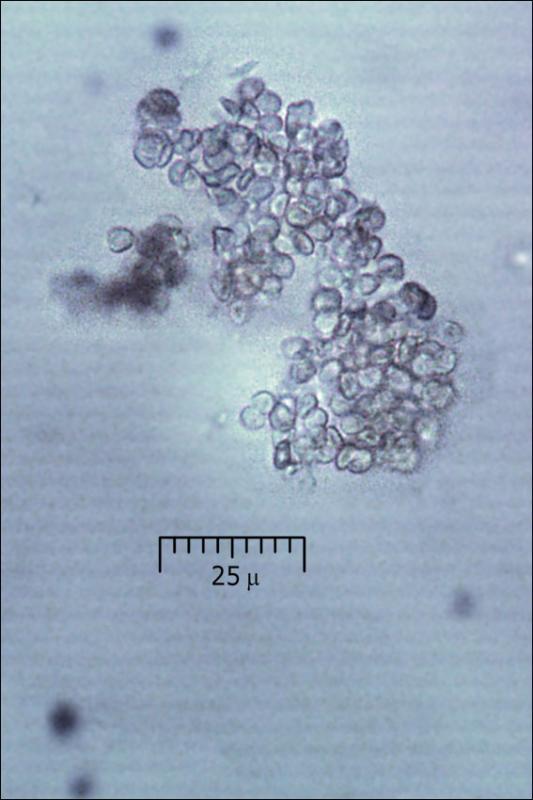
I observed also much smaller, numerous (probably) conidia of some kind (Pic.: 8).
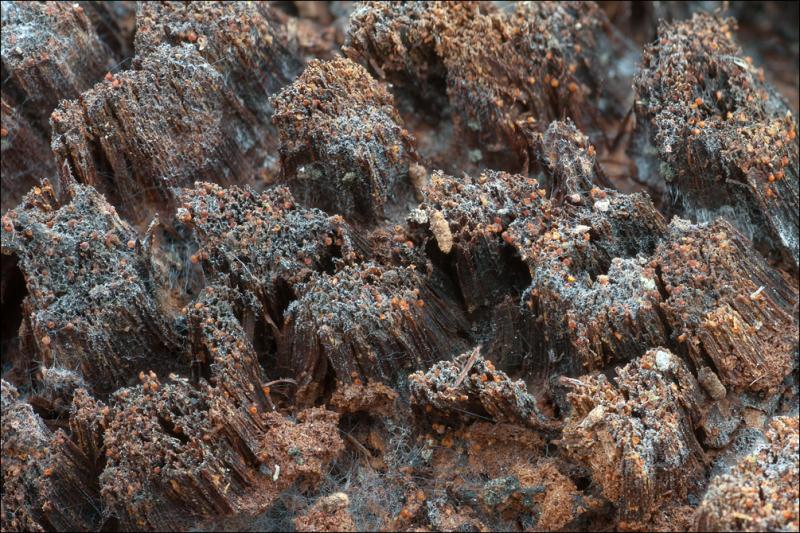
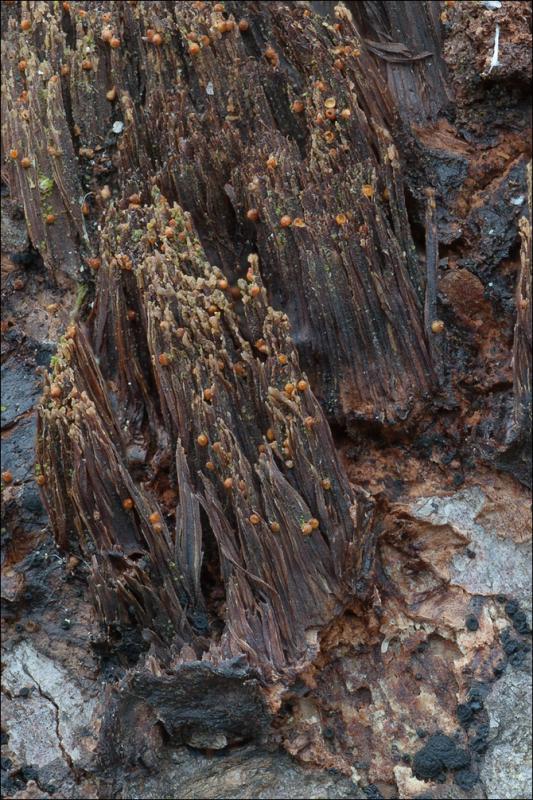
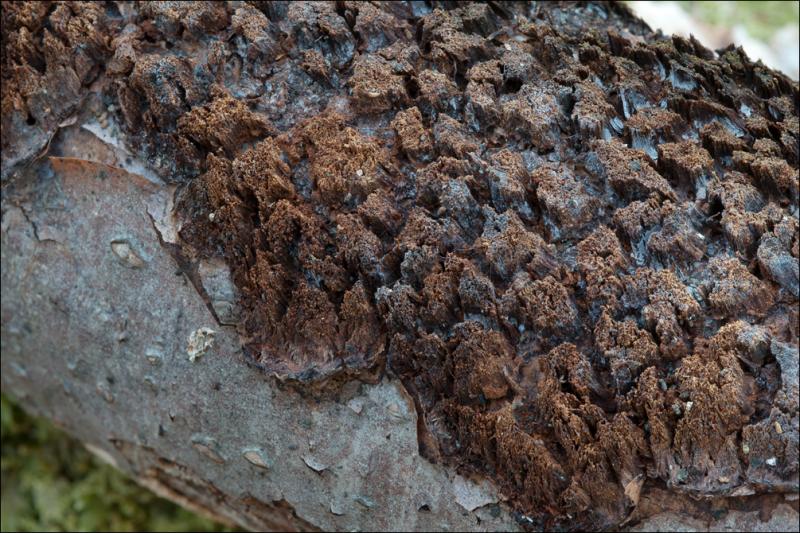
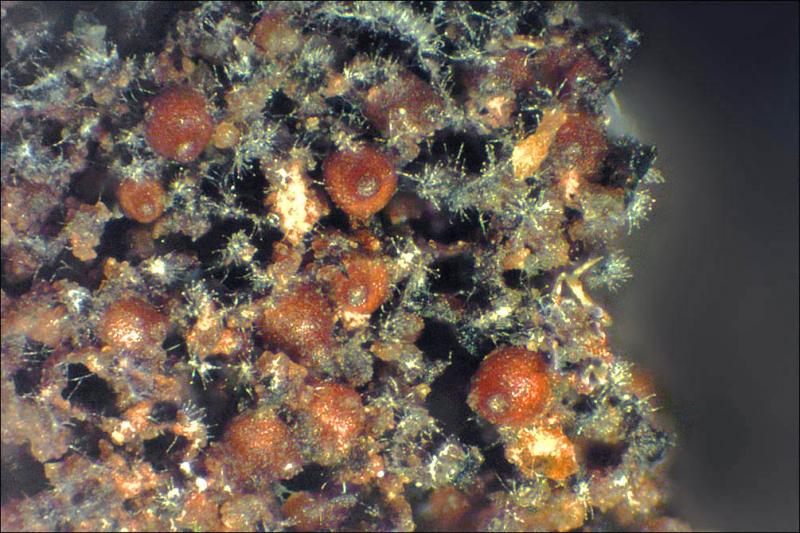
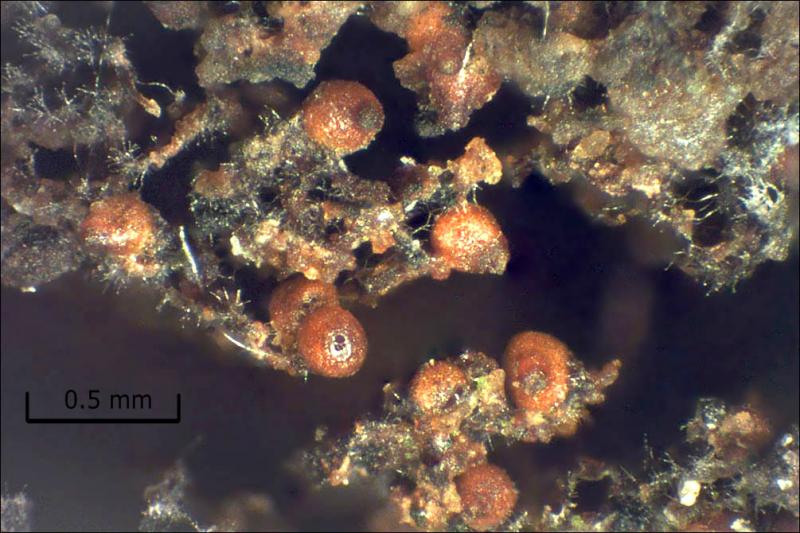
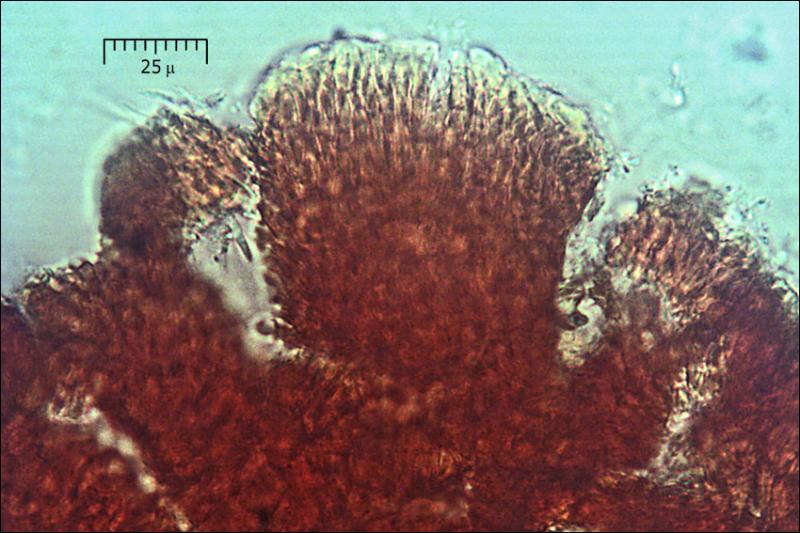
this could be Cosmospora coccinea/Nectria cosmariospora – a common species on old fruitbodies of Inonotus.
Best wishes,
Gernot
cheers
Thank you very much for your input. I browsed the information available on web for the name you proposed and it fits well to my observation. One question more: is it possible that my picture no.8 shows (micro?) conidia of anamorph form of the find - Verticillium olivaceum? Or they belong to something different? Reference Gräfenhan T, Schroers HJ, Nirenberg HI, Seifert KA, An overview of the taxonomy, phylogeny, and typification of nectriaceous fungi in Cosmospora, Acremonium, Fusarium, Stilbella, and Volutellastates (2011), Stud Mycol.; 68: 79-113. states: " ... Microconidia ellipsoidal, oblong or clavate or slightly allantoid, aseptate, in slimy heads... " but no dimensions are given. I was also unable to find some pictures of them.
Regards
Amadej