
11-05-2016 20:37
 Zuzana Sochorová (Egertová)
Hi,this very little ascomycete grew on soil in a m
08-05-2026 11:55
Gernot FriebesHi,found on a decorticated Picea abies branch stil

05-05-2026 22:40
Gernot FriebesHi,I believe this is a Plagiostoma growing on a Sa
06-05-2026 11:25
 Castillo Joseba
Me mandan el material seco de Galicia (España) re
06-05-2026 17:23
Thomas Læssøehttps://svampe.databasen.org/observations/10594257
28-04-2026 20:07
 Lothar Krieglsteiner
... on twig in the air at standing Ceratonia siliq
04-05-2026 18:13
 Stephen Martin Mifsud
ID request for what seems to be a true aquatic fun
04-05-2026 16:39
Stephen Martin Mifsud
ID request: This specimen was collected in Malta o
28-07-2011 18:31
 Alex Akulov
Dear FriendsToday I made the pdf file of Velenovsk
Ascobolus
Malcolm Greaves,
17-11-2016 12:32
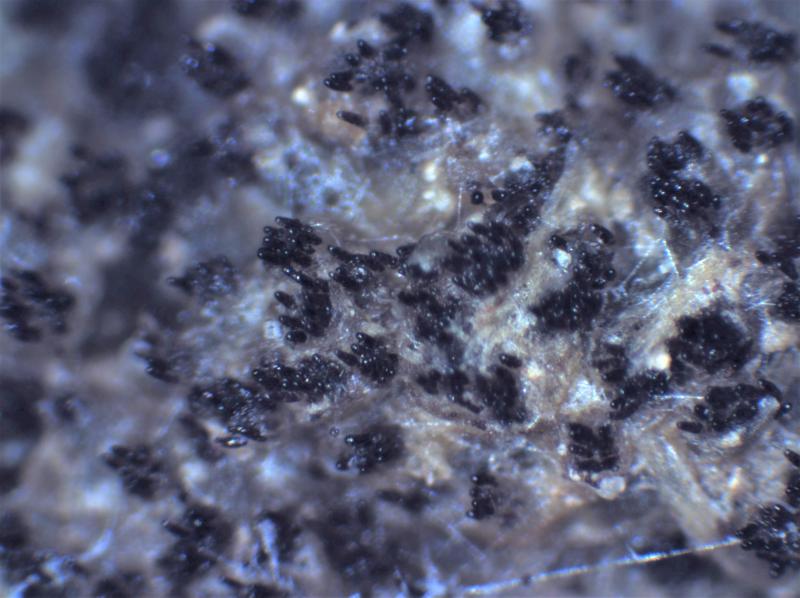
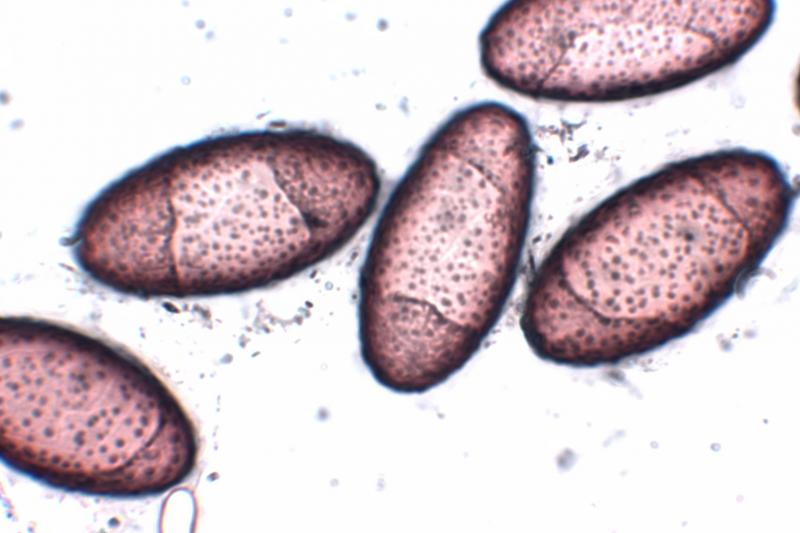
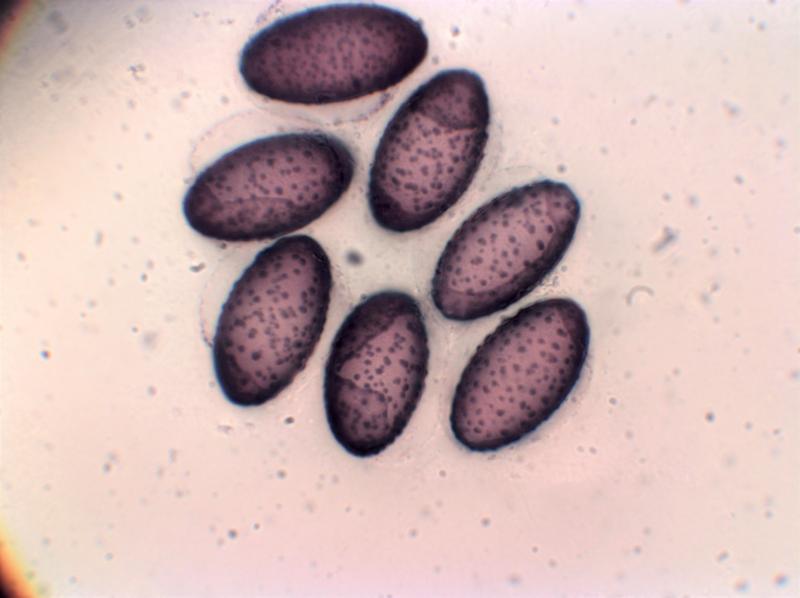
 This Ascobolus is growing in abundance on a sample of Grouse dung.
Although the spores have the gelatinous sheath causing it to look similar to the spores of A.degluptus I still think it is just A stictoideus. Can anyone confirm this.
Thanks
Mal
Michel Delpont,
17-11-2016 15:30

Re : Ascobolus
Hello Malcolm.
The shape and the particular ornamentation of the spores actually remind one of A.degluptus. Moreover, you do not specify the size of the spores, but the spores of A.stictoideus are rather smaller.
Michel.
The shape and the particular ornamentation of the spores actually remind one of A.degluptus. Moreover, you do not specify the size of the spores, but the spores of A.stictoideus are rather smaller.
Michel.
Malcolm Greaves,
17-11-2016 17:46
Re : Ascobolus
Thanks Michel.
The size was (29)30.2(32.16) x (16.6)17.1(18.1)
The size for the two given by Van Brummelen is (25.5)26.5-30.5(32) x 16-17.5 for stictoideus and (27.5)30-33.5(35) x 16-18 for degluptus so not clear cut and I am not sure which would be classed as a better fit?
Mal
The size was (29)30.2(32.16) x (16.6)17.1(18.1)
The size for the two given by Van Brummelen is (25.5)26.5-30.5(32) x 16-17.5 for stictoideus and (27.5)30-33.5(35) x 16-18 for degluptus so not clear cut and I am not sure which would be classed as a better fit?
Mal
Michel Delpont,
17-11-2016 18:09
Re : Ascobolus
Indeed the measures are not always decisive. Did you try to measure the asci? This can sometimes also help. By re-examining your photos with more attention A.stictoideus seems to be the closest species.
Michel.
Michel.