
23-05-2026 11:44
 Charles Grapinet
Hello, I am having trouble identifying this copro
22-05-2026 21:35
Steve ClementsBonjour, I expected this find on old wood on our
22-05-2026 18:12
 Lothar Krieglsteiner
... in moist chamber from Portugal.As the fungus s
22-05-2026 20:08
Ethan CrensonHello all, Yesterday in NYC I was visiting an e
11-01-2022 16:36
 Jason Karakehian
Hi does anyone have a digital copy of Raitviir A (
20-05-2026 17:47
Margot en Geert VullingsWe found this Mollisia on dead Juncus stems mown l
22-05-2026 14:47
Gernot FriebesHi,superficial ascomata collected on bark of a liv
22-05-2026 14:44
Lothar Krieglsteiner
in unripe condition citrine yellow, then soon fadi
22-05-2026 13:29
Gernot FriebesHi,I am curious to hear your opinion on this mater
22-05-2026 10:59
 Nicolas VAN VOOREN
Trouvé sur Phragmites, ce que je pense être un L
Geopora 4949
Leandro Sánchez,
14-04-2016 20:09
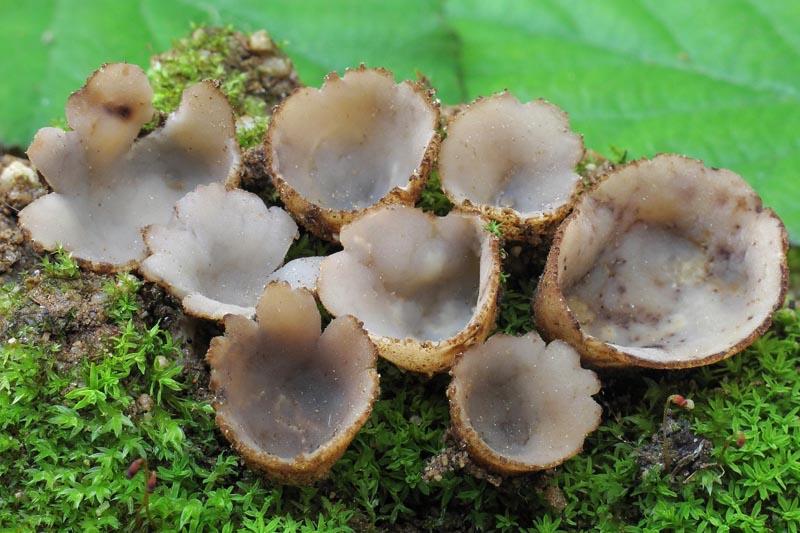
 Sur la terre sablonneuse, jusqu'à 16 mm diamètre
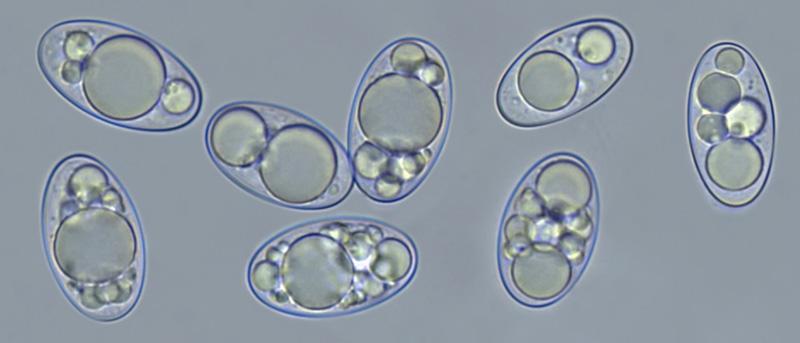
Spores 22-26 / 12-15 Q= 1,60-1,90
Geopora arenicola??
Cordialement
Michael Beug,
15-04-2016 03:36

Re : Geopora 4949
The coloring is closest to Geopora arenosa, though I do not know if G. arenosa is in Europe. G. arenosa spores should be 20-25x11-18 microns while the very similar G arenicola has spores 23-28x14-16 microns. Geopora clausa is widespread in Europe and is quite similar - with spores of two forms, one broadly elliptic and the other narrowly elliptic. G. tenuis has spores 20-27 x 12-15 microns and so is yet another possibility
Leandro Sánchez,
15-04-2016 17:18
Re : Geopora 4949
Hi Michael!!
Thanks for your opinion
Regards
Thanks for your opinion
Regards