
23-05-2026 18:57
Sylvie Le GoffBonjour à tousRécolté sur une branchette de Sal
22-05-2026 14:44
 Lothar Krieglsteiner
in unripe condition citrine yellow, then soon fadi
23-05-2026 11:44
 Charles Grapinet
Hello, I am having trouble identifying this copro
22-05-2026 21:35
Steve ClementsBonjour, I expected this find on old wood on our
22-05-2026 18:12
Lothar Krieglsteiner
... in moist chamber from Portugal.As the fungus s
22-05-2026 20:08
Ethan CrensonHello all, Yesterday in NYC I was visiting an e
11-01-2022 16:36
 Jason Karakehian
Hi does anyone have a digital copy of Raitviir A (
20-05-2026 17:47
Margot en Geert VullingsWe found this Mollisia on dead Juncus stems mown l
22-05-2026 14:47
Gernot FriebesHi,superficial ascomata collected on bark of a liv
22-05-2026 13:29
Gernot FriebesHi,I am curious to hear your opinion on this mater
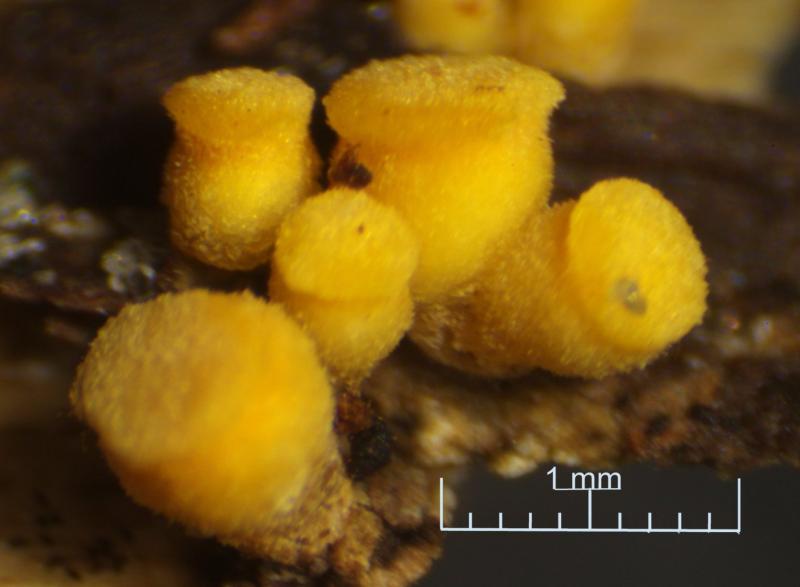
I found this Ascomycete on a log of a dead hardwood tree (Acer platanoides?) in Stange, Norway.
Spores: 20.9 [25.6 ; 27.8] 32.5 x 5.7 [6.6 ; 7] 7.8 µm, Q = 2.9 [3.8 ; 4.2] 5 ; N = 29 ; C = 95%. Me = 26.7 x 6.8 µm ; Qe = 4
Asci: 107.9 [120.2 ; 128.4] 140.7 x 14.5 [15.4 ; 16.1] 17 µm. Q = 6.7 [7.6 ; 8.2] 9.1 ; N = 16 ; C = 95%. Me = 124.3 x 15.7 µm ; Qe = 7.9
Thanks in advance for help!
Regards
Per
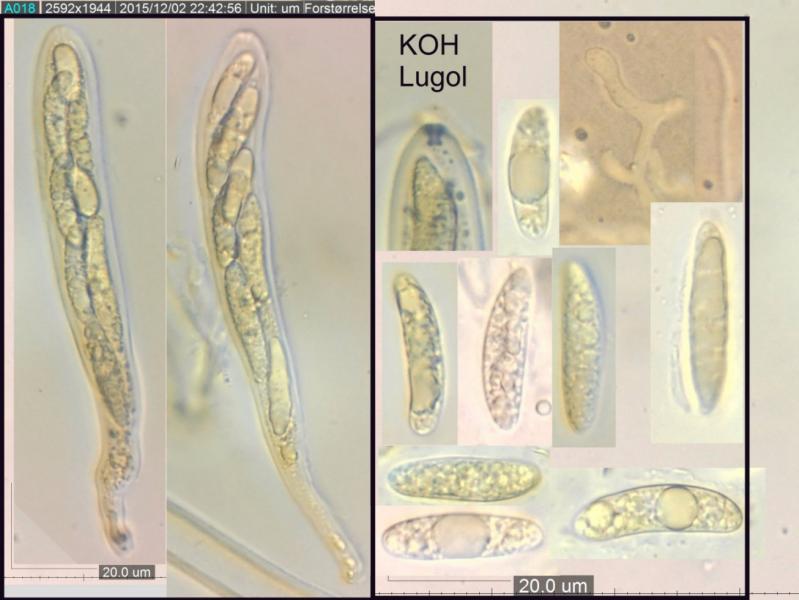

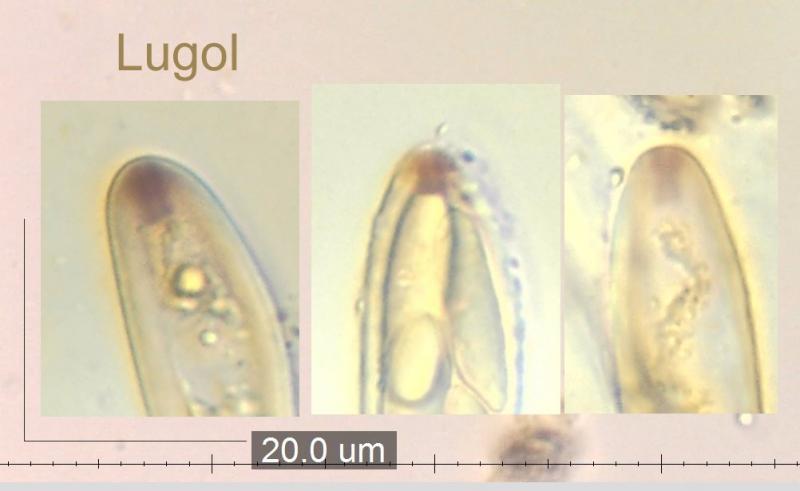
most probably Pezicula acericola. Try Lugol without KOH. I bet the apical apparatus will turn bright red (hemiamyloid).
Regards
Martin
Yes, you are right, it became red (redder than in the photo). I have looked at data about P.acericola on Internet and it seems to fit very well with my disco. As far as I can see it is not recorded in Norway before!
Thank you very much!
Regard
Per
I have now checked it up with Gerard J. M. Verkley's work: A monograph of the genus Pezicula and its anamorphs, and the descriptions/comments by Irina Morozova/Stip Helleman: http://www.ascofrance.com/forum/17358/pezicula-acericola-aesculea-what-is-the-difference
Just to be sure I have re-measured the ascospores: L/W = 2.9 [4 ; 4.3] 5.4 ; N = 100. I found several bluntly hooked spores, and with the asci's length 120.2 - 128.4 µm and paraphyses' apical cell less than 4,5 µm in diameter, it fits very well with Pezicula aesculea.
Thank you for guiding me to the genus.
And thanks to Kåre Homble for helping me identifying it.
Regards
Per