
28-04-2026 20:07
 Lothar Krieglsteiner
... on twig in the air at standing Ceratonia siliq
04-05-2026 18:13
 Stephen Martin Mifsud
ID request for what seems to be a true aquatic fun
04-05-2026 16:39
Stephen Martin Mifsud
ID request: This specimen was collected in Malta o
04-05-2026 09:50
 Castillo Joseba
Me mandan el material seco de Galicia,(España) re
02-05-2026 12:42
Alain BRISSARDBonjour à tousJeuidi 30 avril dernier on m'a remi
02-05-2026 13:06
Pauline. PennaBonjour Please can someone help me with this id
01-05-2026 22:45
 Thierry Blondelle
Bonjour à tous, Une récolte sur bouse séchée d
14-04-2026 05:32
Ethan CrensonHi all, A few weeks back a friend pointed out som
28-04-2026 20:33
Vitus SchäfftleinHello, I found Trochila ilicina on Ilex aquifoliu

Hi to everybody and specially Jacques Fournier
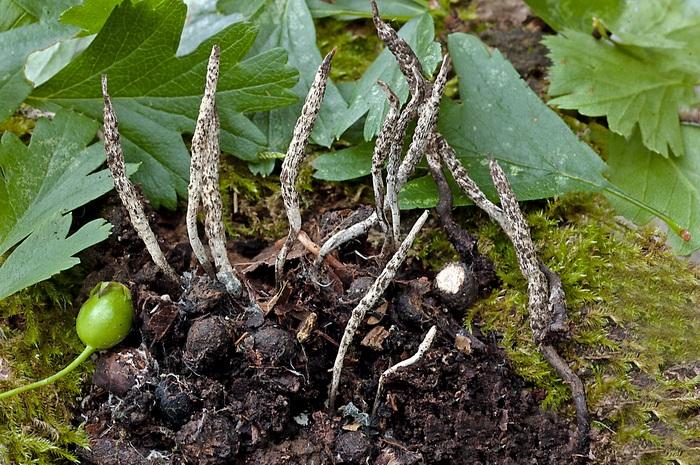
Today we have examined these gregarious stromata up to 40 mm high growing on buried seeds of Cornus sanguinea or Crataegus monogyna. We don't know what the host is because they are living together and the stromata were growing under both trees.
After reading wonderfull Fournier's keys we are observing that our ascospores are greater: 12-16 x 5-7 versus 11-13 x 4.6-5.9 sec. Jacques. Also we have seen that collections on Cornus seeds can be greater. The question is: There is some innovation on this matter?
Many thanks in advance
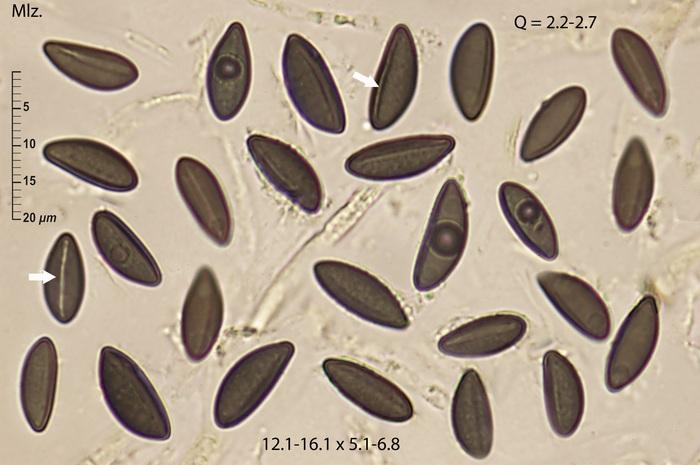
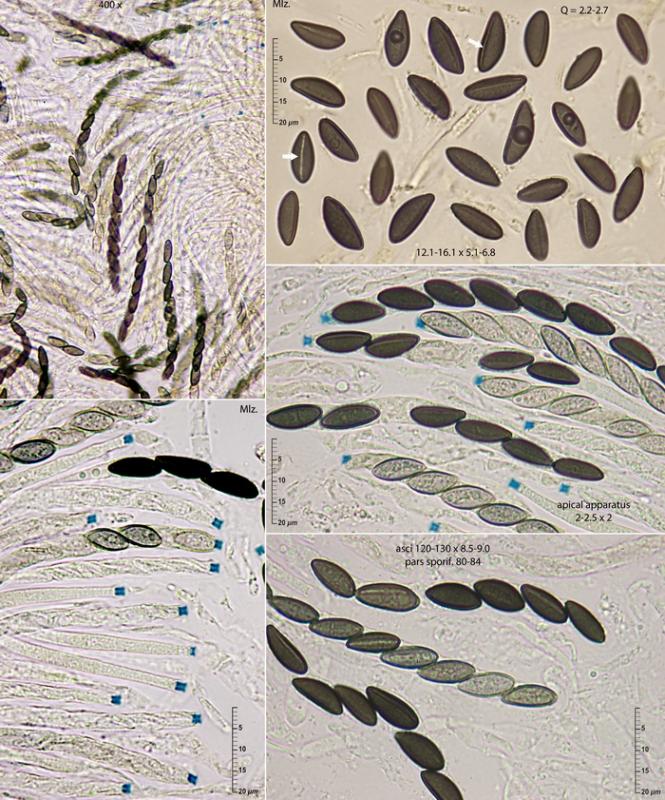
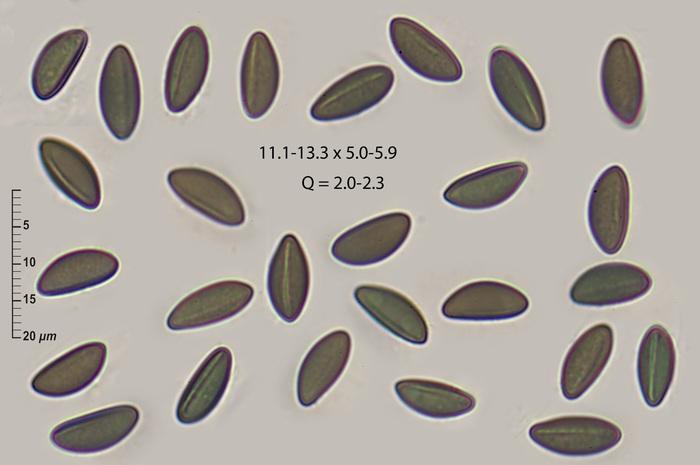

your observations are very interesting and strongly suggest that the Xylaria on Cornus fruits has larger ascospores than the one on Crataegus, as previously observed on the material collected by Peter Welt. I hope that will be sorted out on molecular grounds but it can be expected these fruit-inhabiting species are phylogenetically very closely related (see also X. delitschii). I have no new information so far.
Saludos,
Jacques
HI Jacques
Welcome from the Antillas. I wish that you have found nice fungi.
Well, we will analyze both collections and I will keep you informed.
Thanks a lot, jacques