
15-05-2026 13:33
Sylvie Le GoffBonjour à tousJe serais très reconnaissante enve
16-03-2011 14:31
roman vargas albertoHi. I would like some opinion about this Peziza
14-05-2026 05:36
Ethan CrensonHi all, I haven't paid much attention to Lachnu
10-05-2026 23:17
 Andreas Gminder
Hello,today we found in a moist steep decidous for
11-05-2026 12:32
 Bernard CLESSE
Pourriez-vous m'aider à identifier cette héloti
13-05-2026 15:26
 François Freléchoux
Bonjour,Voici une récolte faite il y a quelques j
12-05-2026 15:41
 Nicolas VAN VOOREN
Dear Ascolovers, especially interested in Pezizale
13-05-2026 12:05
 Thierry Blondelle
Bonjour à tous,J'aimerais avoir confirmation de c
28-04-2026 20:07
 Lothar Krieglsteiner
... on twig in the air at standing Ceratonia siliq
27-04-2026 20:52
Lothar Krieglsteiner
Found on hanging tiwg of Olea europaea in dried-ou
Unknown Asco
Michael Beug,
07-06-2015 01:35
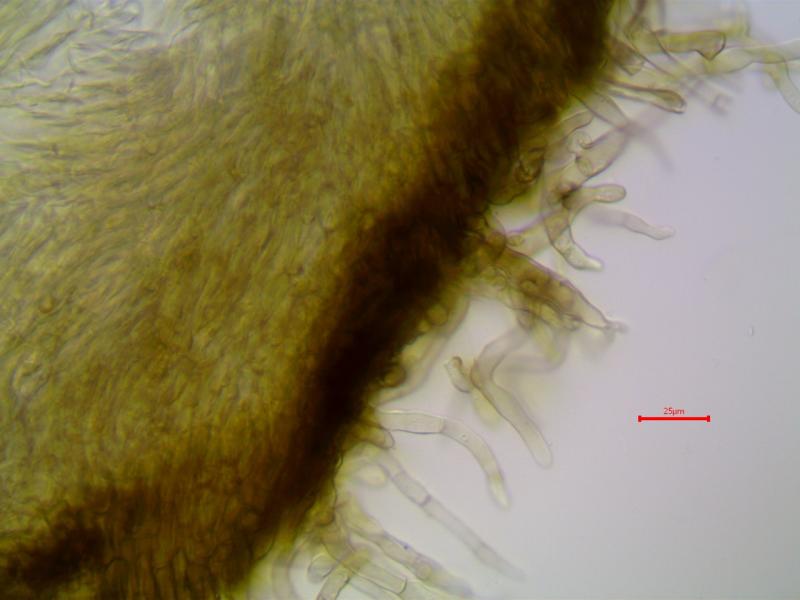
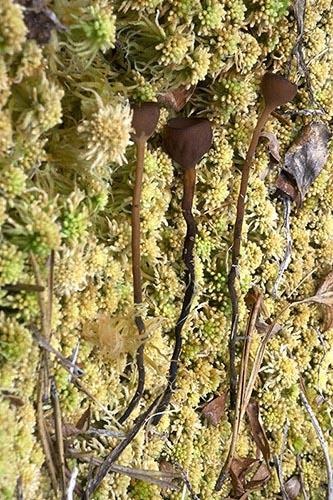
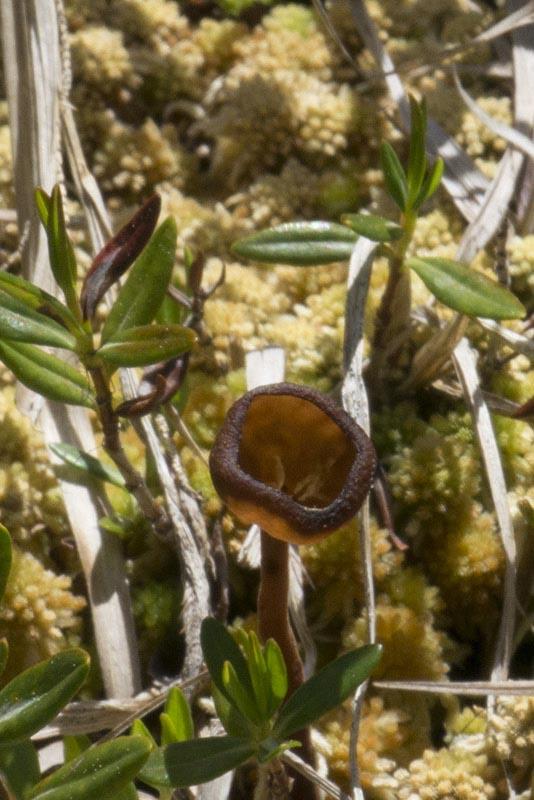
 The long-stalked cups were growing on Sphagnum. No sclerotium was present. Oregon Cascades, USA, 1100 m. Any idea what they may be?
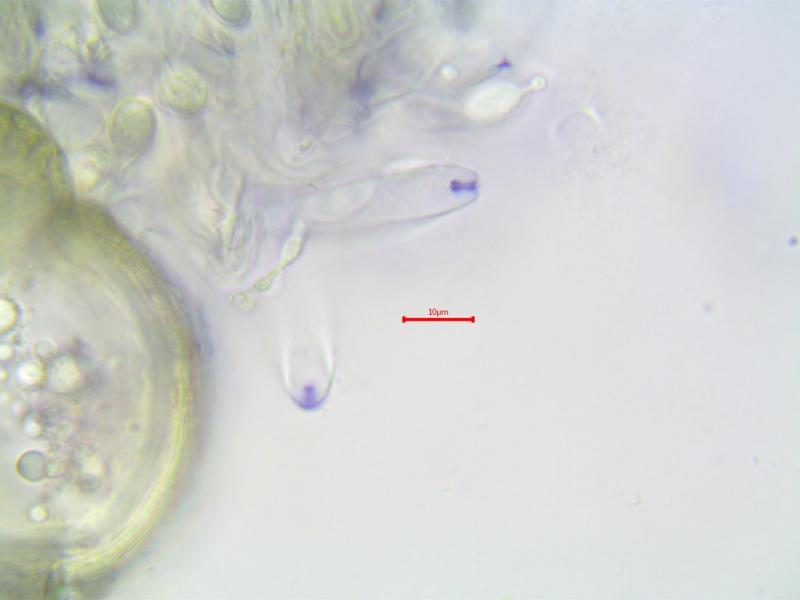
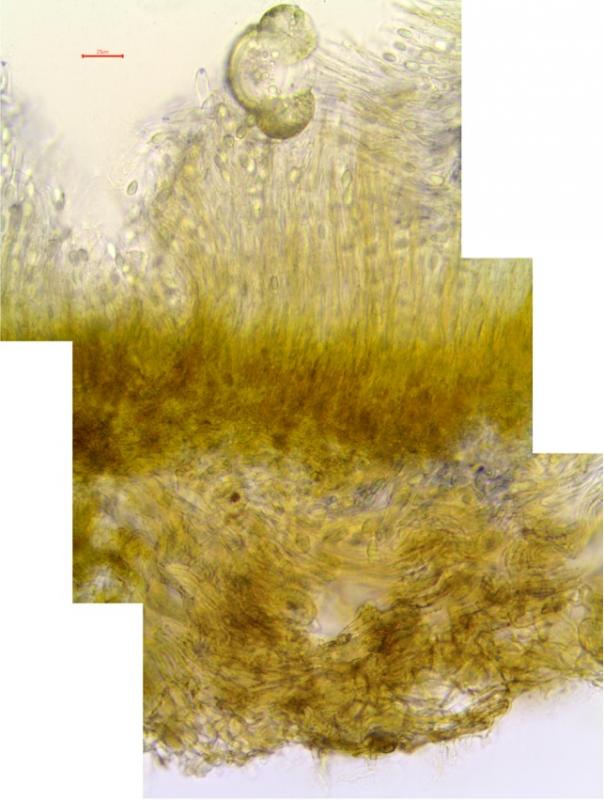
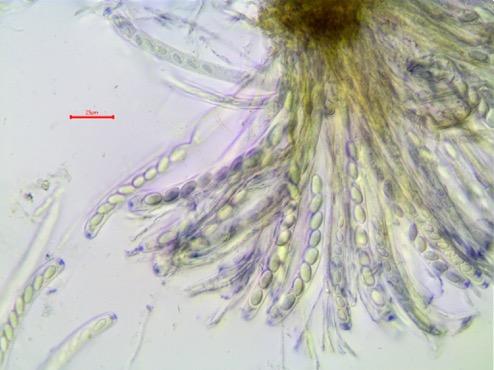
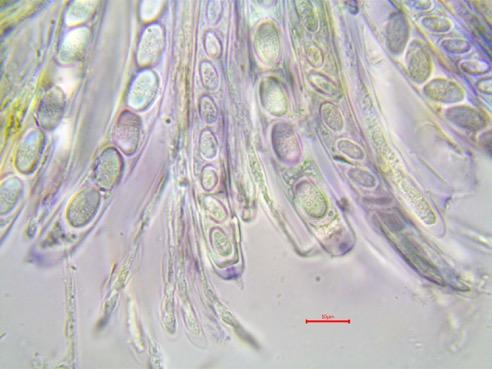
Joey JTan,
07-06-2015 03:27
Re : Unknown Asco
Something in the Sarcosomataceae - perhaps Donadinia or Plectania?
Hans-Otto Baral,
07-06-2015 07:28

Re : Unknown Asco
Clarly a Sclerotiniaceae, perhaps a Monilinia. But I cannot read your scale. What is the spore size?
Michael Beug,
08-06-2015 00:40
Re : Unknown Asco
The spore sizes (measured in the asci) were 10-11 x 5-6 microns. In the field where I could not take images, a fresh mount showed some larger free spores and I noted that almost all of the free spores were already germinating (spores seen in a squash mount of the cup).
The fungus was definitely attached to Sphagnum.
The fungus was definitely attached to Sphagnum.
Hans-Otto Baral,
08-06-2015 06:58
Re : Unknown Asco
The only Sclerotiniaceae that I have in my database on Sphagnum is Sclerotinia kirschsteiniana P. Henn., but that has minute (1 mm) cups and spores 8-11 x 3-4 (Hennings 1899).
Michael Beug,
08-06-2015 17:56
Re : Unknown Asco
Thank you. I passed the specimens on to a colleague (they were observed by a team of four mycologists) and will try to get them out for DNA and further work-up.