
15-05-2026 13:33
Sylvie Le GoffBonjour à tousJe serais très reconnaissante enve
16-03-2011 14:31
roman vargas albertoHi. I would like some opinion about this Peziza
14-05-2026 05:36
Ethan CrensonHi all, I haven't paid much attention to Lachnu
10-05-2026 23:17
 Andreas Gminder
Hello,today we found in a moist steep decidous for
11-05-2026 12:32
 Bernard CLESSE
Pourriez-vous m'aider à identifier cette héloti
13-05-2026 15:26
 François Freléchoux
Bonjour,Voici une récolte faite il y a quelques j
12-05-2026 15:41
 Nicolas VAN VOOREN
Dear Ascolovers, especially interested in Pezizale
13-05-2026 12:05
 Thierry Blondelle
Bonjour à tous,J'aimerais avoir confirmation de c
28-04-2026 20:07
 Lothar Krieglsteiner
... on twig in the air at standing Ceratonia siliq
27-04-2026 20:52
Lothar Krieglsteiner
Found on hanging tiwg of Olea europaea in dried-ou
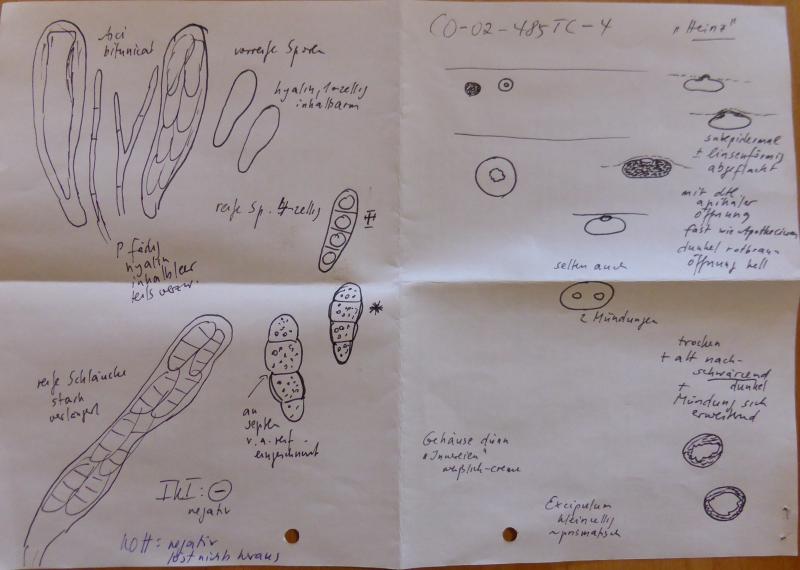
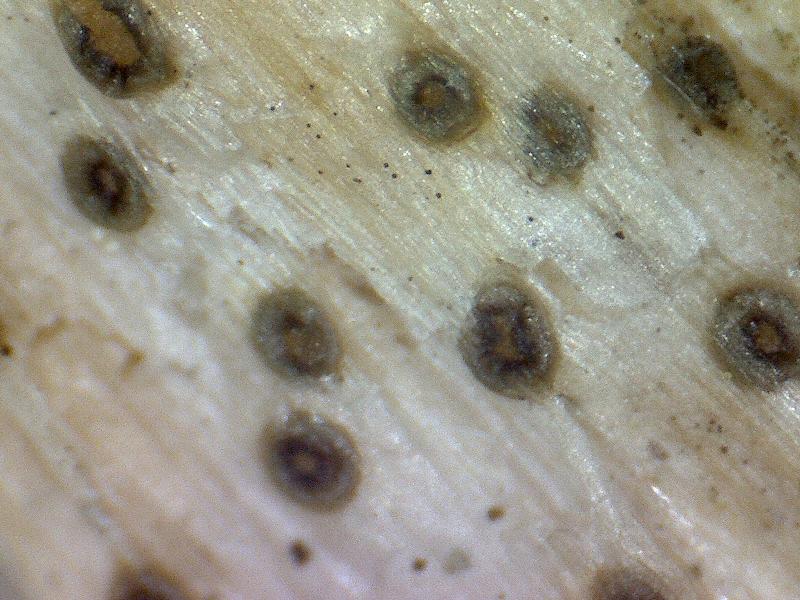
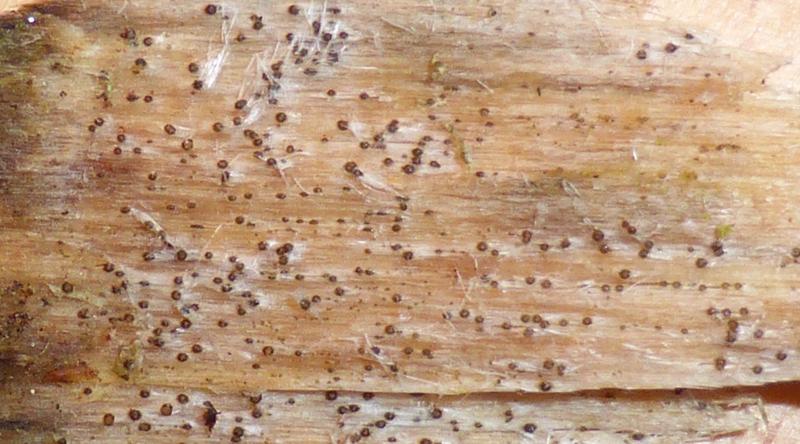
During the project of fungi on dead stems in the Bavarian Forest we found quite often, on a lot of different logs, an ascomycete I can not at all identify. I had some ideas but all of them did not fit, finally. Intesting: most collections were on Abies, but it grew on Fagus also!
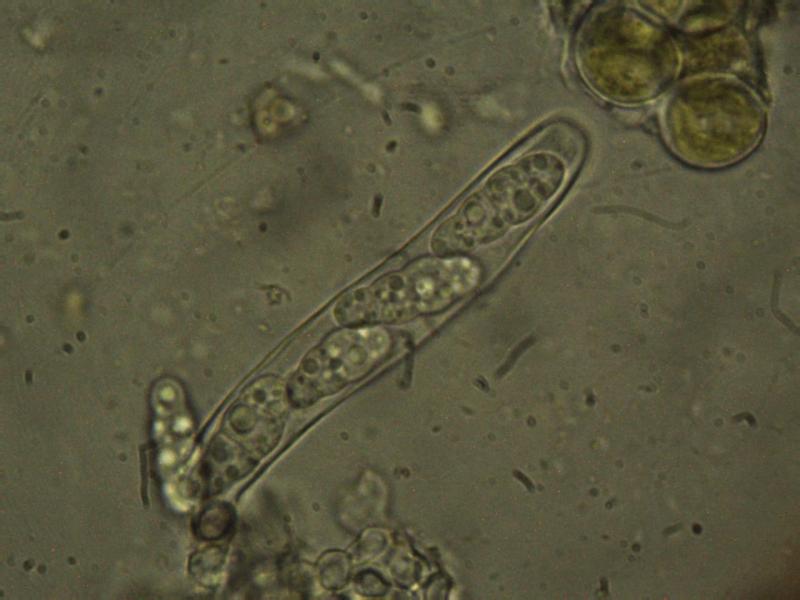
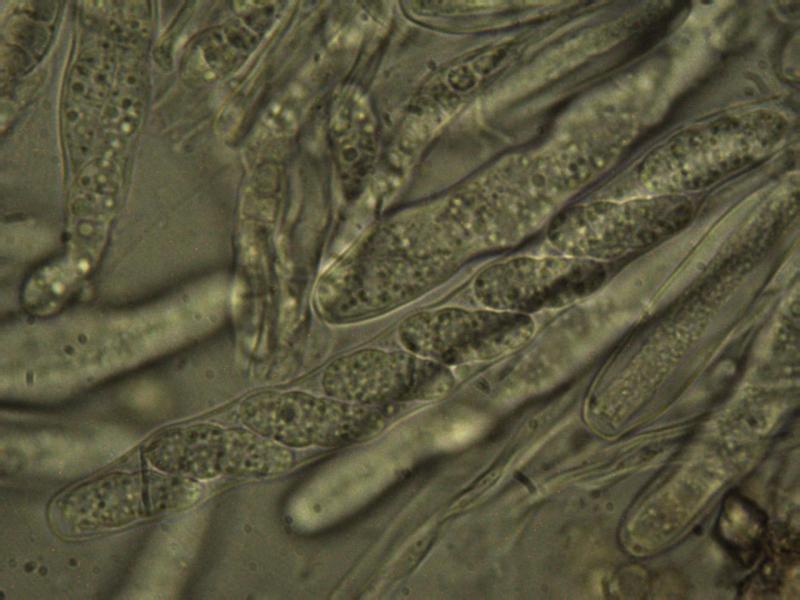
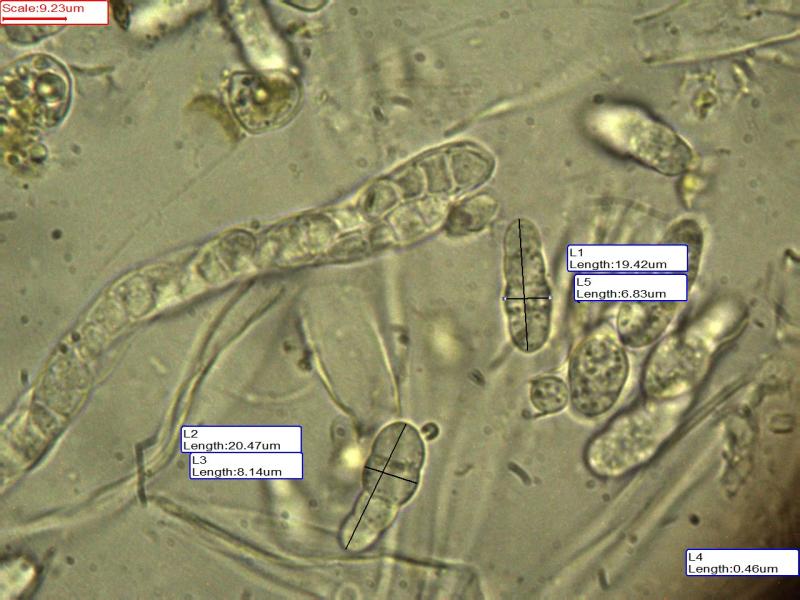
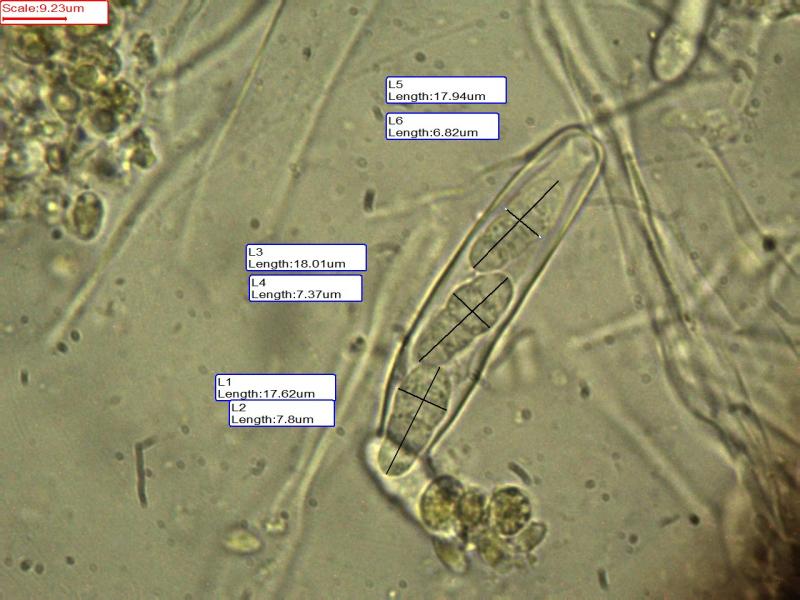
I give pictures of macroscopical habit and of asci with spores. IKI did not obtain any reaction (neither apical apparatus nor ascus wall or anything else).
Who can provide me with an idea?
Regards from Lothar
I forgot the macro-foto
L

das ist sicherlich Exarmidium inclusum. Frag mich aber nicht wieso....
Hier der Link zu Bildern:
https://www.cubbyusercontent.com/pl/Exarmidium/_581525577608441c8e2d0bbc708715d2
Gruß
Zotto
Hallo Zotto,
wow - es ist ja nicht so, dass ich nicht wusste, dass Du der Beste bist, aber dieser neue Beweis ist nicht von schlechten Eltern. Vielen vielen Dank!
Ich habe eben im Index of Fungi nachgesehen und festgestellt, dass die Art zu den Hypocreales (Hyponectriaceae) gehört. Ich habe ja an etlichen Stellen im Ascomyceten-System "gesucht", aber eine Hypocreales hätte ich nicht vermutet. .....
Ganz liebe Grüße nach Tübingen - momentan aus dem Hainich - von
Lothar

Interesting species I would not have recognised too.
Are the asci bitunicate or thick-walled? And how can we be sure that we have to do with the one or the other ascus type? I guess I am not the only one who struggles with this problem.
Bernard
I am actually not familiar with most groups of pyrenpomycetes. This Exarmidium was repeatedly found, and it was an issue in this forum several times. So please search fr the genus in Ascofrance and you will perhaps get answers of some of your questions.
Lothar: I am not sure if Hyponectriaceae belongs in Hypocreales. In my Cubby folders I have it in Xylariomycetidae. But in the unpublished list of families (Syllabus) I see that Walter Jaklitsch has the genus in Xylariales inc. sedis, while Hyponectriaceae (Xylariales) contains only Hyponectria.
When I see at the available photos in my folder, I do not think that the ascus is bitunicate, though it is distingtly thickwalled also laterally. Bitunicate is a bad term because many ascus types have thick endoasci. To clarify whether it is fissitunicate would require to see an ascus during spore discharge.
Zotto
thank you very much for the additional informations about Exarmidium and about your sight on the ascus problem.
Hi Zotto and Bernard,
I was not sure if the ascus is fissitunicate when I examined it, so I looked in different groups of Ascomycetes for the fungus. The asci were quite short as long as the spores where unripe but became a lot elongated with ripe spores.
Best regards from Lothar