
16-03-2011 14:31
roman vargas albertoHi. I would like some opinion about this Peziza
14-05-2026 05:36
Ethan CrensonHi all, I haven't paid much attention to Lachnu
10-05-2026 23:17
 Andreas Gminder
Hello,today we found in a moist steep decidous for
11-05-2026 12:32
 Bernard CLESSE
Pourriez-vous m'aider à identifier cette héloti
13-05-2026 15:26
 François Freléchoux
Bonjour,Voici une récolte faite il y a quelques j
12-05-2026 15:41
 Nicolas VAN VOOREN
Dear Ascolovers, especially interested in Pezizale
13-05-2026 12:05
 Thierry Blondelle
Bonjour à tous,J'aimerais avoir confirmation de c
28-04-2026 20:07
 Lothar Krieglsteiner
... on twig in the air at standing Ceratonia siliq
27-04-2026 20:52
Lothar Krieglsteiner
Found on hanging tiwg of Olea europaea in dried-ou
11-05-2026 20:22
Lothar Krieglsteiner
on attached twig of standing Ficus caricaquite uns
 This Helvella was found in nettle covered soil in a heath area with mostly betula and quercus. At first sight I assumed it was H. acetabulum but under the scope the spores were according to the books I have are much too broad with an average of 22-23 x 16-17.5.
Is there another Helvella it might be?
Thanks
Mal
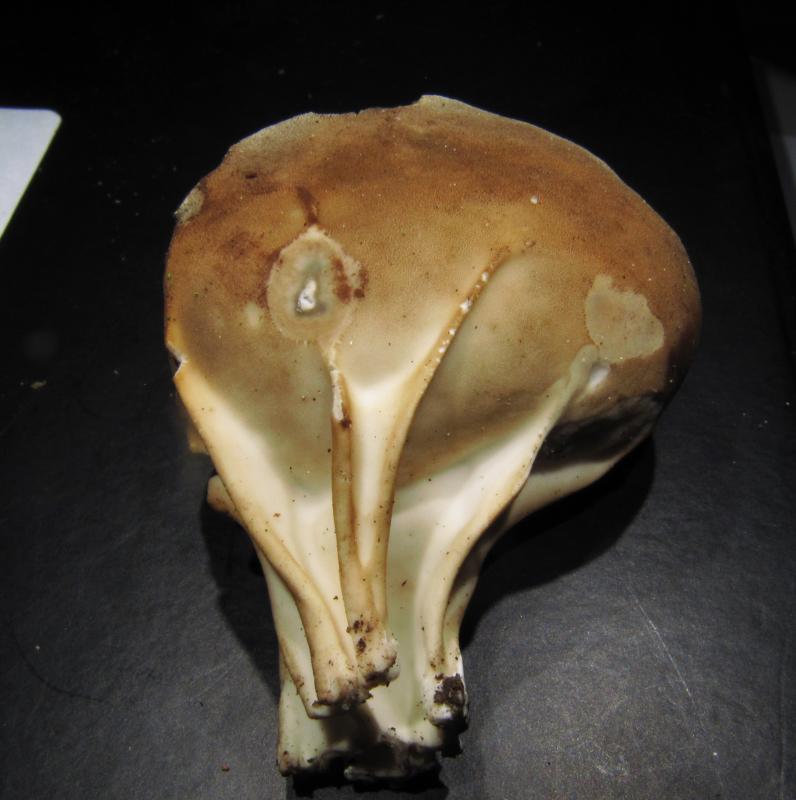
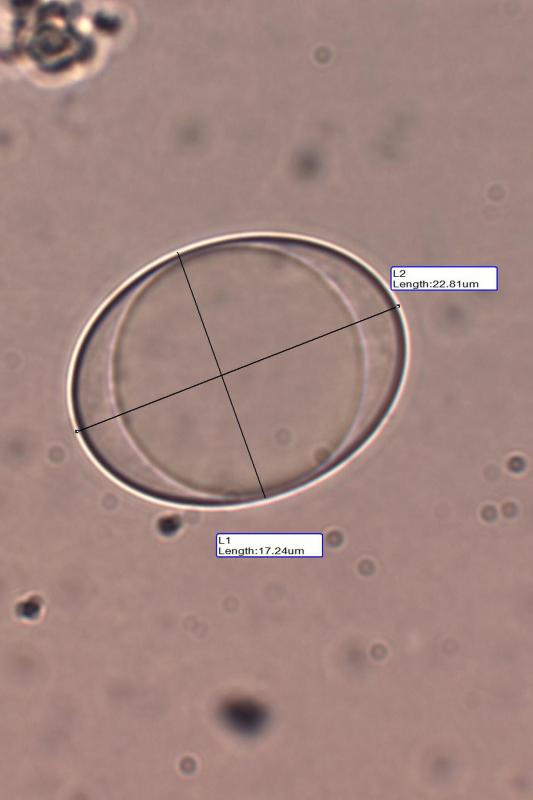
Mal
Regards, Till
I have measured some hundreds of spores of H. acetabulum that is a rather common species and that I see every year in hundreds of ascomata. Many times I have searched for the differences mentioned by Dissing (who examined the original material of H. unicolor in the Boudier's herbarium) as follows:
"H. unicolor can be separated from H. acetabulum and H. costifera on its very broad spores and on characters of anatomy".
The difference from H. costifera is clear, but with H. acetabulum I never understood well what can be the difference "on characters of anatomy". So I think the only chance to learn something more is to find and study carefully some very broad-spored collections of "H. acetabulum".
Malcolm's collection could be a chance to do this, as in my measurements the spores of H. acetabulum are normally 11,5-14,5 µm broad. I have never seen spores x 16-17,5. This might not be enough to recognize another taxon, but a careful investigation should be done.
Mal, was it an abundant collection or it was just one apothecium? The spore size is the same in others specimens? This is the first step.
Thank you to keep me updated with this collection.
Regards
Mario
Unfortunately it was just a single specimen. I took another spore drop and although there were spores closer to the "normal" range there were more in the 16-17 area. What else could I look for or could I send this specimen to you?
Mal
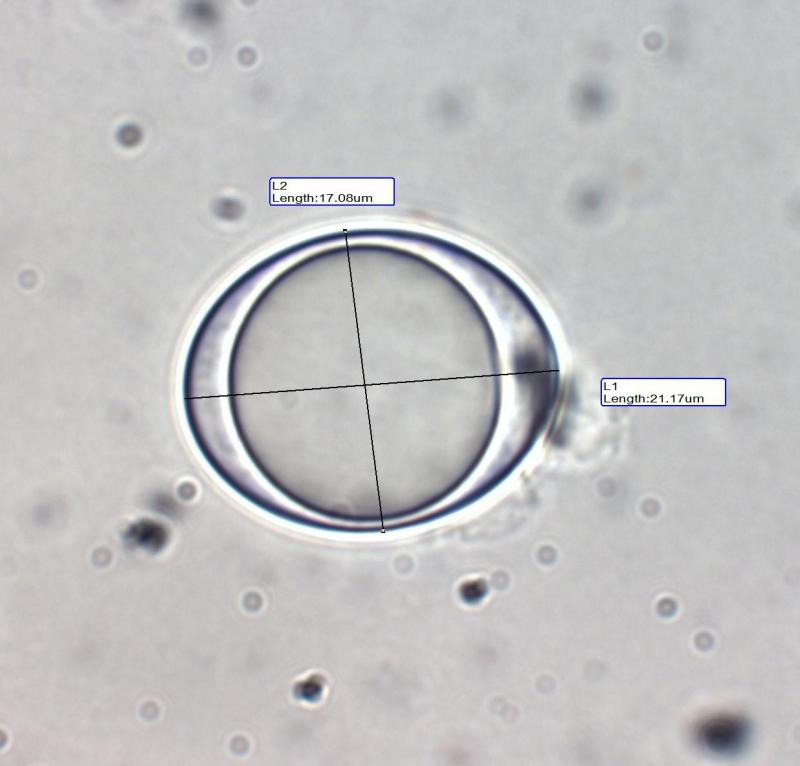
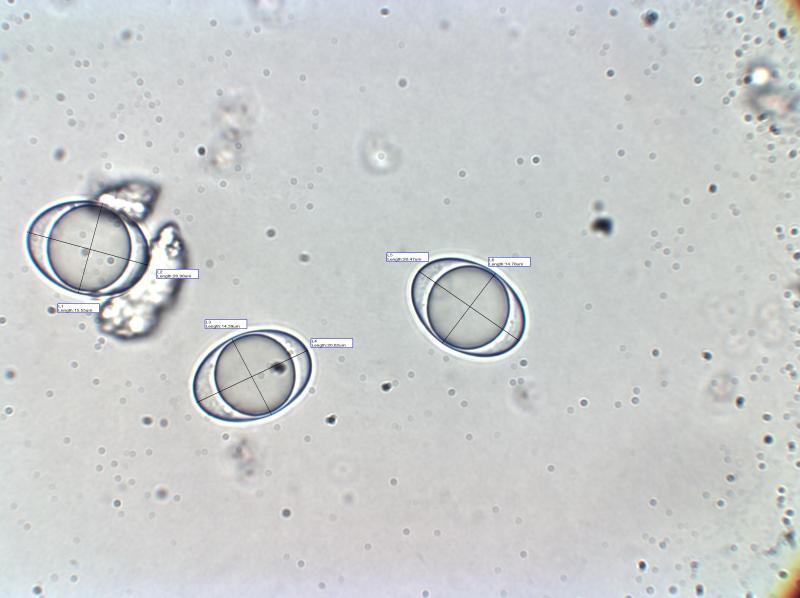
Well, I don't know exactly what to search for. Maybe the best thing is to compare carefully the characters with those of a "typical" H. acetabulum. If you want to send me the specimen I would be happy to examine it. I send you my address by mail.
Thank you
Mario