16-03-2011 14:31
roman vargas albertoHi. I would like some opinion about this Peziza
14-05-2026 05:36
Ethan CrensonHi all, I haven't paid much attention to Lachnu
10-05-2026 23:17
 Andreas Gminder
Hello,today we found in a moist steep decidous for
11-05-2026 12:32
 Bernard CLESSE
Pourriez-vous m'aider à identifier cette héloti
13-05-2026 15:26
 François Freléchoux
Bonjour,Voici une récolte faite il y a quelques j
12-05-2026 15:41
 Nicolas VAN VOOREN
Dear Ascolovers, especially interested in Pezizale
13-05-2026 12:05
 Thierry Blondelle
Bonjour à tous,J'aimerais avoir confirmation de c
28-04-2026 20:07
 Lothar Krieglsteiner
... on twig in the air at standing Ceratonia siliq
27-04-2026 20:52
Lothar Krieglsteiner
Found on hanging tiwg of Olea europaea in dried-ou
11-05-2026 20:22
Lothar Krieglsteiner
on attached twig of standing Ficus caricaquite uns
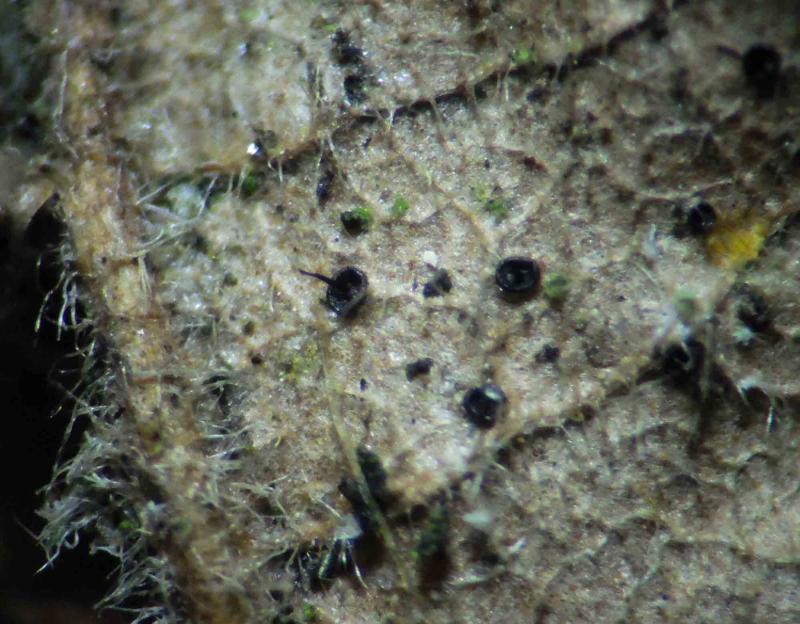
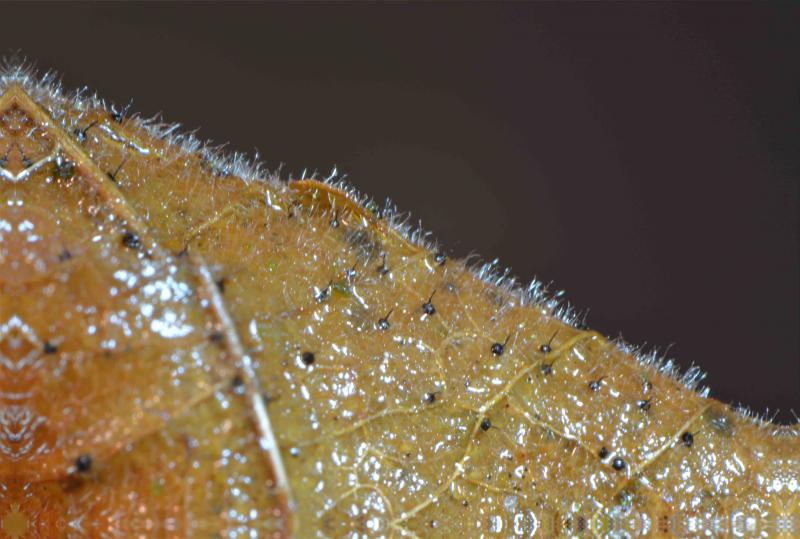
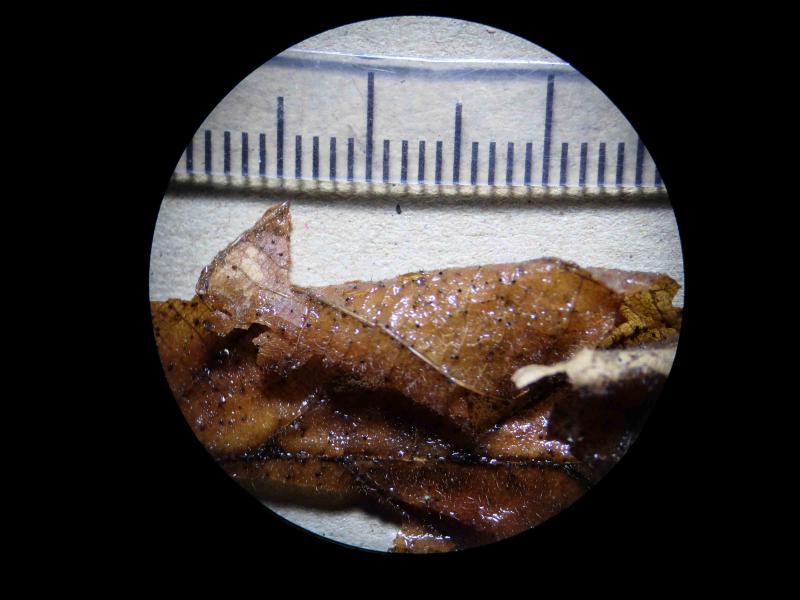
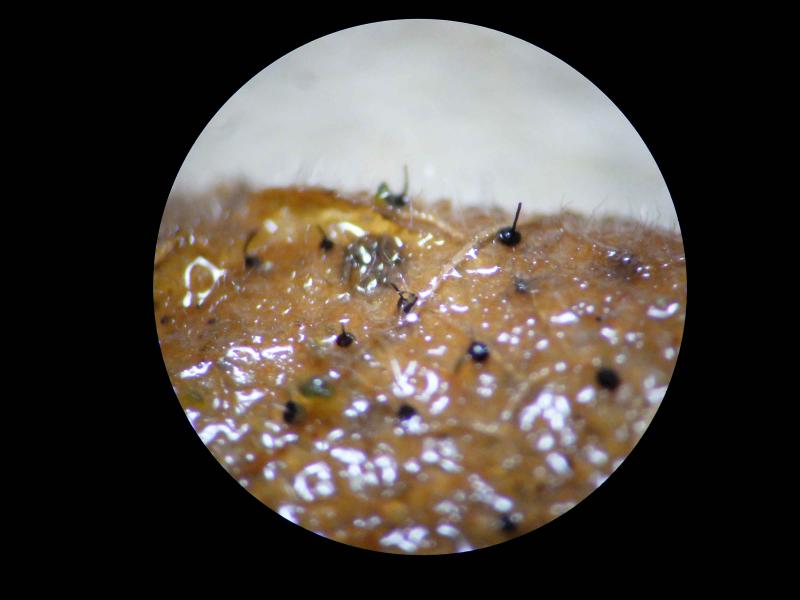
this was found in the same place as the Orbilia, on the remains of a dead leaf by a stream. Oak, Sycamore and Hazel were present. The fruit bodies were on both sides of the leaf, and after soaking in water were up to 0.3 mm diameter. They were hardly immersed, rather attached by tiny "rhizoids", upo to 0.5 mmm long. The neck was between 0.25 and 0.35 long. What I assumed to be spores were in fact asci, containing very thin spores up to 25 x 1.5 um. I suspect this is Gnomonia gnomon, but my microscope is unable to show convincingly a central septum in the spores, nor appendages at the ends. Could this be anything else?
Many thanks if this find could be confirmed,
Steve
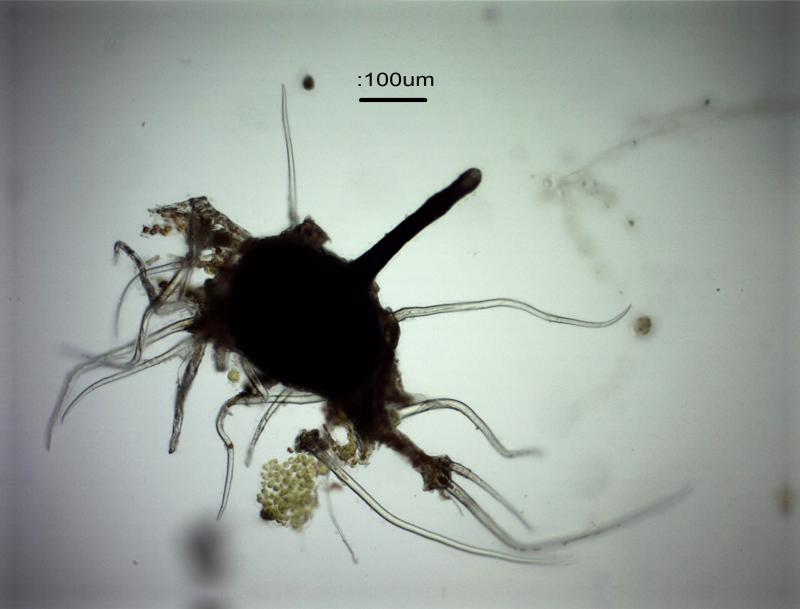
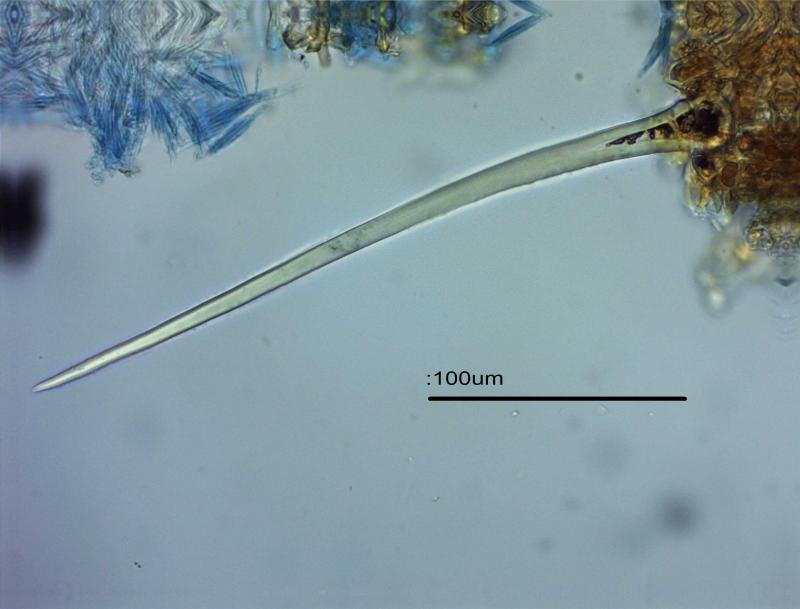
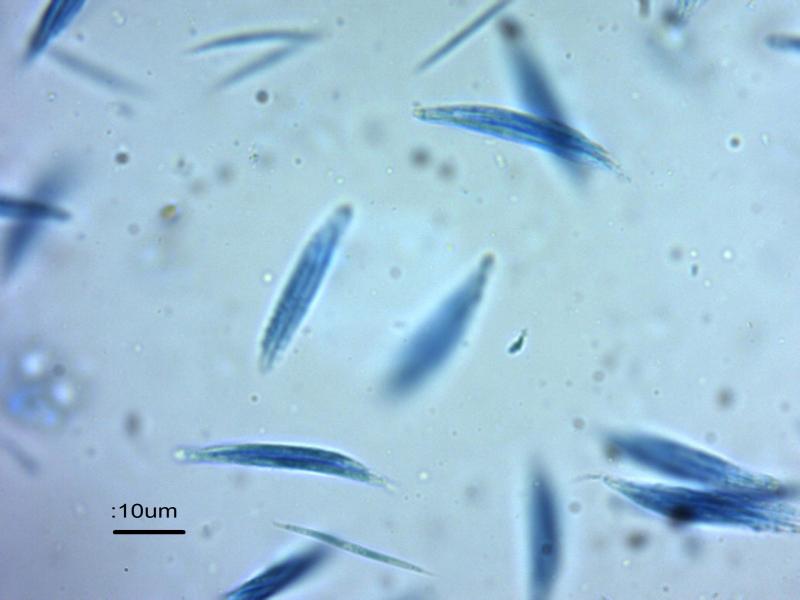

Chris
Gnomonia alni-viridis 7
Gnomonia cerastis 6
Gnomonia leptostyla 2
Most of these are on Acer.
(Most of these are also yours Chris)
Many thanks Chris and Paul

Dear Steve,
As Paulm said, you'll have to go in Sogonov & al., and then in more recent works. The three taxa Gnomonia alni-viridis Gnomonia cerastis Gnomonia leptostyla aren't used yet today.
Alain
It's hard to know what to do with all the "old" records - we don't really know what many of them would be named as nowadays.
Les petits champignons! Les noms, ils se change si vite!
Steve

the leaf looks like of type of a hazel. Ascus's morphology (apical annulus is ca 1 micrometre), 27-31 x 4.6-6 micrones, spore 20 x 1.5 micr fits well in the description of Monod (1983: 85).
Important: Check the perithecia, if they collapse circular when the leaf is in dry condition, typical depression is noted by also by the author.
I have just checked my herbariun specimen - it has the circular depressions as you describe,
Kind regards,
Steve