
23-05-2026 11:44
 Charles Grapinet
Hello, I am having trouble identifying this copro
25-05-2026 16:44
François BartholomeeusenHi forum members,During an excursion organised by
25-05-2026 16:35
 Bernard CLESSE
Bonjour à toutes et tous,J'ai trouvé récemment,
22-05-2026 13:29
Gernot FriebesHi,I am curious to hear your opinion on this mater
23-05-2026 18:57
Sylvie Le GoffBonjour à tousRécolté sur une branchette de Sal
22-05-2026 14:44
 Lothar Krieglsteiner
in unripe condition citrine yellow, then soon fadi
22-05-2026 21:35
Steve ClementsBonjour, I expected this find on old wood on our
22-05-2026 18:12
Lothar Krieglsteiner
... in moist chamber from Portugal.As the fungus s
22-05-2026 20:08
Ethan CrensonHello all, Yesterday in NYC I was visiting an e

Hi to all
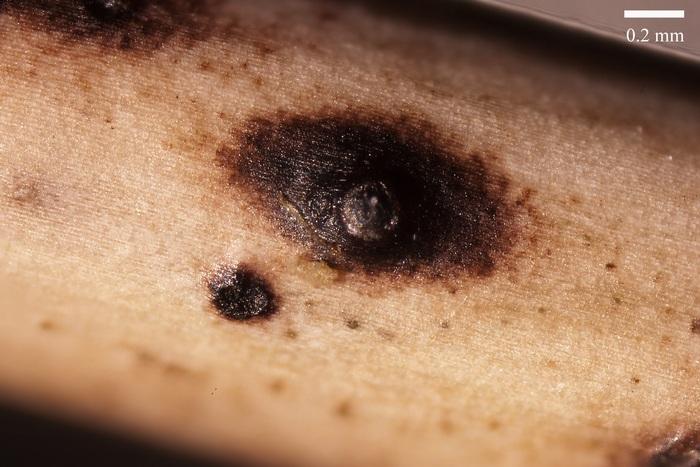
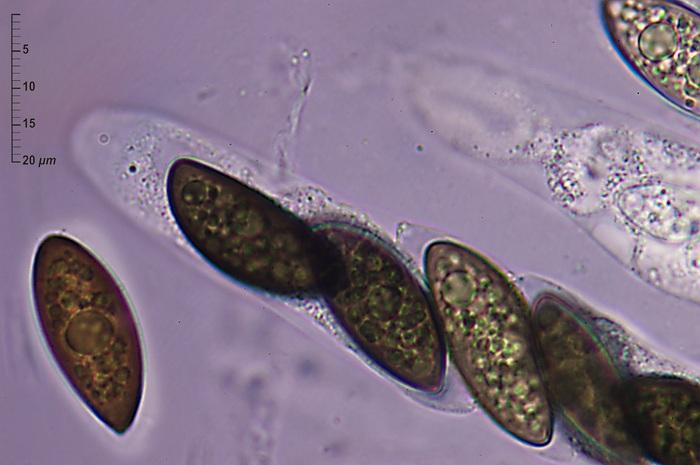
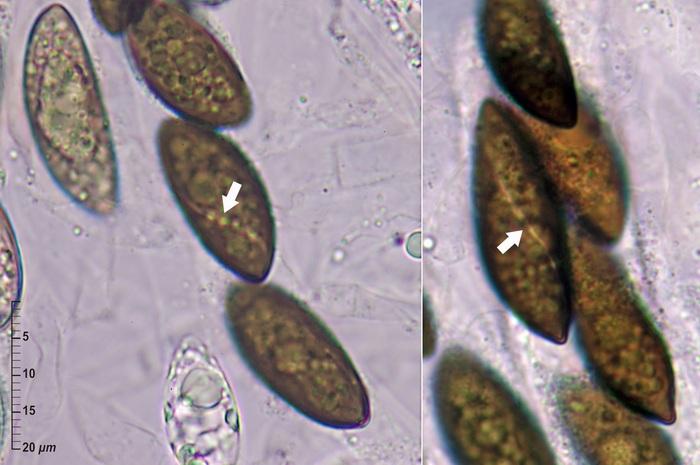
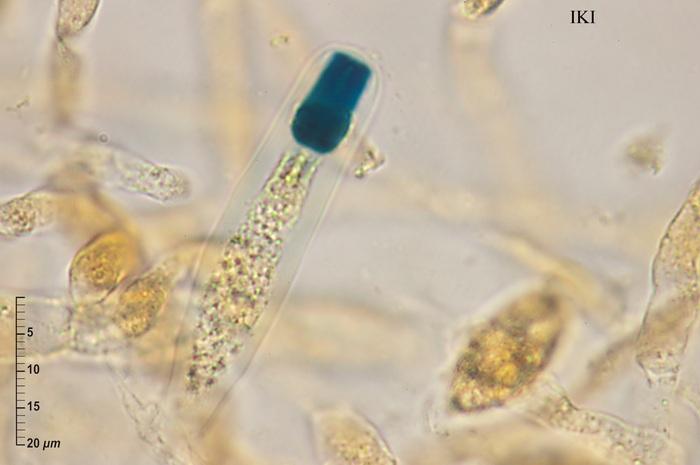
This Anthostomella grew on wet dead stems of Ammophila arenaria. The fungus makes clypeate single blackish perithecia with papilate ostioles. Asci with a massive IKI positive apical apparatus longer than broad. Ascospores broadly inequilateral with spiral germ slit and peculiar partial gel sheaths at the poles. I think don't fits with A. spiralis or A. umbrinella.
Some idea for help me?
Thanks again
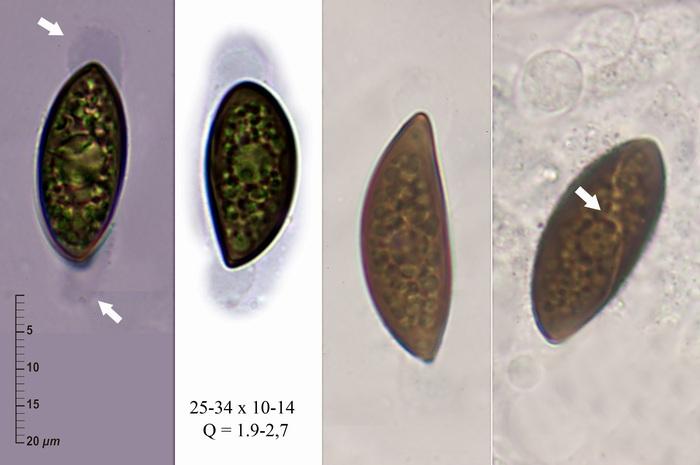
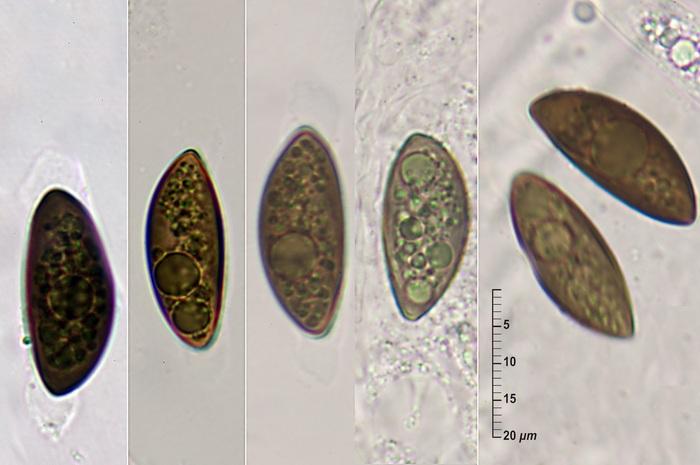
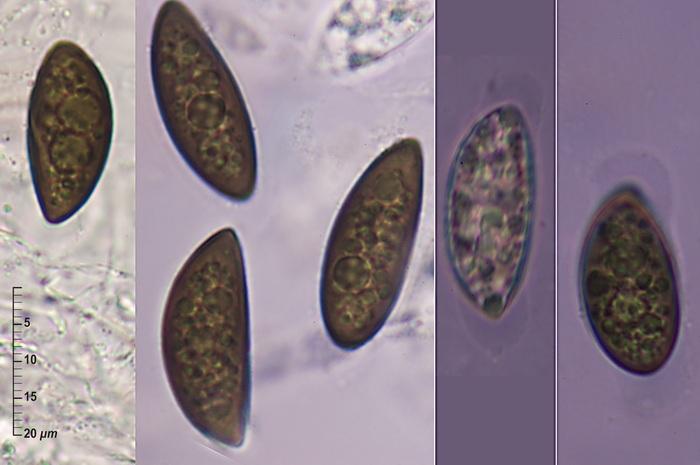

This could be Anthostomella lugubris, a species we find on Ammophila in our country.
Bernard

Hi friends,
Again an amazing record of Enrique !
Clearly it isn't A.lugubris.
Closer than this last one is A. umbrinella, you saw it, but host and macroscopy don't fit. Thus appendages are lacking. Exit this hypothesis.
You can find it in Rappaz (into the genus Leptomassaria). Both species, L.simplex andL. unedo, are corticolous.
A. francisiae has such apical appendages, but the germslit is straight. Exit again.
My conclusion is that your Anthostomella is perhaps new.
Alain
I think so
Thanks again, Alain