30-05-2026 21:12
Philippe PELLICIERSur branche de mélèze (Larix) près de la neige,
25-05-2026 16:35
 Bernard CLESSE
Bonjour à toutes et tous,J'ai trouvé récemment,
29-05-2026 15:35
daniel FERREBonjour à tous,Je voudrais votre aide pour cette
28-05-2026 16:15
James MitchellHello,Does anyone have the original publication of
28-05-2026 11:06
Thomas Læssøehttps://svampe.databasen.org/observations/10596750
23-05-2026 11:44
 Charles Grapinet
Hello, I am having trouble identifying this copro
25-05-2026 16:44
François BartholomeeusenHi forum members,During an excursion organised by
26-05-2026 21:25
Dirk GerstnerHello everyone, I'm completely stumped by this li
26-05-2026 22:44
Ethan CrensonHi all, I think I have Incrucipulum capitatum her
22-05-2026 14:44
 Lothar Krieglsteiner
in unripe condition citrine yellow, then soon fadi
 Hello,
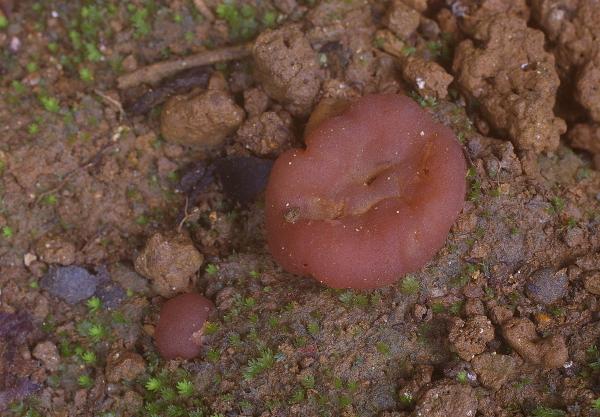
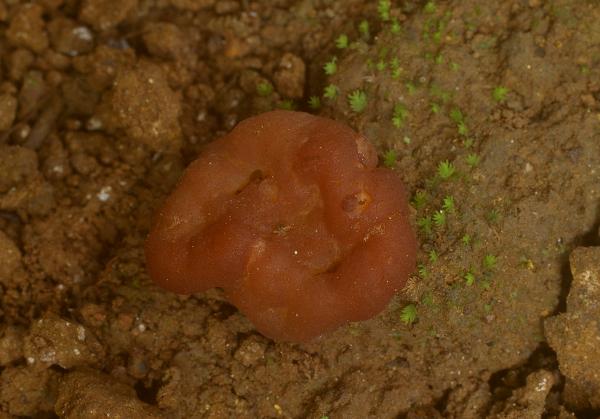
these fungi grew on a naked soil with low moss in a limestone area in East Kalimantan, on a margin of a cave in a rainforest.
Fruitbodies were sessile, distorted, up to 13 mm broad, brown with a reddish tinge,very fragile, very pale brown in fraction.
Smell little bit like a morel.
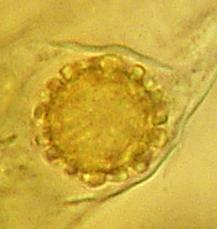
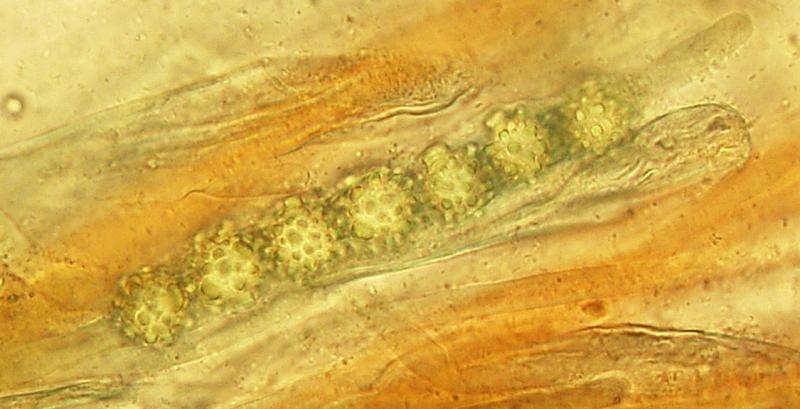
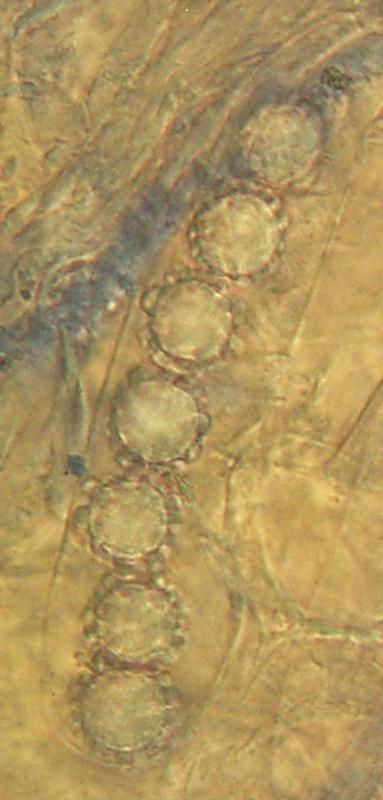
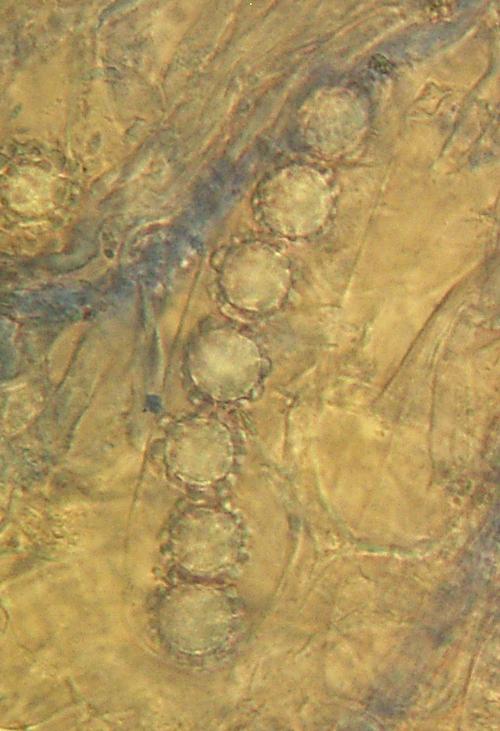
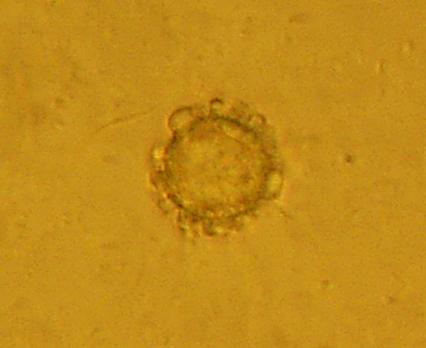
Spores 11-12,5 micrometers, globose, hyaline to pale brownish, with one guttule, ornamented with truncate warts of very different size - 1-3,5 micrometers broad, 2-4 micrometers high.
Asci 250-290 x 18-20 micrometers, cylindrical, octosporic, uniseriate, in Lugol blue in whole length.
Paraphyses straight, hyaline, septate, 5-5,5 micrometers broad, with obtuse apex up to 9 micrometers broad.
Excipulum consists of globose-angular cells up to 65 micrometers broad.
What could it be? Microscopically, it resembles me Plicaria, but macroscopically it´s completelly different.
Thanks, Zuzana


Hello Zuzana,
I think this is a Pachyella species.
Not necessarily a yet described one ....
best regards,
Andreas
Hello,
now you know one ;-)
best regards,
Andreas

your find reminds me to Boudiera. This genus has globose spores with warts. Also the asci are blueing.
Best, Uwe
Hello,
that was my initial thought.
But the apothecia in Boudiera are far smaller and pulvinate, and the ascospores have spines instead of warts.
best regards,
Andreas
Best, Uwe
http://www.sciencedirect.com/science/article/pii/S1340354004705331
Best, Uwe
Macroscopically it´s different too.

seemed to be a good strike by Uwe, at a first glance...
But spore size of P. globispora is twice large.
I will sen the paper to all of you.
Regards
Martin
Hello Zuzana,
if possible you should check by a section through the apothecium how the textura is. You write about textura globulosa, but the medulla in Pachyella is a textura intricata usually. Only the excipulum is of globose cells - and then you should see the hyphoid hairs standing vertically on the globose cells of the excipulum.
best regards and thanks for the article,
Andreas

Did you observe the way the asci where blueing in MLZ? diffusely all over or darker towards the apex. Yes, the excipulum should tell you the genus. It could be interesting for exploring the boundaries between Pachyella and Boudiera further. If you are interested in this you could contact me by e-mail: karen.hansen@nrm.se
Don Pfister suggested it is Ruhlandiella. That is perhaps more likely than Pachyella, also considering the substrate. Again the anatomy can tell. Then it could be a new species. Did you notice if the paraphyses was exceeding the asci?
Look at the paper: A new species of Ruhlandiella (Pezizaceae) from Italy. Mycological Progress 11: 509-513. 2012. by Lantieri, Smith and Pfister.
 Ruhlandiella-0001.pdf
there really are the hairs consisting of few cylindrical cells rising from the globose cells of excipulum. The longest hair I saw was 205 micrometers long.
I add two photos.
But I don´t see t. intricata...
Zuzana
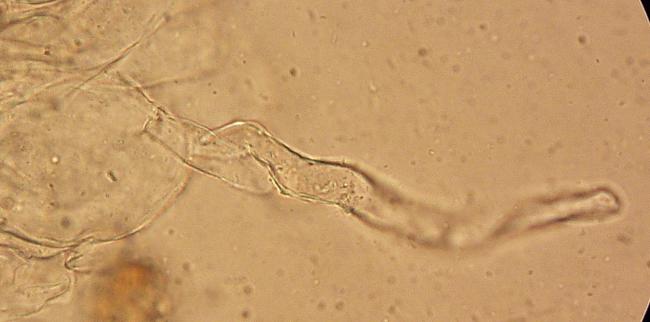
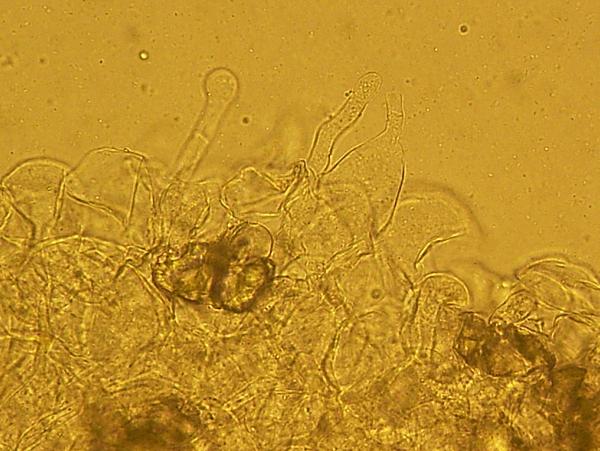
Paraphyses are exceeding the asci.
The blue colour of the asci in Lugol is of the same intensity in the whole length. Young asci become ochre.
I add some more photos of spores.
There was no Eucalyptus in the locality, but my friend (a botanist) tells there could grow some other species of Myrtaceae.
Best regards,
Zuzana