
23-05-2026 11:44
 Charles Grapinet
Hello, I am having trouble identifying this copro
25-05-2026 16:44
François BartholomeeusenHi forum members,During an excursion organised by
25-05-2026 16:35
 Bernard CLESSE
Bonjour à toutes et tous,J'ai trouvé récemment,
22-05-2026 13:29
Gernot FriebesHi,I am curious to hear your opinion on this mater
23-05-2026 18:57
Sylvie Le GoffBonjour à tousRécolté sur une branchette de Sal
22-05-2026 14:44
 Lothar Krieglsteiner
in unripe condition citrine yellow, then soon fadi
22-05-2026 21:35
Steve ClementsBonjour, I expected this find on old wood on our
22-05-2026 18:12
Lothar Krieglsteiner
... in moist chamber from Portugal.As the fungus s
22-05-2026 20:08
Ethan CrensonHello all, Yesterday in NYC I was visiting an e
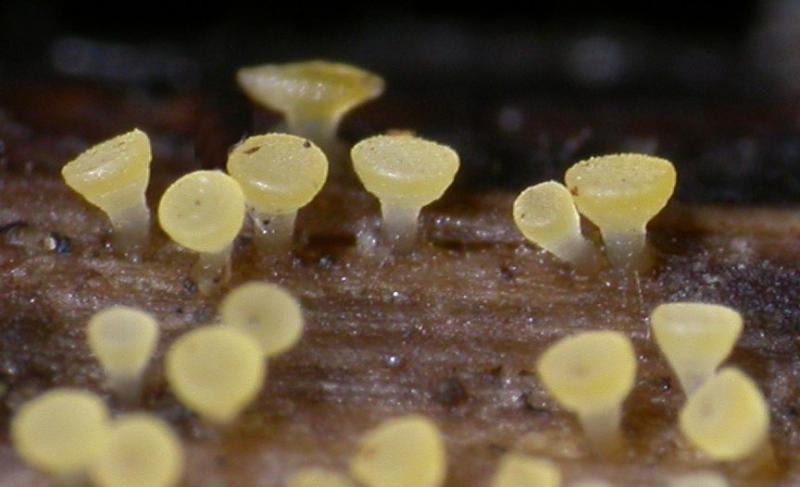
Apothecia sessile, scattered, greenish, translucent, up to 120 mk across, not high, scattered on lower and upper leaf surface.
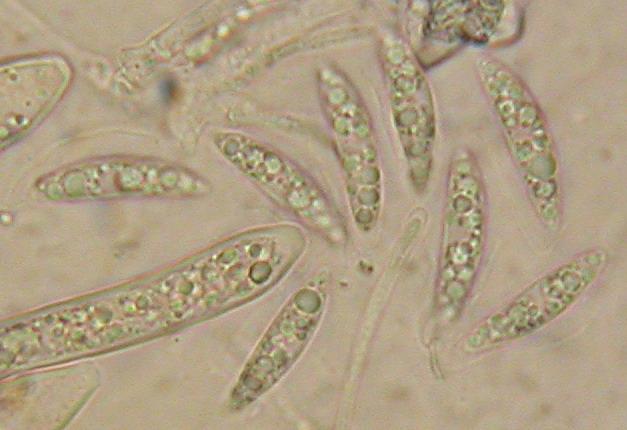
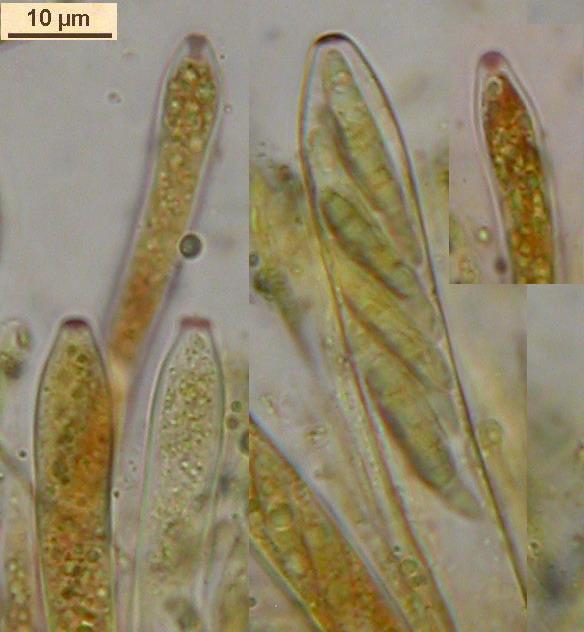
Excipulum from textura prismatica, cells thick-walled, edge row from clavate cells, all cells in upper part of receptacle with green vacuoles; asci clavate, with obtuse-conical tip, without crozier, with euamyloid ring, 52-60 x 11-14 mk; paraphyses scarcely branched, cylindrical at base, enlarged in upper part (3.3-4.6 mk), with green vacuoles in upper part; spores fusoid, slightly curved, with medium and small green guttules, 17.4 (14.3-19.3) x 3.9 (3.4-4.2) (n=13).

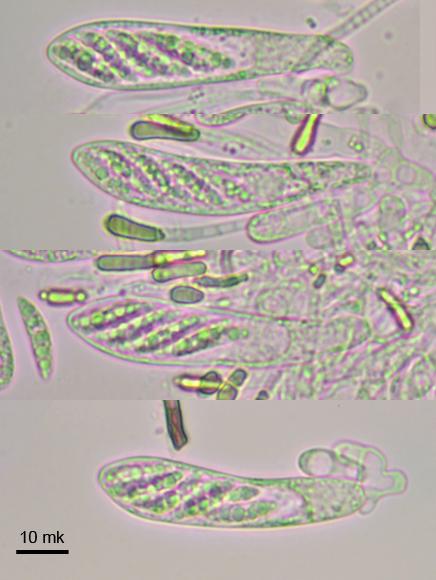
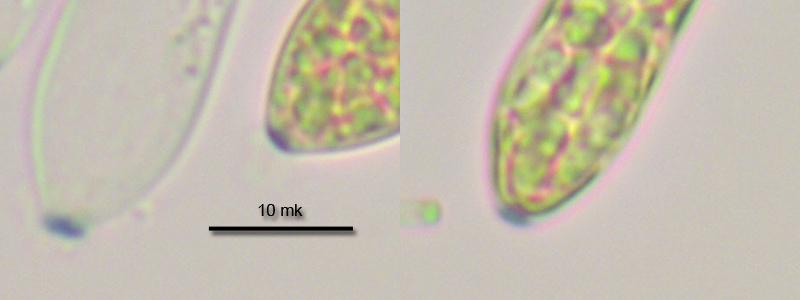
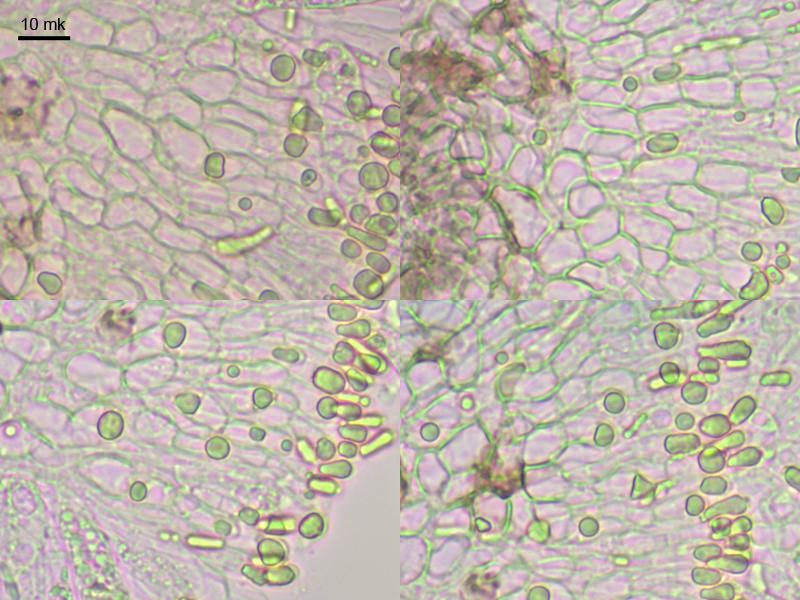
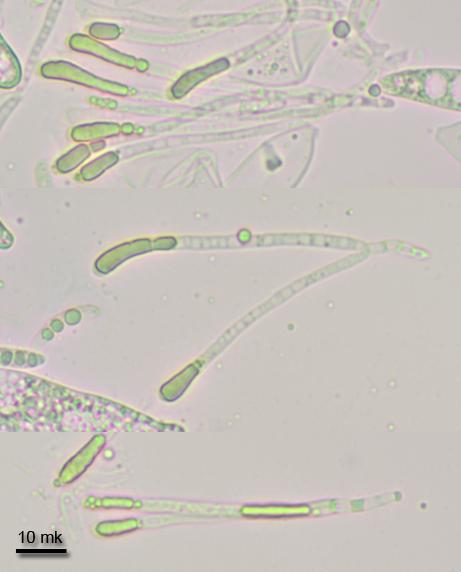


Yes, some characteristics are close to description of Calycellina in Raitviir (2004):
i have not mentioned before important characters: 1) brown basal ring, 2) bright yellowish pigment in hairs and paraphyses turning reddish-brown in YKY
Following this publication, there is only one species with close spore shape and size, it is Calicellina punctata. But spores in this species are narrower than mine and the substrate differs, e.g. need to be studied further i think.

C. punctata has spores with a very low oil content, unlike yours.
The spores strongly remind me of Allophylaria byssacea which is on grasses though although on dicot stems. but the apicla ring is red (type rb). Here an example.
I will check hemiamyloidity again, i guess my solution has faded and i have missed this reaction probably.