
29-04-2026 10:44
 Lothar Krieglsteiner
growing at moist, drying-out soil at the side of a
28-04-2026 20:07
Lothar Krieglsteiner
... on twig in the air at standing Ceratonia siliq
11-05-2026 12:32
 Bernard CLESSE
Pourriez-vous m'aider à identifier cette héloti
05-04-2026 22:46
Lothar Krieglsteiner
on wood of Ceratonia, Algarve, 3.4.2026.The color
10-05-2026 16:18
brigitte vignotbonjour trouvée en Ariège sur bois une petite
10-05-2026 23:17
 Andreas Gminder
Hello,today we found in a moist steep decidous for
27-04-2026 17:16
Lothar Krieglsteiner
.. Algarve, moist lying.The conidiomata look like
10-05-2026 09:02
Buckwheat PeteHello everybody, ould this be Lachnum subvirgineu
08-05-2026 11:55
Gernot FriebesHi,found on a decorticated Picea abies branch stil
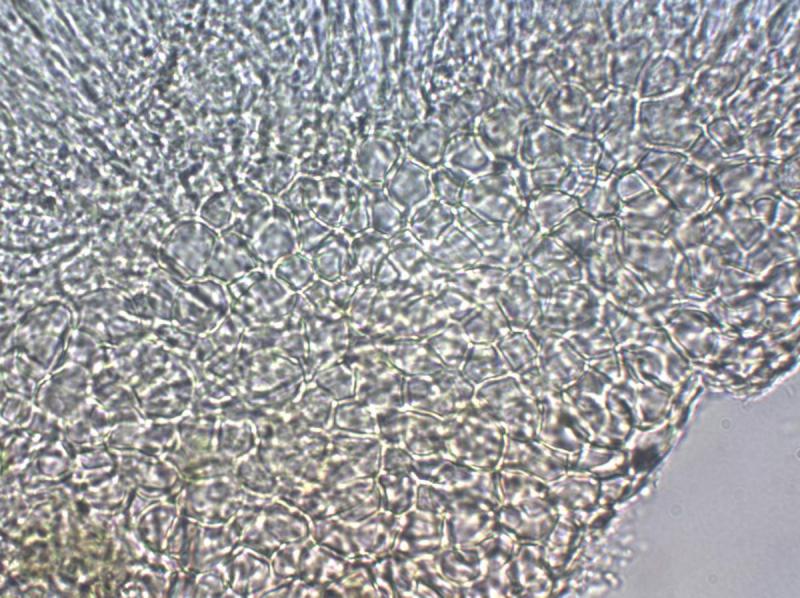
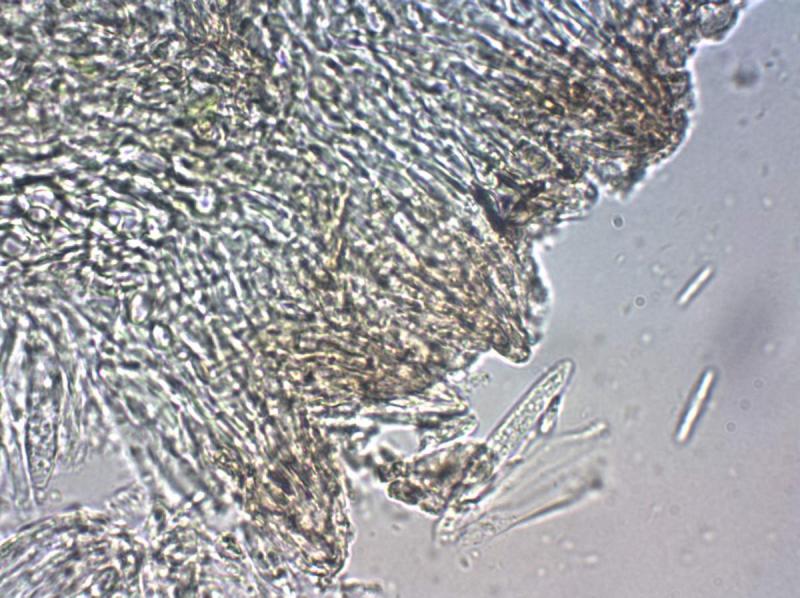
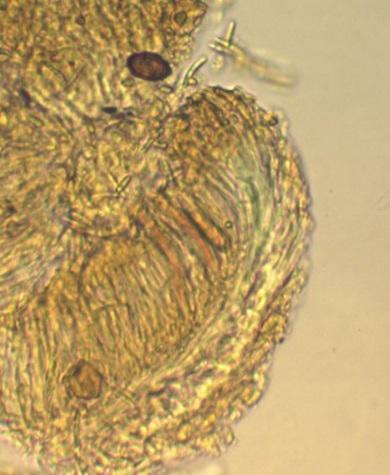
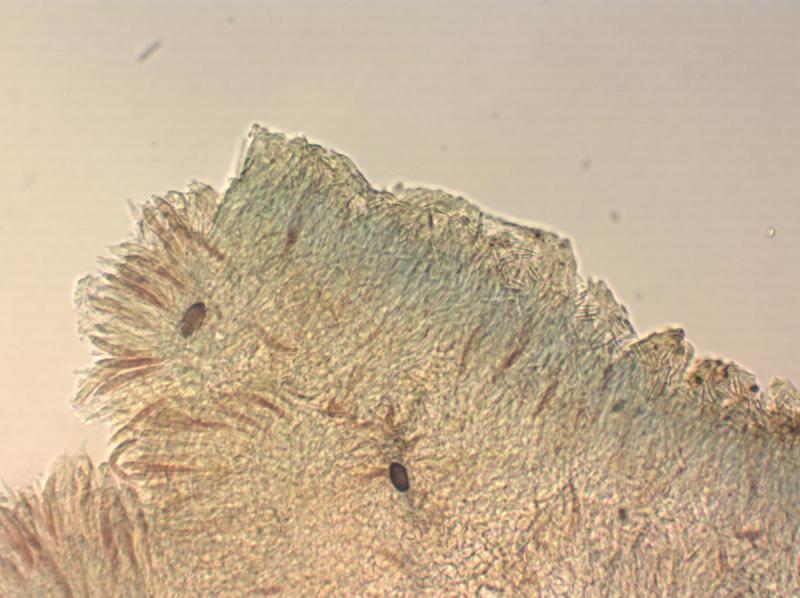
Apothecia ca 0.3-0.4 mm diameter; sessile; with cream-coloured hymenium. Excipulum textura angularis. Margin with yellowish hairs(?), ca 40-50 µm long, forming an aggregated mass in which individual components are very difficult to distinguish.
Asci 35-40(-45) x 4-5 µm, 8-spored, with croziers, tips staining blue in IKI.
Paraphyses apparently sparse, narrowly cylindrical, ca 1 µm wide.
Spores 10-14 x 1.5-2 µm, with medium-sized oil bodies (ca 30-40% of spore volume).
I assume it belongs to the Hyaloscyphaceae but I haven't managed to put a name to it. I'd be grateful for any help.
Merci
Marcus
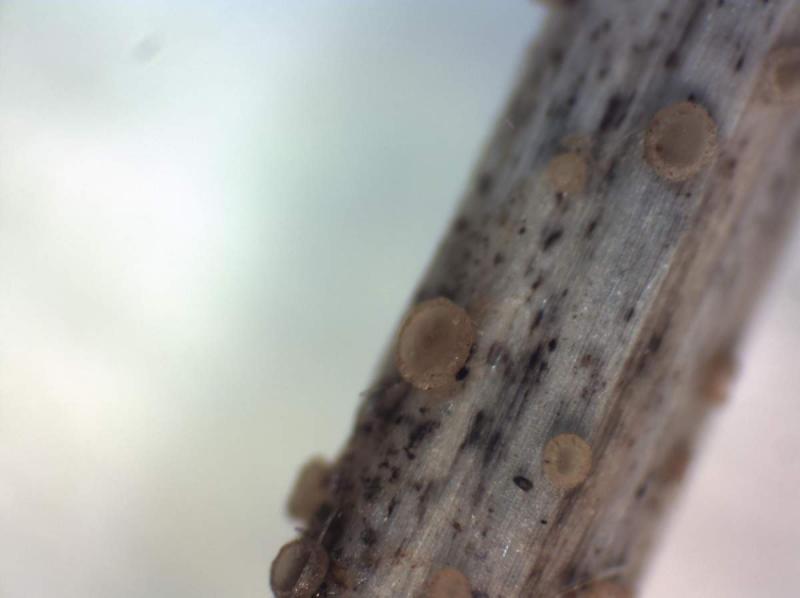
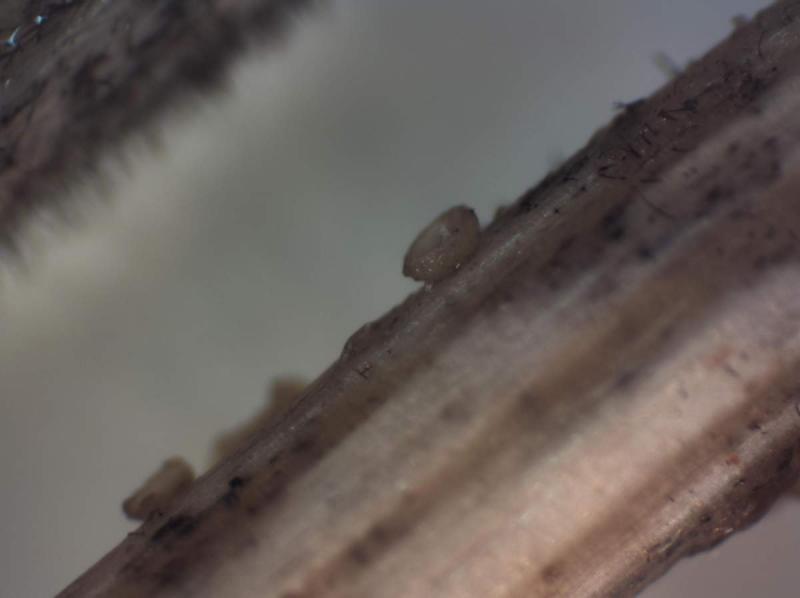
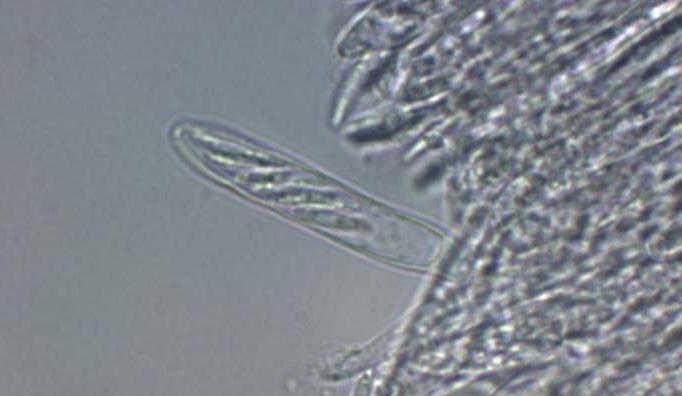
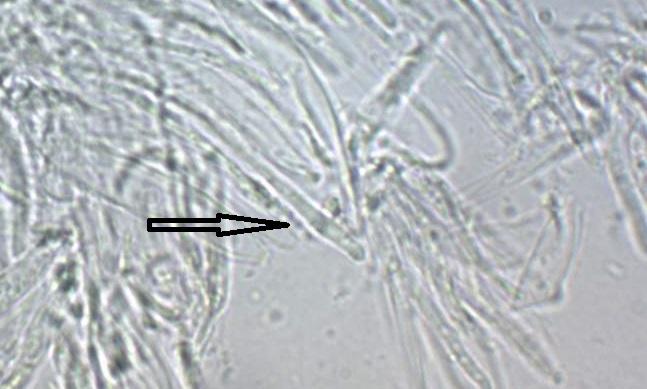
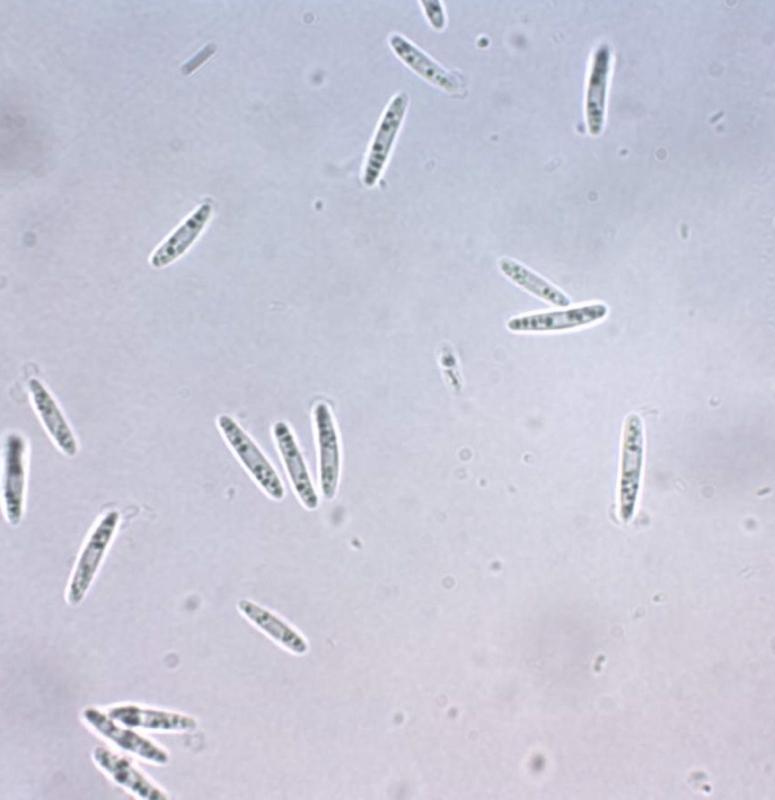

Perhaps this is Psilachum lanceolato-paraphysatum. In that species the medulla often reacts blue in IKI, also the anchoring hyphae.
The apos like to grow near a black ?coelomycete, maybe also in your case.
Zotto
Thanks Zotto.
In many respects my specimen does resemble the collections of Psilachnum lanceolato-paraphysatum that you have described/illustrated in your files. I see that you have images of a collection by Piotr Perz in which the hairs are covered in gel, which seems also to be the case in my specimen.
I'll test the reaction of the medulla to IKI. I'll also have another look at the paraphyses - I think in some cases they were distinctly more lanceolate than the one shown in my photo.
Different descriptions of this species seem to vary in some characters. For example, Raitviir says that asci arise from simple septa whereas other descriptions mention croziers. Spore dimensions also seem to be rather variable.
Marcus
actually Raitviir was in error in several cases. I remember Incrupila aspidii which always had croziers when I saw it.
Zotto
I've been having another look at this specimen.
I was mistaken about the paraphyses. They are lanceolate (not cylindrical), tapered to an acute apex, ca 3 µm wide, exceeding the asci by about 10 µm.
Hairs seem to be narrowly cylindrical, ca 2-3 µm wide, but are very difficult to discern because they are aggregated in a mass.
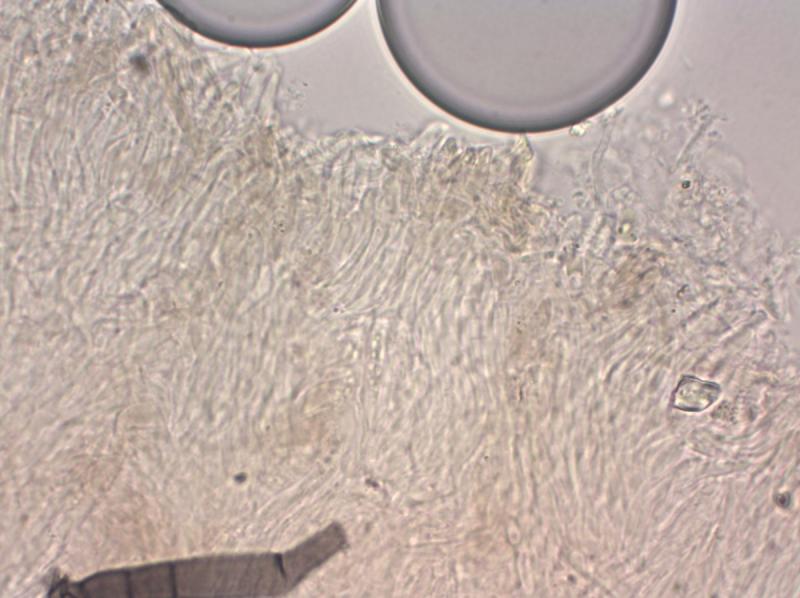
The medulla appears to be blue in IKI (though I struggled to cut a decent section).
The apothecia are closely associated with a sterile coelomycete/hyphomycete, with brown septate setae, 120-220 µm long.
So Psilachnum lanceolato-paraphysatum seems to be a distinct possibility.
Marcus
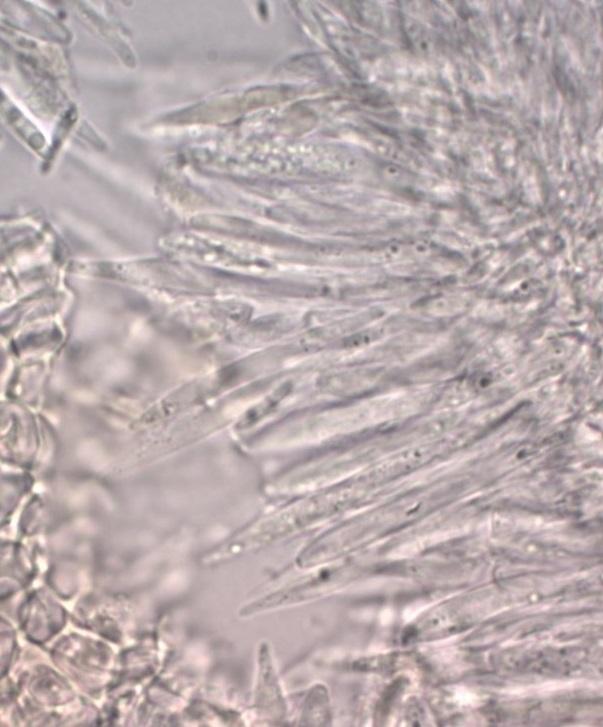
Thank you!
Marcus