
28-04-2026 20:07
 Lothar Krieglsteiner
... on twig in the air at standing Ceratonia siliq
11-05-2026 12:32
 Bernard CLESSE
Pourriez-vous m'aider à identifier cette héloti
29-04-2026 10:44
Lothar Krieglsteiner
growing at moist, drying-out soil at the side of a
05-04-2026 22:46
Lothar Krieglsteiner
on wood of Ceratonia, Algarve, 3.4.2026.The color
10-05-2026 16:18
brigitte vignotbonjour trouvée en Ariège sur bois une petite
10-05-2026 23:17
 Andreas Gminder
Hello,today we found in a moist steep decidous for
27-04-2026 17:16
Lothar Krieglsteiner
.. Algarve, moist lying.The conidiomata look like
10-05-2026 09:02
Buckwheat PeteHello everybody, ould this be Lachnum subvirgineu
Pyrenomycete causing deformation on Corylus twigs?
Björn Wergen,
02-02-2014 20:12
 Hi friends,
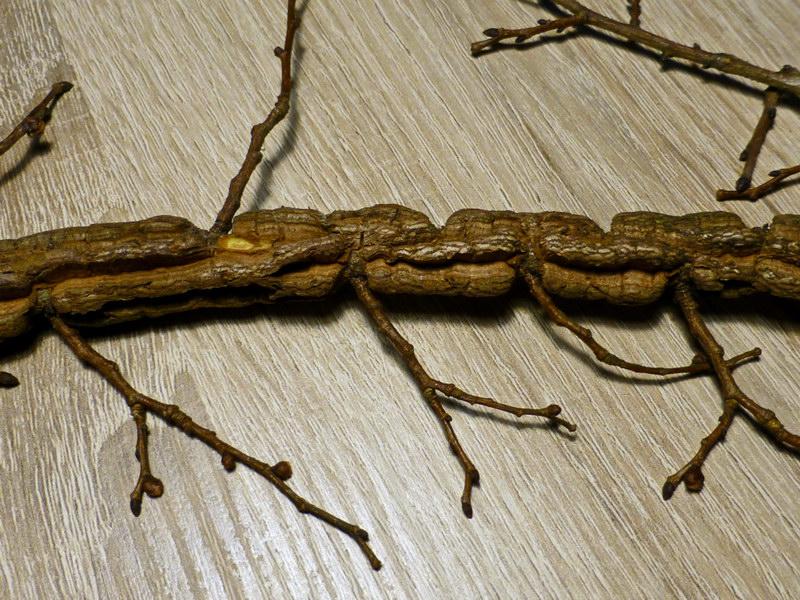
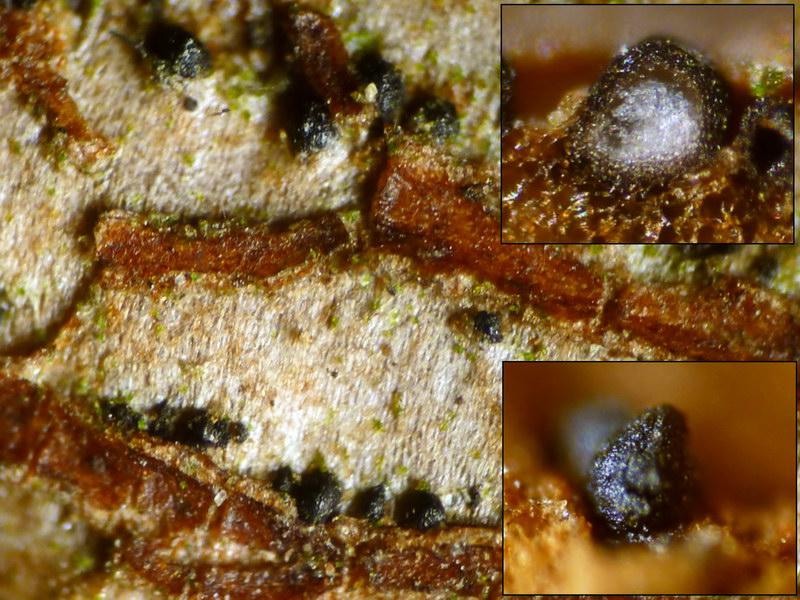
I have some Corylus twigs here with a deformation caused by small, black pyrenomycetes, which are growing on the deformations, while the twig is still living.
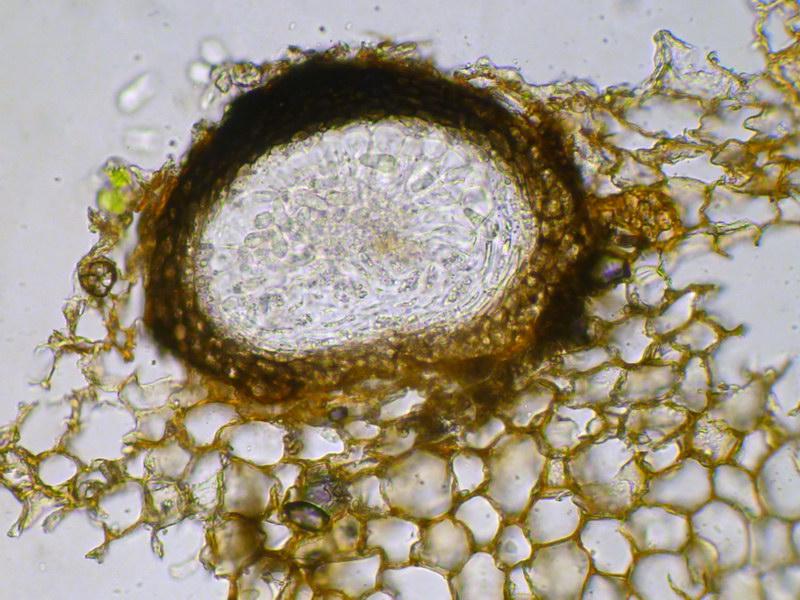
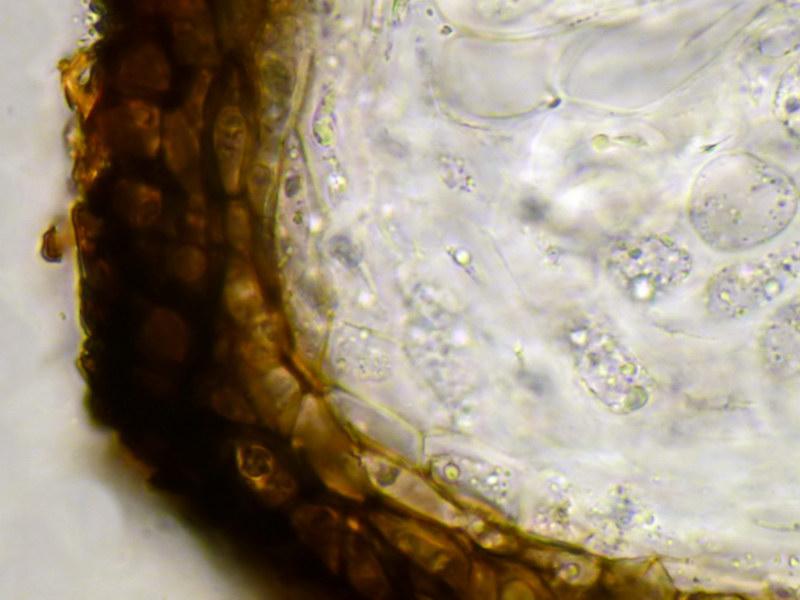
Pseudothecia 0,2-0,35mm, 1/2 embedded into the surface and growing freely later, black, pyriforme, smooth, without ostiolus.
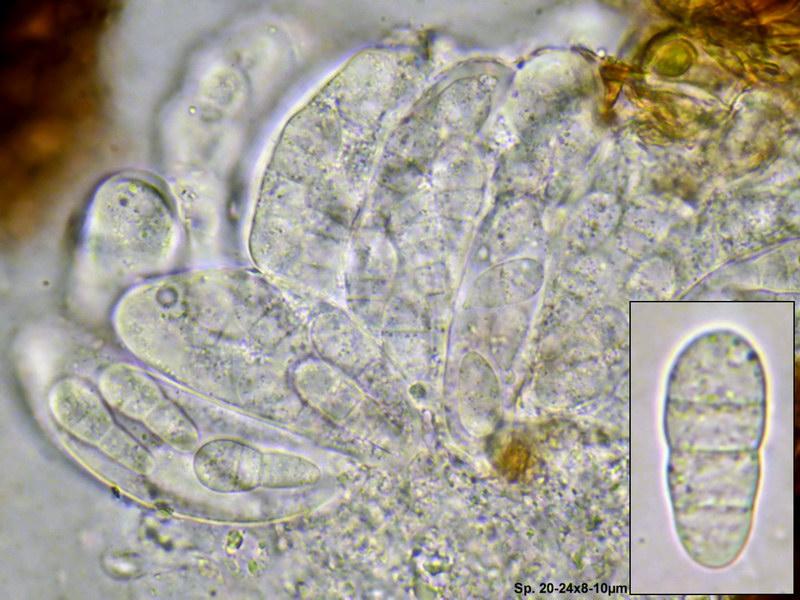
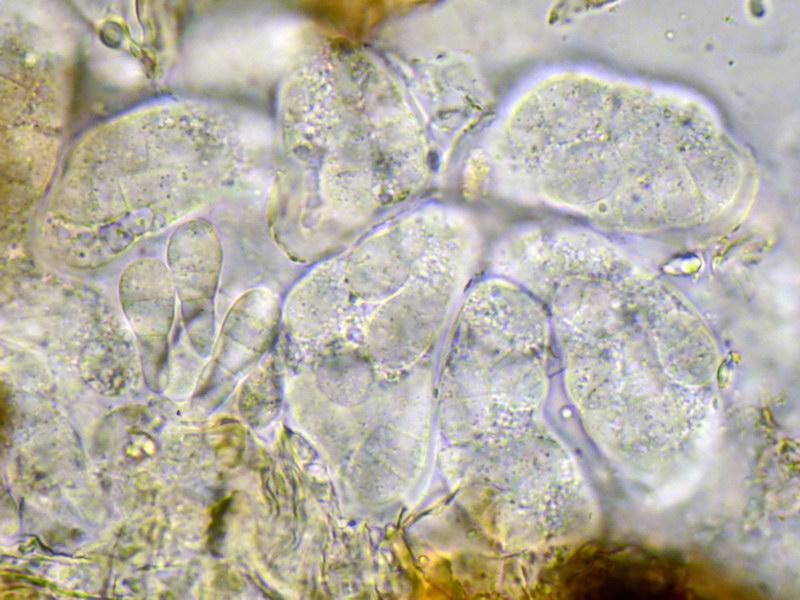
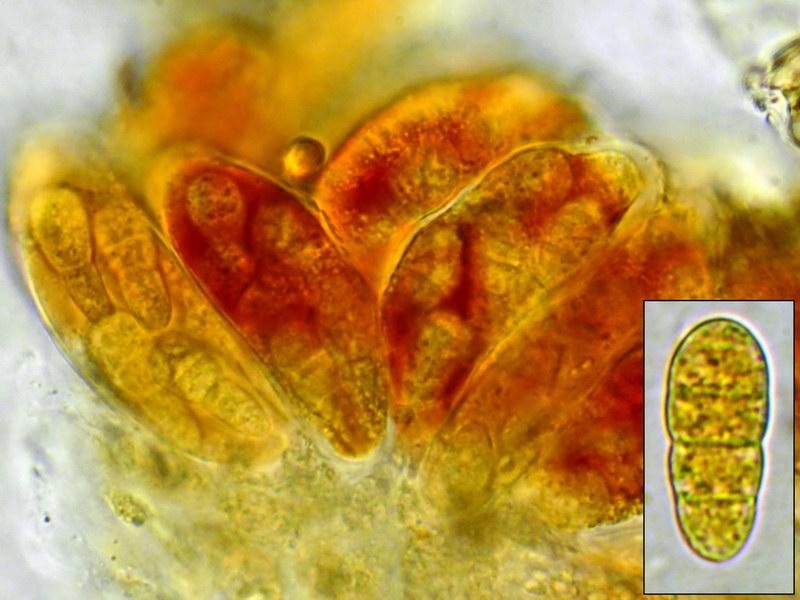
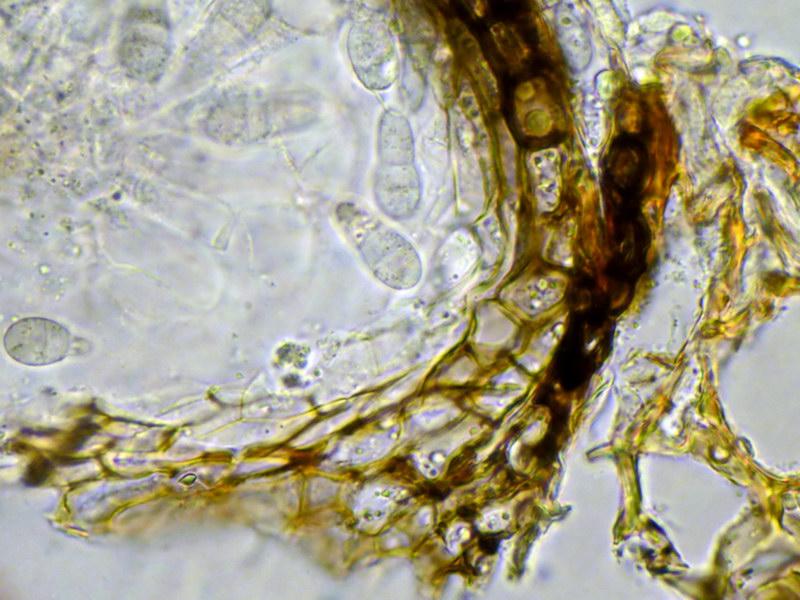
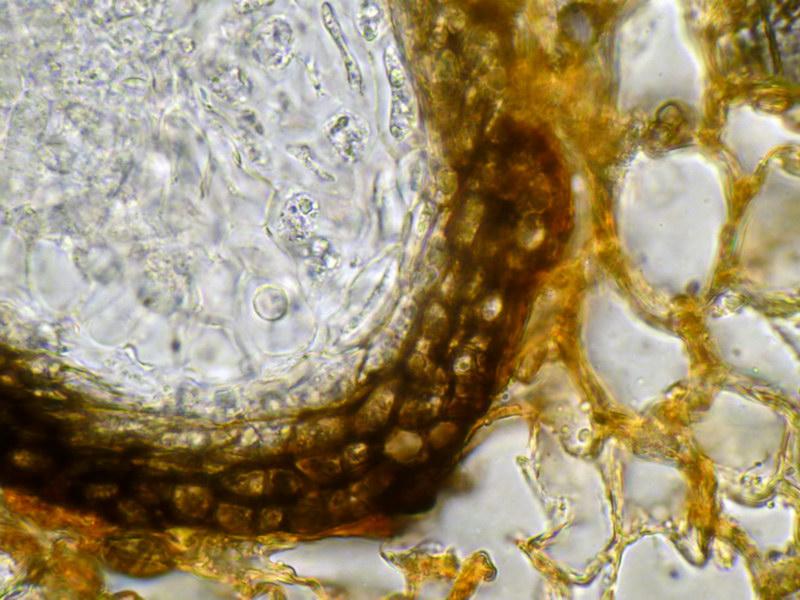
Spores are 20-24x8-10µm, asymmetrical, upper cell broader, generally with three septations, smooth, hyaline. Asci with 8 spores, somewhat saccate, broadest in the middle-lower region, IKI- (red), bitunicate, no stalk, 55-65x17-22µm, without pseudoparaphyses/periphyses. Wall consisting of a 12-15µm thick region of dark brown parenchymatous cells and a ~10µm thick region with paler to hyaline, compressed cells.
Any idea? I thought about Leptosphaerulina, but I did not find any species with the described features.
regards,
björn
Jaklitsch Walter,
02-02-2014 20:49
Re : Pyrenomycete causing deformation on Corylus twigs?
Hi Björn,
based on the image the host is Ulmus minor due to the cork wings (or strips) and alternating twigs. The wings are dead.
The fungus is apparently Saccothecium sepincola, typically occurring on Rosa, although the spore size you give is unusually large.
Regards, Walter
based on the image the host is Ulmus minor due to the cork wings (or strips) and alternating twigs. The wings are dead.
The fungus is apparently Saccothecium sepincola, typically occurring on Rosa, although the spore size you give is unusually large.
Regards, Walter
Björn Wergen,
02-02-2014 21:02
Re : Pyrenomycete causing deformation on Corylus twigs?
Hi Walter,
really Saccothecium sepincola? I thought about that species, but it is described mostly with more than 4 septations. Quite curious...however, thanks for your opinion :)
regards,
björn
really Saccothecium sepincola? I thought about that species, but it is described mostly with more than 4 septations. Quite curious...however, thanks for your opinion :)
regards,
björn
Jaklitsch Walter,
02-02-2014 21:24
Re : Pyrenomycete causing deformation on Corylus twigs?
image 3 in the middle shows an ascospore with 5 septa, if I see that correctly
The fasciculate asci are also typical.
W.
The fasciculate asci are also typical.
W.
Alain GARDIENNET,
02-02-2014 22:41

Re : Pyrenomycete causing deformation on Corylus twigs?
Hi Björn,
Again Walter is right, I think.
All features fit well with S. sepincola (particularly hamathecium). Generally, it's given on Rosa. But I have already found it on Rubus sp. and Cornus sanguinea.
Alain