
28-04-2026 20:07
 Lothar Krieglsteiner
... on twig in the air at standing Ceratonia siliq
11-05-2026 12:32
 Bernard CLESSE
Pourriez-vous m'aider à identifier cette héloti
29-04-2026 10:44
Lothar Krieglsteiner
growing at moist, drying-out soil at the side of a
05-04-2026 22:46
Lothar Krieglsteiner
on wood of Ceratonia, Algarve, 3.4.2026.The color
10-05-2026 16:18
brigitte vignotbonjour trouvée en Ariège sur bois une petite
10-05-2026 23:17
 Andreas Gminder
Hello,today we found in a moist steep decidous for
27-04-2026 17:16
Lothar Krieglsteiner
.. Algarve, moist lying.The conidiomata look like
10-05-2026 09:02
Buckwheat PeteHello everybody, ould this be Lachnum subvirgineu
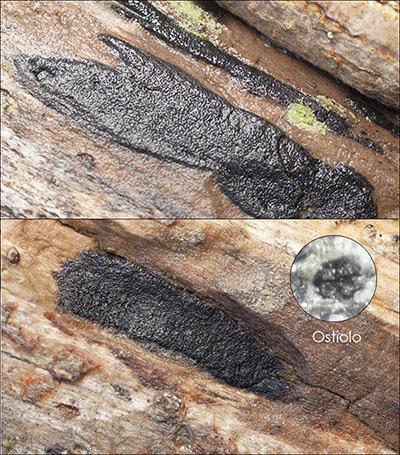
I found this Pyrenomycete, growing on wood of Acer campestre.
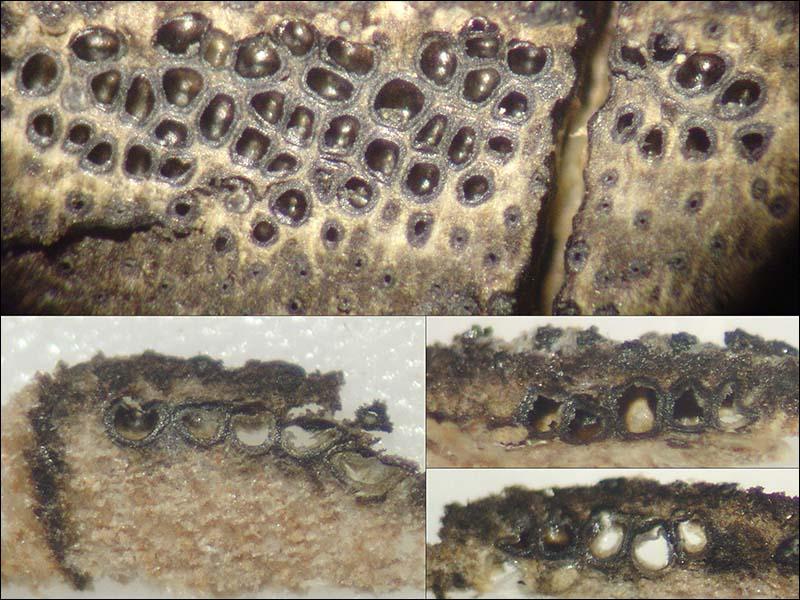
Perithecia size is 200-260um in diameter. Ostioles are 115-140um in diameter and have a cruciform shape.
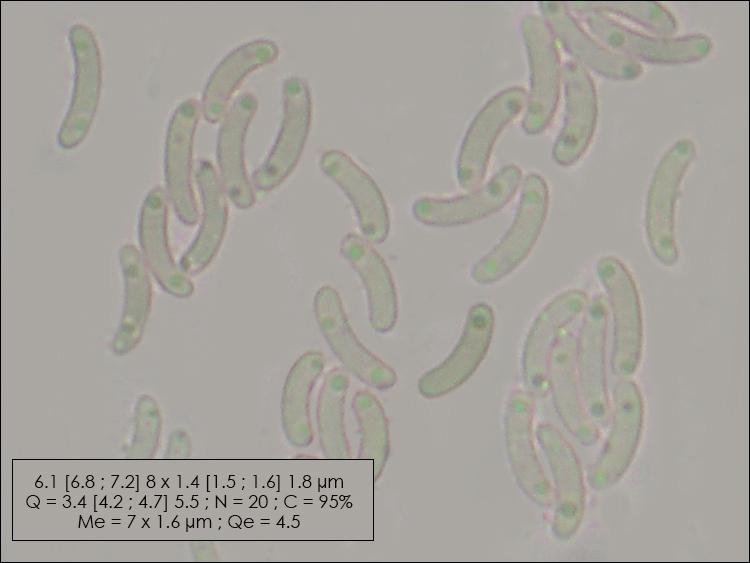
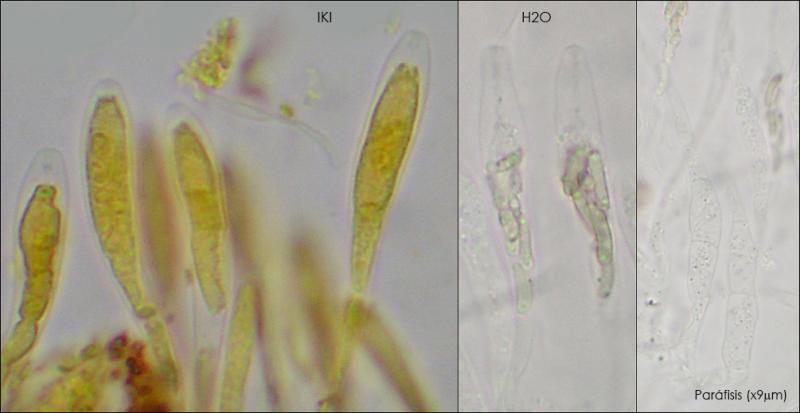
Asci measured 55-68 × 5-7um, area spores 15-23 × 5-6.5um. With IKI, the apical apparatus becomes more apparent, but I'm not able to say if it is IKI +. in any case would be weakly positive.
Persistent paraphyses.
Following keys Rappaz, came to Eutypa Lejoplaca but I doubt if it could be another species, such as E. maura, or leptoplaca (if I consider the reaction to IKI is +).
Can anyone identify the species with the data provided?
Thank you,
Susana (Spain)

you are right, your fungus is likely around E. leptoplaca and E. lejoplaca. Eutypa maura can be ruled out because it is distinctive in having more immersed perithecia and the wood markedly blackened beneath the surface between the necks.
The most reliable difference between the two species is the reaction of the apical apparatus to iodine.
I suggest you follow Rappaz's procedure with a short pretreatment of perithecial content in 3% KOH and mounting in Melzer's reagent. This leads to a more drastic retraction of the ascal content than IKI and makes the apical apparatus easier to make out. Remember it is in fact subapical, at the bottom of a shallow tubular structure. The thing is to work on a very small amount of material in order to make a very thin slide, otherwise interpreting the iodine reaction is most often tricky, especially in species where the apical apparatus is very small. This applies to all species of Diatrypaceae since the character of reaction to iodine is crucial.
Come back with a clear result, whatever how long it takes!
Cheers,
Jacques
¿C'est la réaction tout aussi intense avec KOH + Melzer, qui KOH + IKI?
J'ai fait quelques préparations KOH + IKI (je n'ai pas de Melzer) et pense que c'est positif, j'observe dans les asques un couple de très petits points que je dirais sont bleus.
Que pensez-vous?
Saludos
Susana
ton excellente photo montre bien une réaction positive, amyloide. Tu peux donc écarter lejoplaca.
E. leptoplaca est beaucoup plus fréquente sur Fraxinus, tu devrais la trouver facilement sur des petites branches tombées récemment avec le vent et tu pourras ainsi lui comparer ta récolte.
Amitiés,
Jacques
Saludos.
Susana