
24-03-2026 21:37
Elisabeth StöckliBonsoir,Sur bois (tronc) très pourri de conifère
25-03-2026 10:35
Hulda Caroline HolteHello,I collected this species growing on a dead b
26-03-2026 15:31
 Åke Widgren
Hello,I found this one in October last year, on r


25-03-2026 22:23
 Marc Detollenaere
Dear Forum,On a debarked stem of Tilia, we found s
24-03-2026 15:44
Åge OterhalsI hope someone can confirm the name of this collec
25-03-2026 20:53
François BartholomeeusenDear forum members,On 23 March 2026, I found sever
23-03-2026 20:16
 Miguel Ángel Ribes
Good eveningI'm unable to identify this Coprotus o
25-03-2026 15:06
 Bernard CLESSE
Bonjour à toutes et tous,Pourriez-vous me confirm
Pleospora on Clematis
Björn Wergen,
24-11-2013 18:45
 Hi friends,
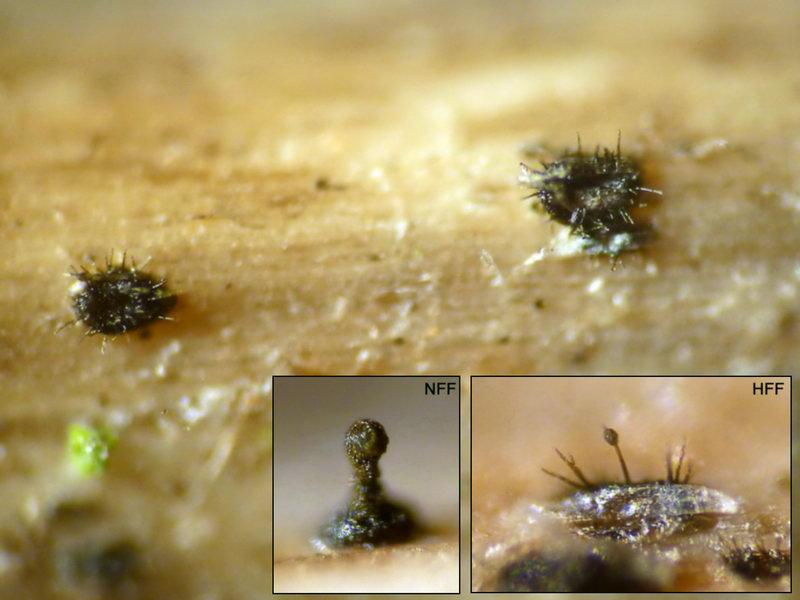
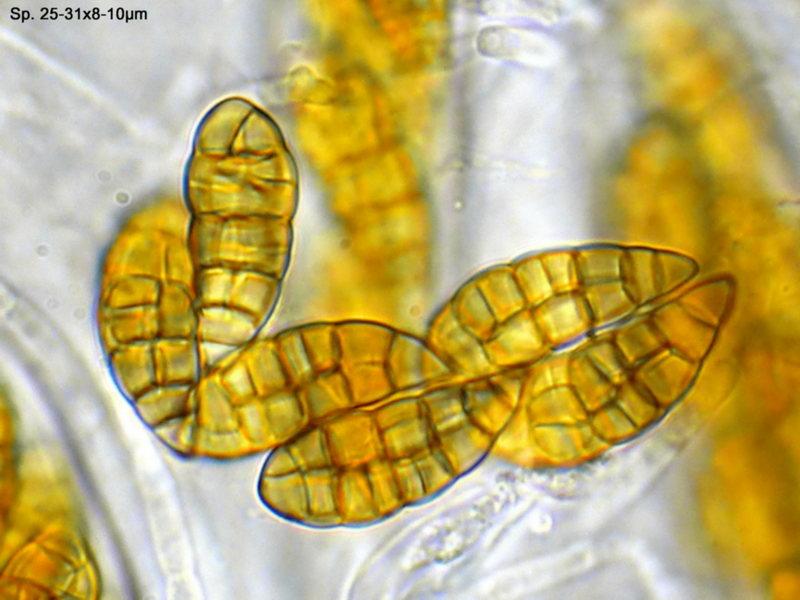
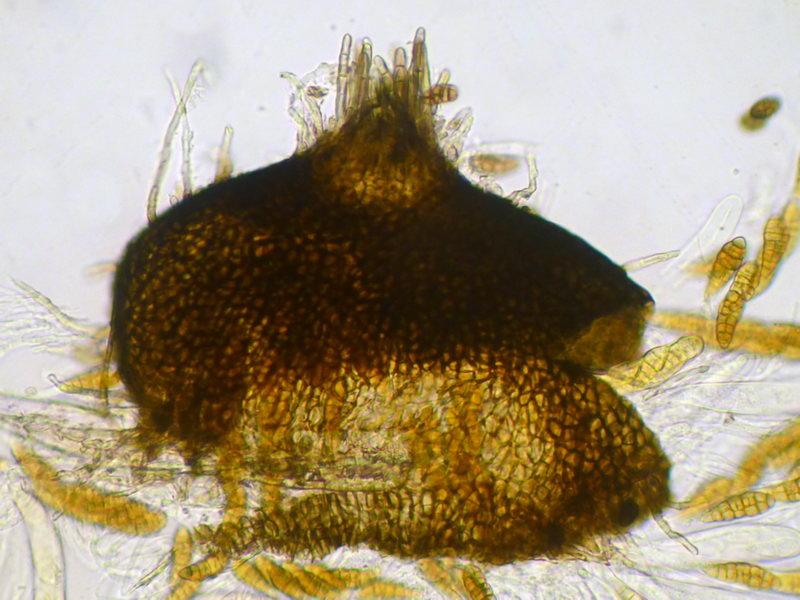
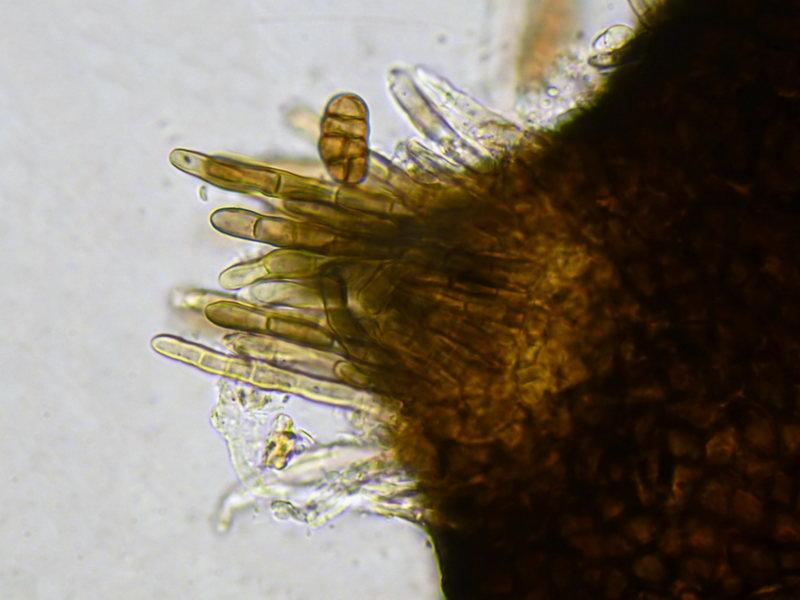
and again, there is an interesting pleosporaleous species growin on dead Clematis stems with distinct setae on the black, hemisphaerical pseudothecia and clavate, 7-8 septated ascospores, which have indistinct, hyaline appendages on both endings (upper ending with hemisphaerical, lower one with conical appendage).
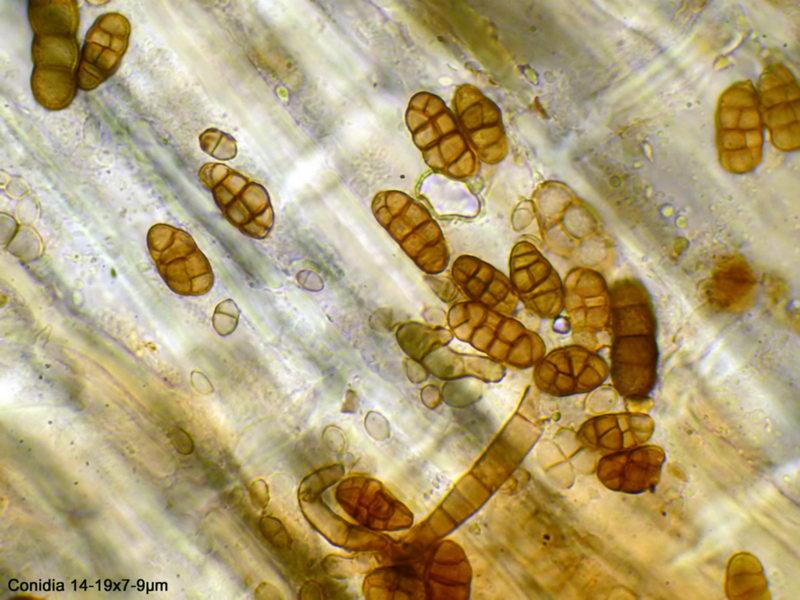
Spores are 25-31x8-10µm, asci 100-130x15-20µm, short stalked and biseriate. I have also found conidial state of very small, beaked conidiomata with Stemphylium-like conidiospores of 14-19x7-9µm.
After comparing several species with Wehmeyer, I have the idea of Pleospora dura, which has tomentose hairs instead of the stiff setae I have recorded. Probably you can tell me something about the relation in Pleospora with their conidial states. In Wehmeyer 1961, P. herbarum is described as attended by Stemphylium state.
I think its time to read Wehmeyer's works...Pleospora is still undeterminable for me :(
[NFF = anamorph, HFF = teleomorph]
Thanks to everyone who can tell me something about it.
regards,
björn


Björn Wergen,
24-11-2013 19:01
Re : Pleospora on Clematis
P. ambigua has many similarities, even if it is figured very different. Wehmeyer gives matching spore and ascus sizes and, more important, distinct stiff hairs and many substrates for this species.
He only describes the spores as "dark yellow brown to red brown"...
He only describes the spores as "dark yellow brown to red brown"...
Alain GARDIENNET,
24-11-2013 20:09

Re : Pleospora on Clematis
Hi Björn,
Perhaps have you to look towards Cilioplea species.
Alain
Perhaps have you to look towards Cilioplea species.
Alain
Björn Wergen,
24-11-2013 20:30
Re : Pleospora on Clematis
Yes you are so right, its Cilioplea coronata...oh man diese blöden Ascomyceten immer ^^
:D Thanks Alain!
regards,
björn
:D Thanks Alain!
regards,
björn
Yannick Mourgues,
24-11-2013 23:55

Re : Pleospora on Clematis
Yes, Alain is right again !
Cilioplea Munk, Dansk Bot. Ark.15(2) : 113, 1953 is a genus that shows ascocarps with short apical setae.
I remember that C. kansensis have hyaline /yellowish setae and C. coronata brown setae. Here it's clearly C. coronata !
Beautiful discovery!
Cilioplea Munk, Dansk Bot. Ark.15(2) : 113, 1953 is a genus that shows ascocarps with short apical setae.
I remember that C. kansensis have hyaline /yellowish setae and C. coronata brown setae. Here it's clearly C. coronata !
Beautiful discovery!